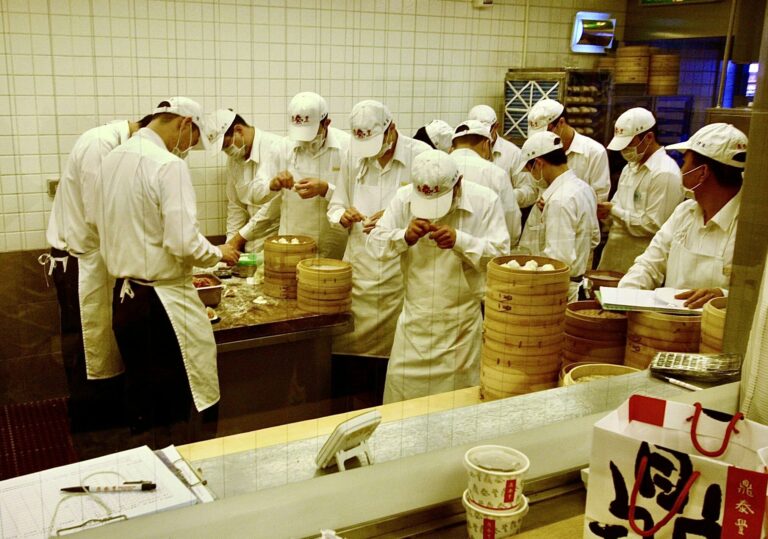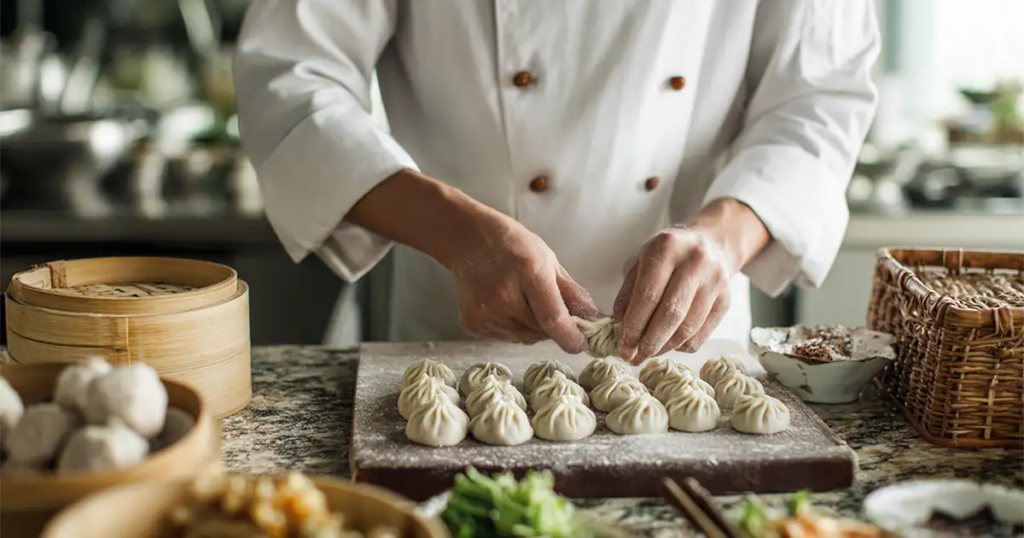
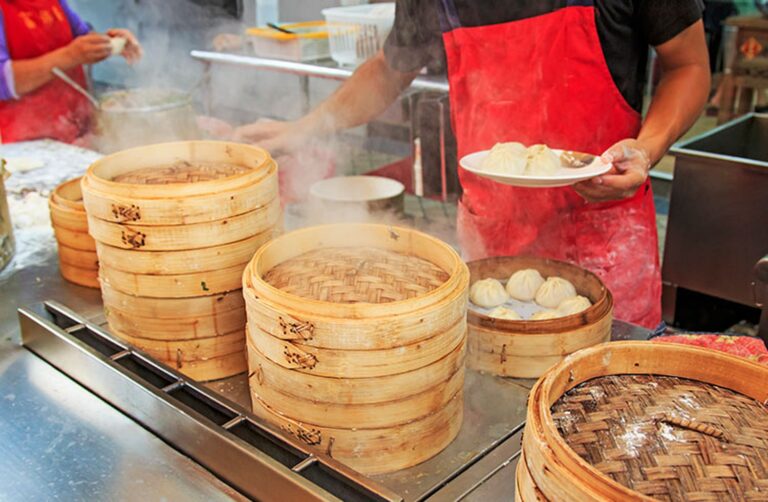
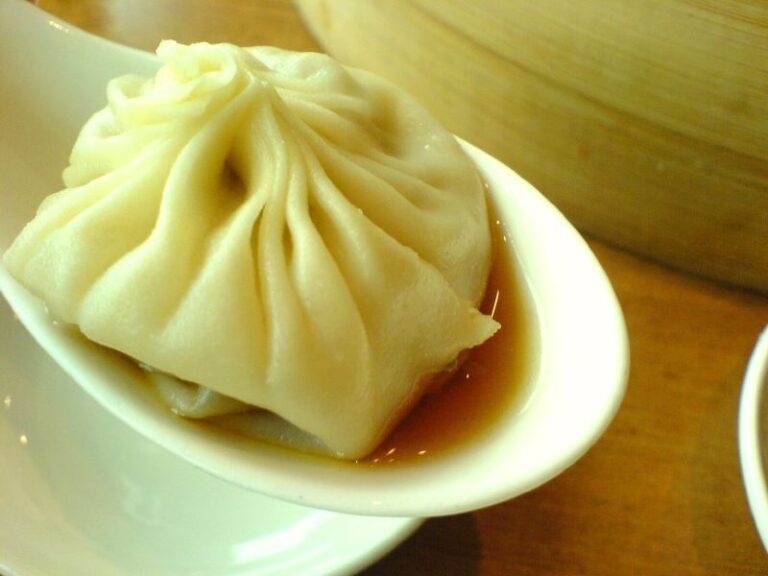
In Taipei, Los Angeles, London, and Singapore, the bamboo steamers arrive in the same neat stacks, while each xiaolongbao carries eighteen pleats. The uniformity is visible before the first bite.
Din Tai Fung is no longer only a Taipei name.
The same sign appears in Los Angeles, London, and Singapore.
Bamboo steamers stack the same way.
Lines form in the same way.
Many people assume they are eating “Taiwanese food.”
But the origin point was not a famous xiaolongbao shop.
It was an oil business that began to lose its place in the city.
What grew here was not only skill in taste.
It was a method of turning a craft into a repeatable system.
1948: Retreat, and the Age of Cooking Oil
This story does not begin with a dish.
The founder, Yang Bing-yi, was born in 1927 in Shanxi, China.
In 1948, the Chinese Civil War intensified.
He crossed to Taiwan with about twenty dollars.
He began again as a newcomer, close to exile.
Postwar Taiwan was a place of gathering.
People arrived from elsewhere, found work, and rebuilt ordinary life.
He moved within that flow.
In 1958, he opened a small shop selling cooking oil by measure.
Its name was Ding Tai Fung Oil Shop.
Peanut oil and other staples passed through the counter.
It was a business that sat quietly inside daily life.
Then the 1970s arrived.
Canned salad oil spread through supermarkets.
Oil stopped being something weighed at a neighborhood shop.
It became a standardized product filled at factories.
The small oil shops of the city began to lose their function.
1972: A Decision Made Under Pressure
By 1972, the shop was forced to change.
Close the doors, or find another way to remain.
They chose to remodel half the space and bring in a dim sum chef from Shanghai.
The decision did not feel like culinary ambition.
It looked closer to survival.
Xiaolongbao already existed in Taiwan.
It had arrived with migrants and the Jiangnan cooking of Shanghai and nearby regions.
Din Tai Fung did not invent it from nothing.
What it did was different.
It tried to make something already present hold together in a new form.
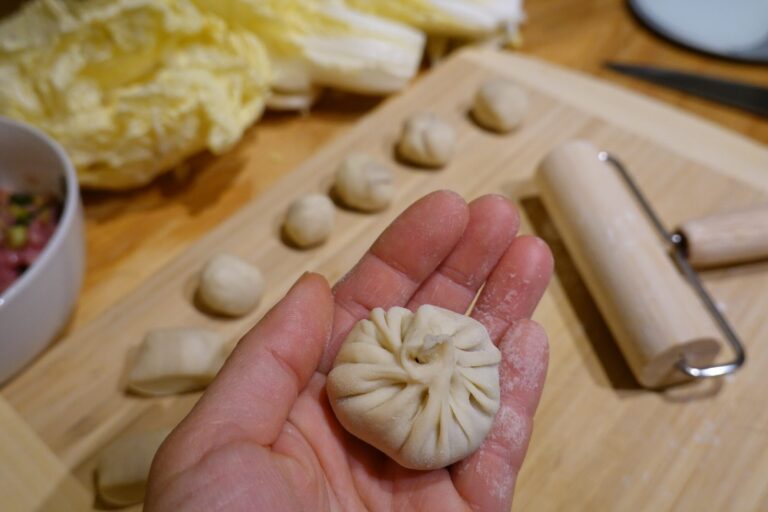

Turning Craft into Uniform Technique
At the time, xiaolongbao varied widely from shop to shop.
Skin thickness changed.
Filling weight changed.
Steaming results changed.
That instability was not a flaw.
It was part of what dim sum had always been.
Din Tai Fung moved in the opposite direction.
It kept the human hand, but reduced the swing.
The second generation, Yang Ji-hua, is often credited as the driver of this shift.
A kind of specification was introduced.
Dough 5 grams.
Filling 16 grams.
Eighteen pleats.
Total weight 21 grams.
A digital scale entered a world of intuition.
Numbers became shared rules.
The shop began to look less like a restaurant and more like a workshop.
This was not only for beauty.
It was a condition for repeating the same result.
Anywhere, with anyone.
Xiaolongbao depends on a narrow balance.
Too thin, it breaks.
Too thick, it becomes heavy.
The point was not to find the balance once, but to keep landing on it.
This thinking did not stop with the steamer.
Din Tai Fung has another quiet pillar.
Fried rice.
Pork chop fried rice often arrives as if it belongs there naturally.
It sits beside the steamer.
Sometimes it becomes the main plate at the table.
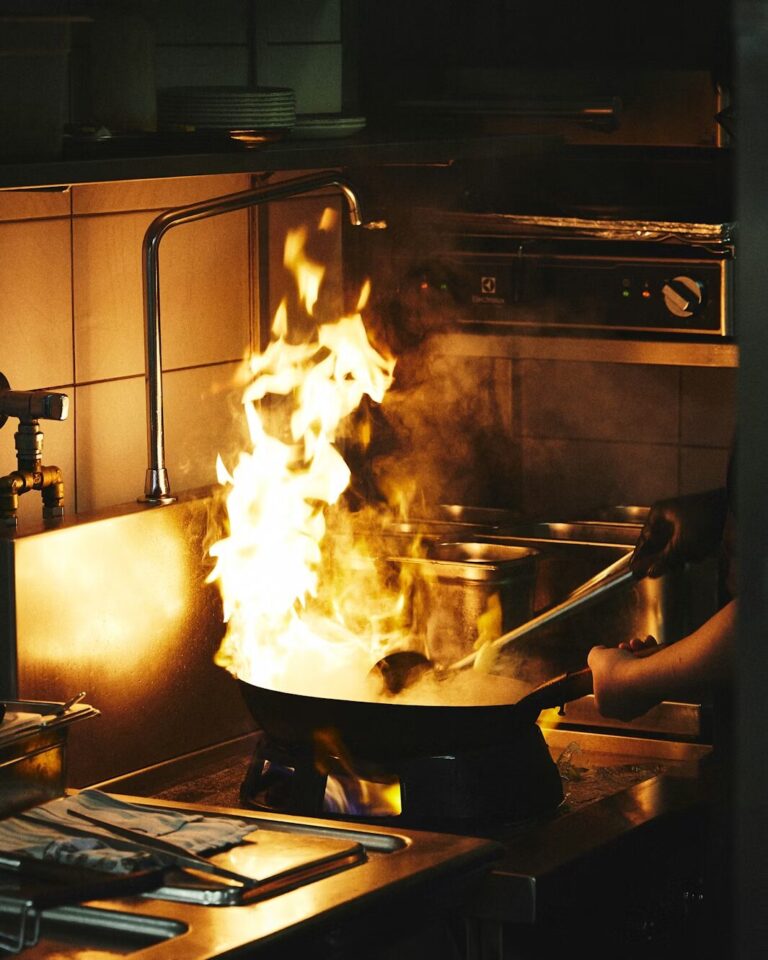
Street fried rice tends to lean on heat, oil, and aroma.
Din Tai Fung’s version removes things instead.
The color is pale.
The oil feels light.
Still, the grains do not collapse.
Egg coats evenly.
The variation between plates is small.
Temperature, salt, texture.
They return to the same point again and again.
Even here, the same idea appears.
Craft is translated into repeatable technique.
1993: A Date When the Outside World Noticed
There is a clear date when Din Tai Fung was “found.”
January 17, 1993.
The New York Times.
In an article titled Top-Notch Tables; Teapots and Dip, the shop was listed among ten great restaurants of the world.
At the time, it was still only one place in Taipei.
And yet it was placed beside famous dining rooms in other cities.
Outside Taiwan, xiaolongbao would have remained a local dim sum.
Then it was suddenly written onto a global food map.
This did not only change the shop’s reputation.
It also matched a moment when Taipei itself began to be looked at differently.
The city started to gain outline as a destination.
1996: Japan as a First Gateway
A major step overseas came in 1996.
Din Tai Fung opened at Takashimaya in Shinjuku.
It did not begin with the United States.
It began with Japan.
The order feels revealing.
At the time, Chinese food often carried an unfair suspicion.
Delicious, but not clean.
The more it resembled street food, the more it was marked that way.
A Japanese department store sells taste, but also reassurance.
To be accepted there meant a shift in trust.
Lines formed in Japan.
That fact traveled back to Taiwan and outward to other countries.
“Working in Japan” became a kind of quality guarantee.
Din Tai Fung seemed to understand how that air moves.
Glass Kitchens and the Designed Experience
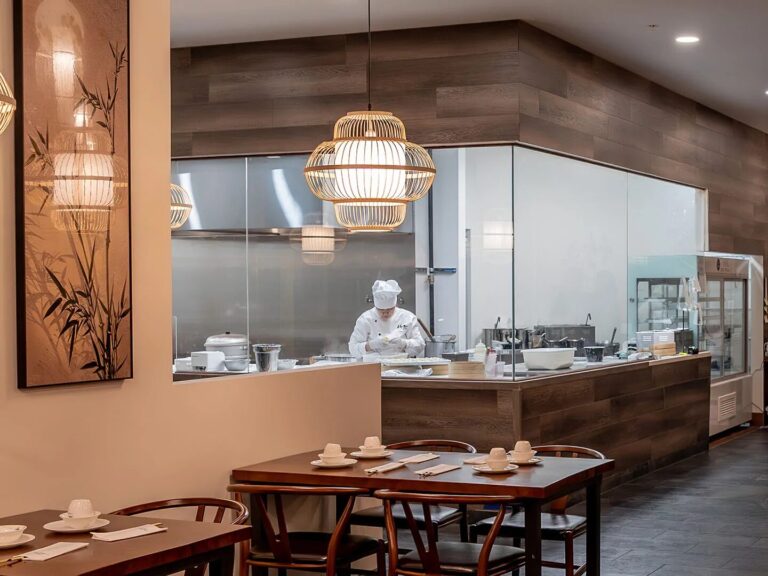
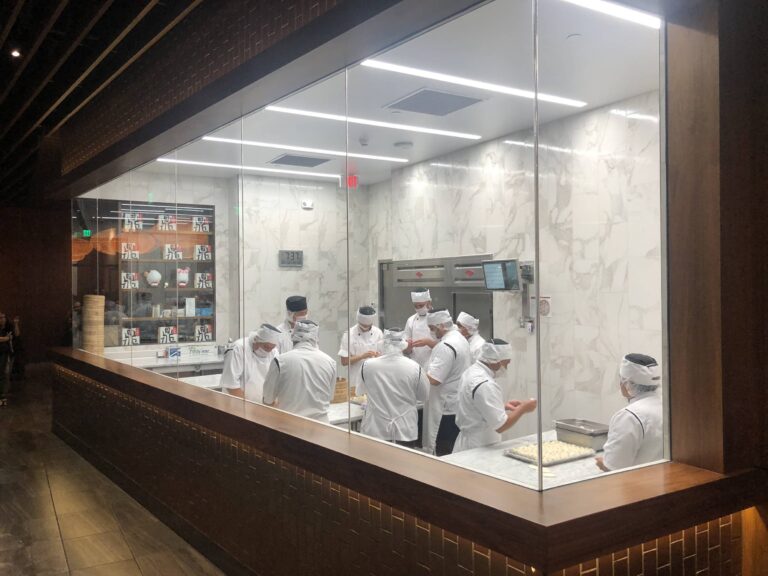
Many Din Tai Fung shops have glass-walled kitchens.
Chefs in white coats.
Masks and caps.
Hands wrapping without speaking.
Visibility signals cleanliness.
But it does more than that.
The diner can see where the work happens.
That alone produces calm.
Chinese cooking is sometimes burdened by the anxiety of hidden back rooms.
Din Tai Fung removed that anxiety in advance.
Not only the food, but the environment was arranged.
The glass kitchen is the clearest symbol.
Yet the design is not only visual.
The act of eating is also quietly stabilized.
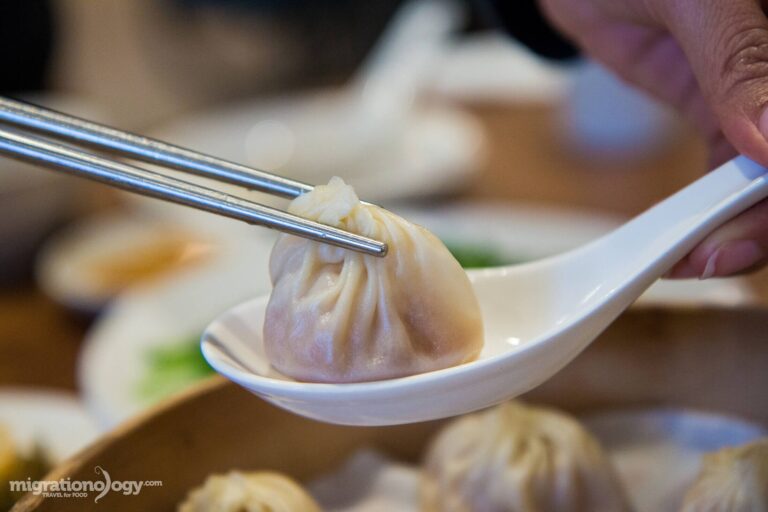
Xiaolongbao is hot.
The skin is thin.
If handled poorly, it becomes an accident.
So the shop begins to include the method.
Sauce ratios.
How to use the spoon.
The order of biting.
Where ginger sits.
This is not etiquette.
It is control of outcome.
Even without explanation, the room guides the diner.
The table setting suggests what to do.
The pace of service reduces confusion.
There is no loud encouragement.
Movement is arranged so people do not get lost.
In this way, xiaolongbao stops being only what happens inside a steamer.
It becomes an experience that includes waiting, visibility, and handling.
Food is remembered through a sequence of small cues.
That sequence becomes the air of the place.
2009: A Star for Dim Sum
Another turning point came in 2009.
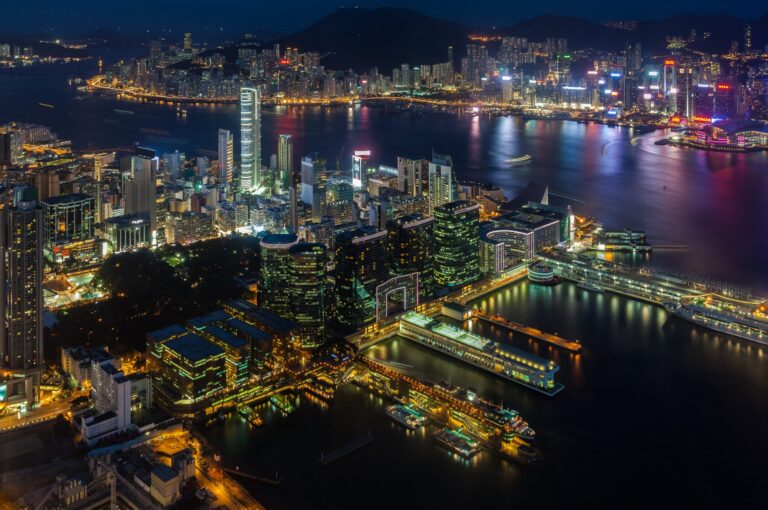
The Hong Kong branch in Tsim Sha Tsui received a Michelin star.
Dim sum had long been food of speed.
Morning markets.
Stacked steamers.
Quick eating.
To see it placed on the same axis as French dining or kaiseki was not only about taste.
It was a shift of coordinates.
A chain, yet delicate food.
A standardized process, yet a refined room.
Din Tai Fung made that contradiction stand.
From this point, xiaolongbao began to leave the category of casual local food.
It moved from “a thing to try while traveling” to “one form of high-end dining in a city.”
The change also altered how dim sum itself was seen.
It became a known dish abroad, not something that needed explanation.
The Taipei Main Store, and a Different Label
There is one remaining twist.
While overseas branches gained stars, the Taipei main store did not.
In Taipei, Din Tai Fung sits under Bib Gourmand.
It is not a defeat so much as a location.
The main store is special, but not too far from daily life.
A star pushes food upward.
Bib Gourmand keeps it close.
Din Tai Fung expanded while holding both.
Why It Became Separate
It is difficult to claim that no better xiaolongbao exists.
Taipei has older shops.
Other cities have their own strong places.
But Din Tai Fung built a form that could survive anywhere.
That difference grew over time.
One reason is the softened scent.
Taiwanese cooking often carries strong signatures.
Star anise.
Fermented notes.
Sweet soy.
Offal.
Thick spice.
They are part of the island’s identity.
They can also be a wall.
Din Tai Fung lowers that wall.
Its xiaolongbao does not rely on those markers.
It is not sweet-spicy.
It does not push aroma forward.
Salt, meat, wheat.
Vinegar and ginger to sharpen the edge.
It wins by temperature and texture.
The lack of eccentricity becomes universality.
Universality exports well.
It did not dilute Taiwan so much as translate it.
Edges were trimmed.
An entrance was built for first-timers.
And the dish became something that needed no explanation abroad.
Another reason is adaptation.
Din Tai Fung does not only reproduce taste.
It reproduces reassurance.
Service and cleanliness carry different expectations by country.
The shop moved toward high standards, and fixed itself as “premium.”
Religion and daily habits also matter.
In places where pork is not eaten, the dish cannot stand unchanged.
Ingredients, kitchens, and explanations must shift.
Din Tai Fung treated these changes as normal work, not exceptions.
It rebuilt the same experience under local constraints.
That became trust.
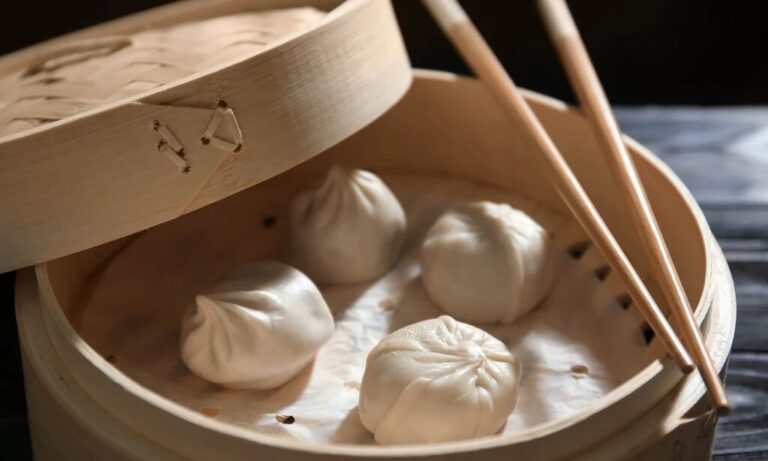
What Eighteen Pleats Hold
Din Tai Fung’s xiaolongbao is unusually uniform.
The same pleat count.
The same skin thickness.
The same temperature of soup.
It is beauty, but also survival.
A family displaced by war.
An oil shop pushed aside by modern retail.
A decision to reduce uncertainty and build repeatable order.
In the end, people eat a well-made dish.
At the same time, they touch a form Taiwan shaped through acceptance and refinement.
The lid opens.
Steam rises.
In that short moment, retreat, urban growth, and a second career fold together.

— Detour —
a little further to walk
- Notes on the Day Din Tai Fung Was Found by the World
- Notes on Din Tai Fung’s Real Beginning
- Notes on the Xiaolongbao New Wave in Taiwan