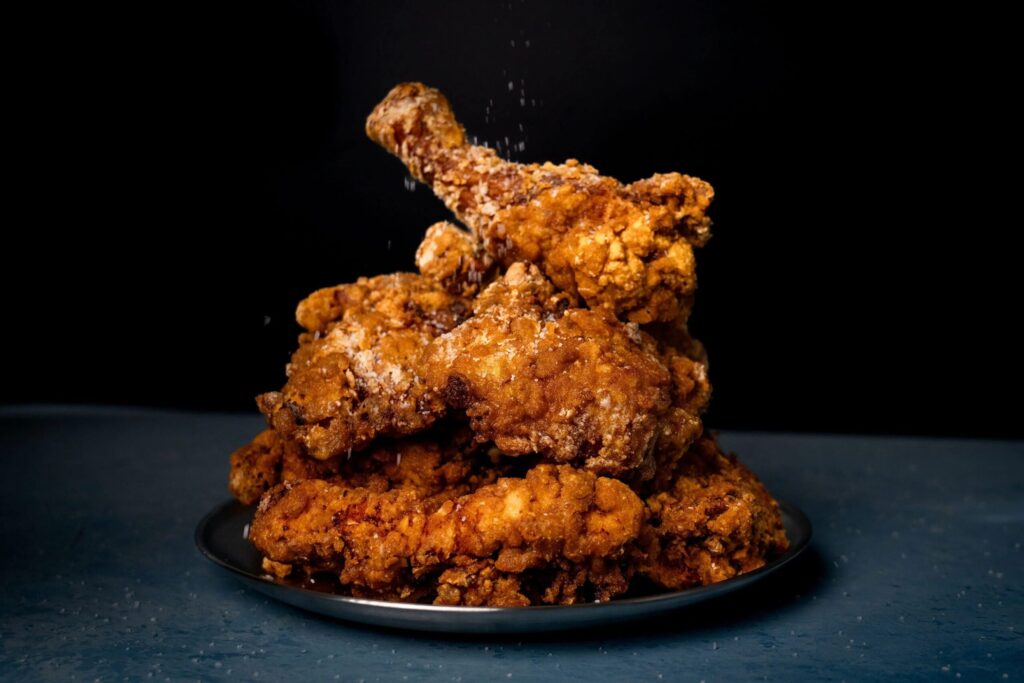
At a Malaysian mamak stall, the chicken arrives yellow and blistered, its spice paste pressed straight onto the skin rather than hidden under a thick coat of flour. Nearby, the wok keeps turning out pieces fast enough that the tray seems less like storage than a pause.
Ayam goreng in Malaysia is often described as fried chicken, but the logic is different.
In many places, fried chicken is understood as a dish built on batter.
A thick coat becomes armor.
The first thing to break is the flour layer.
Here, the coating is absent, or reduced to a thin trace.
Instead, turmeric, lemongrass, and galangal cling directly to the meat.
Fibers and spice paste are pressed into the surface and sealed by heat.
It feels less like frying, and more like tanning.
High-temperature oil does the work.
The skin dries.
The aroma stays behind as scorch marks.
Watching that steady yellow on a plate, it becomes easy to see that chicken is not only an ingredient in this country.
It has another role.
Chicken as a peace treaty at the table
A Malaysian table is not held together by taste alone.
In a multi-ethnic society, food moves alongside taboo.
For Malay Muslims, pork is an absolute prohibition.
For many Hindus, beef is avoided as something sacred.
Among some Chinese communities, there are also habits of avoiding beef, shaped by belief and custom.
When pork and beef are pushed away for religious reasons, one meat remains.
Chicken.
This is less a culinary principle than a technique of shared living.
When people with different backgrounds sit at the same table, chicken creates the least friction.
That is why ayam goreng sits close to the center of everyday eating.
Taste alone does not explain it.
It is also a social necessity.
It is the ingredient with the fewest enemies.
On the table, chicken can look like a small peace treaty.
Temporary, practical, and still effective.
The wok at a mamak, and the circulation of heat
In Malaysian cities, mamak restaurants are known as places that do not sleep.
Many of them keep a large wok near the front.
Inside, dark oil bubbles and moves.
Chicken drops in, rises, and disappears again.
The surface never rests.
The fire is never calm.
Sometimes people judge freshness before they look at the menu.
They listen.
A metal skimmer hits the rim of the wok.
A hard, dry sound.
It can feel like a signal that a new batch is coming up.
In popular shops, the pieces do not stay long on the tray.
They are fried, plated, and fried again.
The rotation does not stop.
That speed is not only business.
It is also technique.
It keeps the meat from drying out.
It keeps the spice aroma from fading.
They seem to know this through repetition rather than explanation.

A part that works on the plate
This dish often appears less as a stand-alone item, and more as a component with a job.
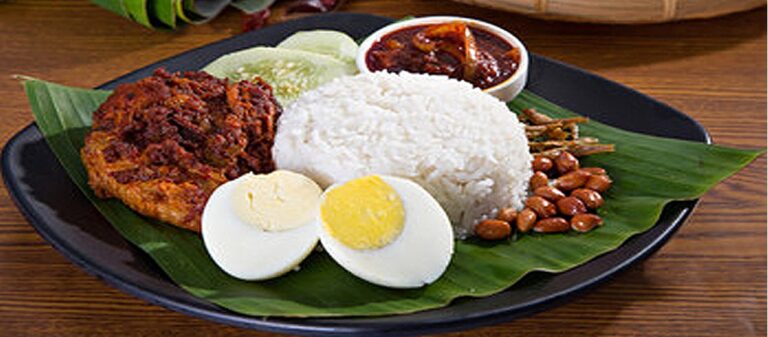
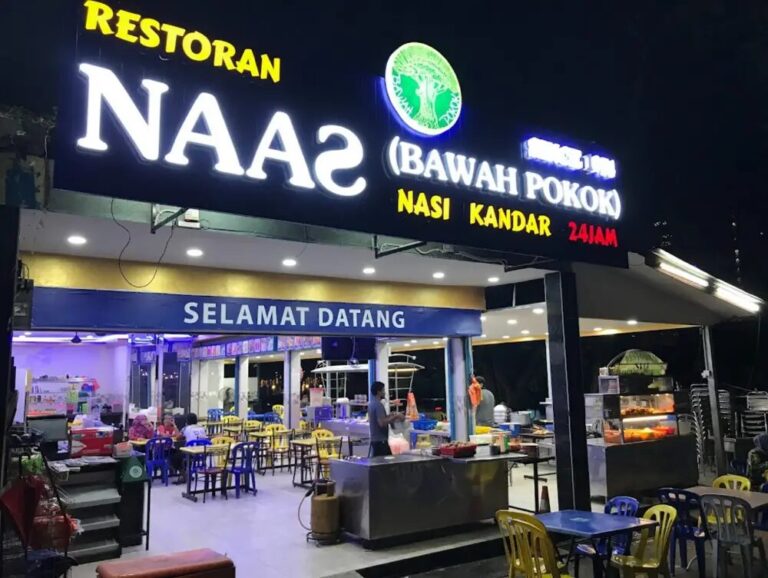
With nasi lemak, coconut rice becomes the base.
It is sweet and heavy.
That softness needs something sharp.
Salt.
Texture.
Resistance.
The crisp skin and fibrous bite tighten the outline of the plate.
They work like an anchor.
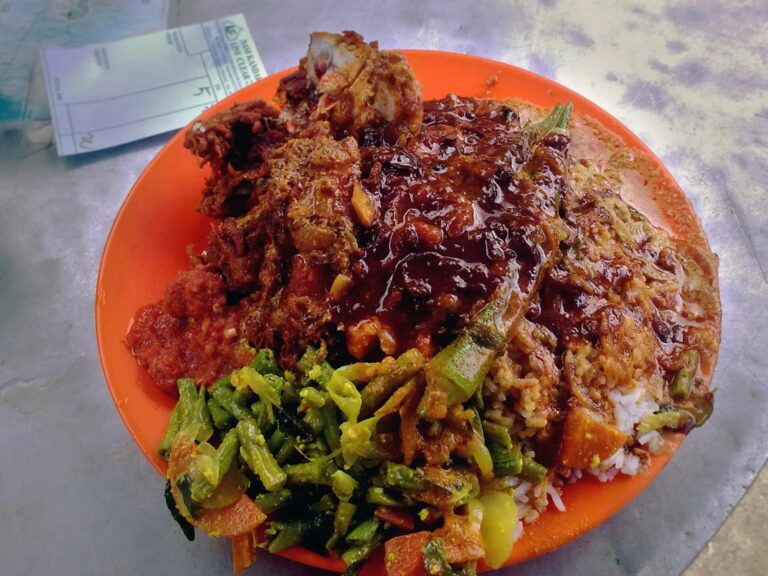
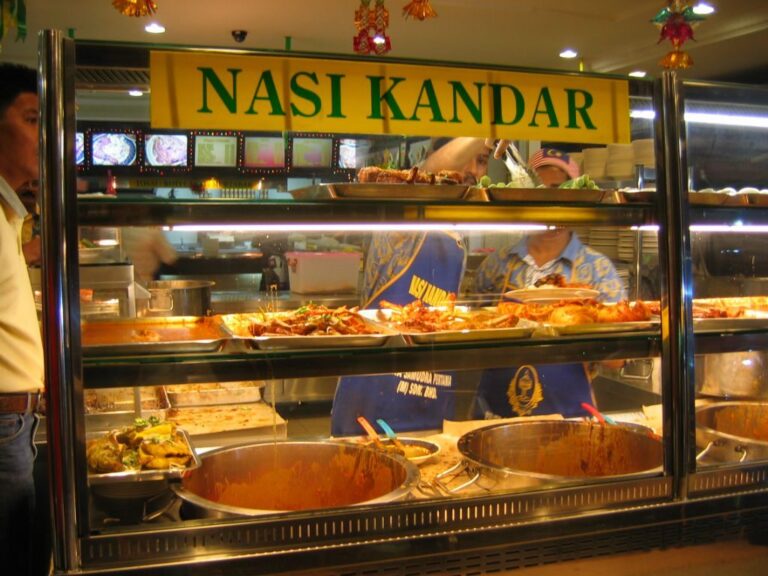
With nasi kandar, the logic changes.
Several curries are poured over rice until everything becomes a flood.
This state is called banjir.
In that liquid field, the chicken tries to keep its dignity as a solid object.
It holds shape longer than the other items.
It gives the mouth something to return to.
There is also the matter of residue.
The cracklings at the bottom of the wok.
Spice and chicken fat hardened into small crystals.
People like to scatter them over rice.
What should be waste becomes seasoning.
Here, that transformation does not feel exaggerated.
It feels normal.
A gradient of yellow and red
On the first bite, aroma arrives before flavor.
The yellow is turmeric.
The color is bright, but the smell is earthy and dark.
The fibers stretch a fresh aftertaste.
Citrus and herbs linger longer than expected.
Each chew releases more scent from the surface.
Heat rises last.
Not as a steady burn, but in patches.
Some parts are mild.
Some parts strike harder.
This is not a dish that feels complete with spoon and fork.
The fingers are faster.
You tear hot skin, and scrape meat from around bone.
Hand-eating here looks less like tradition, and more like efficiency.
The grease and spice left on the fingertips are part of the record.
Without them, the experience feels unfinished.
A smell that covers the street
Walking through Malaysian streets, the scent sometimes arrives before the shop.
Oil carrying burnt spice drifts in from somewhere unseen.
It is not the fragrance of fine dining.
It is the smell of daily life.
Ayam goreng is not a celebration dish.
It is fuel.
It sits on the plate in gold, doing quiet work.
Chicken becomes the safest language in the country.
And that language remains, each day, as the burn marks of spice in oil.

— Detour —
a little further to walk
- Notes on Nasi Kandar in Malaysia
- Notes on Nasi Lemak in Malaysia
- Notes on Mamak Culture Born in Penang