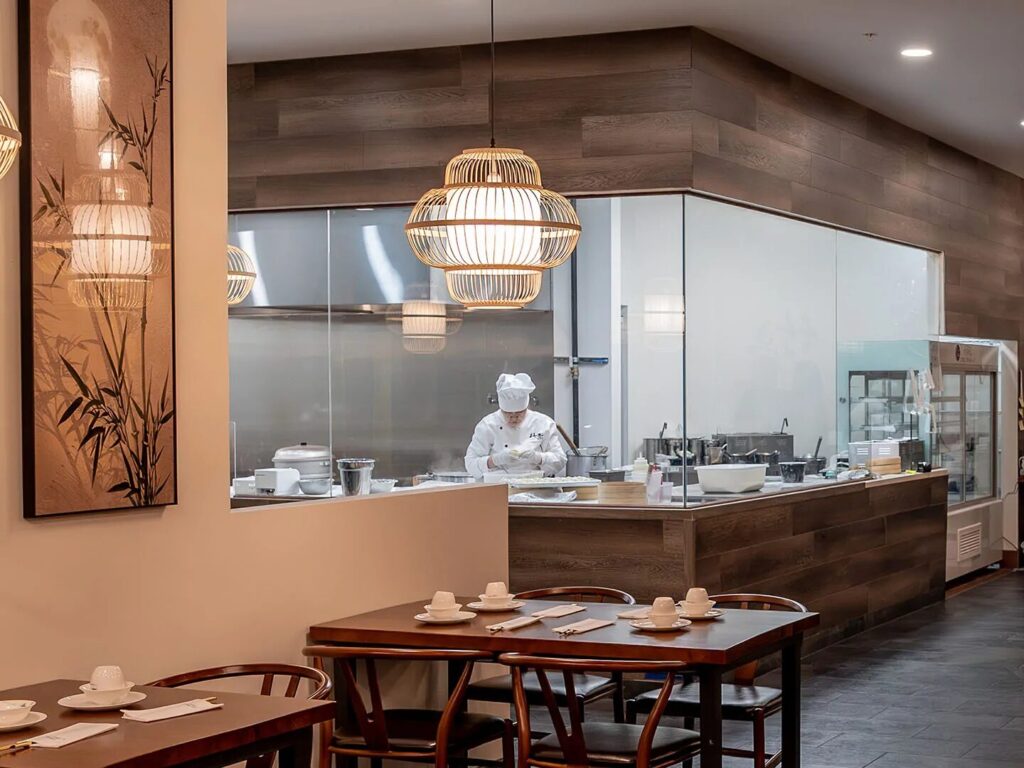
Behind Din Tai Fung’s glass kitchen, dough is cut, rolled, filled, and folded by people who rarely leave their stations. The room is quiet enough that the eighteen folds of a xiaolongbao seem to matter more than the hands making them.
Din Tai Fung’s entrance blends into the street.
There is no loud sign.
Only the flow of people marks it as a destination.
Inside, the air feels arranged.
Before being guided to a table, I notice the glass kitchen.
It looks less like a kitchen
and more like a display case.
People watch the production process
before they wait for food.
A small discomfort appears here.
It is a Chinese kitchen, but there is no shouting.
The sound of woks and flames is hard to catch.
There is only a group in white uniforms,
repeating movements in silence.
This is not a stage built for a single artisan.
The artisans are placed like parts of the equipment.
It does not look like the back of a restaurant.
It looks like the front room of a production line.
A kitchen that does not raise its voice
Behind the glass, hands keep moving.
But the movement is not a performance.
There is no exaggeration for the customer’s gaze.
Dough is cut.
It is stretched.
It is filled.
It is lined up.
No one shouts instructions.
Procedure replaces sound.
Din Tai Fung does not sell heat and chaos.
It does not impress with firepower or noise.
Instead, the steps move forward
at a uniform speed.
This silence does not feel accidental.
It feels designed.
It is a silence that does not depend on personal mood.
A silence meant to reach the same result
no matter who is standing there.
Roles are cut into narrow parts
When I look more closely, the paths are short.
People do not leave their stations.
That is what stands out.
The work is divided with harsh precision.
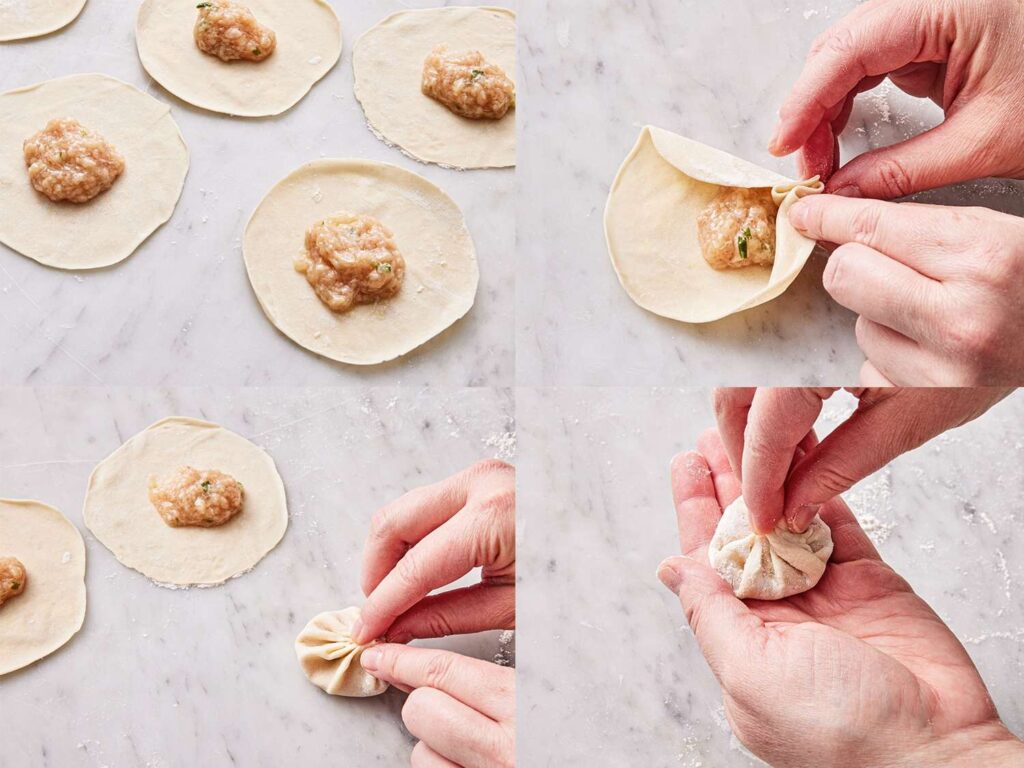
One person tears the dough.
One person rolls it.
One person wraps it.
No one does everything.
One person repeats one step.
There is little freedom inside it.
It resembles an assembly plant more than a restaurant.
Each handoff stabilizes quality.
There is not much space
for personal inspiration to enter.
Sometimes I notice small differences in color
on collars or hats.
They look like rank marks.
Trainee.
Level one.
Level two.
It seems that even after joining,
a person does not start at the wrapping station.
They begin at the edges.
They move inward later.
The order looks fixed as a system.
The strictness feels closer to a military structure
than a cooking school.
But the military aims for victory.
Here the aim is reproducibility.
Discipline exists
to reduce variation in taste.
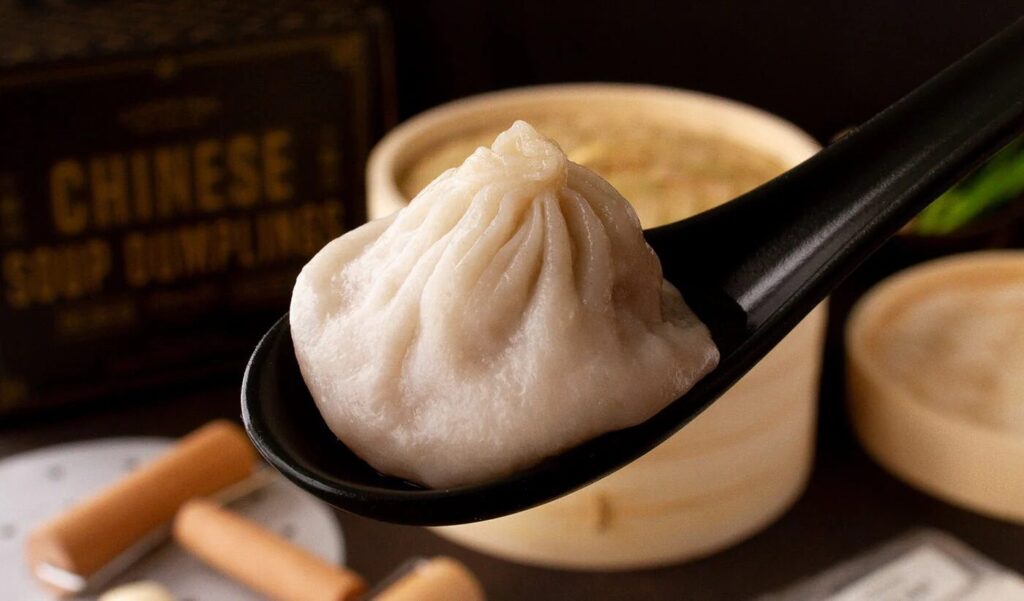
The eighteen folds of xiaolongbao
begin to look less like an artisan’s sensibility
and more like an industrial standard produced by this system.
What eighteen folds indicate
The folds can look decorative.
In Din Tai Fung, decoration feels secondary.
The folds are traces of process.
When the same shape repeats,
the process is confirmed as correct.
The number becomes a visible indicator.
Not only of appearance,
but of precision.
If the folds are uneven,
it is treated less as a taste problem
and more as a process problem.
That kind of culture seems to exist here.
In this place, “good” is a result.
“Same” comes first.
The strange whiteness of fried rice
The manufacturing logic appears most clearly
in paigu egg fried rice.
When the plate arrives, the first surprise is color.
It is too white.
In many Chinese kitchens, fried rice turns brown.
The scent of scorched heat matters.
Wok breath becomes value.
Din Tai Fung removes that trace on purpose.
There is no char.
The surface is not glossy with oil.
It looks less like a stir-fry
and more like a constructed product.
The grains stand.
But they do not break apart.
People say the rice is a specified variety, Taikeng No. 9.
Oil quantity.
Green onion cut size.
Egg doneness.
Everything feels regulated.
Browning is not a bonus.
It is treated as unevenness to eliminate.
The Maillard reaction becomes error, not charm.
This value system feels closer to manufacturing
than to cooking.
This is not a stir-fry.
It resembles an edible precision part
assembled according to a blueprint.
That sentence fits too well.
Skilled hands used to deny craftsmanship
The reason for this thoroughness seems simple.
Global expansion.
A famous restaurant often depends on the chef.
Individual talent becomes the taste.
But that method is hard to copy.
Genius cannot be mass-produced.
Bodies change.
Moods shift.
People leave.
Din Tai Fung chose a system
that cancels out individual variation.
No matter who makes it,
in Tokyo or Los Angeles,
the taste lands in the same place.
What is interesting is that the artisans are not removed.
They are built into the standard.
Hands are necessary.
Freedom is not.
That contradiction
appears to hold.
A metaphor for Taiwanese manufacturing
Din Tai Fung’s philosophy resembles another industry in Taiwan.
The country is known for contract manufacturing
in semiconductors and electronics.
A foundry like TSMC
produces a client’s design with minimal deviation.
Authorship is not requested.
Errorlessness is.
Din Tai Fung looks similar
in the world of food.
A foundry for xiaolongbao.
A place that keeps shipping the same product
without drift.
Customers come to eat.
At the same time, they come to buy stable quality.
Taste begins to resemble a supply contract
more than a service.
An industrial product that can be eaten
I lift the white fried rice with a spoon.
There is little noise in the flavor.
Oil does not remain on the tongue.
Everything feels arranged.
I break open a xiaolongbao.
Soup runs out.
The thickness of the wrapper feels even.
The heat inside feels consistent.
It is hard to see a cook’s face here.
What is visible is the company logo.
It is easy to call that lonely.
But the fact that the same quality is promised
in any city in the world
is itself a strange achievement.
At Din Tai Fung, I am not only eating xiaolongbao.
I may be eating a piece of Taiwan,
in its most advanced form as a manufacturing country.
The claim does not need to be strong.
As long as hands keep moving behind the glass,
this place will continue to look
less like a restaurant
and more like a factory.
— Detour —
a little further to walk
- Notes on Din Tai Fung
- Notes on the Hidden Giant Behind Global Xiaolongbao
- Notes on Formosa Chang as a Manufacturing