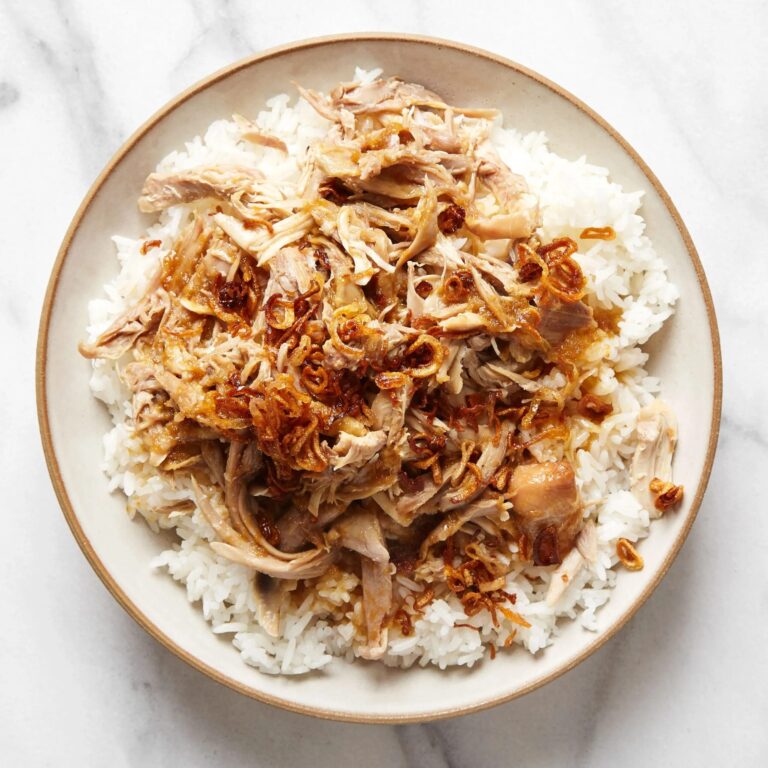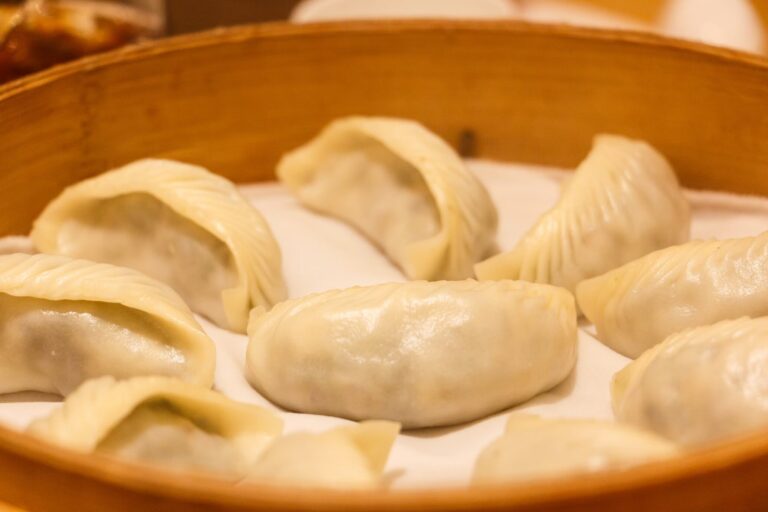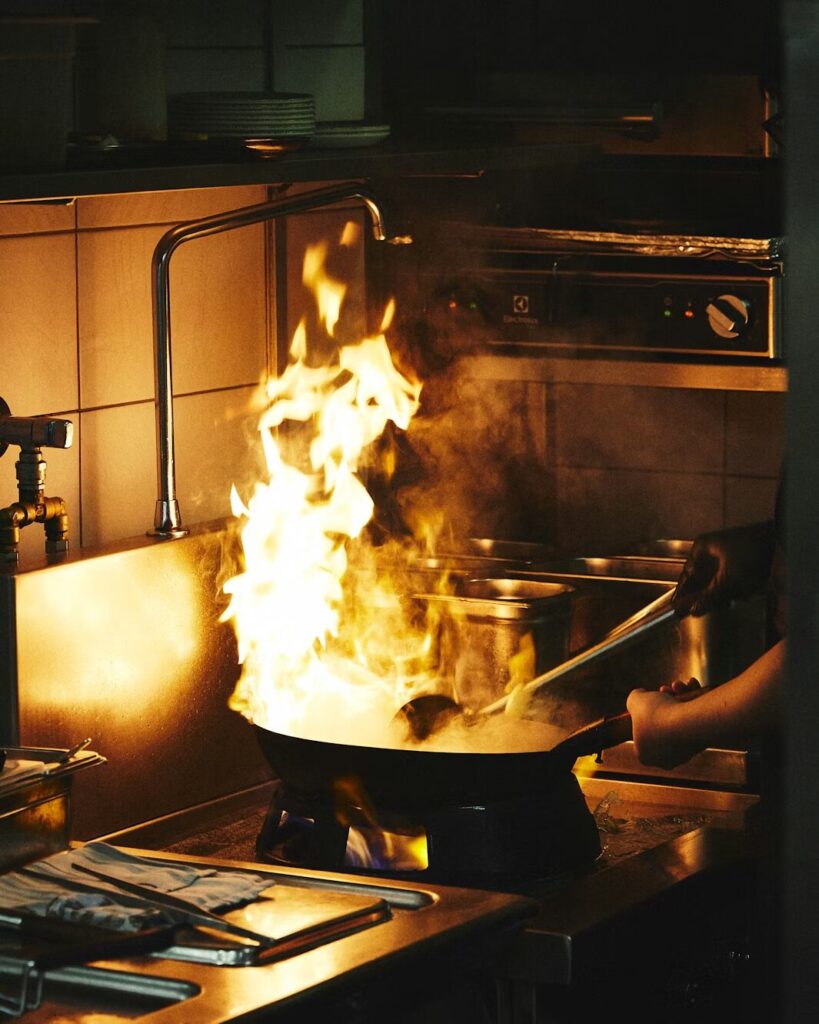
At Din Tai Fung, the dish that keeps appearing at local tables is not the famous basket of xiaolongbao but a plate of unusually white fried rice, topped with a soft, boneless pork chop. It looks almost too restrained to compete with a wok specialist’s version, yet the same quiet plate returns across the room.
If you go to Din Tai Fung, it is worth looking around the room.
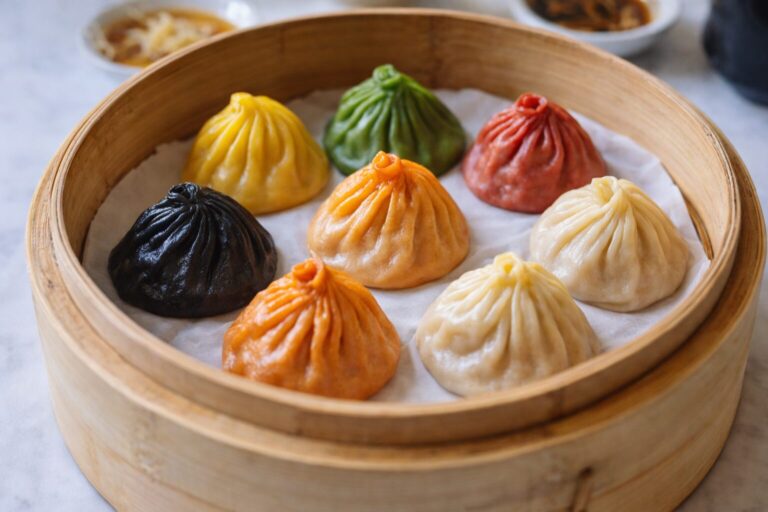
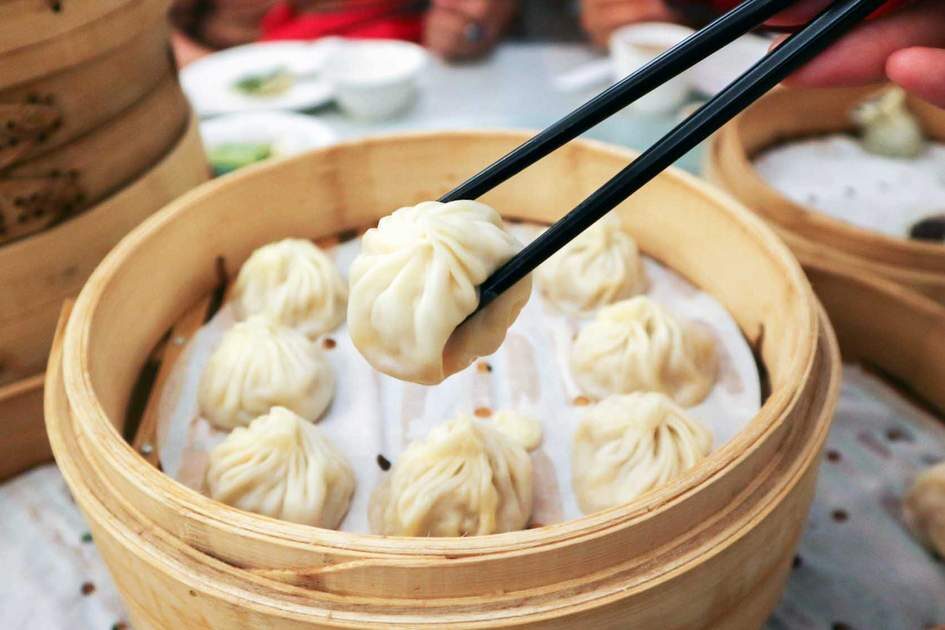
Tourists eat xiaolongbao.
Steam rises.
Phones lift.
But at some tables of local regulars,
a different main dish appears.
Pork chop egg fried rice, paigu dan chao fan.
Before the steamer’s heat,
the whiteness of the plate enters the eye.
A piece of meat sits on top, heavy and calm.
The same combination repeats across the room.
Some people say it directly.
Din Tai Fung is not a xiaolongbao shop.
It is a fried rice shop at the highest level.
A group trained for dim sum
outperforming wok specialists
can look slightly unnatural.
On the plate, it seems to hold.
The outline of Din Tai Fung
Din Tai Fung began in Taipei.
It is known for xiaolongbao.
Now it has branches across the world.
For a dim sum restaurant, the geography is unusually wide.
There are usually people outside.
Tourists and locals stand together.
Number tickets are handed out.
The line is processed.
Here, food is not the only product.
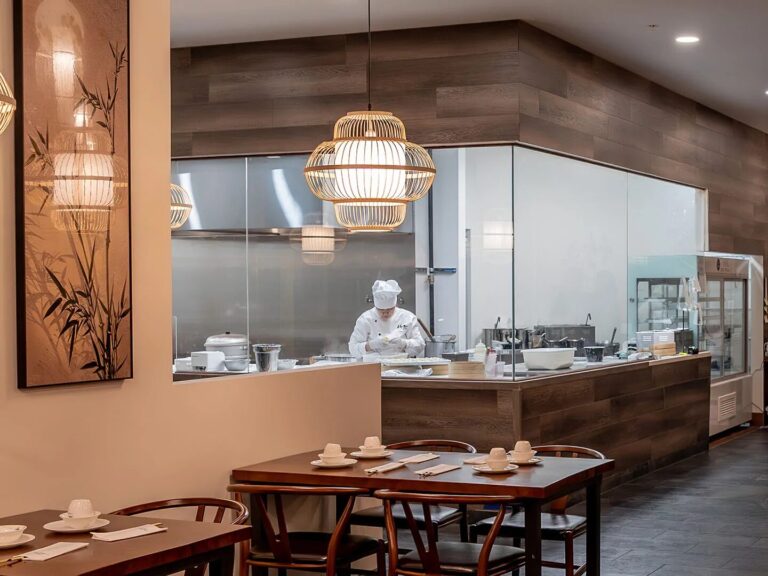
Operations are part of what is sold.
The same shape.
The same temperature.
The same rhythm.
Repetition becomes the brand’s frame.
In Taiwan, restaurants often swing by the day.
Taste and service shift with staff and mood.
Din Tai Fung reduced that swing on purpose.
That is why it worked overseas.
And overseas, it was reinterpreted as fine dining.

Why it is white
Many good fried rice plates are golden or brown.
Egg color.
Soy sauce color.
Fire color.
Din Tai Fung’s fried rice is unusually white.
And it is matte.
There is little shine from oil.
It is built through subtraction.
No soy sauce.
Seasoning stays with salt, scallions, and egg.
Oil is reduced close to the limit.
Even browning looks removed,
as if treated as noise.
The fragrance of the Maillard reaction
is left out on purpose.
Street specialists build flavor through addition.
More oil.
More seasoning.
More heat.
Din Tai Fung moves the other way.
It exposes the sweetness of rice itself.
It commits to that direction.
A specification wall that specialists cannot match
A street master shakes the wok by instinct.
Heat changes by the day.
Humidity changes by the day.
The result swings.
That swing can become charm.
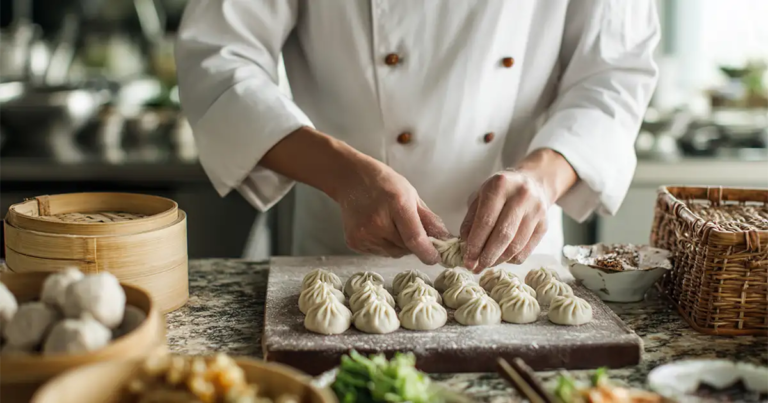
Din Tai Fung looks as if it shakes the wok by numbers.
The specifications feel slightly obsessive.
First, there is a fixed rice variety.
It is said they use Taikeng No. 9.
Sticky and sweet, close in feeling to Japanese rice,
but able to stay intact under stir-frying.
Even scallions feel standardized.
How they are cut.
The ratio of green to white.
It feels decided in advance.
Egg freshness is controlled.
There is said to be a time limit after cracking.
When I hear that, the kitchen begins to resemble a lab.
While specialists react to a good flame day by day,
Din Tai Fung keeps producing an industrial product
with a stable average.
That high baseline ends the contest quietly.
The partner on top: paigu
The fried rice itself is mild and clean.
That is why the pork chop matters.
Taiwanese paigu is different from Japanese tonkatsu.
There is no breading.
The meat is pounded to break fibers.
It is marinated, then fried.
There is no bone.
It moves toward softness,
almost to the point where teeth are unnecessary.
The plate is built on contrast.
Plain, separated grains.
Rich, juicy meat.
Eaten in turns, the mouth completes the taste.
The rice alone feels unfinished.
With the meat, it becomes whole.
It looks designed that way.
Why it can feel better than a specialist shop
In many specialist fried rice places,
the first bite is the best.
Then oil builds up.
The ending becomes heavy.
Din Tai Fung can reverse that.
Some people say the last bite is the best.
Because oil is restrained,
fatigue arrives later.
Even when it cools, the taste does not collapse.
It does not rely on the scent of the hottest moment.
It stands even as temperature drops.
That sensibility can feel closer
to Japanese rice culture than to Chinese cooking.
Not chasing aroma,
but tasting the grain itself.
People sometimes say this is why Japanese tourists respond so strongly.
I can see how that reaction happens.
A side dish that eats the main dish
On the menu, fried rice is a staple.
It could be called a side.
Its completeness still threatens the main attraction.
There is no charred wok fragrance.
No oyster sauce depth.
Only rice, egg, scallion, and salt,
placed in clean order.
Some people say you should eat one fewer xiaolongbao
and make room for this white plate.
Din Tai Fung does not push it forward.
Today again, under the shadow of steam,
the white dish keeps rotating
with quiet consistency.
— Detour —
a little further to walk
- Notes on Din Tai Fung as a Taiwanese Factory
- Notes on Din Tai Fung
- Notes on the Hidden Giant Behind Global Xiaolongbao