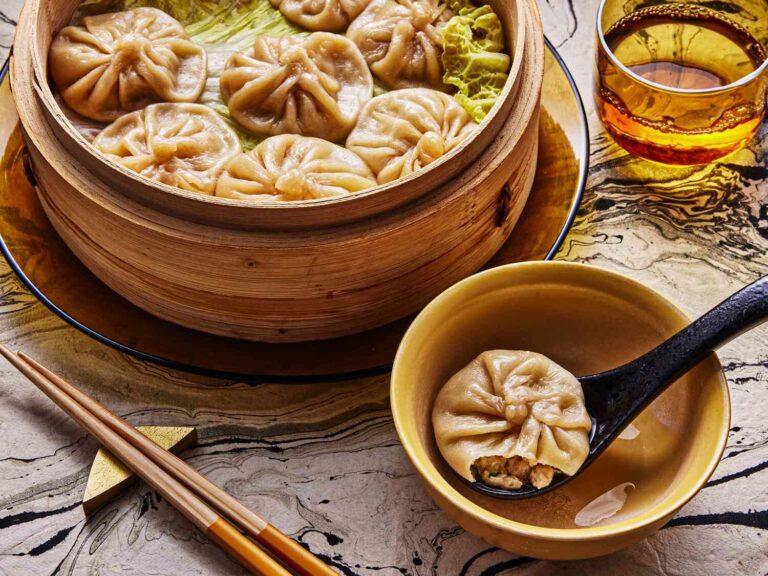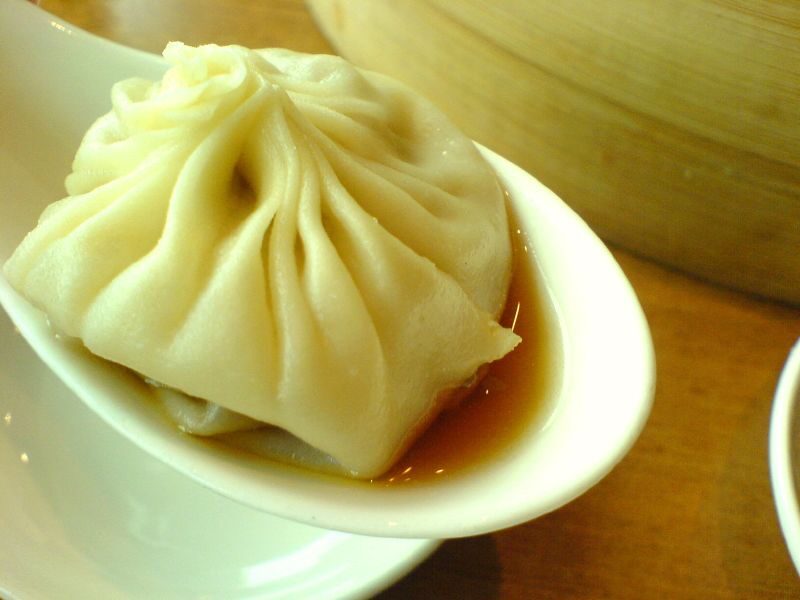
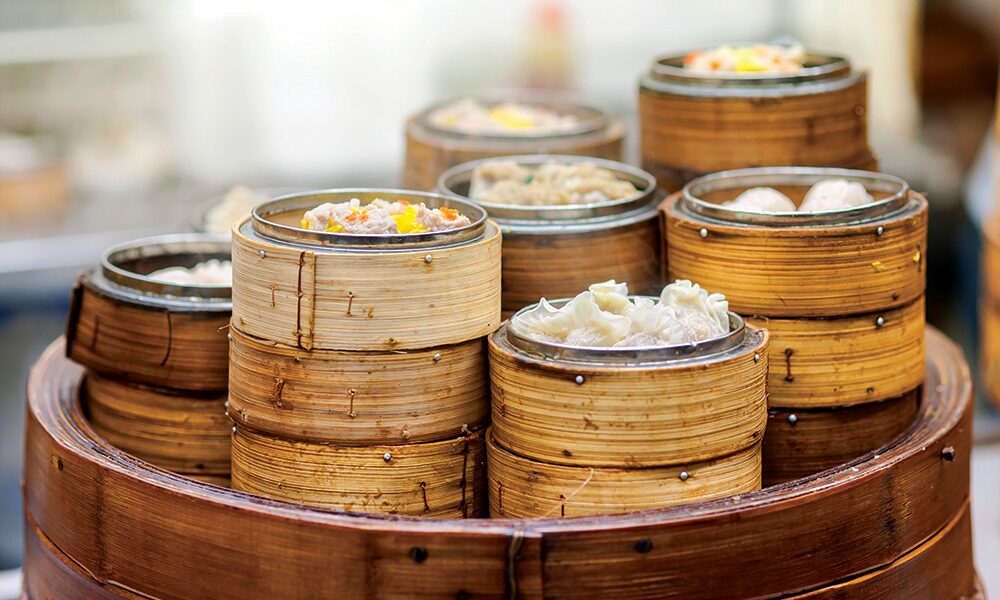
At a Din Tai Fung table, a steamer basket arrives with a spoon, shredded ginger, a sauce ratio, and a prescribed order of movements. The sequence is familiar enough to seem like the natural rulebook for xiao long bao itself.
I sometimes see articles about how to eat xiao long bao, the soup dumplings known locally as xiaolongbao.
Some people read them before a trip.
Others scroll through them while standing in a line.
The steps are usually the same.
Place it on a spoon.
Break the skin slightly.
Sip the soup first.
The instructions appear in a neat, repeatable order.
That order is not an old rule of Chinese dining.
It is closer to a method spread by one restaurant: Din Tai Fung.
A procedure designed to make this dumpling safe, and to deliver the taste as intended, has been circulated as the correct way to eat it.
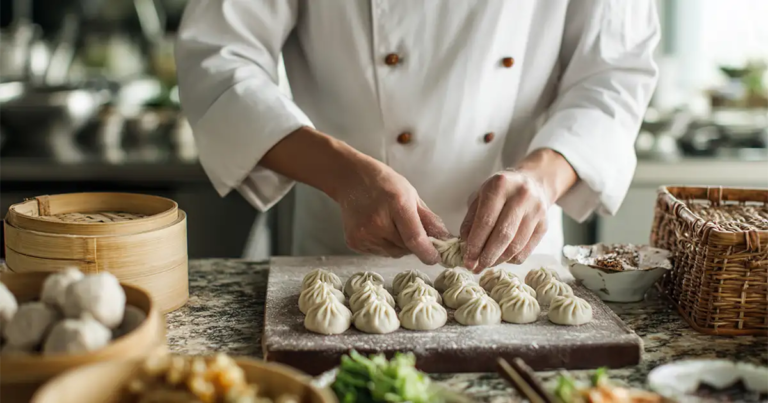

Designing an experience, not just a dish
Long ago, this dumpling was one item among many dim sum snacks.
It was eaten in Shanghai and in Taiwanese alleyways, mixed in with other small foods.
There was no clear rulebook.
Din Tai Fung’s contribution was not only to scale the dish globally,
but to prepare a way for anyone, anywhere, to eat it safely and consistently.
The goal was not to teach manners.
It was to guarantee the quality of the experience.
The restaurant gently guides the customer toward the way it expects the dumpling to be eaten.
Procedures that prevent accidents and standardize taste
From the moment a customer sits down to the moment they leave,
the sequence of actions inside Din Tai Fung tends to converge into a similar shape.
First, there is the sauce ratio.
Soy sauce one part.
Vinegar three parts.
It is often presented as a kind of golden rule.
The purpose is standardization.
Salt from the soy sauce brings out the sweetness of pork.
Vinegar cuts through the weight of fat.
By stating the ratio clearly, the restaurant reduces mistakes in seasoning.
Too salty. Too sour.
Small accidents are prevented before they happen.
Next, the spoon becomes a requirement.
You place the dumpling on the spoon.
On the spoon, a small dish is formed.
The purpose is safety, and the preservation of soup.
If you move it directly from the steamer to your mouth,
the chance of burning yourself rises.
On the spoon, the heat settles slightly.
A buffer is created.
The spoon also catches what leaks.
If the skin breaks and the soup escapes,
it does not disappear onto the plate.
The design ensures the contents can be taken in full.
Ginger is not decoration either.
It wipes the fat inside the mouth.
It works like a small wiper.
The purpose is to keep the eating continuous.
With ginger, the customer can keep going without dulling too quickly.
Controlling what is seen, and what feels clean
Din Tai Fung does not only organize the way the dumpling is eaten.
It also organizes the way the restaurant is seen.
The movements on the staff side follow a set of standards.
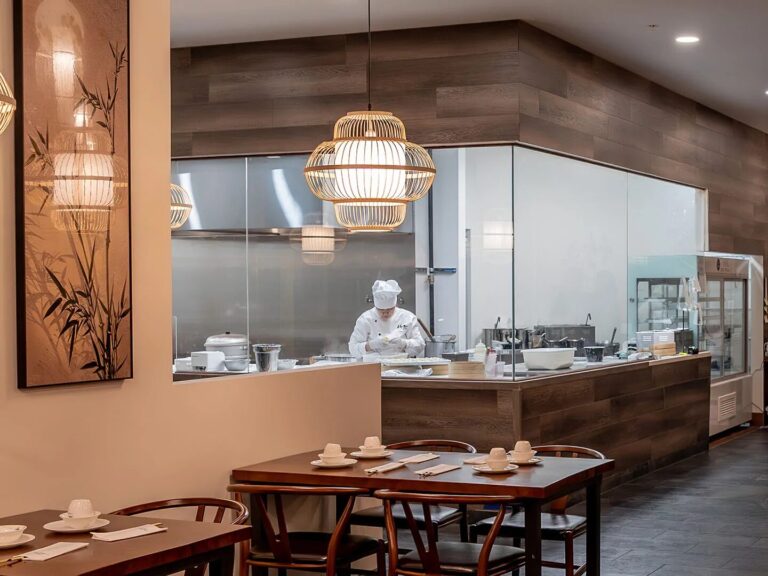
The most visible example is the show kitchen.
The kitchen is made transparent.
The purpose is trust.
Chinese kitchens were often treated as closed, and therefore suspicious.
Din Tai Fung turned the kitchen into glass.
Staff wear white coats, masks, and hats.
The making process becomes part of the product.
Safety is delivered as visual information.
There is also the handling of bags.
A brown cloth is often used.
The purpose is to prevent smells and stains.
By taking a customer’s bag and covering it,
the restaurant removes one small concern from the table.
Attention returns to the meal.
Even the speed of delivery is controlled.
When the dumpling cools, the skin hardens.
The fat in the soup begins to set.
So the time between serving and eating is kept short.
The floor staff’s routes, and their awareness, are designed around that.
Why rules were needed
There was a moment when the local had to be translated into the global.
A major turning point came in 1996,
when Din Tai Fung expanded into Japan, opening in Shinjuku Takashimaya.
A bun filled with hot soup was not familiar in Japan at the time.
And many people are sensitive to heat.
It had to be served safely.
That is where guidelines became necessary.
A comic-style instruction sheet was created.
So anyone could follow the same steps.
Because the method was rational,
it was brought back into the Taiwan flagship.
It settled into place as a global standard.
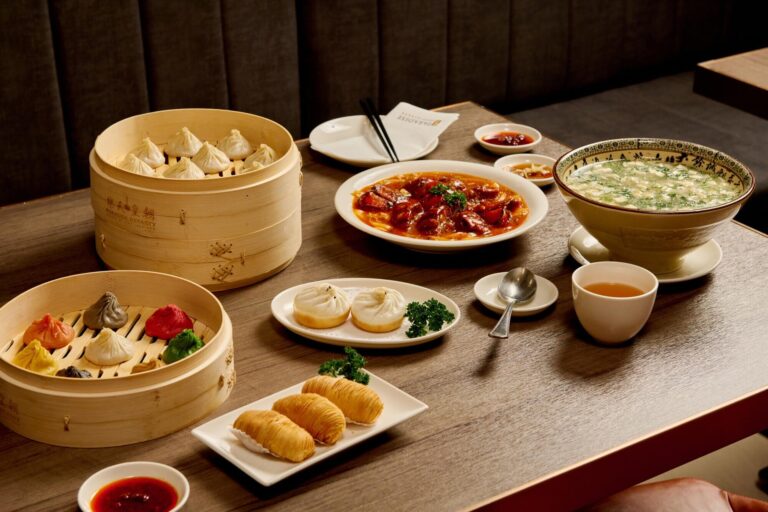
Xiao long bao as a sequence
What Din Tai Fung serves is not only pork wrapped in dough.
It is served at the right temperature.
Seasoned with an expected balance.
Carried to the mouth without injury.
The entire sequence becomes the product.
Because the procedure exists,
the dumpling can move beyond its local role as a casual snack
and be accepted across different cultures.
Somewhere in the city,
the same steps are being repeated again.
— Detour —
a little further to walk