A pot of blackness kept going since 1969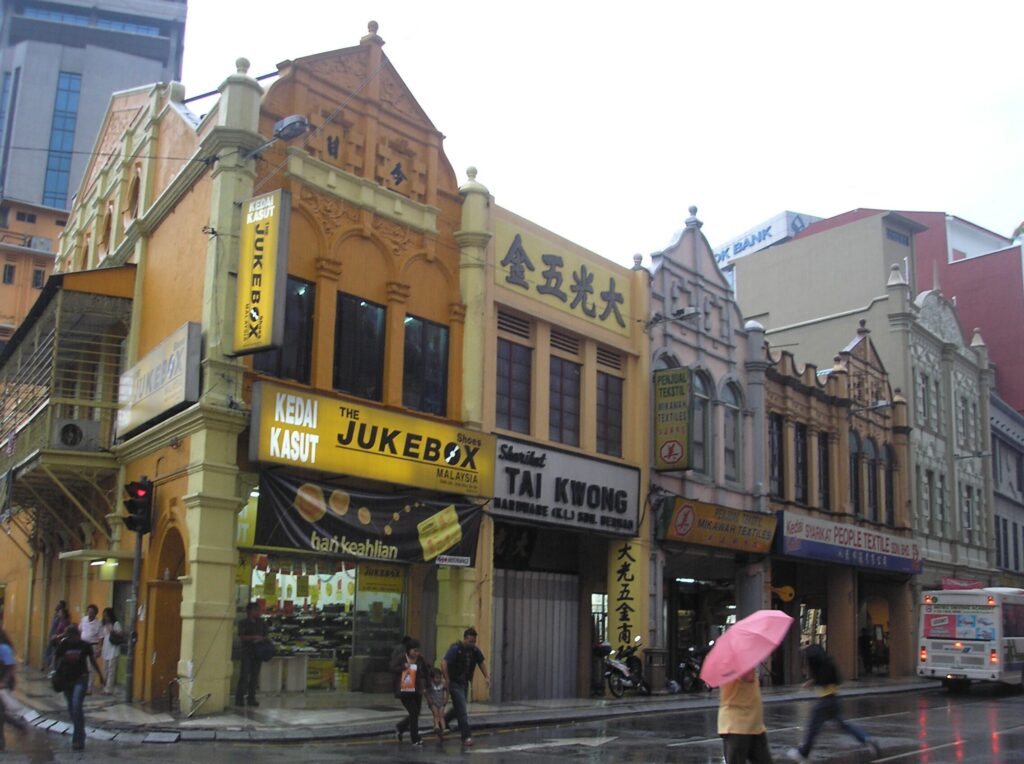
Jalan Tuanku Abdul Rahman.
People in Kuala Lumpur shorten it to Jalan TAR.
New buildings rise. Old shophouses remain.
Stalls leak out onto the sidewalk. Even at noon, the air feels heavy.
The street shows its older layers without trying.
Heat sits in place. The wind does not move through.
In one corner, a faded green sign holds its ground.
Kudu bin Abdul. Established in 1969.
It is not a place that calls customers with lights.
It is simply there. Then, without noticing, people are pulled in.
What you find here is not the bright kind of spice curry that follows trends.
It is heavier. Bitter. Sweet.
It tastes like something that has stayed in the city for a long time.
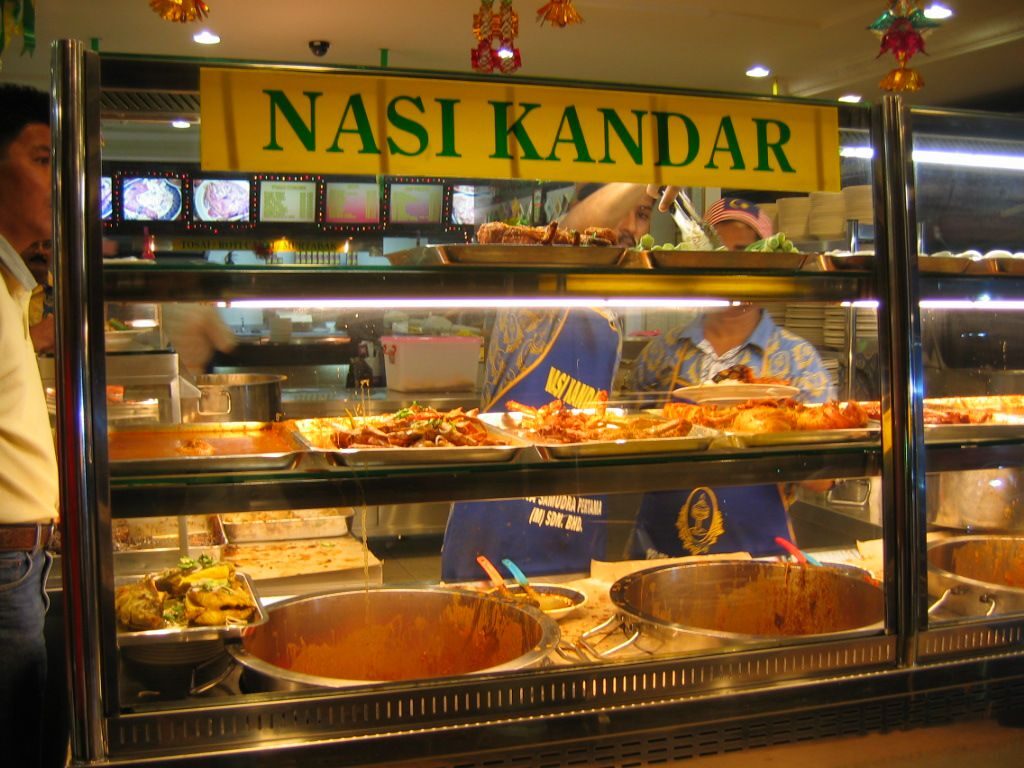
A shop where black arrives first
What makes Kudu feel like Kudu is the color.
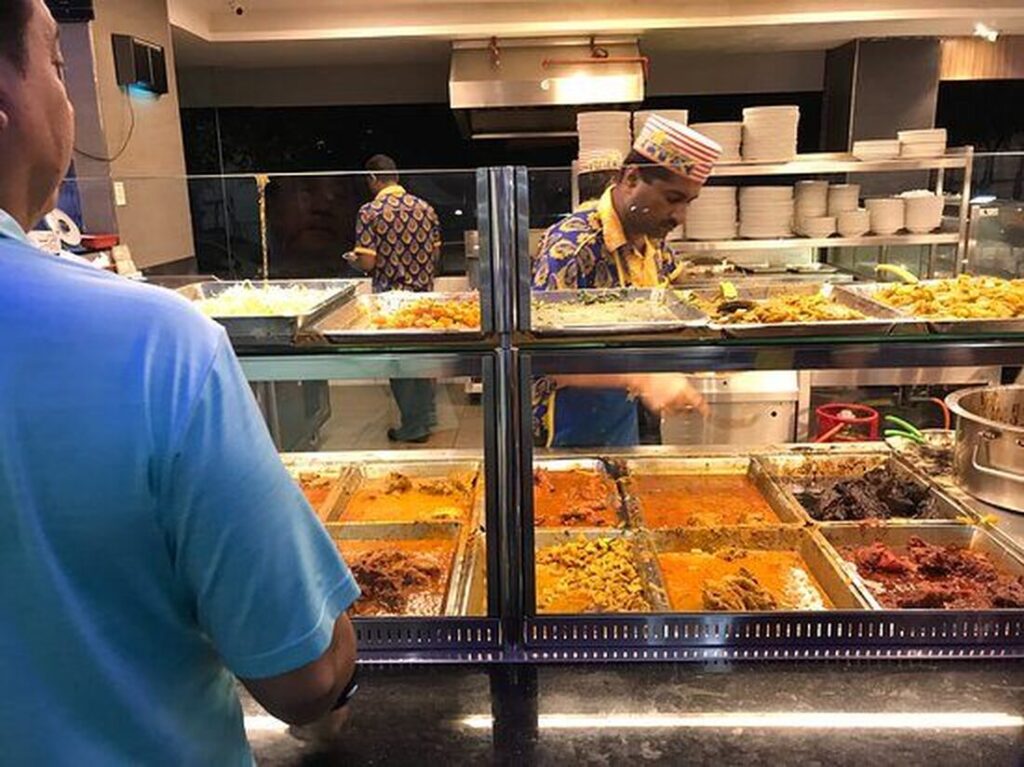
A nasi kandar plate is usually full of different tones.
Red sambal.
Yellow curry.
White rice.
Here, black comes first.
Ayam masak kicap, chicken braised in soy sauce.
Not the clean, glossy black of Japanese teriyaki.
This is a thick darkness, reduced with spice, oil, and soy until it turns viscous.
Closer to tar.
When it lands on the plate, other gravies lose some of their presence.
The eye is pulled toward the black.
In the mouth, sweetness arrives first.
Then a burnt bitterness comes late.
Chili stays at the end.
It feels less like a dish than a block of energy.
Like fuel.
This part of the city was once a working district.
The meal seems designed for that rhythm.
Calories and salt delivered quickly, without hesitation.
The blackness looks optimized for labor.

1969 as a date that remains inside the shop
Kudu began in 1969.
In Malaysia’s modern history, it is not a smooth year.
That year, Kuala Lumpur saw the May 13 incident.
After a general election, ethnic conflict expanded and people died.
A state of emergency was declared. The air of the city changed.
In that same year, the business moved from Penang to KL and opened here.
That fact sits at the entrance, quietly.
No one explains history inside.
There are no long captions on the wall.
Only the year remains.
1969 carries weight behind the sign.
A shophouse that still follows old grammar
The space obeys the logic of an older shophouse.
A narrow frontage. A long interior.
An old ceiling fan turns above.
Slow rotation. Mostly sound.
Faded photographs sit on the walls.
Some look like they belong to no one.
The floor is well kept, but not polished into shine.
It holds layers of oil and time.
Outside, redevelopment continues. Chains appear and multiply.
Inside Kudu, the room does not move much.
No renovation. No new system.
That lack of change becomes an anchor.
Some people return not only for taste,
but for the time that the room preserves.
Shared tables and a practical kind of harmony
In a small room, sharing a table is normal.
Even if there is an empty seat, people compress the space.
A Malay civil servant.
An Indian trader.
An elderly Chinese man.
A traveler, mixed in.
There is not much conversation.
Hands move. That is enough.
This is not muhibbah as a political slogan.
It is harmony as daily practice.
The reason is simple.
They want to eat here.
For the length of lunch, ethnicity and religion become thinner.
Only temporarily.
That temporary quality matters.
It is not an ideal meant to last forever.
It is a working arrangement for one meal.
And it functions.

Plating as a kind of craft
At the counter, there are experienced staff.
They are often called joki.
They build a plate with no wasted motion.
They look at a face and decide the amount of rice.
They choose a cut of meat without hesitation.
The work is not measured.
It is judged.
Still, the result does not vary much.
One gravy goes on.
Another follows.
And at the end, the black is placed.
Banjir.
A word that fits. Flooding.
Before the flavors fully merge on the plate, the eating begins.
There is no time to let it become one uniform brown mass.
Speed is part of the design.
Not for efficiency alone,
but to finish before everything collapses into the same taste.
The weight that remains after the meal
After eating, I step outside.
The heat of the street feels slightly cooler than before.
There is fullness.
There is sweat.
The weight left in the stomach is not only physical.
It feels mixed with fifty years of habit, and the conditions of this place.
Kudu is close to a reference point for nasi kandar in Kuala Lumpur.
It is not a showpiece.
But once you know this baseline,
other curries in the city look different.
Inside the older layer of Jalan TAR,
the black gravity continues to turn, without stopping.
Restoran Nasi Kandar Kudu Bin Abdul
— 335, Jalan Tuanku Abdul Rahman, Chow Kit, 50100 Kuala Lumpur
— 10:00–22:00 (until 20:00 on Sundays)
— About a 5-minute walk from Monorail “Medan Tuanku” station