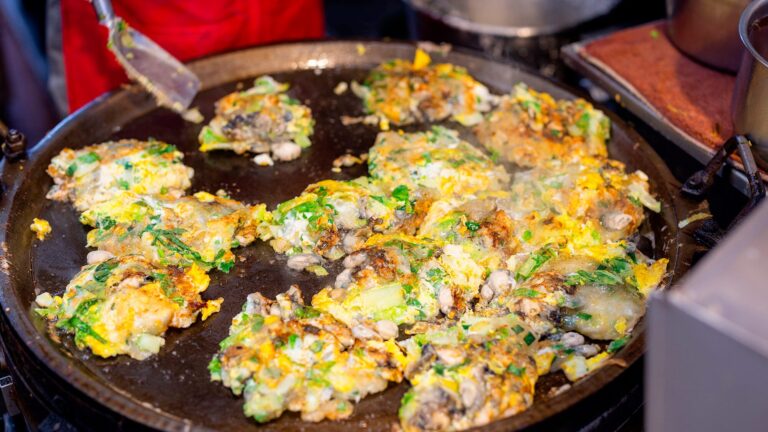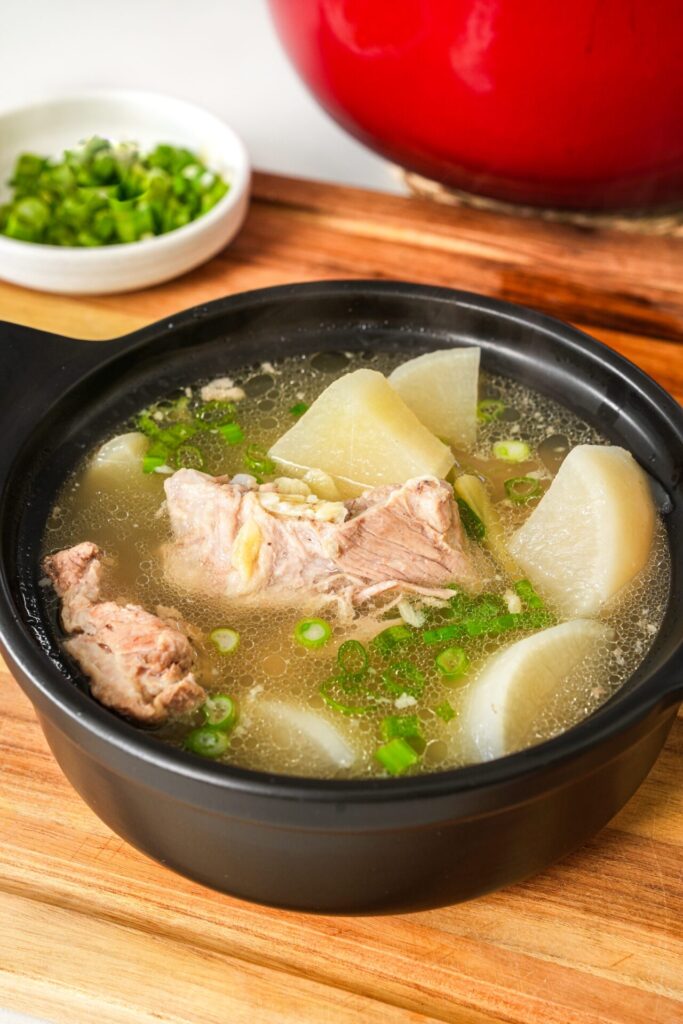
A small Taiwanese diner may list paigu soup as a single item, but the bowl that arrives can be almost transparent or clouded reddish brown. The pork ribs, the broth, and even the way the dish fits into a meal change with that color.
On the wall of a small diner, the menu reads only one line: paigu soup.
From that alone, it is impossible to know what will arrive.
It may be a clear, pale broth.
Or a bowl clouded in reddish brown.
Paigu soup in Taiwan has two faces from the beginning.
They are not variations in seasoning or strength.
They are different dishes, with different origins and roles, placed under the same name.
Boiling and steaming
The lineage of the white paigu soup goes back to daily life among migrants from Fujian.
Pork was not abundant.
Lean meat was used elsewhere.
What remained were bones and the flesh around them.
To waste nothing, these were placed in a large pot and boiled with daikon.
Boiling requires no special technique.
It allows large batches and rarely fails.
Paigu soup here was not a dish for attention.
It was closer to water, something always present.
The red version is newer.
It is said to have spread after the 1920s, especially around Taichung and Fengyuan.
Its starting point was paigu su, fried pork ribs.
Marinated in soy sauce and spices, coated in batter, then deep-fried.
Originally, it belonged to banquets and drinking tables, a dry snack.
For street stalls, this posed a problem.
Fried food loses value once it cools.
Hardening slows turnover.
The solution was to place it in a small bowl and steam it with soup.
Through steaming,
the batter breaks down,
the meat softens,
and time becomes less of an enemy.
Thus, fried ribs became soup.
The logic of the red bowl
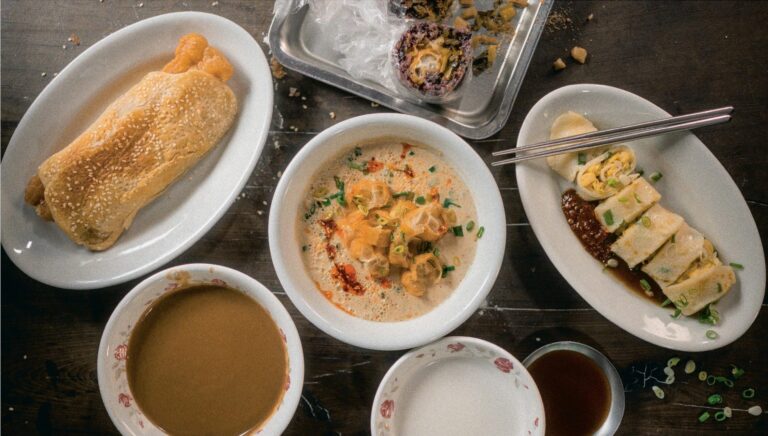
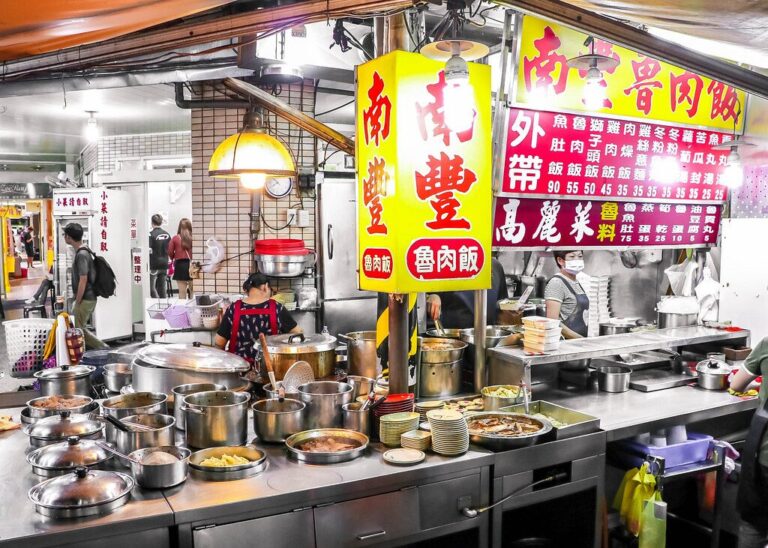
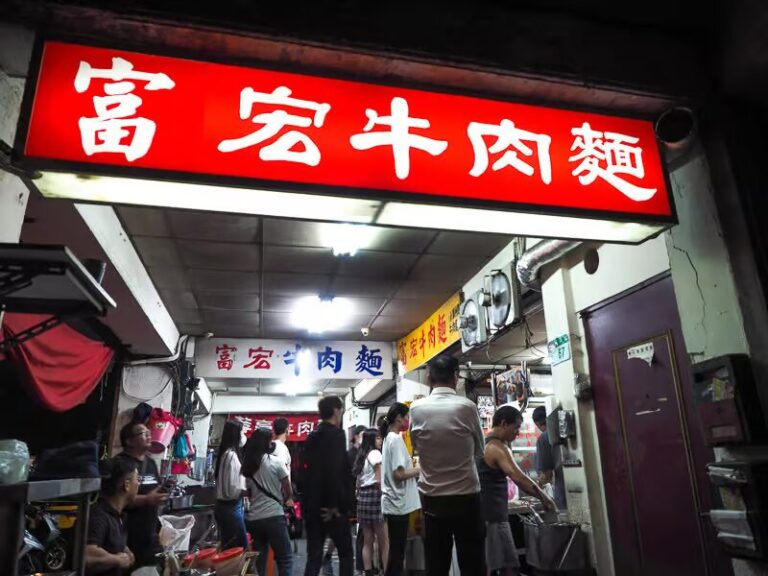
The red paigu soup, paigu su tang, makes sense in the context of night markets.
Fried meat.
Batter.
White pepper.
Winter melon or taro, half dissolved.
Elements that do not naturally belong together share one bowl.
The key is the collapse of the batter.
What should be crisp absorbs liquid and turns soft, almost trembling.
Clarity is not the goal.
Cloudiness is part of the appeal.
Oil and spice dissolve into the broth.
With each sip, layers of flavor press forward.
This is a night taste.
A bowl that overwrites fatigue and hunger through force.

The structure of the white bowl
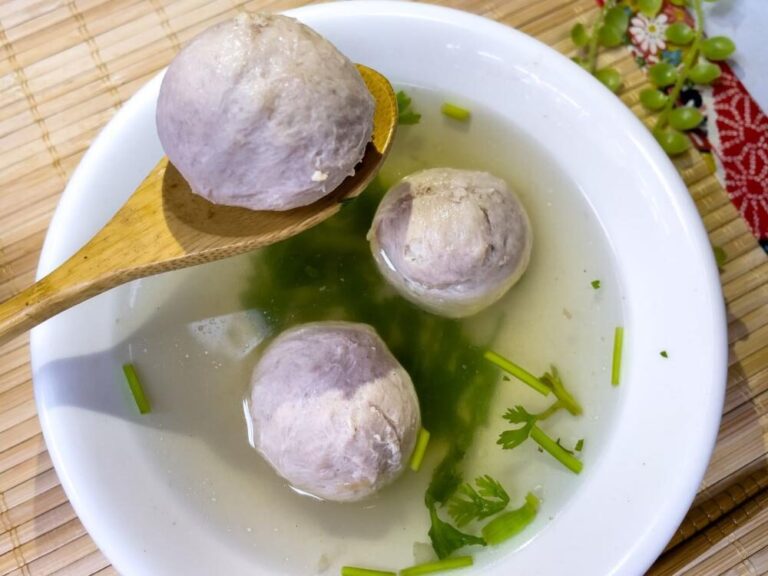
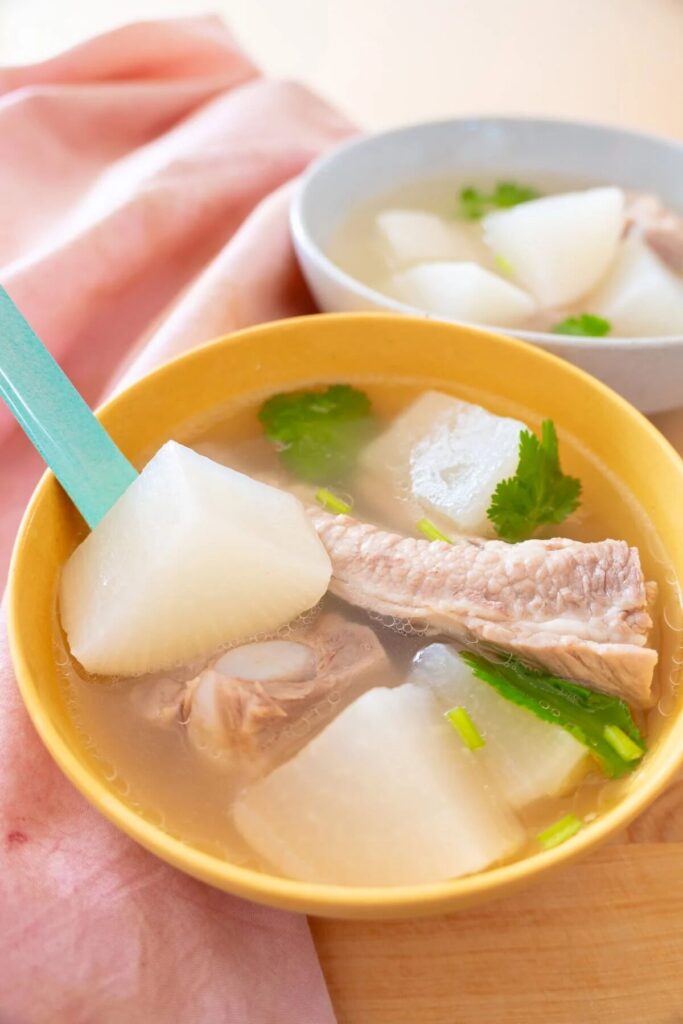
The white paigu soup is quiet.
Raw ribs and daikon.
Seasoning is limited to salt.
The pot is heated, scum removed, and time allowed to pass.
The broth stays nearly transparent.
Its aroma is restrained.
Here, the ribs are not the focus.
They are a medium for the soup.
The bowl is placed beside braised pork rice or fried rice.
It washes fat from the mouth.
It regulates the flow of the meal.
Eating around the bone
Whether red or white, paigu soup is a dish that confronts bone.
In the red version,
meat and softened batter are scraped from bone with the teeth.
In the white version,
the boiled, flavorless meat is dipped into a small dish of spicy soy sauce.
Only then does the rib become a meat dish.
The bones remain.
In the bowl, only structures that have finished their role are left.
Two functions
At night, when stimulation and oil are needed, red.
At midday, when balance is required, white.
Though they share the name paigu,
these two do not replace one another.
Paigu soup in Taiwan is not a single dish.
It is a name that holds two different tools, each used at a different moment.
— Detour —
a little further to walk