At lunchtime, a beef noodle shop’s menu may offer only two choices: hongshao or qingdun. The difference is not just the color of the broth; it sets the bowl on one of two distinct paths before the first bite.
Beef noodle soup (niurou mian) is now a common sight in Taiwan, in almost any city.
But its starting point was not a restaurant district.
It was the postwar military dependents’ villages known as juancun.
These were small communities formed by soldiers and their families who arrived from the mainland.
Inside them, regional food memories began to overlap.
Sichuan, Yunnan, Shandong, Qinghai.
Different tastes, carried separately, were forced to share the same narrow kitchens.
Over time, they adjusted to each other.
And the dish that emerged was no longer purely “from somewhere else.”
Taiwan itself had little tradition of eating beef.
Cattle were valuable for farming.
Using them as food was closer to an exception than a habit.
That an imported custom became something like a national staple is part of the story.
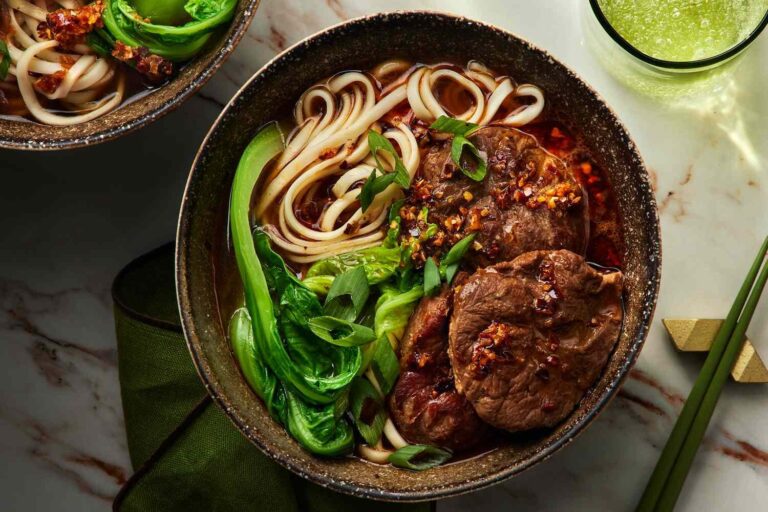

Two currents: red-braised and clear-broth
At lunchtime, the menu outside many shops is unexpectedly short.
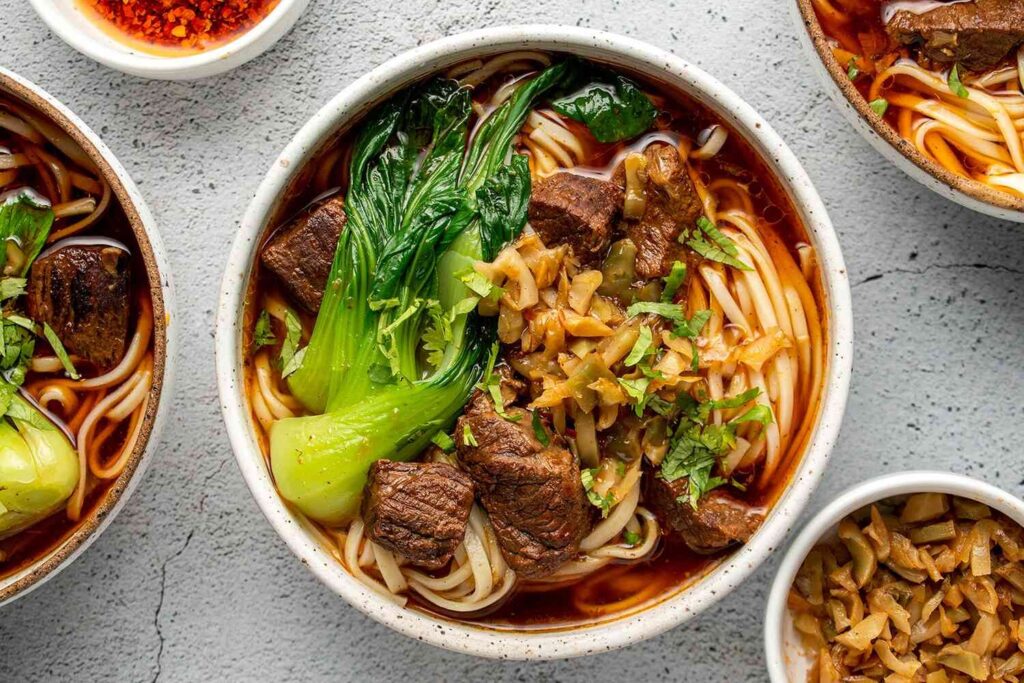
Hongshao beef noodles.
Qingdun beef noodles.
Few characters, but a clear split.
The bowl that arrives will have a different temperament depending on which one is chosen.
There are two broad lineages.
One is hongshao, built on soy sauce and warm spices.
It announces itself quickly.
The other is qingdun, a lighter broth that stays clearer on the tongue.
It leaves more behind after the last sip.
In juancun, these were not always separated so neatly.
Each household adjusted the balance.
Recipes moved by word of mouth.
They stayed slightly unstable.
Neither is more correct.
People chose based on their body that day, or the background of the person behind the pot.
So Taiwanese beef noodles do not have a single “right” taste.
It is normal for it to shift by city, by shop, by family.
A dish that settled with the city
The dish spread into the broader city, it is often said, during urbanization after the 1970s.
More people worked late.
More people needed meals that could be eaten quickly.
This dish takes time to prepare.
But once the pot is ready, it turns efficiently.
It could live as a street stall.
It could also fit inside a small shop.
In Taipei, the spices often lean stronger.
In Taichung, the direction can feel closer to herbal cooking.
In Kaohsiung, the broth may carry more weight.
Even under the same name, the taste drifted with the character of each city.
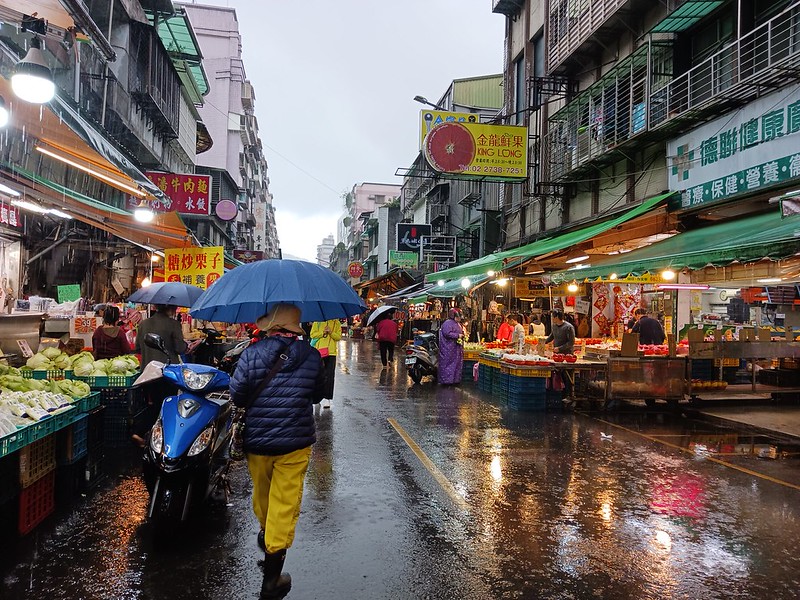
It appears near stations.
In residential streets.
Beside markets.
It changed shape to match the city’s tempo, and then sank into daily life.
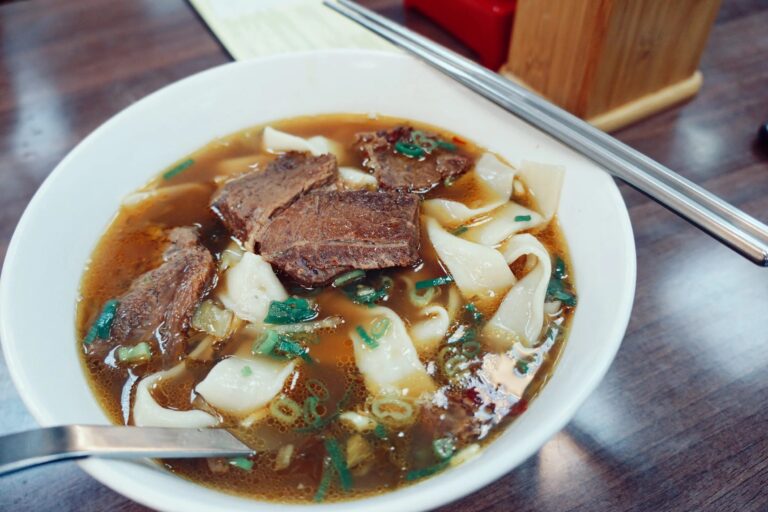
The bowl is finished at the table
This dish is not complete when it is served.
On many tables, small containers are waiting.
Pickled mustard greens.
Pickled chilies.
Chili oil, or a house-made paste.
These are not side dishes.
They are parts used to finish the flavor.
The pickled greens sharpen the outline of the fat.
They lighten the aftertaste.
The pickled chilies add not only heat, but a fermented edge.
In hongshao, they cut the heaviness.
In qingdun, they give definition.
Many locals do not add them at first.
They begin by tasting the shop’s baseline.
Then, halfway through, they adjust in small steps.
It is less like changing the flavor, and more like taking the bowl apart over time.
This is not a dish that is simply received.
It is a dish completed by the person eating it.
Beef noodles as a piece of scenery
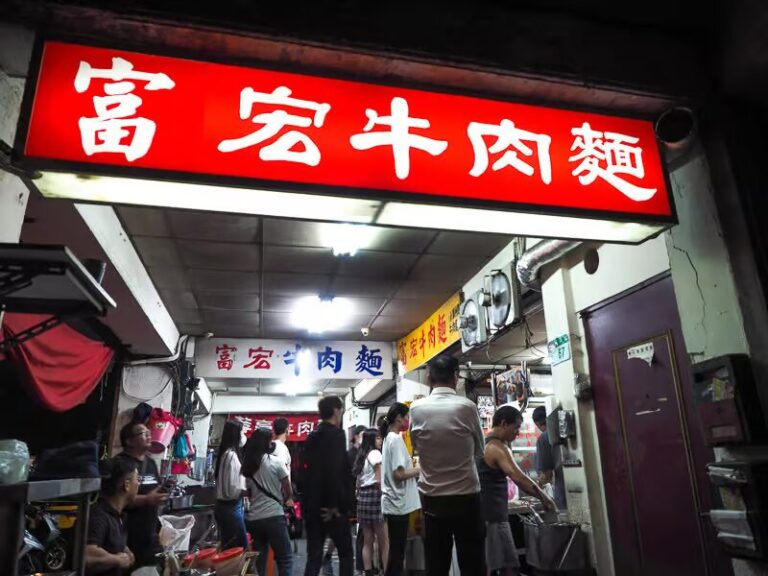
White characters on a red sign: “beef noodles.”
Steam rising from a pot near the entrance.
The sound of noodles boiling.
Bowls touching.
People eat without speaking much.
When they finish, they stand up without leaving any special comment.
It is no longer a dish one goes out to seek.
It is something that is expected to be there.
A postwar food memory arrived from elsewhere.
It was absorbed slowly into the city.
And now it exists without needing explanation.
— Detour —
a little further to walk
- Notes on Dry Beef Noodles in Taiwan
- Notes on Tomato Beef Noodle Soup in Taiwan
- Notes on Taipei’s Beef Noodle Arena