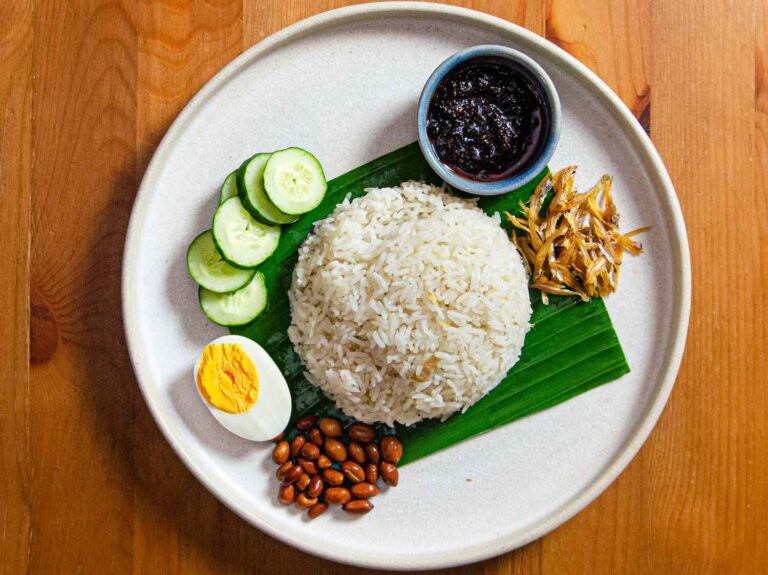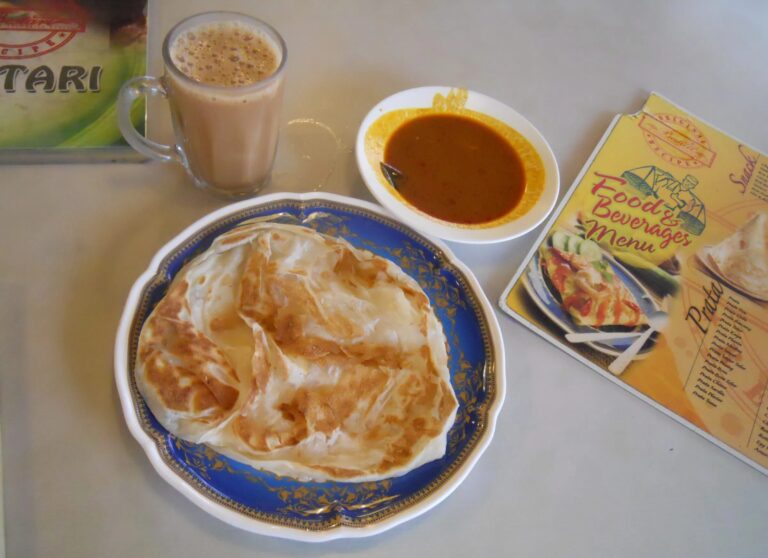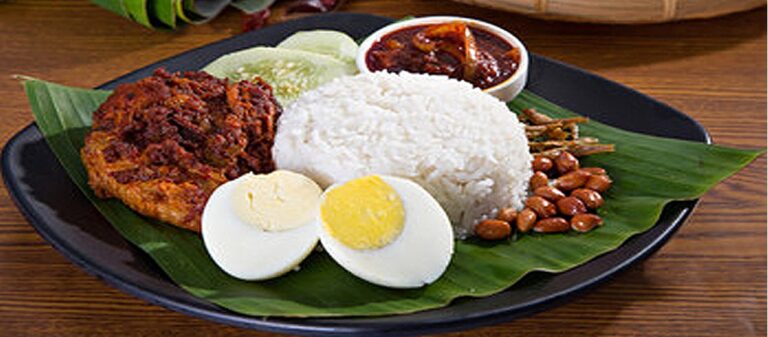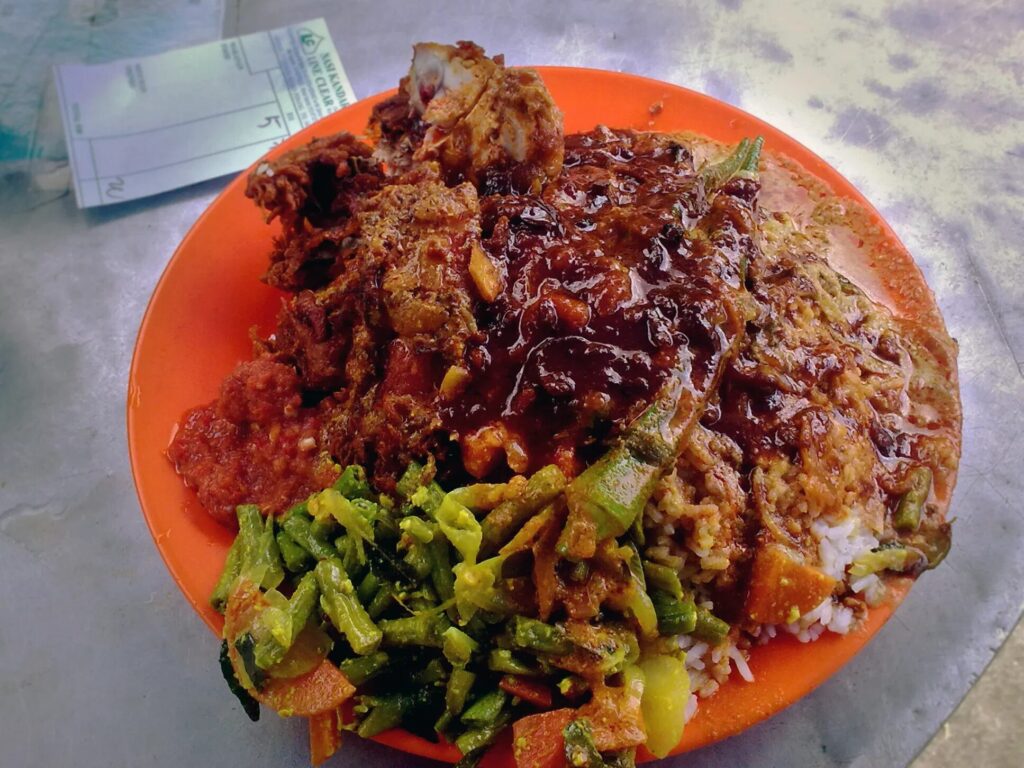
In Penang, nasi kandar arrives as a plate of rice buried under several gravies, while its name refers not to an ingredient but to a shoulder pole. The pole has disappeared from the shops, but something of its weight remains on the plate.
Most dishes are named after ingredients or places.
Chicken becomes chicken. Sichuan becomes Sichuan.
Nasi kandar is different.
Nasi is rice.
Kandar is the act of carrying with a shoulder pole.
It is not named after what it contains, but how it moved.
That suggests it began not from a shop, but from transit.
To understand it, it helps to imagine the weight of the pole first, before looking at the curry.

Penang in the nineteenth century
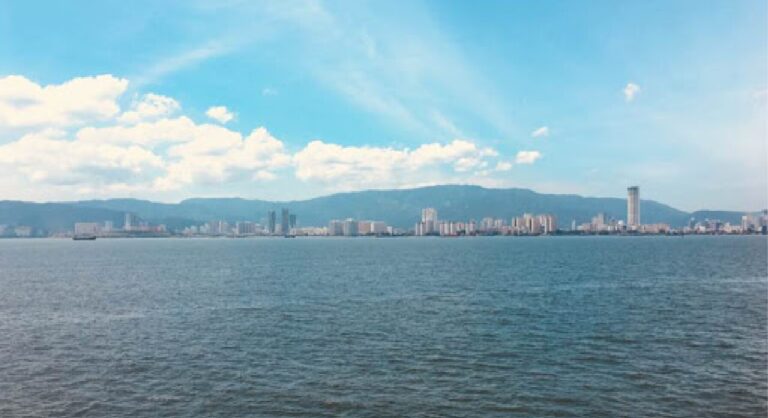
If the clock is turned back, the scene becomes Penang in the nineteenth century, the port of George Town.
It functioned as a relay point inside the British trade network.
Ships arrived. Goods were unloaded. They were moved into warehouses.
The labor was done by workers called coolies.
The tropical air was heavy.
Sweat did not dry.
The work was long, and the breaks were short.
In that environment, food was closer to fuel than to leisure.
It needed to be quick, filling, and salty enough to keep the body moving.
Indian Muslim migrants, often described as Mamak, are said to have noticed this.
They did not only sell food.
They sold a way to support the working day.
Why it had to be carried
The vendors did not begin with proper storefronts.
They had little capital and no land.
It was more rational to go where the customers were.
Around the port, people gathered in the daytime and dispersed at night.
A fixed shop would have too much empty time.
So the shop moved.
Pots, rice, and plates moved with it.
The meal was brought to the place where labor was happening.
This is where kandar becomes necessary.
A pole rests on the shoulder.
Baskets and pots hang from both ends.
Rice on one side. Curry on the other.
The load is split left and right, and balance becomes a way to escape weight.
It is simple. But repeated on tropical streets, it turns into a kind of engineering.
If the walking rhythm breaks, the pot swings and the liquid spills.
If the center of gravity shifts, the shoulder fails.
The carrier learns a particular tempo.
The starting point of nasi kandar was not a kitchen.
It was walking.
A dish shaped by constraints
A meal that must be carried has limits.
Those limits decide its structure.
First, it needs liquid.
Plain rice is hard to eat quickly.
It requires a sauce.
Next, it needs heat.
Mobile selling carries the problems of hygiene and spoilage.
Keeping the pot hot is also a form of preservation.
And the flavor becomes dense.
Salt and spices help keep food stable.
Oil holds heat and traps aroma.
The richness may not be the result of luxury.
It may be the result of adaptation.
It is not spicy because it wants to be spicy.
It is not heavy because it wants to be heavy.
The premise of carrying made it so.

Curry as fuel for labor
Nasi kandar is often described as food that supported port workers.
A worker’s meal has conditions.
It must be cheap.
It must be fast.
It must fill the stomach.
Rice is cheap.
But rice alone is monotonous.
Curry adds flavor, and oil raises calories.
Meat is costly, but even a small portion gives satisfaction.
Beans and vegetables add volume at low cost.
Spices also help with keeping.
The plate seems to have been assembled around the needs of work.
In the end, it became a kind of edible calorie calculation.
The customer did not think about nutrition.
The question was only whether the afternoon could be endured.
When mixing becomes the rule
One feature often mentioned is the mixing of several gravies.
The word used is kuah campur.
Kuah refers to sauce or cooking liquid.
Curry gravy, stew juices, the liquid that wets the plate.
Campur means to mix.
Kuah campur is a signal.
Not one curry, but several, mixed and poured together.
The mixture creates complexity.
Red heat.
Yellow softness from lentils.
Black sweetness.
Each one alone can be too sharp, or too flat.
Together, edges soften and the outline becomes thicker.
What is notable is that mixing is not an accident.
It is a practice.
This is not a dish that begins as a finished form.
It is built on the assumption that boundaries will disappear.
Ordering a flood
Another word is heard often.
Banjir.
It means flood.
Enough gravy to sink the rice.
It can look excessive.
But in this context, it becomes the completed state.
The island of white rice disappears.
The plate turns into a brown sea.
The flood is not indulgence so much as function.
Dry rice goes down faster with liquid.
Dense flavor spreads more evenly with volume.
The flood is not impulse.
It is a tool.
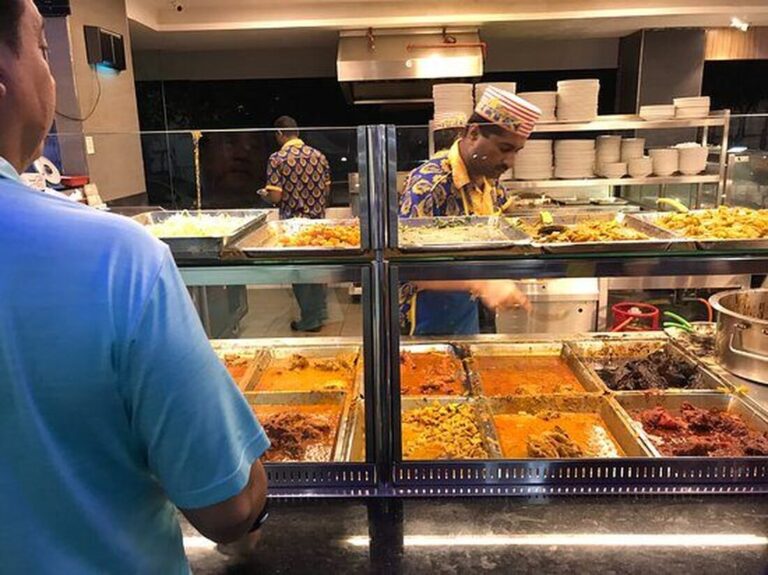
From street to shop
Time moved forward.
Traffic increased.
Hygiene rules tightened.
Street hawking became difficult.
From around the 1970s, the dish is said to have moved under roofs.
A kopitiam edge.
A market corner.
Then independent shops.
When carrying was no longer required, the pole disappeared.
But the form remained.
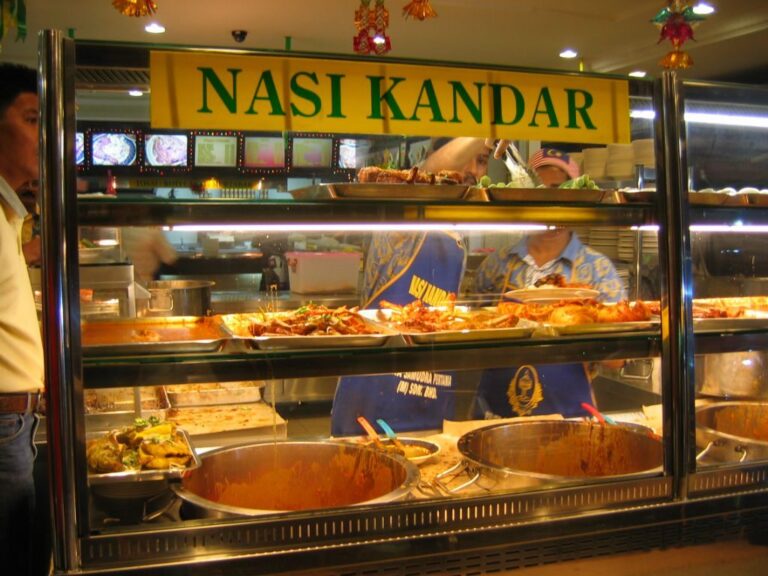
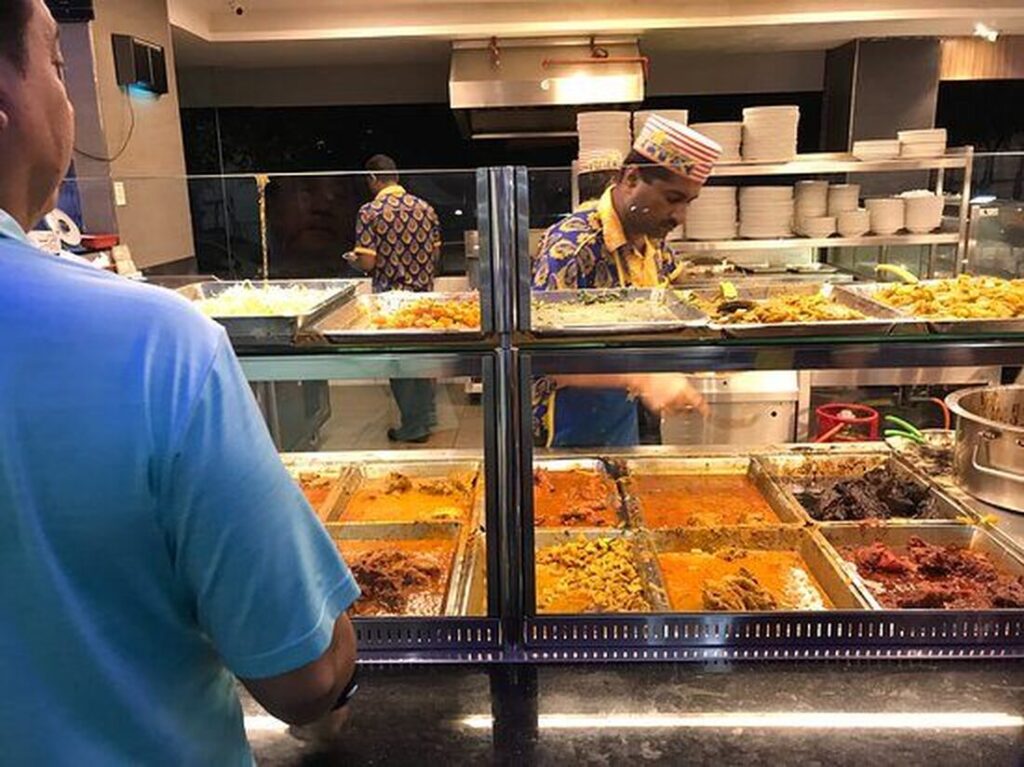
The pots lined behind glass resemble the old baskets, rearranged.
Customers stand in front and point.
Gravies are mixed.
The method of transport vanished, but its logic settled into the structure of the shop.
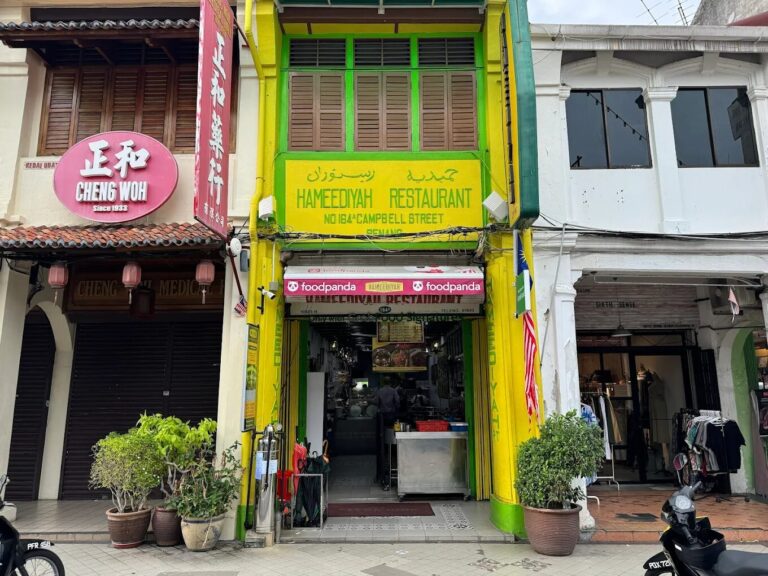
The time kept by an old shop
One of the oldest names often mentioned in Penang is Hameediyah.
It is said to date to 1907.
Following its history reveals more than a restaurant.
It shows layers of migration and commerce.
There are stories about spices turning from trade goods into cooking.
Spices were merchandise, necessity, and preservation technology.
A pot sits at the end of that line.
The colors of the food are not bright.
They resemble the port itself.
Oil, dust, and sweat.
The transitional phase under a tree
Between carrying and storefronts, there is said to have been a middle stage.
Selling under a tree.
There is shade.
People gather.
Fixed costs remain low.
This form is sometimes described as the origin of a style called bawah pokok.
Not a full cart.
Not a full shop.
Only a pot, rice, and people.
Food is often born in the gaps of a city.
The reason for density still remains
Modern nasi kandar can be found in air-conditioned spaces.
Inside shopping malls.
In chain stores.
But the flavor does not thin out.
Oil remains heavy.
Gravies remain dense.
It can be explained as tradition.
But tradition is too convenient.
It may be more natural to see it as design that once worked as fuel for labor, still intact.
This dish sits closer to working culture than to cuisine.
A pole that cannot be seen
When I eat it now, the shoulder pole is not visible.
No one carries it.
Neither the staff nor the customer.
Still, the name keeps the act of carrying.
Nasi and kandar.
On the plate, gravies mix and boundaries disappear.
The disorder does not feel accidental.
It looks like a form produced by movement and work.
One sweats while eating it.
Not only from heat, but from weight.
The pole is gone.
But it remains inside the dish.

— Detour —
a little further to walk
- Notes on Hameediyah, Penang’s Oldest Nasi Kandar
- Notes on Mamak Culture Born in Penang
- Notes on Nasi Kandar in Malaysia