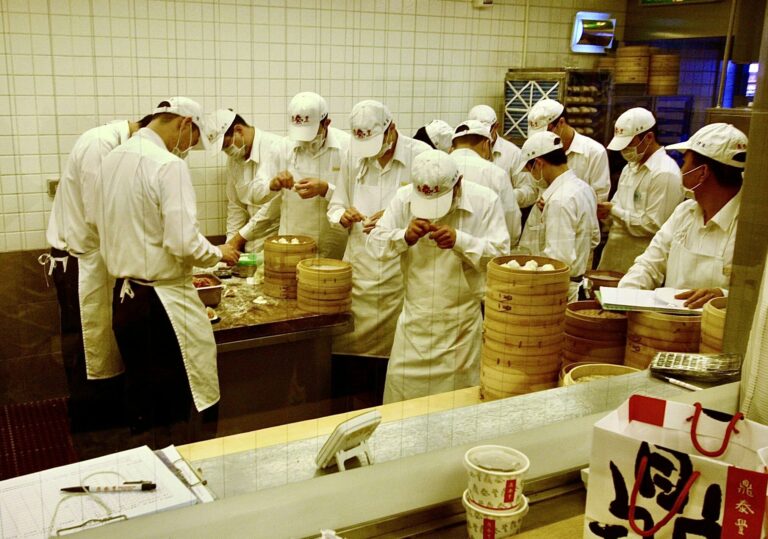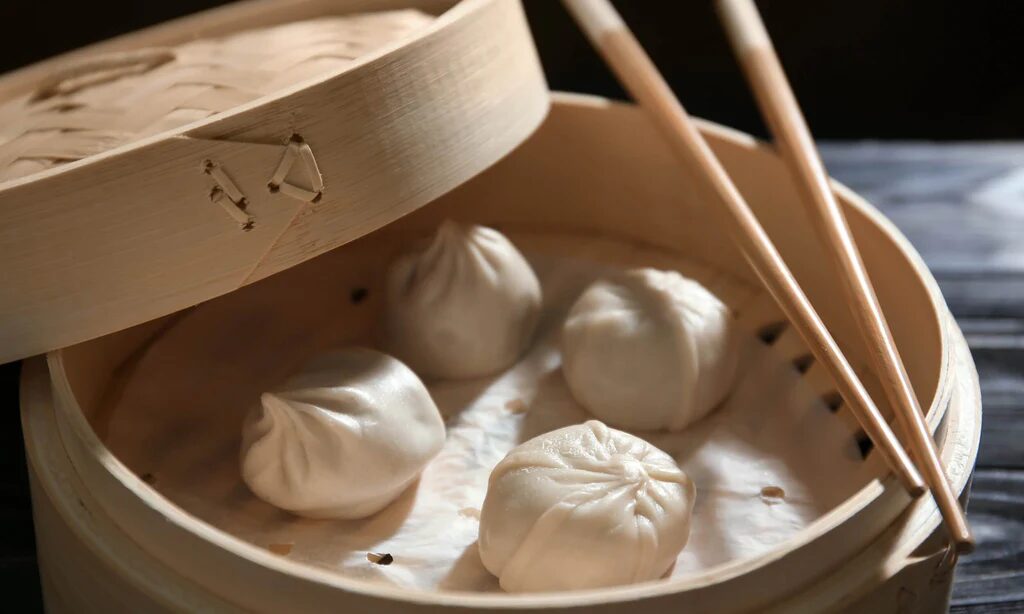
At Nu Sentral, the familiar Din Tai Fung sign appears with one small change: DIN by Din Tai Fung, and a notice that no pork is used. Inside, the xiaolongbao still arrive in neat baskets with eighteen folds, but the smell rising from the steamer is different.
I walk through Nu Sentral, connected to KL Sentral.
My pace is the pace of a transfer.
I drift along the mall corridor.
A familiar logo appears.
Din Tai Fung.
The white sign and the neat typeface arrive first.
Then something is slightly off.
The name reads DIN by Din Tai Fung.
The face is the same.
Only the business card has changed.
At the entrance, a notice says no pork is used.
In this city, it is not a rare line.
Seeing it under this logo makes me pause.
The Din Tai Fung system
Din Tai Fung is known as a Taiwanese dim sum chain.
The ordering axis usually leans toward the steam basket.
The air is uniform.
The lights are bright.
Floors and tables look carefully wiped.
Cleanliness arrives before the smell of oil.
The delivery of food is controlled.
Baskets arrive hot.
The thinness of the skin looks consistent.
The folds line up.
A place like this is reassuring when traveling.
Taste is predictable.
Price is predictable.
Mistakes in ordering are rare.
That is why the difference stands out when something changes under a similar sign.
The more similar the surface is, the more the missing smell remains.
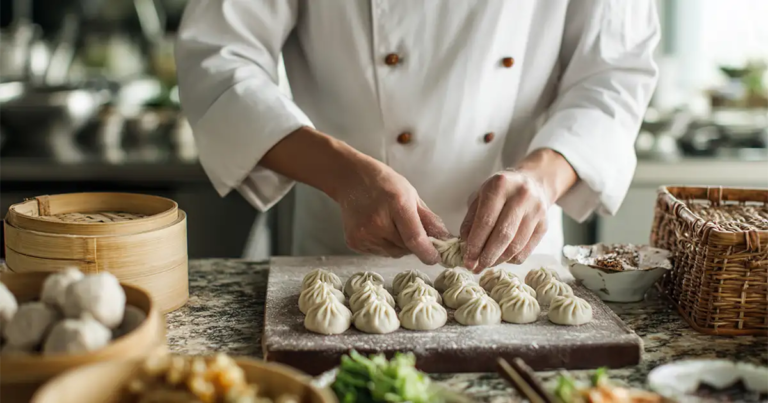

The pale gap and eighteen folds
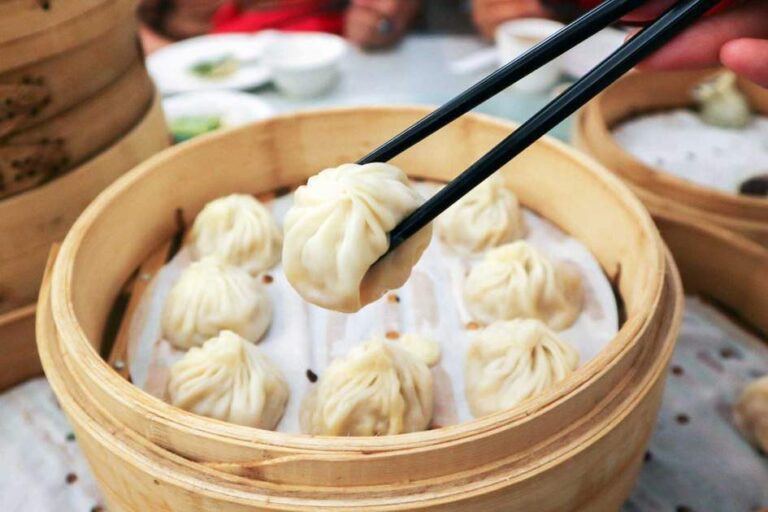
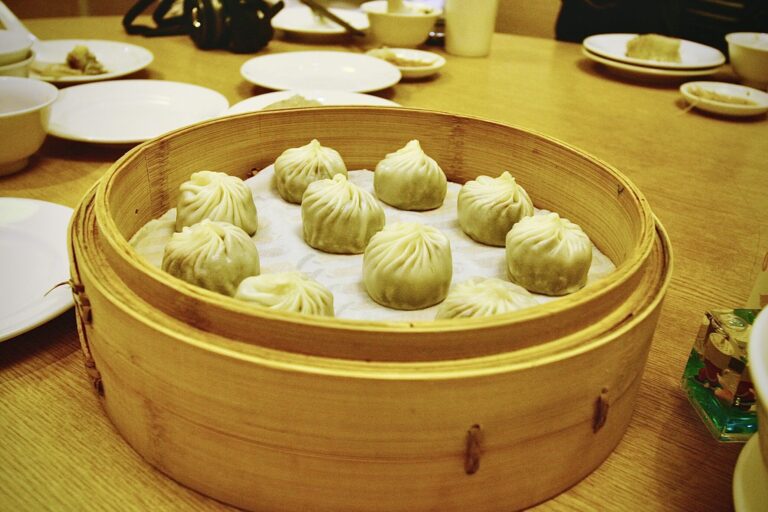
I open the bamboo steamer.
Steam rises.
The pieces appear in their usual shape.
Eighteen folds, often treated as a standard.
A skin thin enough to look translucent.
They sit with almost the same face as Taipei.
But when I bring my nose close, a certain smell is absent.
A sweet animal note.
The fragrance of lard.
It is missing.
This is not Din Tai Fung in the usual sense.
It is DIN by Din Tai Fung.
It is a branch built for Malaysia’s Muslim market.
No pork is used at all.

What pork does in xiaolongbao
What is the soup inside.
It is gelatin from pork skin and fat that melts under heat.
In that sense, the core is pork itself.
Making a pork-free version touches the definition.
It is like making sushi without fish.
Or baking bread without wheat.
Chicken, ayam (Malay for chicken), is capable, but it is not pork.
The melting point of fat is different.
The viscosity of gelatin is different.
A simple replacement tends to slide into dryness, or into a soup that will not set.
Rebuilding with chicken
DIN’s answer is a full shift to chicken.
Pork is removed.
The structure is rebuilt.
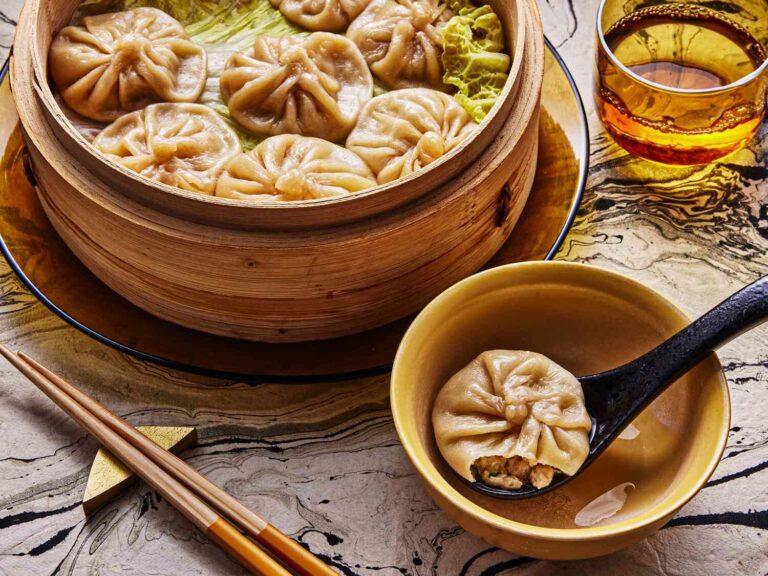
The soup feels thinner than the pork version.
The color leans closer to gold.
What replaces pork skin is not visible.
Chicken feet collagen, perhaps.
Or a plant-based setting agent.
I cannot say.
The texture is not the pork texture.
The filling can become plain.
So scallion and ginger are used more strongly.
The outline is drawn by aroma.
When I eat, it does not read as an inferior copy.
The heavy note and the faint pork smell are gone.
The whole thing becomes lighter.
For a moment, I hesitate over what to call it.
Sometimes it looks like a different dish.
A parcel of chicken broth, dressed in the same technique.
This looks less like localization.
More like opening another entrance.
It is not adjusting toward local taste.
It is widening the conditions under which people can eat it.
Remove pork, and more people can eat it.
More people can enter the restaurant.
The range of the dish extends.
DIN looks like a response to constraint.
It also looks like a decision for expansion.
Hijab and chopsticks
I look around the room.
The scene differs from the pork-serving branch.
Women in hijab sit at tables.
They use chopsticks.
They break the skin over a spoon.
The movements are careful.
For strict Muslims, Chinese food has often been a distant world.
Dim sum, especially, would have been.
There can be desire, and a barrier at the same time.
DIN thins that barrier.
Sometimes it looks like a diplomat.
It invites people into a cuisine that used to stay out of reach.
On the table, there is soy sauce, vinegar, and ginger.
There is no sambal (Malay chili paste).
The country’s red staple is not placed here.
Only the Taiwanese set remains.
It looks like an arrangement meant to keep the experience pure.
Two Din Tai Fungs
In Malaysia, two branches coexist.
One with pork.
One without.
The pork-serving Din Tai Fung becomes a kind of enclave.
The smell of lard lingers.
The expected taste is there.
DIN becomes a new open square.
Malay diners and tourists enter more easily.
Families from the Middle East sit down as well.
Which one is installed seems tied to the mall’s customer mix.
The calculation looks precise.
The same logo, and two different base designs.
Evolution or compromise
Long-time fans might say it is not xiaolongbao without pork.
Still, this pale steamed food changes shape with the environment.
It can look like evolution.
It can look like compromise.
Even with pork removed, skin and soup technique carry it.
Customers seem satisfied.
The brand’s underlying strength is shown in a roundabout way.
I leave my seat.
Outside, the corridor returns to its flow of people.
— Detour —
a little further to walk
- Notes on Halal Xiaolongbao
- Notes on Din Tai Fung and Its Global Expansion
- Notes on Xiaolongbao and the History Taiwan Inherited