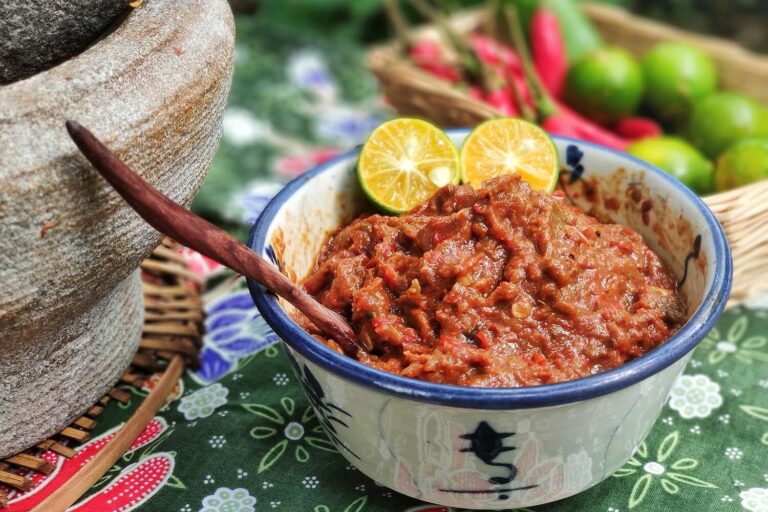
In Taiwanese diners, a cloudy brown paste sits beside the plates, looking more unfinished than appetizing. It gathers on white rice, clings to water spinach stems, and turns up wherever a plain meal needs more weight.
In Taiwanese diners, a brown paste often sits on the table.
It looks cloudy, almost unfinished.
Shacha sauce (shacha jiang) is not there to decorate anything.
It is there to thicken bland ingredients,
and to speed up the pace of white rice.
It rarely becomes the main character.
But some dishes only work because it exists.
It is neither sweet nor spicy.
Oil comes first.
Then garlic, dried shrimp, and fish powder.
What stays in the mouth is not a clean aroma.
It is closer to grit.
A texture of small particles.
In Taiwan, its popularity cannot be explained by preference alone.
The way it is used in daily life is already an answer.
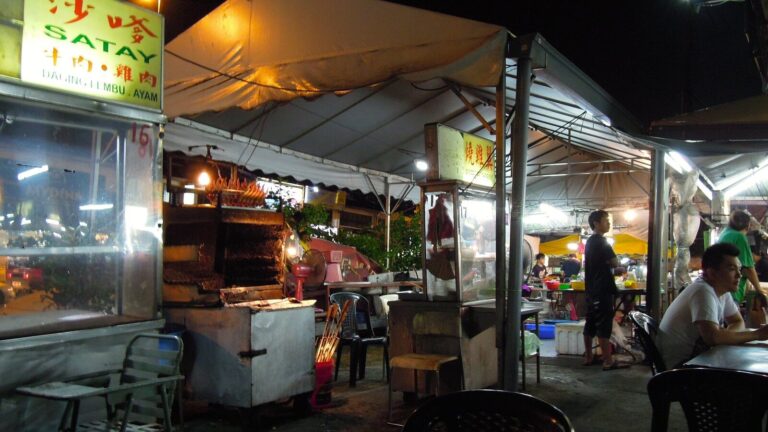

A talent for stealing rice
There is a phrase in Taiwan: bai fan sha shou.
A “white rice killer.”
Food that makes you eat more rice than you planned.
Shacha sauce is treated as one of the classics.
At its center is oil.
Garlic follows.
Then the layered umami of dried shrimp and dried fish.
On hot rice, the oil melts and coats each grain.
The rough particles remain on the tongue.
Even when there is not much meat,
one spoon is enough to keep the bowl moving.
It can look like Japanese yakiniku sauce in function.
But it is used more casually than that.
And it sits deeper inside daily meals.
Water spinach as a partner
When you order shacha beef,
it often arrives with water spinach.
It is not there for color.
The pairing feels structural.
The stems are hollow.
When you bite, they release water with a light snap.
Shacha sauce is heavy with oil and particles.
It does not always settle well on smooth leaves.
But the hollow stems and fibers catch it.
They hold the oil in place.
After stir-frying, the bite comes in layers.
First the green.
Then, a moment later, the oil and umami.
On a plate that could become flat with only meat,
it adds a second texture.
Water spinach is not just a side.
It becomes a place for the sauce to stay.
Four patterns across the Taiwanese table
If you line up the dishes that use shacha sauce,
a tendency appears.
Meat.
High heat.
Speed.
It shows up where these conditions meet.
It rarely belongs to long stews,
or dishes that build depth through fermentation.
Instead, it works when a flavor direction must be decided fast.
It feels less like “seasoning”
and more like a tool that thickens the outline of a dish.
Stir-frying: shacha beef
The most common form is stir-fry.
Shacha beef.
Shacha lamb.
They are cooked hard and fast over high heat.
The meat is seared.
The vegetables are pushed through.
Shacha sauce is added at the end, and the plate is finished.
It does not dominate like soy sauce.
It does not burn like chili paste.
But its seafood and spice layers fill the gaps of lean meat.
Under heat, the smell changes.
Right before it risks scorching,
the oil rises, and the garlic comes forward.
That short moment may be why it suits stir-frying.
Beef carries a strong lean smell.
In Taiwan, beef culture is said to be relatively recent,
less automatic than pork.
When shacha sauce enters,
the outline of beef is covered once,
and the garlic and seafood take the front.
It does not soften the meat.
It changes the nationality of the smell.
Simmering: shacha hot pot
In hot pot, shacha sauce is closer to a base ingredient.
Not a finishing condiment.
It dissolves into a clear broth or stock.
Meat, offal, and vegetables sink into it.
Even when the pot reduces,
the flavor direction stays stable.
In Chaozhou- or Shantou-style hot pot,
its presence is heavy.
The aroma becomes a thin oil film on the surface.
It keeps control until the end.
Instead of pushing with heat like Sichuan spice,
this pot pushes with thickness.
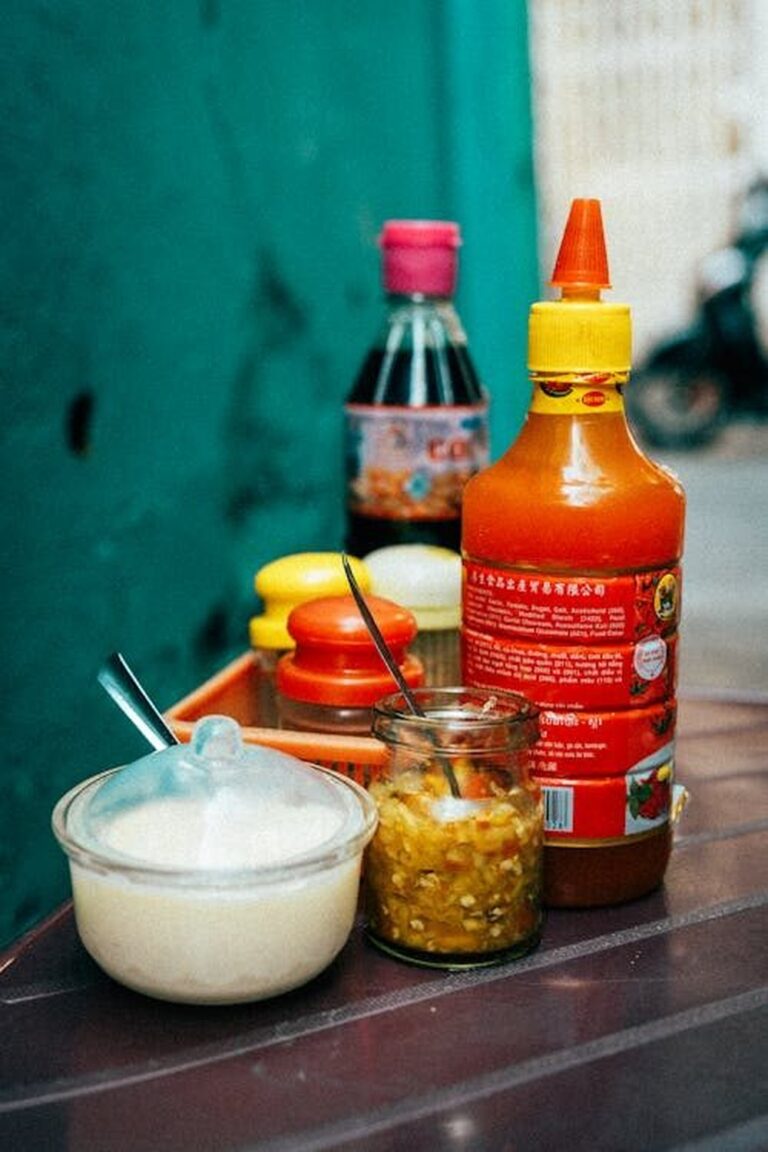
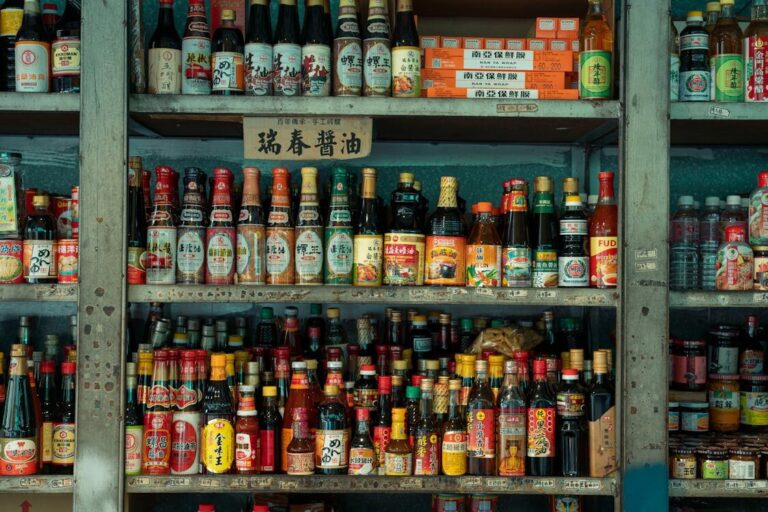
And hot pot shops usually have a sauce station.
A bowl of shacha sauce sits there.
Chopped scallions, garlic, chili, vinegar, and soy sauce line up beside it.
People mix their own ratio.
Each small dish becomes private.
Shacha sauce is not fully finished.
It is placed there as a half-product, meant to be adjusted.
That room for mixing
may be one reason it fits hot pot so well.
Mixing: shacha squid, shacha noodles
There is also a no-fire use.
Boiled squid served with it.
Dry noodles mixed with it.
Here, the sauce works less through roasted aroma
and more through texture.
The grit of dried shrimp and dried fish
arrives late in the mouth.
The ingredient’s heat alone loosens the oil.
The flavor is overwritten with minimal cooking.
Because the work is so simple,
freshness matters more.
It becomes a street taste with one stir.
It is convenient because multiple umami elements
are already inside it.
Dipping: shacha sauce with soy sauce and garlic
In Taiwan, it is often not used alone.
It is mixed with soy sauce, garlic, and chili
to make an instant dipping sauce.
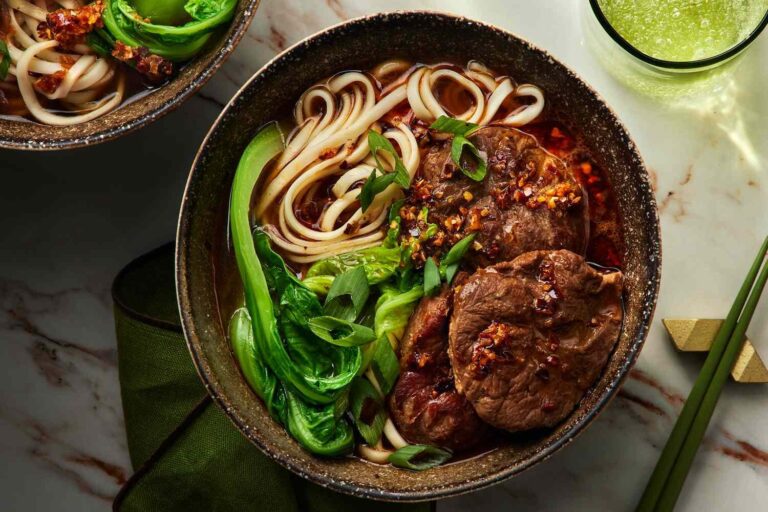
Beef soup.
Hot pot.
Offal dishes.
These ingredients are strong.
The sauce must be dense enough to meet them.
Shacha sauce becomes the core.
Soy sauce alone can feel thin.
Garlic alone can feel sharp.
Between them, shacha adds an oily seafood layer
that thickens everything by one step.
As people mix it in small saucers,
it starts to look less like a condiment
and more like a shared language
between shop and customer.
Some used to add egg yolk or raw egg.
Recently, that gesture seems less common.
Small customs disappear quietly
in places like this.
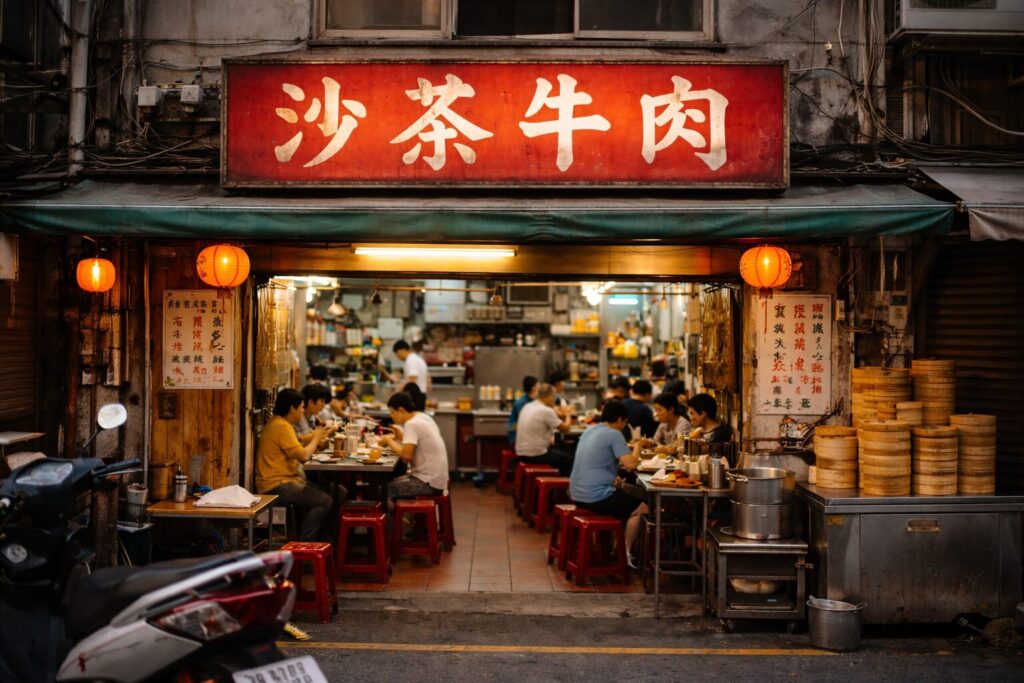
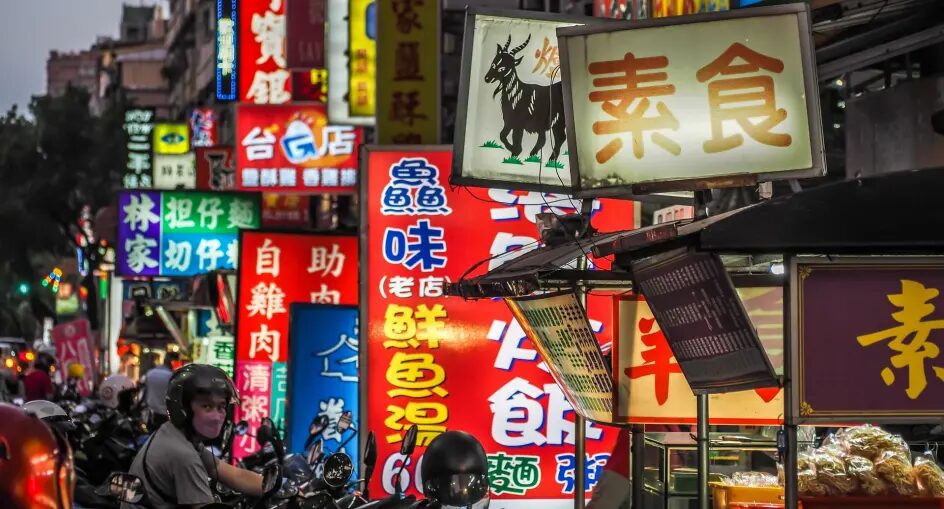
Inside the noise of re chao
There is a place where this taste fits best.
Not a quiet restaurant, but re chao.
Low chairs.
The sound of high flames.
Plates moving fast.
Beer bottles knocking.
The air asks for density, not precision.
Shacha beef sits neatly inside that demand.
You sweat.
You chew strong meat.
You wash it down with beer.
Shacha sauce feels close
to the body temperature of Taiwanese nights.
The brown spoon that holds the everyday
Shacha sauce is not a refined taste.
But it has stayed on white rice,
caught in water spinach,
and remained at the center of loud plates.
It is not for special days.
Still, it supports a large part of Taiwanese appetite.
One brown spoon changes the density of the table.
That is why it is still there.
— Detour —
a little further to walk
- Notes on Sha Cha Sauce as a Crossroads in Taiwan
- Notes on Blanched Greens in Taiwan
- Notes on Four Invisible Pillars of Taiwanese Flavor