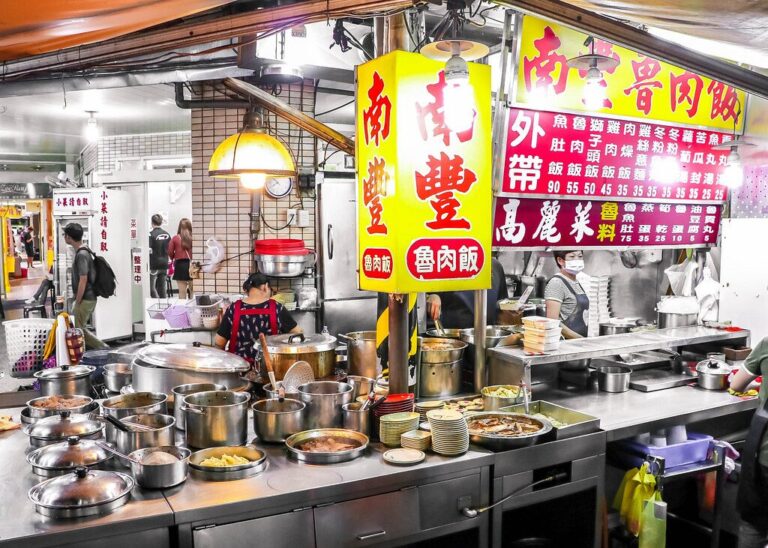
In Taipei, Formosa Chang’s yellow sign is so common it fades into the city’s background. Follow the high-speed rail south, however, and the familiar mustached logo disappears before the island’s major southern cities come into view.
Living in Taipei, the yellow sign becomes part of the background.
A logo of a man with a trimmed mustache.
Formosa Chang.
It appears on the way to work, on the walk back from shopping, without any deliberate search.
Less a destination than a given presence.
But when the high-speed rail heads south, the scenery changes at a certain point.
Somewhere past Taichung, the sign stops appearing.
At present, Taichung is said to be the southernmost limit of the chain’s expansion.
In major southern cities such as Kaohsiung and Tainan, there are no branches.
These are regions with sufficient population and purchasing power.
It is hard to argue that there is no market.
And yet, the giant does not move south.
When considering why, one river inevitably comes to mind.
What the Mustached Logo Signals
There is a restaurant known as Formosa Chang, a nationwide chain built around lu rou fan.
It began in 1960 as a small street stall in Taipei.
Today, it is often treated as a reference point within Taiwanese food culture.
Inside, the lighting is bright.
The floors are dry.
Air-conditioning runs steadily.
Staff move in uniform.
The flow from ordering to serving is clear.
The dish comes from the world of street cooking.
The environment, however, feels corporate.
For many people, the name signals a meal unlikely to deviate far from expectation.
It may be one of the places that gave a stable outline to a dish once defined by variation.
Yet what is notable is this:
The presence of Formosa Chang does not end at the restaurant door.

Lu Rou Fan as Taiwanese Everyday Life
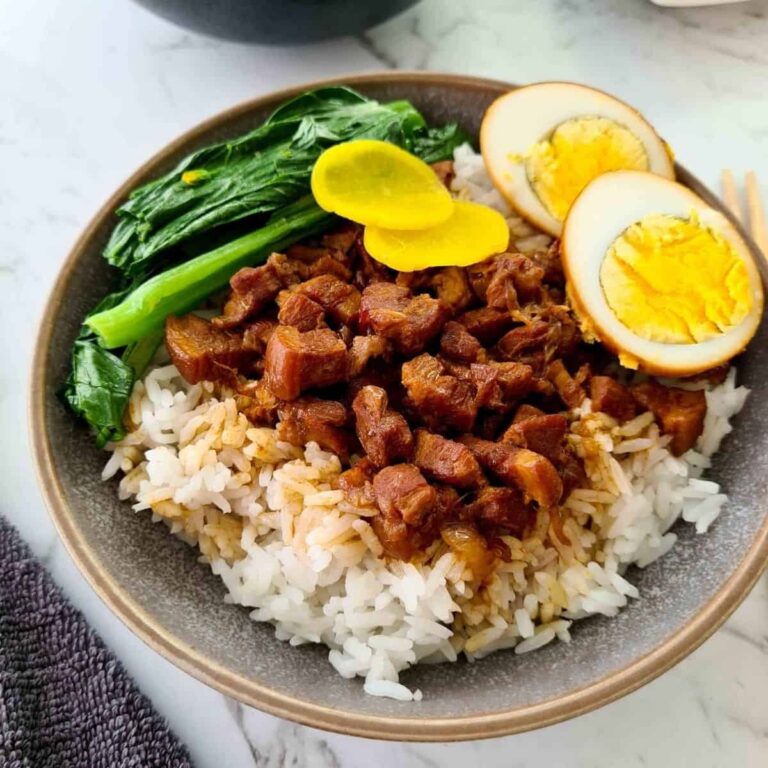
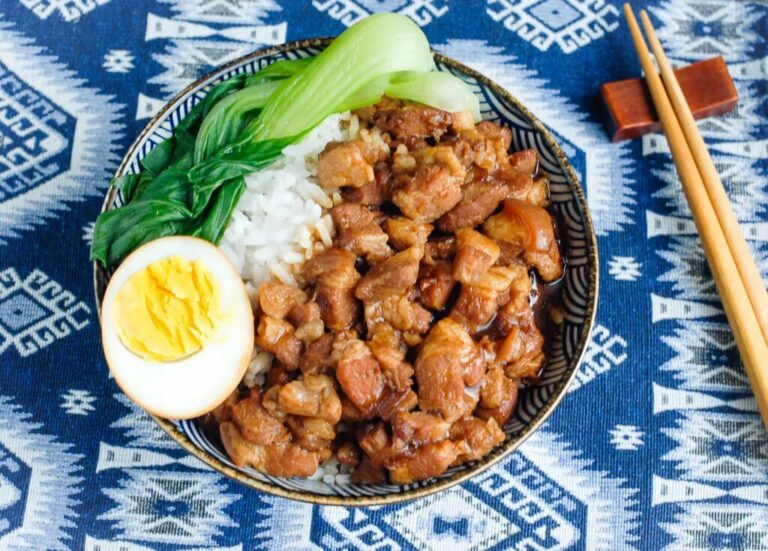
Lu rou fan is often described as a national dish of Taiwan.
Finely chopped pork is simmered in a soy-based sauce with a restrained sweetness.
It is then poured over white rice.
The structure is simple.
Differences between shops remain visible.
The ratio of fat to lean meat shifts.
Sweetness rises or recedes.
Sometimes star anise lingers at the edge.
Even so, most people picture roughly the same bowl.
The portion is modest.
The price is usually restrained.
Some finish it alone.
Others add greens or soup and let it become a full meal.
In Taiwan, this bowl rarely marks an occasion.
It sits closer to a baseline —
something that quietly supports the rhythm of ordinary days.
The Zhuoshui River as a Boundary of Taste
When discussing Taiwan’s food culture, a line is often drawn across the island.
The Zhuoshui River, cutting through the center.
Across this river, flavor tendencies are said to change.
North salty, south sweet.
Soy sauce selection, sugar usage, the direction of braising.
Even with the same dish name, crossing the river can yield a different result.
The version favored by Formosa Chang follows a northern design.
Salt-forward, supported by the richness of fat.
Placed unchanged on a southern table that assumes sugar as a base,
it risks being perceived as slightly too salty.
Differences in taste are matters of preference, but also of memory.
And such memories are often more rigid than expected.
The Slippage of the Name “Lu Rou Fan”
More complicated than flavor is the confusion surrounding the name itself.
In the north, lu rou fan refers to finely chopped pork braised in soy sauce and poured over rice.
Formosa Chang belongs to this lineage.
In the south, the situation differs.
There, lu rou fan often means a bowl topped with chunk-style braised pork belly.
The minced version is more commonly called rou zao fan.
If Formosa Chang were to enter Kaohsiung unchanged,
the sign would read “lu rou fan,” and customers would imagine chunked pork.
What arrives would be minced meat.
The resulting discomfort precedes any judgment of taste.
A mismatch between expectation and reality produces resistance.
Avoiding this would require changing the name to rou zao fan.
But doing so would come close to negating the brand itself.
Protect the name, or adapt to the market.
The choice is not trivial.
Choosing Not to Change
From a technical standpoint, solutions exist.
Increase sugar for southern markets.
Adjust signage.
Add explanations.
Global chains localize in this way all the time.
A company of this scale and capability could have done so.
And yet, it did not.
One likely reason lies in the demands of standardization.
Formosa Chang maintains its flavor through strict numerical control, including ISO standards.
Regional recipe variations would complicate raw material management, production lines, and quality checks.
They would erode the chain’s core strength.
Another factor is resource allocation.
The northern economic corridor—Taipei, New Taipei, Taoyuan, Taichung—already offers a sufficiently large market.
Increasing density and dominance there appears, from a business perspective, rational.
Win where winning is certain.
That logic seems visible beneath the surface.
Reaching Without Opening Stores
What is interesting is that nothing is entirely withheld from the south.
In supermarkets in Kaohsiung and Tainan,
in the frozen sections of PX Mart,
products bearing the Formosa Chang name appear.
No stores are opened.
But goods are sent.
It resembles deploying air power without sending ground troops.
There is no need to root deeply as a daily diner.
Being chosen occasionally as “a Taipei flavor” is enough.
This distance avoids direct collision with southern food culture
while still reaching those who seek it.
The spacing feels deliberate.

Why Din Tai Fung Could Cross
Another Taipei-born brand followed a different path.
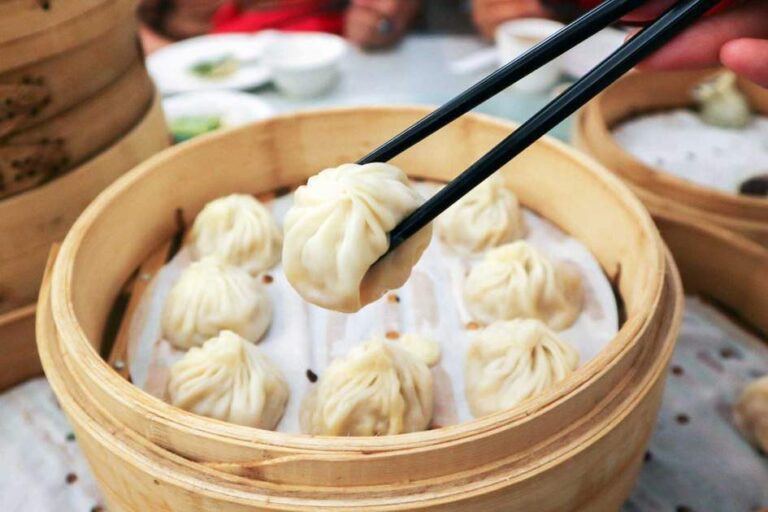
Din Tai Fung expanded into Kaohsiung and Tainan with large-scale locations.
Why could it cross the river?
One answer lies in the origin of the dish.
Xiaolongbao were introduced after the war.
For southern diners, there is no inherited definition to defend.
“Famous Taipei restaurant” functions as value in itself.
Lu rou fan is different.
It is native food.
Everyone carries a personal benchmark.
And those benchmarks are rarely surrendered.
Formosa Chang’s hesitation may reflect not corporate weakness,
but the intimacy of the dish it handles.
A River as Deliberate Limit
Companies are expected to grow.
But how far they grow remains a choice.
Not crossing the Zhuoshui River appears less like fear than resolution.
To preserve flavor standards.
To protect the meaning of a name.
To maintain a manageable system.
A line was drawn.
The absence of yellow signs in the south is not a gap,
but part of the outline.
The river is both a barrier and a definition.
Formosa Chang stands as a case of a giant that grew large enough
without crossing every possible boundary,
remaining firmly embedded in Taiwan’s food landscape.
— Detour —
a little further to walk
- Notes on the Zhuoshui River Border in Taiwan
- Notes on Formosa Chang Beyond the Dining Room
- Notes on Lu Rou Fan That Flew Over Taiwan