A sign that appears at regular intervals
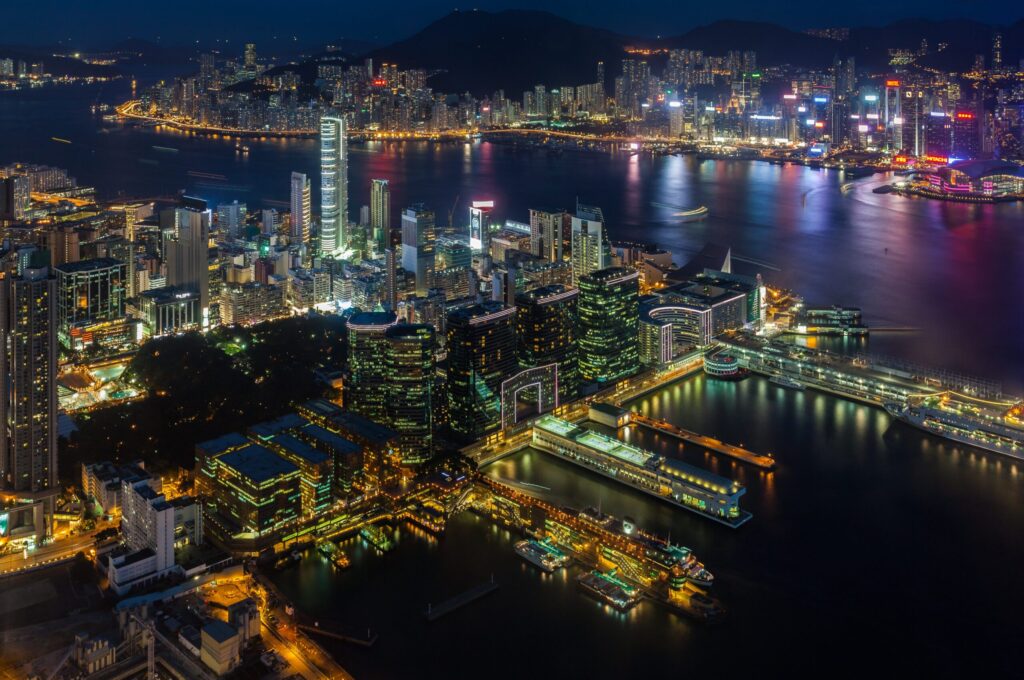
Walking through Taipei, the same colors enter my view at steady intervals.
White background. Red characters.
Lao Hu Jiang Wenzhou Giant Wontons.
The sign is not loud.
Still, it stands where it can always be found, even without looking for it.
It is less impersonal than a convenience store, and less uncertain than an independent shop.
When I want to eat alone and avoid failure, this sign feels close to a promise.
There is one complication.
Taipei is full of shops with similar colors and similar names.
Where one chain ends and another begins is something few people can explain clearly.
1990 as a turning point
The origin of this shop is said to be around 1990.
At the time, wontons were still a side dish.
They were light soups, served next to noodles.
Rarely the main meal.
What changed here was scale.
The wontons were made large, heavy enough to function as a staple.
A dedicated chili sauce was added, completing a bowl that no longer required rice.
As a result, the assumption shifted.
Wontons were no longer a snack.
They became one full meal.
Today, countless locations across Taipei continue to serve the same format, at lunch and at night, without interruption.
The physical meaning of “giant”
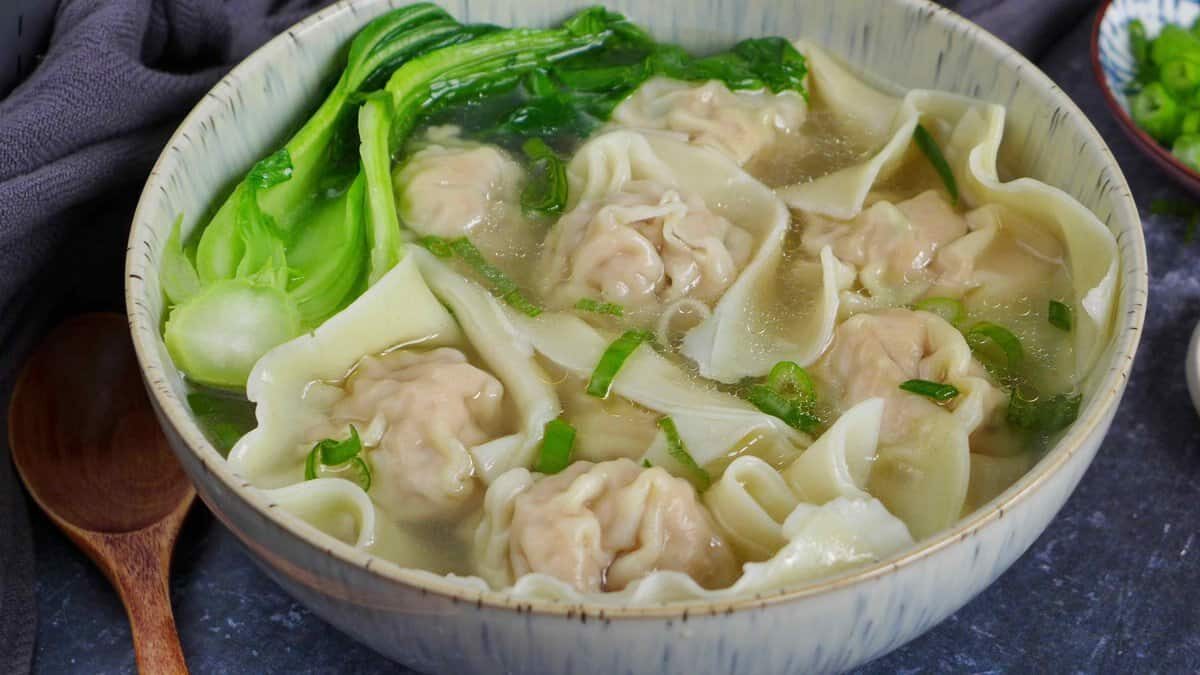
The moment the bowl is placed on the table, the difference is clear.
This is not the world of small wontons.
Each piece is roughly the size of a child’s fist.
The skin is thick.
The meat filling is dense.
When lifted with chopsticks, there is weight.
The wontons do not collapse in the soup.
They travel intact from bowl to mouth.
This is not a wonton meant to be swallowed.
It is designed to be chewed, closer to a meat dish than a drinkable soup.

The tiger sauce
At the center of the condiment station sits Lao Hu Jiang, the tiger sauce that gives the shop its name.
Chili, garlic, fermented black beans.
Dark and forceful.
One spoonful is enough to change the character of the soup.
The originally mild Wenzhou-style wontons gain a sharp outline.
The final balance is left to the customer.
With the same bowl, the result varies widely depending on how much sauce is added.
This room for adjustment is one reason the chain avoids boredom, despite its uniformity.
A fixed soup structure
The soup follows a set pattern.
Seaweed floating on the surface.
Thin strands of egg.
Chopped pickled mustard greens.
This is less a direct inheritance from Wenzhou than a Taiwanese arrangement created by the chain itself.
Ocean aroma, soft egg, restrained saltiness.
These elements correct the potential monotony of the oversized meat wontons.
In every branch, the structure remains unchanged.
The function of consistency
There are few surprises at Lao Hu Jiang Wenzhou Giant Wontons.
There are also few disappointments.
No matter the location, under the same sign, the same-sized wontons and the same tiger sauce appear.
In a busy city, this lack of variation serves a purpose.
It offers no ambition beyond satisfying hunger.
For those who ask for nothing more,
that stability is more than enough.