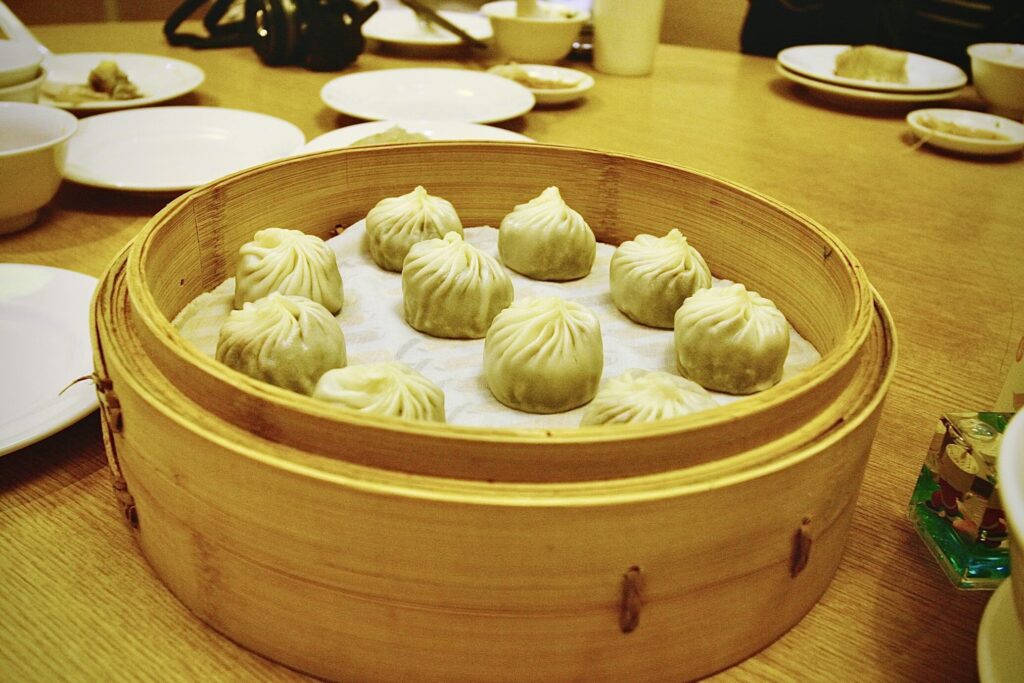
Chimei, the factory brand that made the xiaolongbao ordinary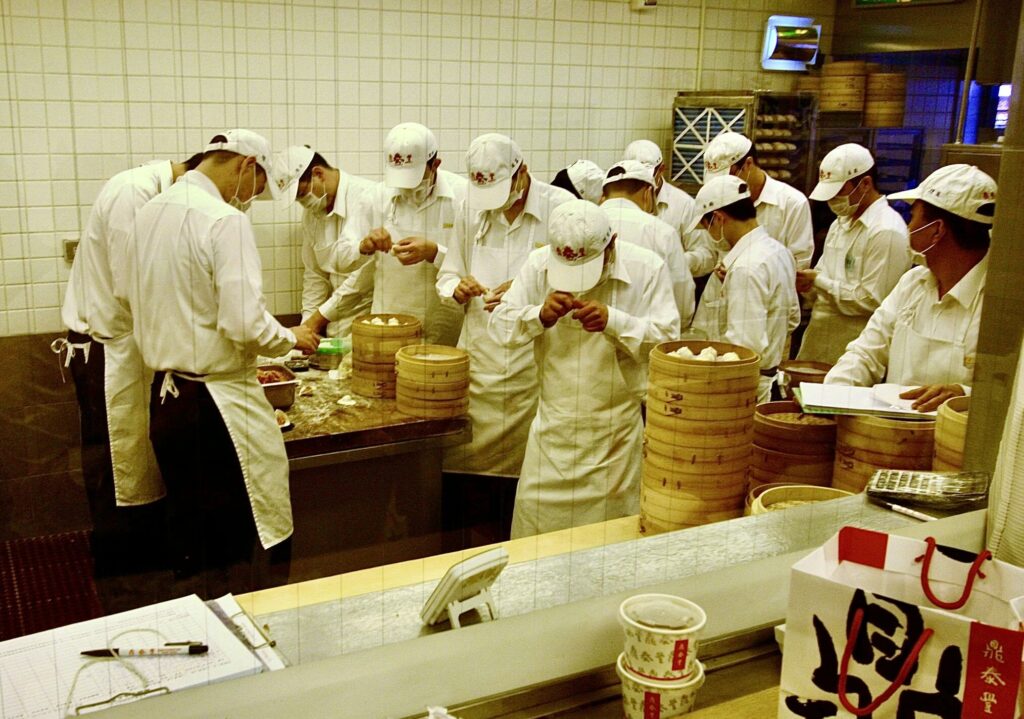
Taiwan’s xiaolongbao became global through Din Tai Fung.
The sign is easy to recognize.
The bamboo steamers are stacked the same way in Los Angeles, London, and Singapore.
But there is another main actor.
It is quieter, and it wins by volume.
Its name is Chimei.
Known as a Taiwanese high-tech group, it also makes xiaolongbao in factories.
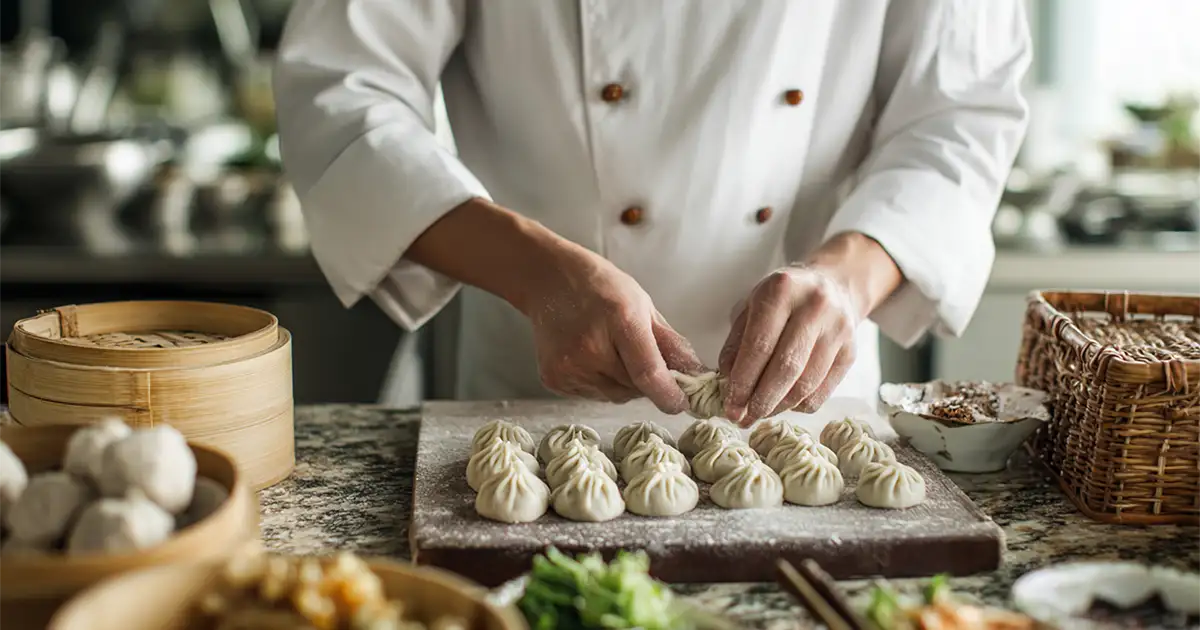
A strange set of siblings called Chimei
Chimei has several faces.
At times it is a major maker of plastics, known for ABS resin.
At times it is a company tied to LCD panels.
And then there is the face found in a supermarket freezer.
A large producer of frozen dim sum.
Hard plastic and soft dumplings seem unrelated.
What connects them is a founder’s mindset, and engineering carried to the end.
1971, beginning with Japanese eel
Chimei Foods was founded in 1971.
This was before Taiwan’s high-tech industries fully rose.
At the time, Taiwan worked as a food supply base for Japan.
Frozen eel and frozen pork were in high demand.
The founder, Hsu Wen-lung, started the food business to process Taiwanese produce and earn foreign currency through added value.
The early mission was simple.
Move Taiwanese food across the sea without losing freshness.
The groundwork was built here.
Freeze it, ship it, and deliver it without collapse.
The quiet skill of cold-chain discipline accumulated first.
Convenience stores as black ships
The turning point came in the 1990s.
Japanese convenience stores expanded fast, and demand for steamed buns surged.
Japan’s requirements were strict.
Make millions. Make them identical.
Never let foreign matter enter.
Chimei could meet this.
For them, a meat bun was closer to an industrial product than a dish.
Flour conditions and pork fat were treated as variables to be controlled.
Japan, as the most demanding customer, trained them.
That training later worked as a passport to wider markets.
Engineering the wrapper
A meat bun can be frozen.
Xiaolongbao is difficult.
A thin wrapper holds soup inside.
When frozen and reheated, moisture expands.
Pressure breaks the skin.
Here, Chimei’s chemical DNA appears.
They treated the wrapper as a new material.
Not only wheat flour.
Starch ratios are adjusted for elasticity and freeze resistance.
Thin, but not fragile.
This starch connects xiaolongbao to another Taiwanese staple.
Cassava.
The same source used for tapioca.
Cassava starch carries a different stickiness and bounce.
It helps a thin wrapper resist tearing.
It absorbs the shock of freezing and heating.
Sometimes the soft chew comes from that decision.
The soup is engineered as well.
Not only gelatin to set it.
Fat is blended by melting point, so it releases cleanly at the moment of eating.
It is less like cooking.
More like designing physical properties.
Xiaolongbao shifts from a steamer dish into a freezer-ready product.
Expanding as a black-clad ruler
Chimei’s strongest advantage is that it does not fear invisibility.
A major Japanese convenience store’s steamed bun.
A character bun sold at a famous theme park.
A private-label product at Costco.
Chimei is often said to be behind these fillings.
It chose to support rather than stand in front.
It spent less on brand premiums and more on manufacturing quality.
If Din Tai Fung spread as a “restaurant,”
Chimei spread as a “shelf.”
It crosses borders inside freezers.
Crossing the religious wall
Dim sum’s weak point is pork.
That blocks entry into Muslim markets.
Chimei moved early to obtain halal certification.
But making a juicy xiaolongbao without pork fat is difficult.
Here again, industrial knowledge helps.
Emulsification techniques with chicken and vegetable oils rebuild the richness.
This opens doors in Southeast Asia and the Middle East.
Places even famous dining brands cannot enter easily,
Chimei enters through another route.
A Silk Road at minus eighteen
A good product fails if it melts once in transit.
The wrapper cracks.
The soup escapes.
It becomes unsellable.
Chimei built a logistics chain that keeps temperature down from factory to shelf.
Frozen, unbroken, uninterrupted.
Its export history matters here.
Shipping eel to Japan since the 1970s trained the same muscles.
Cold transport is not only for taste.
It is also for trust.
Japanese logistics standards become global standards through repetition.
The cost-down of happiness
Hsu Wen-lung is also known as a patron of art,
a builder of hospitals and museums.
His philosophy leans toward daily life.
Good things should not belong only to the rich.
Words like that remain.
If Din Tai Fung is haute couture, Chimei is Uniqlo.
High-quality xiaolongbao at a price most people can reach.
Factories run.
Costs are pushed down to the limit.
This is not cheapness for its own sake.
It is a kind of food democratization.
A high-end experience is compressed into a freezer product.
Placed where anyone can take it.
That is Chimei’s role.
Steam from the factory
At Chimei’s plant in Tainan, millions of pieces are made each day.
Nearby, the same group produces LCD panels and high-performance plastics.
The materials differ.
But the temperature is the same.
Make high quality, and supply it steadily at scale.
The spirit of Made in Taiwan remains
both in bamboo steamers and production lines.
Din Tai Fung made the world notice xiaolongbao.
Chimei made the world live with it.
Both are visible.
But the second one stays hidden in the shelf.
Still, when xiaolongbao became an ordinary food across borders,
some of that factory steam seems to have traveled with it.