Order Within a Single Griddle
In the morning streets of Taiwan, a familiar scene repeats itself.
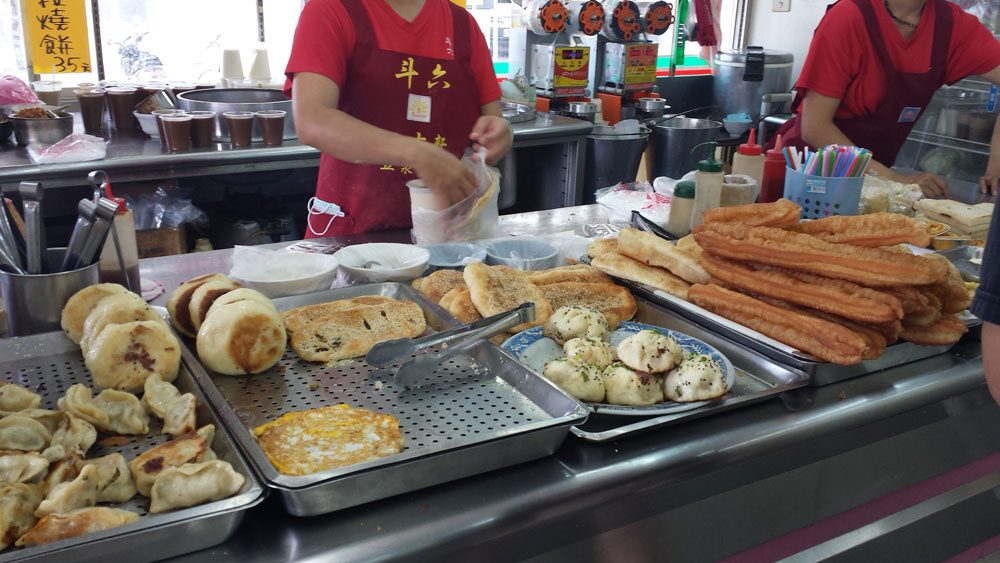
I step into a small breakfast shop and order danbing and fantuan.
An egg is cracked onto the griddle. Batter is poured.
Beside it, youtiao is reheated.
I glance up at the wall menu.
Hamburgers. Radish cakes. Sandwiches. Soy milk. Black tea. Coffee.
While eating the danbing, a small question arises.
Why does Taiwan’s breakfast feel so undisciplined.
Why hamburgers sit next to radish cakes
At first glance, the menu is confusing.
Western-style hamburgers sit beside Chinese radish cakes.
Next to them is danbing, which belongs to neither category.
The drinks follow the same pattern.
Coffee, tea, and soy milk share the same line.
Nothing is grouped.
There is no clear logic.
For the customer, it is not especially kind.
And yet, in Taiwan, this arrangement feels normal.

Layers of food history
This disorder is not accidental.
It is the result of accumulated time.
The base layer was rice-based food.
Congee. Rice noodles.
Things that enter the stomach lightly.
Then came wheat culture from the mainland.
Mantou, shaobing, youtiao.
Flour became part of the morning.
Later, with foreign aid and Western influence, bread arrived.
Sandwiches followed.
When new food appeared, old food did not disappear.
Nothing was removed.
Nothing was overwritten.
Items were simply placed side by side.
That history is visible on the menu board.
Everything ends with a single griddle
How does a shop handle so many items.
The kitchen gives the answer.
At the center, there is only one large griddle.
Burger patties. Fried eggs. Radish cakes. Danbing.
The method is the same.
Everything is grilled.
There is no need for pots, steamers, or ovens.
By adjusting heat and position on the griddle, all orders are processed.
The menu is wide.
The process is narrow.
This is where the logic of Taiwan’s breakfast shops converges.
Order beneath the disorder
Taiwanese breakfast looks like anything goes.
But it rests on an unspoken rule.
If it can be cooked on a griddle, it belongs.
Because of that, the morning rush never stops the shop.
The woman at the griddle divides the surface like a map,
moving items without words.
I finish the danbing and wipe oil from the fantuan wrapper.
While I do, the next order slides onto the metal.
The disorder is not neglected.
It is managed.
Taiwan’s breakfast is less free than it appears.
And that quiet restriction is what keeps the morning moving.