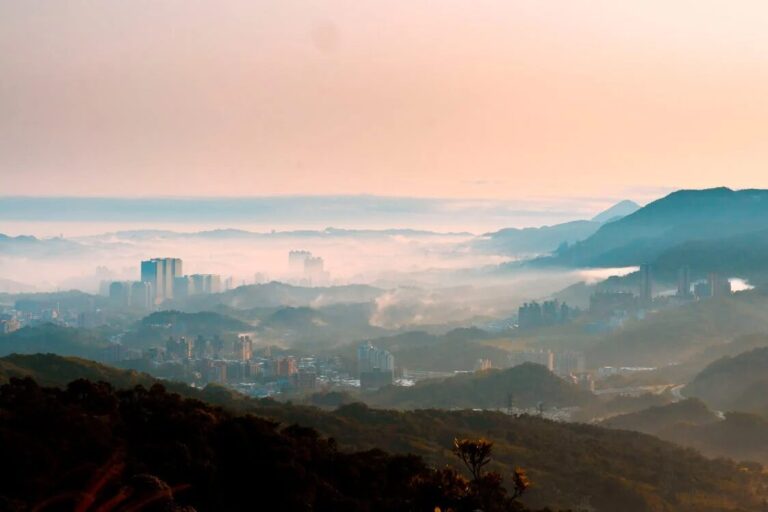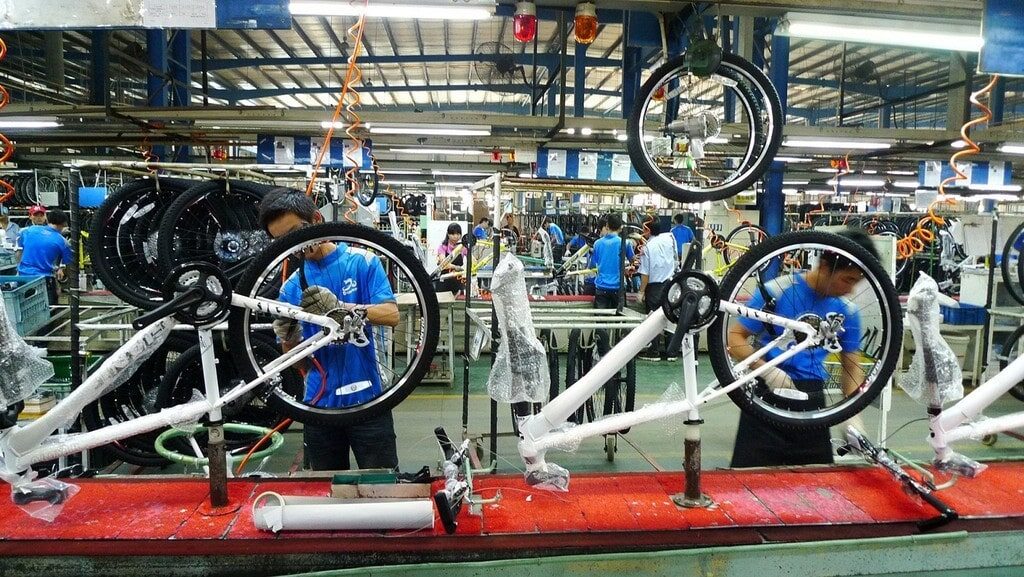
In Dajia, Taichung, rice fields and low factory buildings stretch through a town that looks almost unremarkable. Yet bicycles carrying the logos of Trek, Specialized, and Cannondale trace back to this quiet corner of Taiwan.
Taichung, Dajia.
It is not a tourist destination.
It does not look like an industrial zone either.
Rice fields stretch out.
Low buildings stand in rows.
It is a town that could be anywhere.
And yet, for the global bicycle industry, this area sits close to the center.
Trek.
Specialized.
Cannondale.
The logos on finished bicycles differ.
But many of them have been made in Taiwan.
More precisely, they trace back to a dense cluster of factories in the middle of the island.
Why did this corner of Taiwan become a supply base for the world’s high-end bicycles?
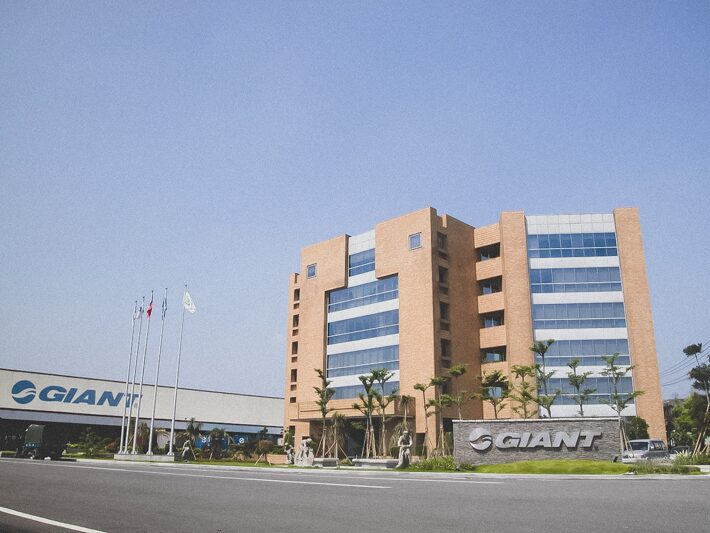
At the center of that question is Giant.
Giant Was Not Always the Protagonist
Giant did not begin as a leading name.
For a long time, it stood closer to the background.
In its early years, Giant worked as an OEM manufacturer for Schwinn, a historic American brand.
Design decisions were made elsewhere.
The brand belonged to someone else.
Final pricing was not in its hands.
Like many Taiwanese manufacturers, Giant grew as “the one who makes.”
Then came a sudden shift.
Schwinn decided to move production to China.
From a cost perspective, it was a rational choice.
At that moment, Giant lost most of its revenue.
What emerged was not a debate about ideals, but a question of survival.
Making alone was no longer enough.
As long as it supported another brand, control would not return.
Giant’s move toward its own brand was not driven by idealism.
It was a strategy forced by circumstance.
A Bet on Making “Made in Taiwan” Mean Quality
At the time, Taiwanese products were not highly regarded.
They were affordable.
They worked reasonably well.
But they were not objects of aspiration.
Giant did not choose to compete on price.
It focused on weight reduction.
Invested in aluminum and carbon materials.
Reexamined manufacturing processes themselves.
The skills refined through OEM work were, for the first time, applied under its own name.
What Giant undertook was not a marketing overhaul.
It was a redefinition of manufacturing.
Could Taiwanese products be chosen for quality, not price?
Giant placed its bet there.
In that sense, it became one of the first Taiwanese manufacturers to claim quality as its subject.
King Liu and a Decision at Seventy-Three
Any account of Giant’s shift must include its founder, King Liu.
In 2007, at the age of seventy-three, he cycled around Taiwan himself.
This was not advertising.
It was not a product demonstration.
A bicycle, he suggested, need not remain a worker’s tool.
It could support health.
It could create time to think.
In the same quiet air as the film Island Etude,
the meaning of cycling in Taiwan began to change.
What Giant sold was not the bicycle itself.
It was a way of living with one.

YouBike Was Not About Profit
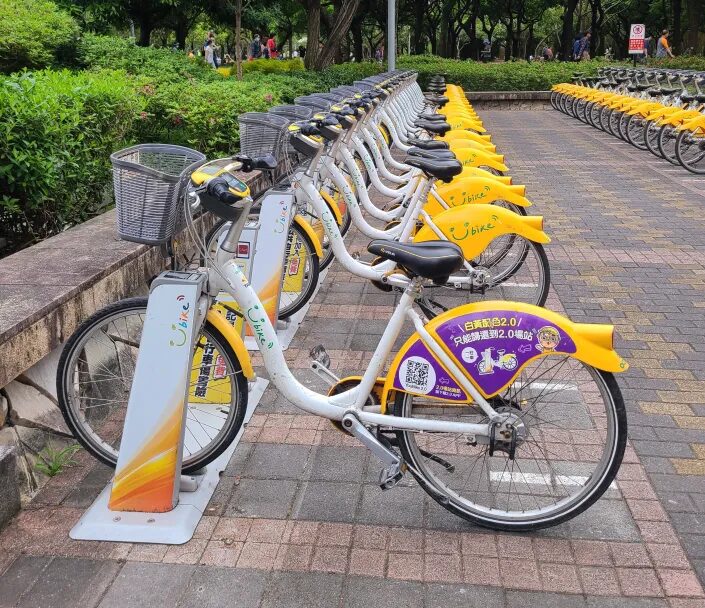
From there, YouBike followed.
Around the world, bike-sharing projects were abandoned.
Many companies withdrew, citing losses.
Giant did not.
What stands out is that the Giant logo is not prominent on YouBike frames.
It is not displayed.
But it is not hidden.
In Taiwan, the fact that Giant makes them is widely understood.
Quality speaks for itself.
That seems to be the chosen distance.
YouBike is not simply corporate social responsibility.
It is the final step of the “Cycling Island Taiwan” idea.
Only when bicycles reach every corner of the city does culture become everyday life.
Remaining in the Background, While Moving Everything
Giant still does not speak loudly.
It does not lean on founding myths.
It does not press its brand forward.
Yet,
Street corners in Taipei.
Factories in Taichung.
Cycling roads around the world.
Many of them connect back to this company.
By not stepping forward,
it keeps the whole system turning.
Giant may represent one form of completion
that Taiwanese manufacturing has reached.
— Detour —
a little further to walk
- Notes on Taiwan’s Bicycle Culture
- Notes on the Bicycle Maker Behind YouBike in Taiwan
- Notes on Riding YouBike in Kaohsiung