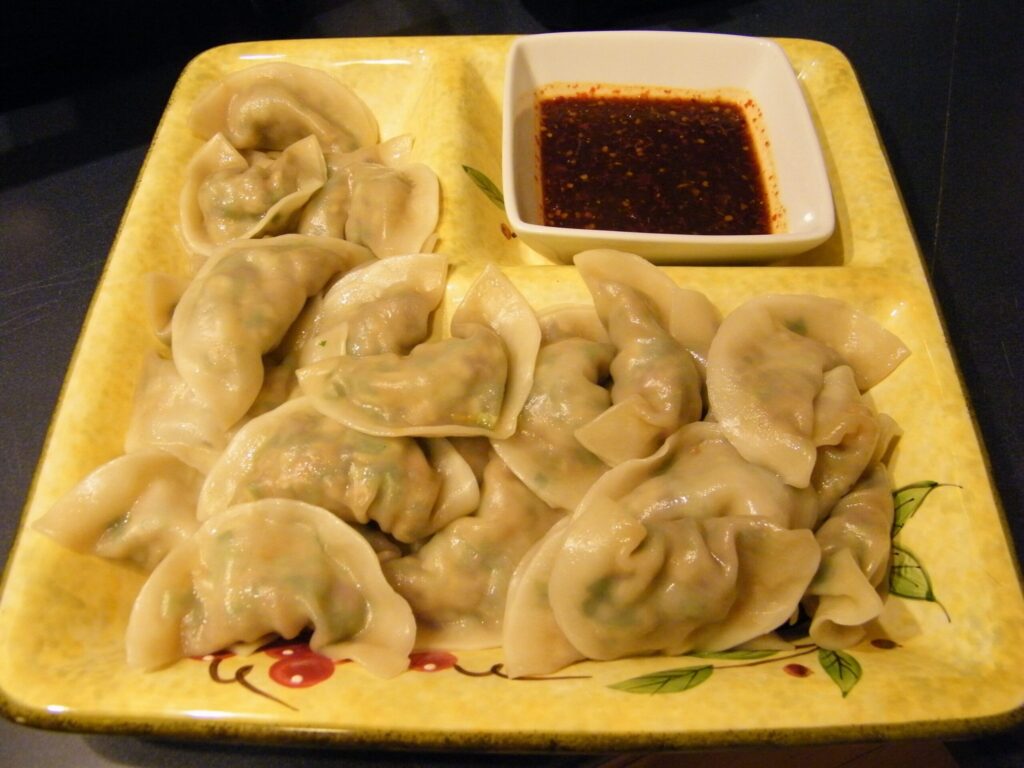
In Taiwan, a supermarket freezer can turn a handful of frozen dumplings into dinner: count them out, drop them in boiling water, and reach for the garlic. That ordinary meal belongs to a wheat-based food tradition far from the island’s older rice-centered table.
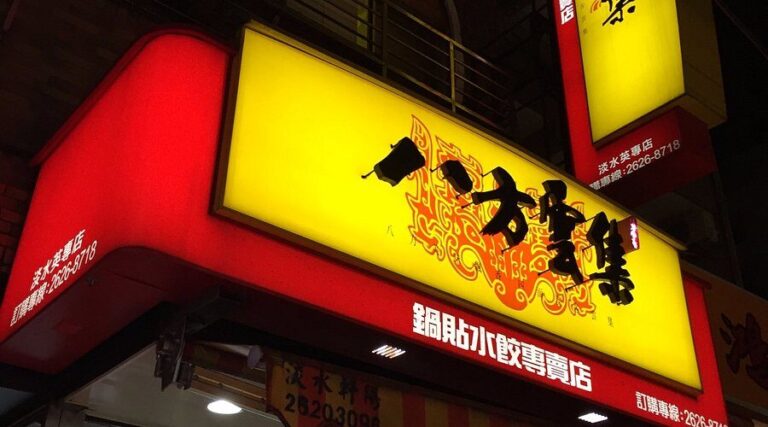
Eating shuijiao (水餃, boiled dumplings) in Taiwan is easy. Some shops advertise dumplings on their signboards, and chains such as Bafang Dumpling (八方雲集) and Sihai Youlong (四海遊龍) sell them over the counter. Supermarket freezers carry several brands. At home, you drop as many as you need into a pot, and that is a meal. In Taiwan today, dumplings are an ordinary food.
Taiwan, though, has long been a rice-eating island. Dumplings, with wheat-flour wrappers around meat and vegetables, belong to the food culture of northern China. So how did they become so ordinary in Taiwan?
The usual answer is that people from mainland China brought them around 1949. That points in the right direction, but it does not explain the dumplings Taiwan eats today. Dumplings were already in Taiwan before then.
After the war, people who ate dumplings as part of daily life moved to Taiwan. Large amounts of wheat followed, and so did lessons in cooking with flour. Then shops took over the wrapping, then factories, and then chains selling dumplings all over town.
The history of dumplings in Taiwan is not the story of a dish that crossed the sea once and stopped there.
Dumplings in Prewar Banquet Restaurants
Taiwan had dumplings before 1949. From late 1927 into the next year, Wu Jiangshan (吳江山), owner of the Taipei restaurant Jiangshanlou (江山樓), wrote a series called “Taiwan Ryōri no Hanashi” (臺灣料理の話, “On Taiwanese Cuisine”) for the Taiwan Daily News (臺灣日日新報). Dumplings appear in it. Cooks also made variations on them with new shapes and flavors: a four-petaled sifang jiao (四方餃), a longjiao jiao (龍角餃) shaped like a water caltrop, and a xieliu jiao (榭榴餃) shaped like a pomegranate.
A 1930s menu from Penglaige (蓬萊閣) also lists many kinds of dumplings (水餃, 三角餃, 四方餃, 菱角餃, 梅花餃, 菊花餃). These elaborate dumplings were often served as savory snacks at banquets, and they are said to have differed mainly in shape. The idea that dumplings first reached Taiwan in 1949 does not hold.
Still, these were not the dumplings of today’s street shops. Jiangshanlou and Penglaige were among the leading grand banquet restaurants known as jiulou (酒樓) in Dadaocheng (大稻埕). Wu Jiangshan traveled to Beijing, Guangzhou, Tianjin, and other cities to study their cooking, and he hired cooks from Sichuan. Penglaige brought in cooks from Guangdong. These restaurants served more than local Taiwanese dishes. They took in dishes and techniques from across China, and dumplings were part of that wide range.
Dumplings existed in prewar Taiwan. But the surviving records do not show that ordinary households ate them as everyday meals.
What changed after the war was less the dumpling itself than the people eating it and the places where they ate it.
People Who Ate Dumplings Every Day Arrive
Around 1949, large numbers of soldiers, civil servants, and their families moved from mainland China to Taiwan. They brought more than the names of dishes. They brought a way of life. They steamed mantou (饅頭, steamed buns), made noodles by hand, baked shaobing (燒餅, a baked, layered flatbread), and wrapped dumplings.
This is the big difference from the dumplings of the prewar restaurants. These were not snacks made by professional cooks for banquets. They were made at home and eaten by families. The food cultures of people from many parts of China came into the living spaces of postwar Taiwan, starting with the juancun (眷村), or military dependents’ villages.
What happened in 1949 was not that Taiwan gained one new recipe. The number of people who knew dumplings as an ordinary meal jumped all at once.
Here, dumplings entered Taiwan as someone’s home cooking, by a different route from the prewar banquet snack. Even so, they were not yet a food for all of Taiwan. In a society built around rice, wheat foods needed more than new eaters before they could become part of daily life.

US Aid Wheat and “Flour in Place of Rice”
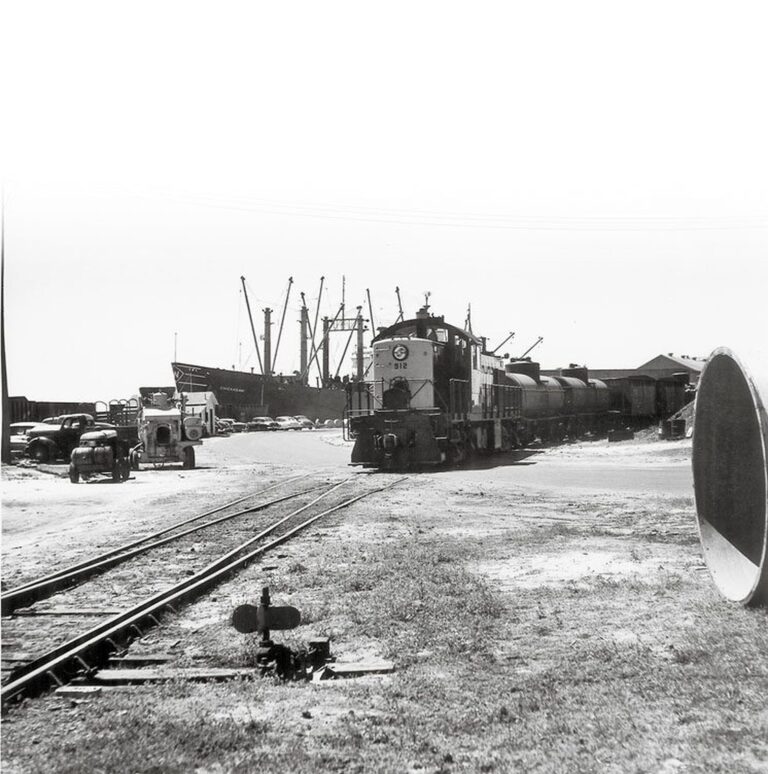
In the 1950s, large amounts of wheat reached Taiwan as US aid, known as meiyuan (美援). For a time in the mid-1950s, all the wheat used by Taiwan’s flour mills came from aid shipments. Wheat foods spread in Taiwan because of the migrants from the mainland, and also because the wheat itself arrived in bulk.
The government had its own reasons to promote wheat. On the world market, rice then cost more than wheat. If Taiwan imported cheap wheat, ate it at home, and exported rice instead, it could earn foreign currency.
In the 1950s, the government pushed a policy of “flour in place of rice” (以麵代米). It did not simply hand out flour instead of rice. Soldiers, civil servants, and teachers could trade their rice rations for flour and receive a larger amount. The program later reached miners, poor households, and farmers. In farming areas, people could trade unhusked rice for refined flour under a scheme called “flour for grain” (麵粉換穀). Eating wheat came with an economic incentive.
After the war, people who ate dumplings and other wheat foods every day came to Taiwan. Then the wheat to make those foods arrived in bulk. The people and the raw material were now in the same place.
But having flour did not mean that households used to cooking rice could make dumplings or mantou. What came next was teaching people how to cook with flour.
Teaching People How to Cook with Flour
In 1962, CUSA (美援會), the government body overseeing US aid, and the Taiwan flour millers’ trade association (臺灣區麵粉同業公會) set up the Taiwan Flour and Wheat Foods Promotion Committee (臺灣區麵麥食品推廣執行委員會). Promotion centers opened in Taipei, Taichung, and other cities, with classes and cooking demonstrations. Harvest (豐年), a magazine published by the Joint Commission on Rural Reconstruction (JCRR, 農復會), also ran illustrated guides for rural women on making mantou, cong you bing (蔥油餅), and other wheat foods. The flour came with instructions for eating it.
Dumplings were on the menu of the 1962 demonstrations. The campaign did not single out dumplings. It promoted wheat foods as a whole, including mantou, baozi (包子), noodles, and flatbreads.
Dumplings, mantou, and other wheat foods that came with the postwar migrants were not foods that most households in Taiwan knew how to make as part of everyday cooking. Through classes and printed guides, the cooking methods of postwar migrants now reached other households. This is why the movement of people in 1949 alone cannot explain how dumplings became everyday food in Taiwan.
The eaters came. The wheat was supplied. Then the skill of cooking it was spread. With all three in place, dumplings could move beyond the home cooking of people from particular places.
Eating Dumplings at a Shop
In the 1960s, where people ate dumplings began to change too. Around this time, shops such as Tung Men Dumpling House (東門餃子館), said to have started as a street stall in Taipei in 1961, were opening.
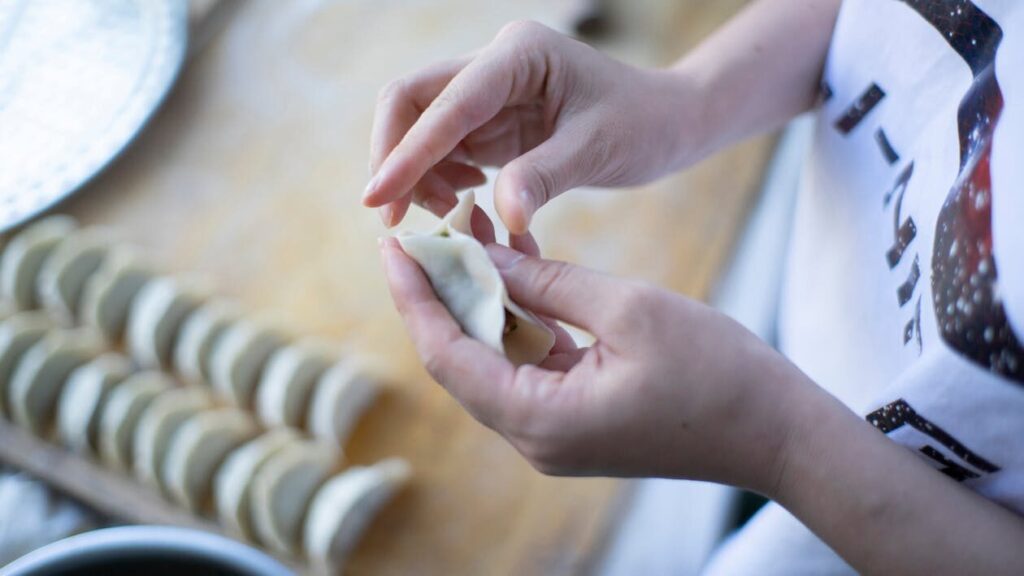
Shops like this separated the people who made dumplings from the people who ate them. To make dumplings at home, you knead the dough, roll out the wrappers, mix the filling, and wrap each one by hand. At a shop, none of that is needed. You no longer had to know how to make dumplings in order to eat them.
Dumplings stayed a home food, and they also became something you could pay for and eat in town. In time, the work of wrapping moved beyond shop kitchens and into food factories.
Frozen Dumplings Spread
By the late 1970s, there were already food companies selling dumplings as products for the home. Qishan Longfeng (旗山龍鳳), founded in 1977, is said to have started its business with dumplings. The next year, Qiqiao Foods (奇巧食品) was founded and began making dumplings, potstickers (鍋貼), and other wheat-based foods.
Qiqiao started out by working with mobile sales vans known as “little bees” (小蜜蜂). According to press reports, supermarkets were still uncommon in the 1980s, and dumpling sales relied on these vans and on small shops in the countryside. In time, dumplings also spread as a food to keep frozen and boil at home.
Their shape may have helped. Each dumpling is a separate unit from the moment it is wrapped. You can freeze them one by one and take out only as many as you need, whether five, ten, or twenty. The rest stay in the freezer.
They are easy to cook, too. Boil the number you want straight from frozen, and you have a meal. Unlike a noodle dish, there is no broth and topping to prepare separately. Unlike a rice bowl, which comes as one fixed serving, the portion does not have to be set in advance. The wheat wrapper holds a filling of meat and vegetables, so a single plate can work as a whole meal.
It is possible that freezing did not so much turn dumplings into a processed food as suit a form they already had, one that lent itself to storing and dividing. Dumplings, once wrapped one by one by families gathered together, became a food you take from the freezer a few at a time, with almost no change in shape.
Dumpling Chains
In the 1990s, chains specializing in dumplings appeared. Sihai Youlong opened in 1993 and expanded around potstickers and dumplings. Bafang Dumpling followed in 1998 with the same focus and spread across Taiwan. Today Bafang has more than 1,000 stores in Taiwan alone.
By this point, dumplings no longer fit only the frame of northern home cooking or juancun food. They became a cheap, quick meal out in the city. Each dumpling has its own price, and you order as many as you want. Order fewer for a light meal and more when you are hungry. You can add potstickers, noodles, or soup.
This works much like frozen dumplings. At home, you boil the number you need. At a shop, you order the number you need. The fact that each dumpling is a separate unit worked well for both frozen food and chain-store sales.
A dish that northern families once wrapped together became, in Taiwan, something you buy by the piece on a lunch break.
Dumplings as Everyday Food in Taiwan
People eating dumplings in Taiwan today rarely think about this history. Order some at a shop, and they come lined up on a plate. At home, take a bag from the freezer and boil water. Dumplings have become that ordinary.
That ordinariness was not there from the start. Taiwan’s prewar banquet restaurants already served dumplings. After the war, people who made and ate dumplings at home moved to Taiwan. US aid wheat arrived, and the government and industry promoted wheat foods. The work of wrapping moved from homes to shops and then to food companies, and dumplings finally became a standard item at chains across Taiwan.
No single one of these changes made Taiwan’s dumplings what they are today. Changes that happened separately added up, and the effort and knowledge needed to eat dumplings shrank bit by bit.
To eat dumplings in Taiwan now, you do not need to know how to make them. At a shop or in the freezer, they are already wrapped and waiting.
The history of dumplings taking root in Taiwan was probably not mainly about everyone learning to make them. It was also about dumplings becoming something anyone could eat at any time, even without knowing how.
— Detour —
a little further to walk
- Notes on Guotie in Taiwan
- Notes on the Steamed Dumpling That Lost Its Shop
- Notes on Wheat and Rice in Taiwan