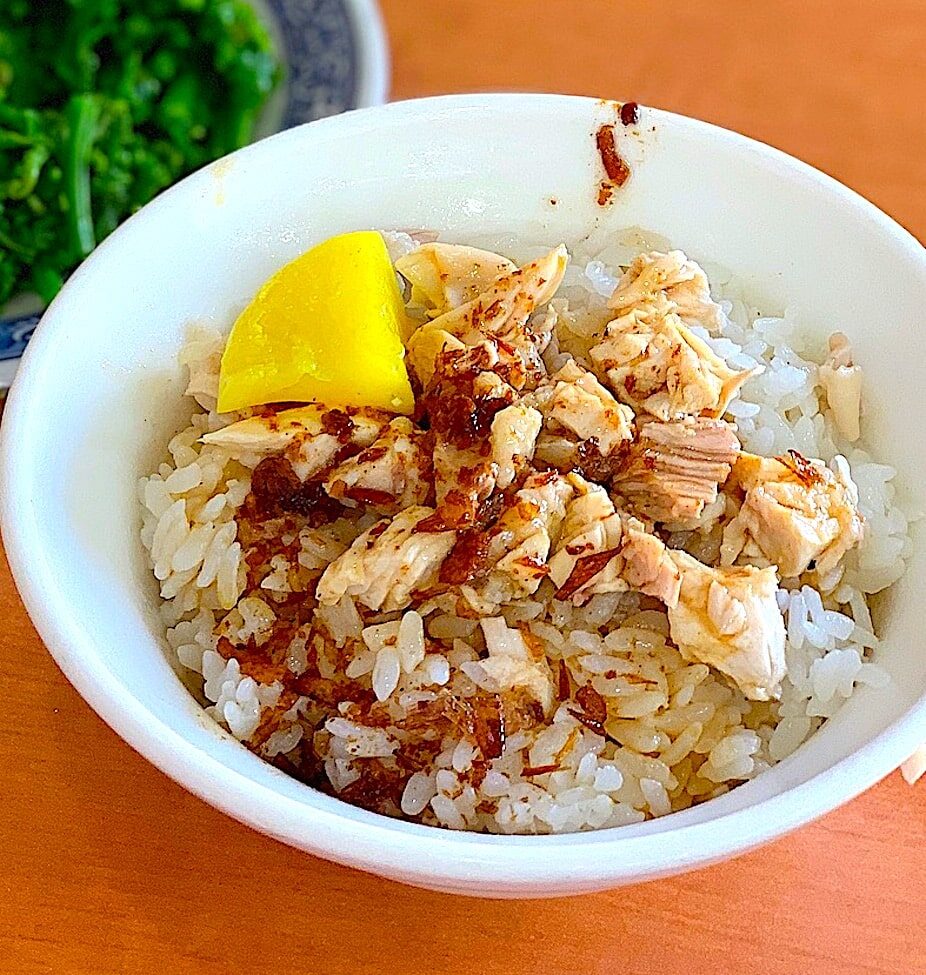
In Chiayi, a bowl labeled chicken rice may be topped with shredded turkey, while farther north the same name usually means chicken. The rice, oil, sauce, and meat remain recognizably the same even as the bird changes.
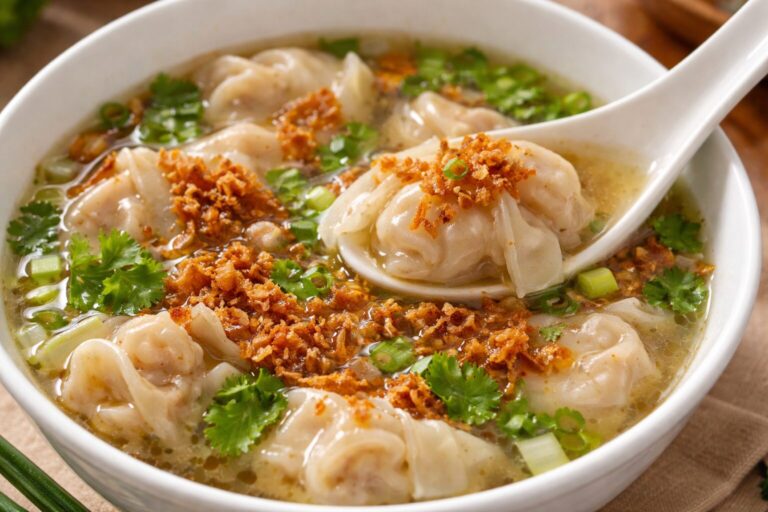
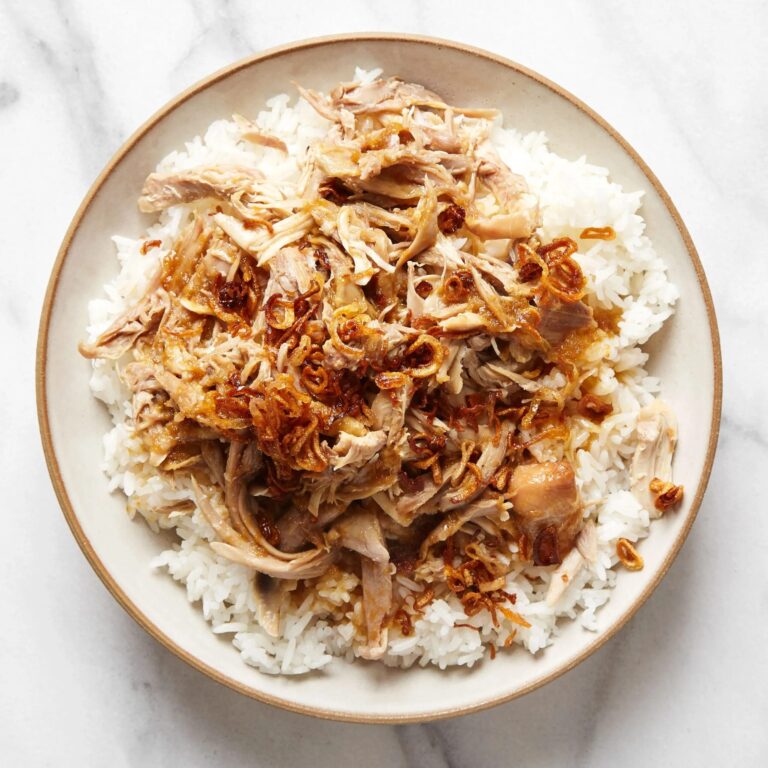
Order ji rou fan (雞肉飯) in Taiwan and a bowl of white rice arrives with shredded meat on top. Oil and sauce run down into the rice. Some shops add you cong su (油蔥酥, fried shallots) or a few slices of pickle. Taken literally, the name simply means rice with chicken.
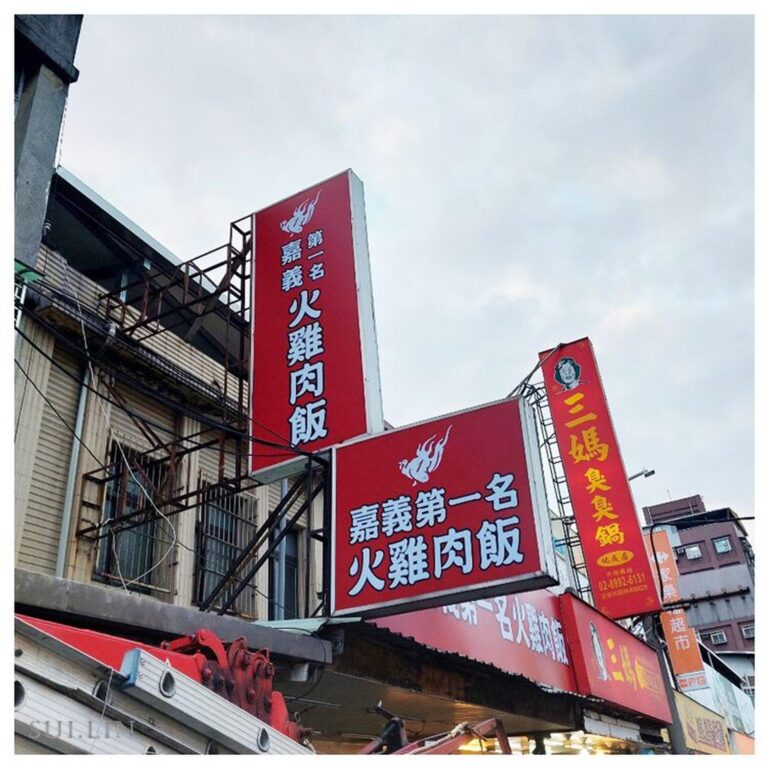
In Chiayi the meat is often not chicken. It is turkey. The city is known for huo ji rou fan (火雞肉飯, turkey rice), and a shop like Penshui Ji Rou Fan (噴水雞肉飯, literally “fountain chicken rice”) still keeps the word chicken in its name and leaves the turkey out. Elsewhere in Taiwan there are shops that really do use chicken.
Chicken or turkey, the bowl is called chicken rice. So what is it that makes the dish chicken rice?
What chicken rice is made of
There is no single correct recipe. Some shops shred the meat fine, others cut it into larger pieces. Some use chicken fat, some use pork fat. The sauce, the poaching liquid and the fried shallots come in different combinations.
Take the dish apart and a similar structure is left each time. Rice is cooked. Poultry goes on top, cooked in a way that keeps it fairly plain. Fat and liquid are added, and that is the bowl.
Hainanese chicken rice pairs the same two things and is built differently. There the rice itself is cooked in chicken fat and in the liquid the bird was poached in, and the meat is served in whole slices, usually beside the rice. Taiwanese chicken rice does not cook the rice in stock. The rice is cooked plain, and the meat, the fat and the sauce go on afterwards.
What joins the rice and the meat is added at the end. Change the meat on top and the shape of the bowl holds.

Next to lu rou fan, the meat kept changing
Seen this way, chicken rice sits closer to lu rou fan (魯肉飯) than to Hainanese chicken rice. Lu rou fan is also a small bowl of rice under a modest amount of meat, fat and a strongly flavoured liquid. What differs is how the meat and the rice are joined.
Lu rou fan simmers the pork itself in soy sauce, fat and spices. The flavour goes into the meat, and the meat goes onto the rice with its braising liquid. Chicken rice cooks the meat plainly. Some turkey rice shops in Chiayi poach it the way bai zhan ji (白斬雞, poached chicken) is made, leaving it in hot water off the boil rather than boiling it hard. The meat goes on the rice, and the oil, the poaching liquid and the sauce follow.
If lu rou fan is a dish where the meat is made strong enough to carry the rice, chicken rice is a dish where oil and sauce bridge plain meat and plain rice.
The origin story told in Chiayi points the same way. City records and local accounts say that in the early postwar years Lin Tien-shou (林添壽), who ran a shop near the fountain roundabout, shredded the chicken eaten at festival offerings, put it on rice, poured braising liquid over it, and began selling it. He is also said to have been selling lu rou fan before that.
Whether this was the first chicken rice in Taiwan is not known. Putting chicken on rice is simple enough that similar dishes could have existed elsewhere first. What the story suggests is that chicken rice was not invented from nothing. It may have come out of a rice-and-sauce arrangement that was already running, with a different meat placed on top.
The meat did not stay fixed at that shop either. Lin Chao-cheng (林昭正), the founder’s son, has said that they moved from the kind of chicken eaten at festivals to a cheaper bird raised for meat, found it too soft, tried another kind of chicken, and settled on turkey. The Chiayi Municipal Museum (嘉義市立博物館) describes the shop as using turkey from 1949, so the sources do not agree on what the early meat was.
Within that account, price alone did not decide it. Cheaper meat was possible. Meat that was too soft was not. The reasons given for turkey are price and the texture of the fibre.
Some of the flavour sits outside the meat
The flavour of chicken rice does not come from the meat alone. The meat is cooked plainly, and chicken fat, pork fat, poaching liquid, sauce and fried shallots go on top of it. Proportions differ by shop. Much of the aroma, saltiness and richness comes from outside the meat.
Swap chicken for turkey and, as long as the oil and the sauce stay close to what they were, the bowl still tastes like chicken rice. That leaves the meat with another job.
Texture.
The account from Penshui — a bird too soft, another kind of chicken tried, turkey in the end — fits that structure. Oil and sauce carry much of the flavour, so the species can change. They cannot supply fibre and chew. In lu rou fan the flavour is built into the meat by the braising. In chicken rice the meat and the seasoning can be held apart. That difference is probably what gave the dish so much room.
Out of Chiayi, still chicken rice
By 1975, chicken rice was already being served in Taipei. That year a couple from Chiayi opened Liang Ji Chiayi Chicken Rice (梁記嘉義雞肉飯) in the city, carrying the name of their home town and the dish they had eaten there.
Chiayi’s version did not simply become the standard everywhere either. A very different route shows up in 1997.
Foot-and-mouth disease broke out in Taiwan. For Formosa Chang (鬍鬚張), whose main product was lu rou fan, pork became a risk overnight. The company had been developing non-pork products for about two years, chicken rice among them. The trials had run a long time and the reaction inside the company was poor. It was no match for Chiayi chicken rice. Why would a lu rou fan shop sell chicken rice at all? The product was shelved.
When lu rou fan sales fell sharply, that changed. The company reworked the chicken rice out of what it had already developed and put it into every store in about a week.
Chicken rice was not the only non-pork product prepared then. Fish, seafood and other chicken dishes went out at the same time. The line-up was cut back later, and chicken rice stayed on as a standard item.
The chicken rice Formosa Chang sells now uses chicken breast, not turkey. The route is nothing like the one that produced turkey rice in Chiayi. What happened is still close. In the Penshui account the meat moved from one kind of chicken to another, and then to turkey. Half a century later a shop that sold lu rou fan put chicken on the same rice when pork became hard to use.
What stayed was not the species.
The meat changes and it is still chicken rice
The name makes it look as though the chicken decides the dish. Follow what has actually been eaten in Taiwan and the meat moves more than expected. In Chiayi there is testimony that it started with ordinary chicken, and turkey was the one that stayed after several kinds were tried. In other places the meat is still chicken. Formosa Chang, a lu rou fan chain, made chicken rice work when pork became hard to use.
Other parts move less. There is rice, and fairly plain poultry on it. Oil and sauce join the two and make the bowl. The trial and error over meat in Chiayi shows both halves of that: the meat could be swapped as long as the structure held; the texture could not.
Chicken rice is probably less a fixed recipe than a dish with a lot of room in it. That is how it became a turkey speciality in Chiayi, a real chicken dish in other towns, and in the end a line on the menu of a shop that sells lu rou fan.
The name says chicken.
Still, it may not be one meat that carried the dish. It may be that the meat could change and the bowl was still chicken rice.
— Detour —
a little further to walk
- Notes on Lu Rou Fan and Chicken Rice in Taiwan
- Notes on the Long Memory Inside a Bowl of Braised Pork Rice
- Notes on the Five Bowls of Braised Pork Rice in Sanchong