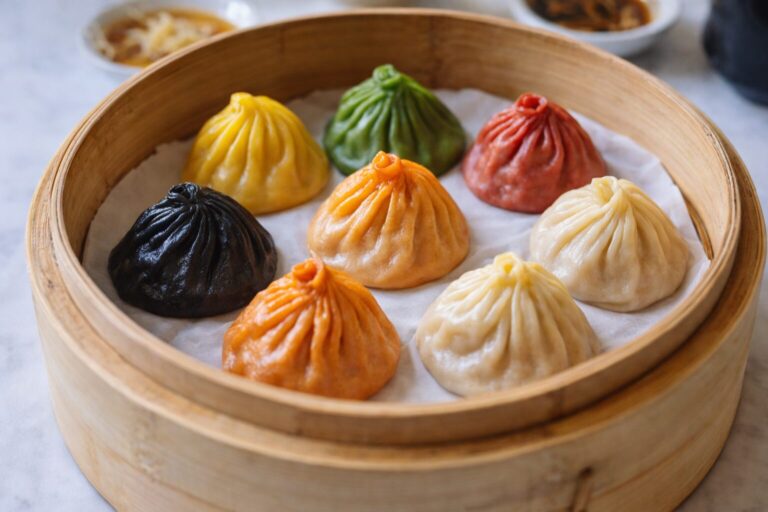
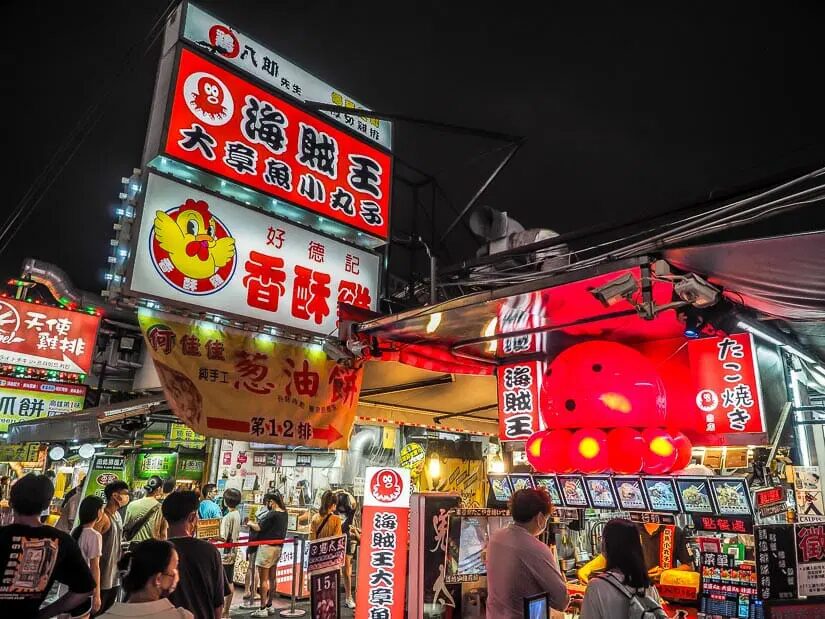
At Tamsui and Shilin Night Market, tourists lift fist-sized buns with both hands, push straws through their skins, and sip the hot liquid inside. The bamboo steamer suggests xiaolongbao, but the bun behaves more like a drink than a dumpling.
In Tamsui, in Shilin Night Market, and sometimes in Shanghai’s Yuyuan, I see the same scene.
Tourists hold a bun the size of a fist.
They push a straw into it.
They drink.
It is called tangbao, or guan tang bao.
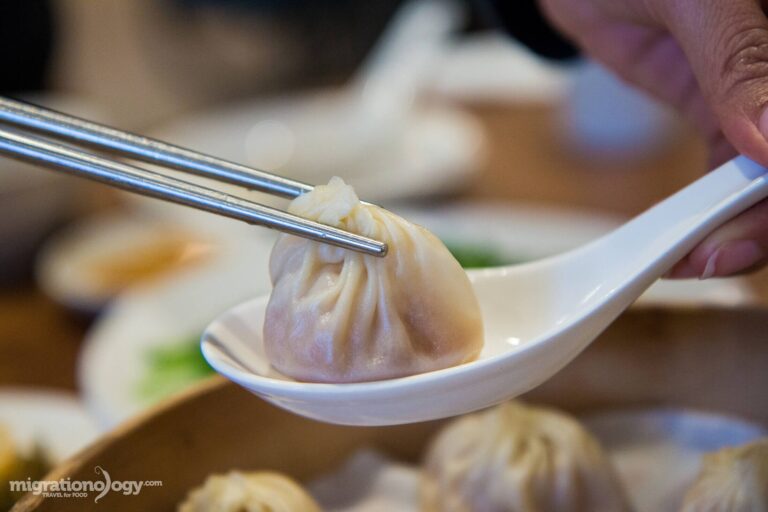
It is also called xiaolongbao, but the scale is already different.
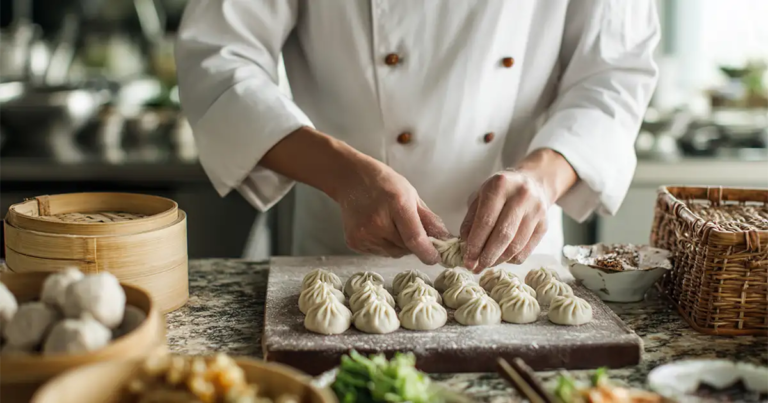
It sits in a bamboo steamer, yet it is not meant to be eaten in one bite.
If Din Tai Fung moved toward thin skin and quiet repetition,
this one moved toward size, wobble, and play.
At first glance, it looks like a modern invention made for attention.
But the form is not built only from novelty.
Its roots are older than the Taiwanese standard.
A thousand-year-old fast food
The origin is often traced to Kaifeng in Henan, China.
In the Northern Song period, soup-heavy buns were already part of city life.
The old capital was dense.
Markets, officials, travelers, street stalls.
Food had to match the speed of movement.
There were no straws.
People bit a small hole, sipped the liquid, and then ate the rest.
The order came first for safety.
Etiquette followed later.
The point was not size.
It was a bun that carried hot liquid inside.
A small container of heat.
The modern invention was the straw
When a dish becomes a tourist object, it changes.
It has to stand out.
It has to separate itself from other stalls.
Tangbao grew larger.
The skin became thicker.
The soup increased.
The bun began to look like a balloon.
But scale creates side effects.
It is too hot.
It is hard to lift.
It tears.
It collapses.
The straw solved several problems at once.
Someone must have tried it first.
From that moment, the dish shifted slightly.
It was no longer only eaten.
It was also drunk.
People sip.
They stop.
They laugh.
They film.
The bun pretends to be a dim sum item,
while moving closer to a beverage.
An anti-thesis to Din Tai Fung
This soup bun seems built in the opposite direction.
Din Tai Fung values thinness.
Here, strength matters more.
To hold that much liquid, the wrapper must endure pressure.
It becomes thick, elastic, and hard to tear.
It is no longer just a wrapper.
It is closer to a bowl.
The center of gravity also shifts.
The filling becomes secondary.
The soup becomes the main actor.
The meat is a support structure for the liquid.
This is not about the perfection of a single bite.
It is about how liquid can be held, shown, and released.

When danger becomes entertainment
One reason people gather is the risk.
Drinking hot soup through a straw is not calm eating.
It becomes a small event.
Sip.
Too hot.
Pause.
Sip again.
That rhythm shapes the atmosphere around the table.
Din Tai Fung encourages silence.
This dish invites noise.
Night markets and tourist streets fit it better.
The roughness belongs there.
Even the possibility of burning your mouth feels like part of the price.
The smartphone as accomplice
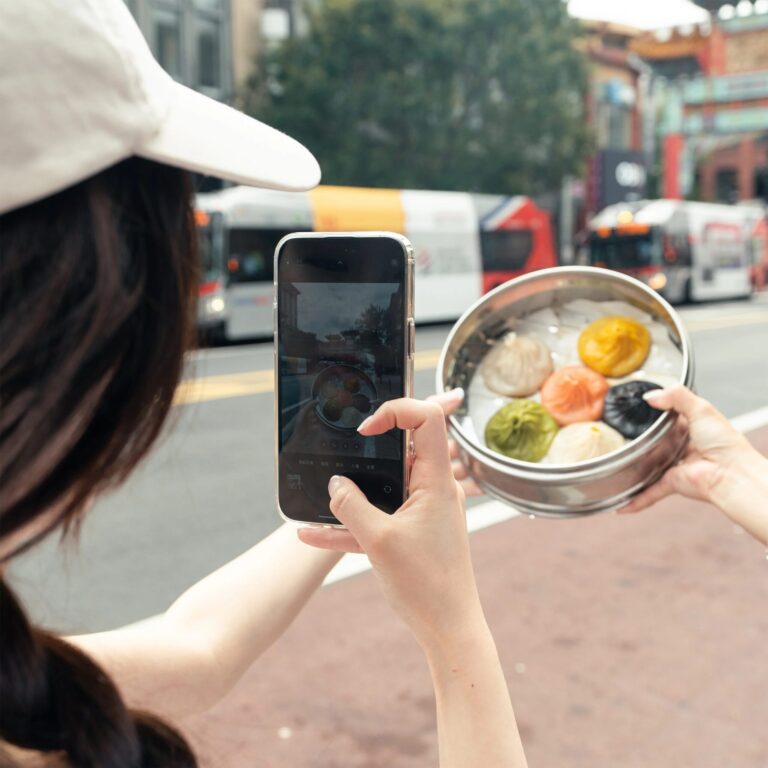
The revival of this dish has another partner: the smartphone.
A regular xiaolongbao can look plain in a photo.
Its meaning is in thin skin, heat, and how it breaks in the mouth.
Those are hard to carry into a screen.
Guan tang bao behaves differently.
It wobbles when touched.
The liquid shifts inside like a weight.
Even a still image shows something strange.
Video makes it clearer.
The moment of stabbing the straw becomes a ritual.
The liquid rises.
The person reacts.
The people around them laugh.
A short story completes itself in seconds.
The dish needs no explanation.
The danger and the awkwardness arrive first.
A bun becomes something to film.
Only forms that survive filming remain.
Liquid that moves.
A gesture that repeats.
A reaction that can be captured.
This soup bun fits the requirements.
The eater becomes a commentator.
The food adapts to the commentary.
That feedback loop now reaches the inside of a steamer.
An old liquid bomb, made new again
Guan tang bao does not feel like a break from tradition.
It feels like a survival strategy.
A thousand-year-old form adjusted itself to tourist streets and short videos.
It became larger.
It became thicker.
It accepted a straw.
Din Tai Fung fixed a global standard for xiaolongbao.
This dish stayed outside that standard, serving a different appetite.
Inside the steamer is not only soup.
Heat, laughter, and the act of recording are sealed in the same wrapper.
— Detour —
a little further to walk
- Notes on the Entertainment of Xiaolongbao
- Notes on Xiaolongbao in Taiwan
- Notes on the Xiaolongbao New Wave in Taiwan