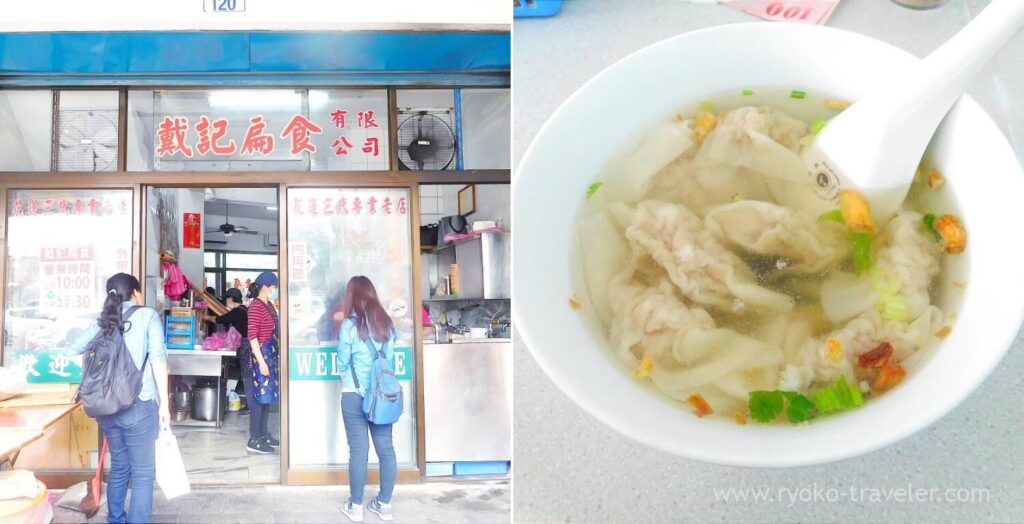
For years, a yellow sign with red lettering and a small tiger marked out a familiar kind of meal across Taipei. Now the original chain’s storefronts are white, while the yellow signs remain everywhere—often attached to shops with no clear connection to it.
For those who have spent time in Taipei,
a certain color settles into memory.
Yellow ground.
Red characters.
A slightly old-fashioned tiger mark.
Once, when people said Lao Hu Jiang Wenzhou Big Wontons,
this color scheme came first.
Before taste or even the name,
it signaled something simple: inexpensive, filling.
Walking through the city,
this yellow appeared at regular intervals.
It became part of the urban background.
A city crowded with imitation
The problem was its clarity.
Wenzhou Big Wontons is a generic term.
It belongs to no one.
As a result,
shops unrelated to the original chain,
independent long-running eateries,
and places whose intentions were unclear
all adopted similar yellow and red signs.
Before long,
the city was filled with nearly identical storefronts.
Lineage became hard to trace.
Distinction faded.
Yellow multiplied,
and in doing so,
began to lose its meaning.
The original turns white
At some point,
the chain considered the original began to change its signs.
The base became white.
The lettering cleaner.
The fonts more contemporary.
There was a sense of order,
a step away from the image of a mass-market diner.
Abandoning yellow meant letting go
of a successful past.
Choosing white was a quiet statement.
We are not the same.
Memory resists revision
But the city’s memory does not update easily.
Travelers holding old guidebooks.
Elderly residents moving by long habit.
For them,
the real big wontons are still yellow.
They pass by white signs without pause
and drift toward familiar colors.
The result is an inversion.
The original turns white.
The derivatives remain yellow.
Color no longer indicates authenticity.
What sits in the bowl
Whether eaten in a white shop
or a yellow one,
what arrives at the table is similar.
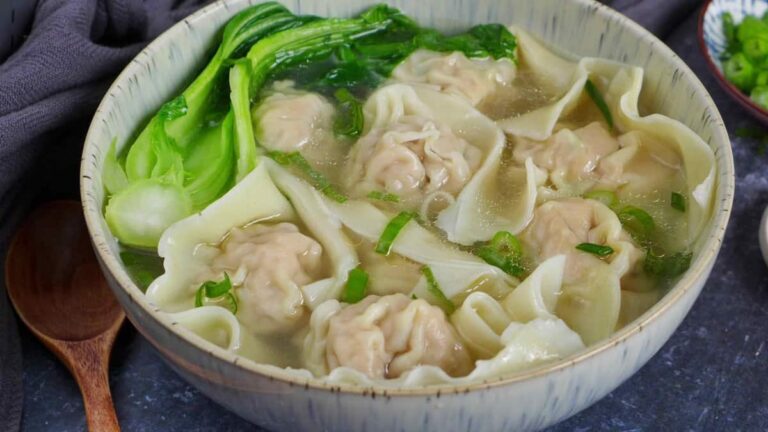
Large wontons.
Thick skins.
The weight of meat inside.
A spicy condiment placed nearby.
Despite the difference in signage,
the sensation in the mouth changes little.
In the end,
judgment is not made by color,
but by what is in the bowl.
Tigers, plural
In today’s Taipei,
white tigers and yellow tigers coexist.
The white tiger offers consistency and stability.
The yellow tiger carries memory and a degree of uncertainty.
Which is correct no longer matters much.
If the chili oil is sufficiently sharp,
and the wontons sufficiently heavy,
the color of the sign
quietly recedes from importance.

— Detour —
a little further to walk
- Notes on Lao Hu Jiang Wenzhou Giant Wontons in Taiwan
- Notes on Ghost Chains in Taiwan
- Notes on Wonton Soup in Taiwan