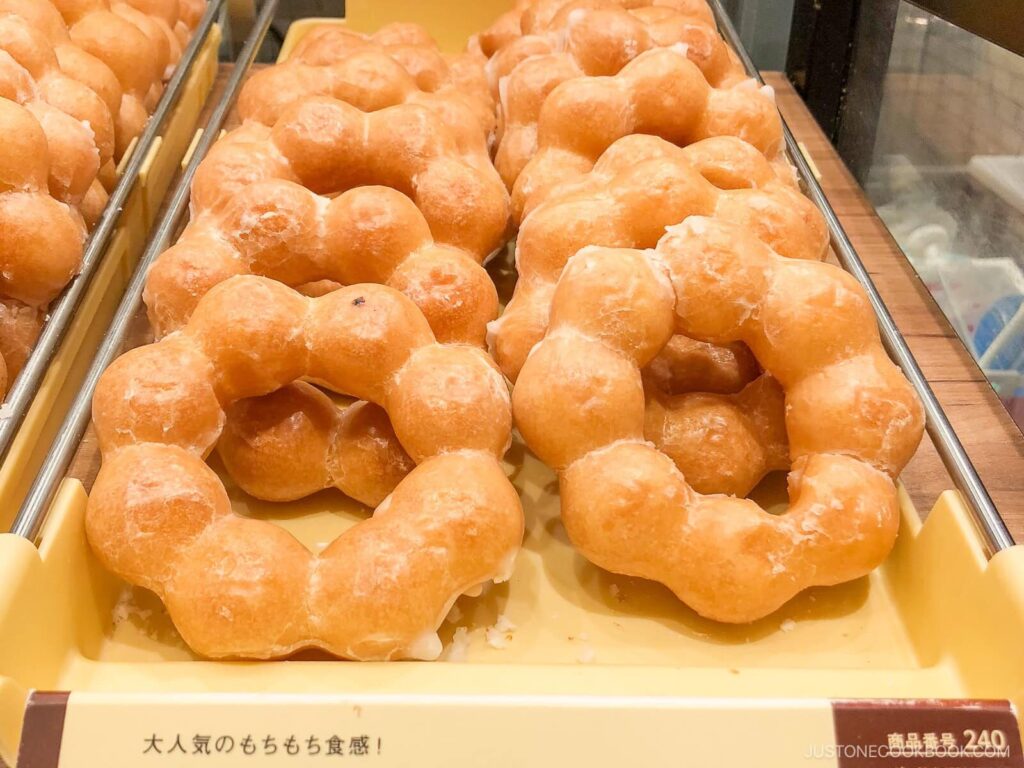
Frozen udon, convenience-store sweets, and Mister Donut’s Pon de Ring all carry a bounce that is neither quite sticky rice nor ordinary wheat. The white taiyaki had that same bounce—and disappeared.

Japanese eaters are attentive to texture.
Ramen is judged by its firmness.
Bread is expected to be soft and yielding.
Rice cakes need no explanation.
Yet in recent years, the elasticity found in convenience-store sweets and frozen foods feels different from the stickiness of traditional rice or wheat.
The time it takes to bite through.
The rebound against the teeth.
The stability that remains even after cooling.
What lies behind this is a texture known in Taiwan as Q, produced by processed starch derived from cassava.
The Japanese archipelago has already begun to change, quietly, into something more elastic.
Viscosity and rebound are not the same
Much of what is called “mochi-mochi” in Japanese refers to viscosity.
Rice cakes and dumplings cling to the teeth.
They stretch, resist, and slowly deform.
The resistance is heavy and lingering.
Taiwan’s Q is centered elsewhere.
It pushes back.
It holds its shape.
At the end, it snaps cleanly.
The sensations may appear similar, but the body reads them differently.
One is stickiness.
The other is rebound.
Traditionally, Japanese taste favored the former.
Rice cakes that did not stretch were considered flawed.
Dumplings that broke too easily were unfinished.
Still, this new elasticity was not rejected.
Rebound derived from tapioca was accepted not as something foreign, but as a “new kind of softness,” an evolved firmness.
Perhaps the reason is simple.
The word “mochi-mochi” had already grown too broad.
The frozen udon shift
Many people sense that frozen udon has more firmness than cheaper boiled noodles.
Originally, udon’s texture came from gluten formation.
Kneading, resting, water control.
It was a craft governed by technique.
Frozen noodles require something else.
They must survive freezing and reheating.
They must not break or stretch unpredictably.
They must feel the same every time.
Here, tapioca starch entered as an industrial solution.
It added freeze resistance and rebound that wheat alone could not provide.
Part of what is now felt as “Sanuki-like firmness” has been quietly replaced by cassava.

The ring that changed donuts
Mister Donut’s defining product, the Pon de Ring, did not originate in Japan.
Its model was pão de queijo, a Brazilian cheese bread.
The primary ingredient is not wheat, but tapioca starch.
Before its arrival, Japanese donuts leaned toward dryness and crumble.
Old-fashioned textures dominated.
Then came rebound.
Elasticity that returned with each bite.
That ring was not a donut in the old sense.
It was closer to a fried sweet dumpling.
This was where Taiwan’s preference for Q and Japan’s affection for softness briefly overlapped, connected by tapioca.
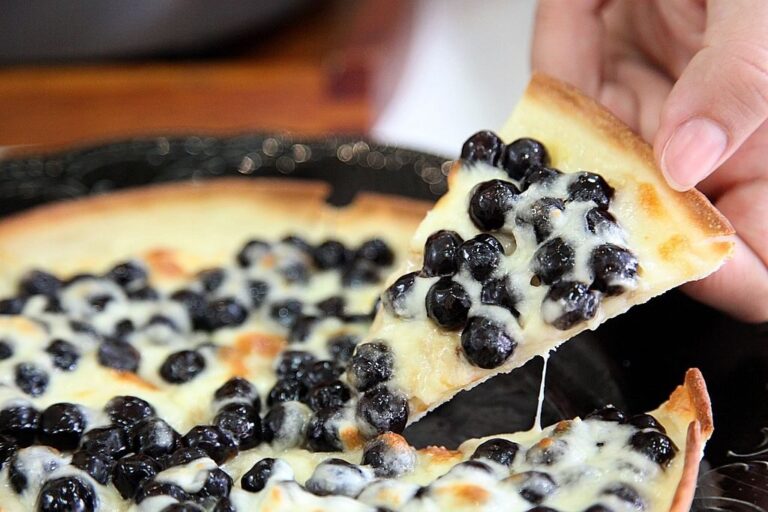

Whether it can enter the refrigerator
True rice cake has a clear weakness.
When chilled, it hardens rapidly.
This starch retrogradation turns it rigid and unchewable.
That is why daifuku is sold at room temperature.
Desserts meant to be chilled must rely on other materials.
Cassava starch was chosen.
It resists hardening at low temperatures.
Its elasticity remains over time.
The rapid increase of “chilled, chewy” sweets in convenience stores traces back to this property.
They resemble traditional confections, but inside they are chemically optimized products.
This was not failure.
It was adaptation to the refrigerator.

The brief life of the white taiyaki
In the late 2000s, white taiyaki appeared everywhere and then vanished.
Made primarily with tapioca starch rather than wheat, it stayed soft when cool.
It could be prepared in advance.
Turnover was efficient.
As a business, it made sense.
The problem lay elsewhere.
Successful Q-based foods shared a trait.
Frozen udon and Pon de Ring used elasticity as support, not as the core.
They kept wheat aroma and familiar textures as a base.
White taiyaki abandoned that base.
Crispness was gone.
Toasted aroma was gone.
Only rebound remained.
What people encountered was something close to warm, sweet rubber.
Japanese diners enjoy softness, but they do not want to eat elasticity itself.
That product became a lesson, brief and final, that Q cannot stand alone.
A localized Q, already ordinary
Frozen udon.
Soft breads.
Desserts styled after warabi mochi.
If an ingredient list includes “processed starch,” it marks the quiet presence of Q.
Long before the tapioca milk tea boom, cassava had already entered daily life in Japan.
It shed its original name, wore the mask of “mochi-mochi,” and gained full citizenship.

— Detour —
a little further to walk
- Notes on Q-Dan Texture
- Notes on the Birth of Taiwanese Tapioca
- Notes on the Texture Called Q in Taiwan