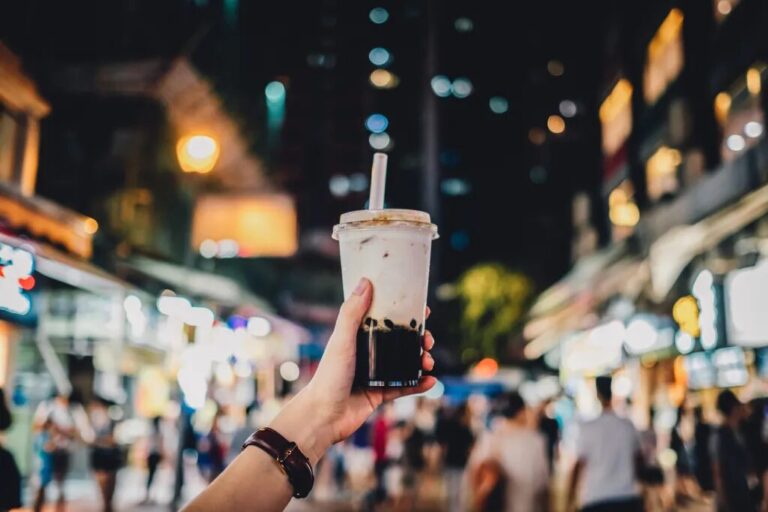
At the bottom of a cup of Taiwanese milk tea, black tapioca pearls wait beneath a drink that was never meant to be eaten. A wide straw brings both up together, turning a familiar tea break into something with a different kind of texture.
This drink is known in English as bubble milk tea, and in Taiwan it is often called zhenzhu naicha.
At first glance, the word bubble seems to point to the black pearls at the bottom.
But it did not begin there.
In the early days, the bubbles were foam.
Fine, pale froth that rose on the surface of tea after it was shaken with ice.
What mattered was not something to chew.
It was the act of shaking.
A motion closer to a bar than to a teahouse.
When cold tea was a break in custom
Until the early 1980s, tea in Taiwan was usually hot.
Cooling it was a small rebellion.
At Chun Shui Tang in Taichung, someone poured black tea, syrup, and ice into a shaker.
It was closed.
It was shaken.
The bitterness softened.
The drink became rounder.
Foam appeared.
The glass chilled.
With that, tea moved from something for adults to something for the young.
The first shift was not flavor.
It was temperature.
Starch was not meant for a cup
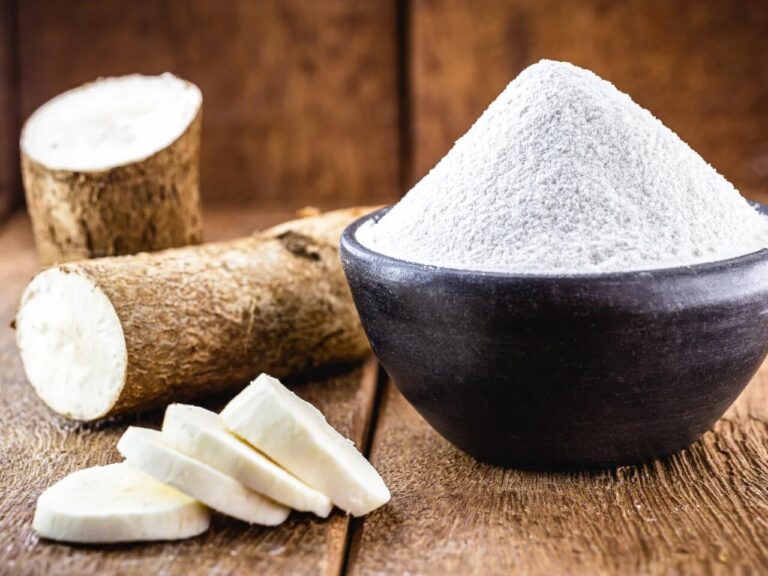
The next element was tapioca pearls, known locally as fen yuan.
These were balls of starch made from sweet potato or cassava.
They were eaten from bowls.
With shaved ice.
With sweet soup.
Someone dropped them into cold milk tea.
No one is certain who.
Some say it was chance.
Others say it was curiosity.
The result was simple.
Liquid was drunk.
Starch was chewed.
The texture Taiwan calls Q entered a drink.
For the first time, drinking and eating overlapped.

A choice not to choose an origin
After that, two shops claimed to be first.
Chun Shui Tang in Taichung.
Hanlin Tea Room in Tainan.
The case went to court.
It lasted more than a decade.
In 2019, the decision came.
There was no need to decide.
This drink did not belong to a company.
It belonged to a society.
No patent was granted.
Anyone could make it.
That is how it traveled.
It spread as something closer to open source than to a brand.
The straw that made it work
One more piece was required.
A wide straw.
Twelve millimeters or more.
Without it, the pearls would stay at the bottom.
With it, liquid and starch reached the mouth together.
The entire structure depended on a plastic tube.
A small tool finished a large idea.

A drink that learned to be chewed
What remains in the cup is no longer just tea.
It is a dessert that flows.
The shaker broke temperature.
Starch brought texture.
The straw forced them into one path.
Each time I draw a black pearl from the bottom,
I am tasting a quiet shift that began in Taiwan in the 1980s.
— Detour —
a little further to walk
- Notes on the Birth of Taiwanese Tapioca
- Notes on the Global Spread of Bubble Milk Tea from Taiwan
- Notes on Sealed Lids in Taiwan