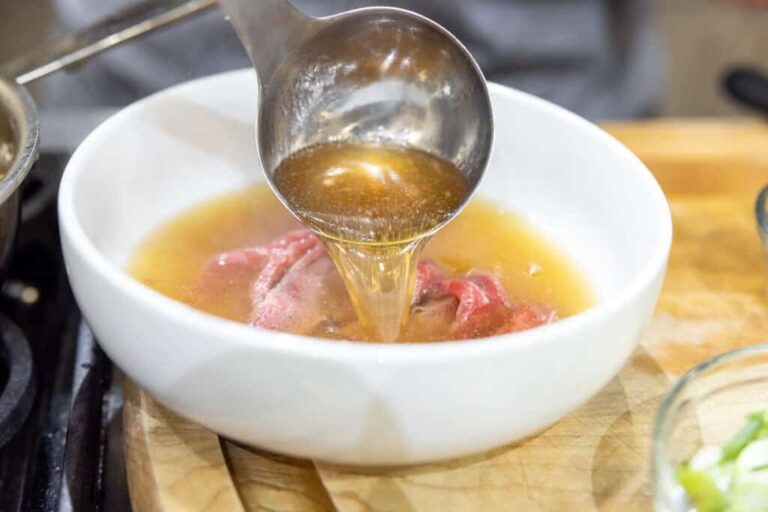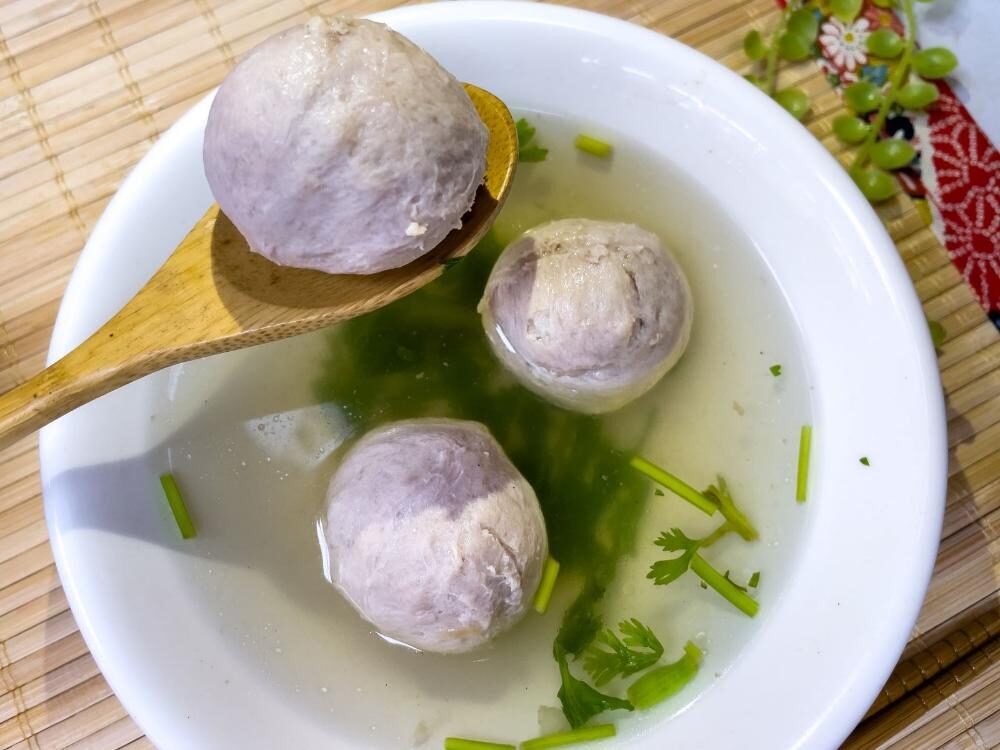
In Hsinchu, clear pork meatball soup often arrives beside rice noodles, with gray meatballs marked by deliberate black flecks of shiitake. Outside the bowl, a steady wind moves through a city where food has long had to dry, cool, and hold its shape.
Pork meatball soup, known as gongwan tang, appears early in Hsinchu.
It sits beside rice noodles on menus near Chenghuang Temple.
This pairing is often explained as a set for visitors.
But the connection seems older and more practical.
Both dishes appear to assume the same condition.
They are built on the wind of this place.

A City That Functions as Wind
Hsinchu has long been called a windy city.
From autumn into winter, strong seasonal winds arrive.
Dry, steady, and persistent.
This is not only a matter of laundry drying faster.
The city itself has functioned like a drying device.
Low humidity and constant air movement.
For food processing, these are favorable conditions.
Rice noodles developed here not because of rice alone,
but because boiled strands could be dried quickly and evenly.
The same logic applies to earlier forms of this soup.
Pounding meat takes time.
If temperature rises, fat melts and flavor weakens.
Strong wind and lower temperatures change the workspace.
Whether by tradition or accident, the climate helped.
Black Flecks in a Gray Sphere
Hsinchu’s version of this dish has another feature.
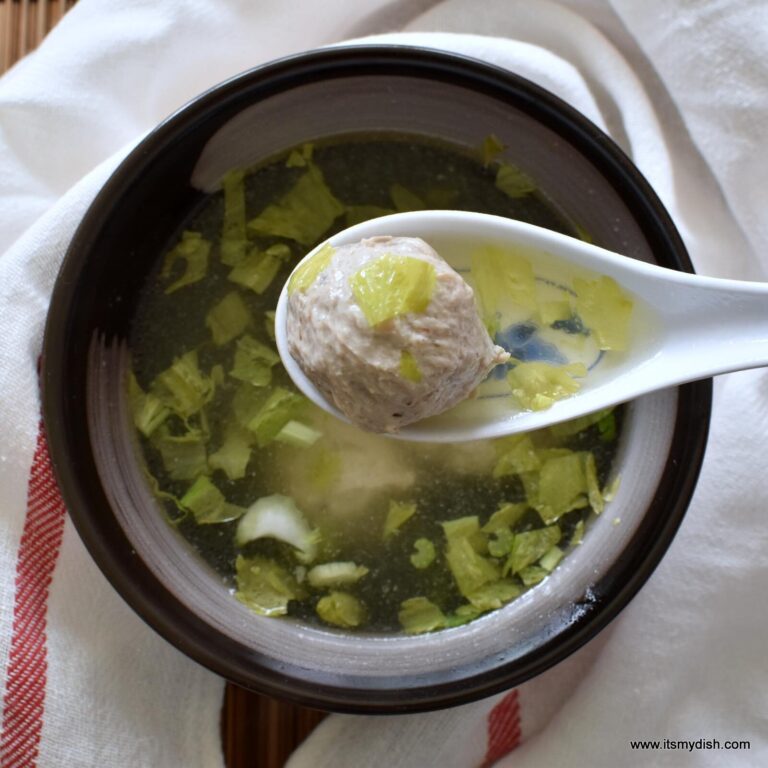
Mushroom-filled meatballs.
In clear broth, gray spheres carry small black dots.
They are not decorative.
They are not hidden.
The black comes from shiitake mushrooms mixed in on purpose.
Why mushrooms.
Pork contains inosinate.
Dried mushrooms contain guanylate.
Together, they do not simply add.
The depth changes when chewed.
This was likely known through experience, not theory.
Mushrooms gain value through drying.
Again, the wind is involved.
Black flecks scatter evenly through the gray meat.
Visually, this is a planned inclusion.
When bitten, pork fat rises first.
Then the aroma of mushroom follows from behind.
The result has dimension absent from the plain version.
Factories as a Form of Continuity
Today, most of these meatballs are made in factories.
Hsinchu has specialist producers.
Large signs, freezers, loading bays.
They no longer resemble stalls.
But this is not a break.
It is a continuation.
The labor of pounding meat moved from hands to machines.
Temperature control, mixing speed, particle size.
What was once left to wind and experience is now numerical.
Frozen packages in Taipei supermarkets often trace back here.
This city supplies texture to the entire island.
It is possible to say that before semiconductors,
Hsinchu was already producing precise meatballs.

What Remains at the Bottom of the Bowl
Drinking this soup in Hsinchu often feels different.
That may be expectation rather than taste.
Still, on a windy evening,
with hot broth and resilient meat,
there is a moment when the reason becomes clear.
Why this dish emerged here.
Why it spread across Taiwan.
The answer settles not in thought, but in the body.
This soup is made of pork, technique,
and the wind of Hsinchu.
— Detour —
a little further to walk
- Notes on Gongwan Soup in Taiwan
- Notes on Fish Ball Soup in Taiwan
- Notes on the Zhuoshui River Border in Taiwan