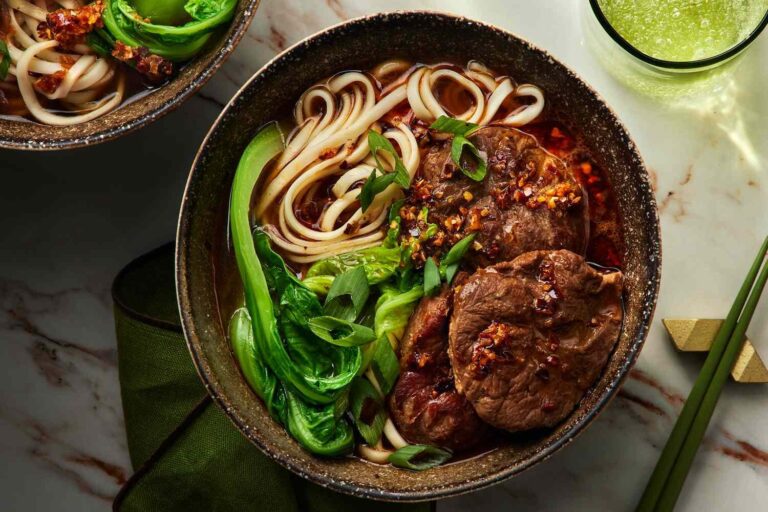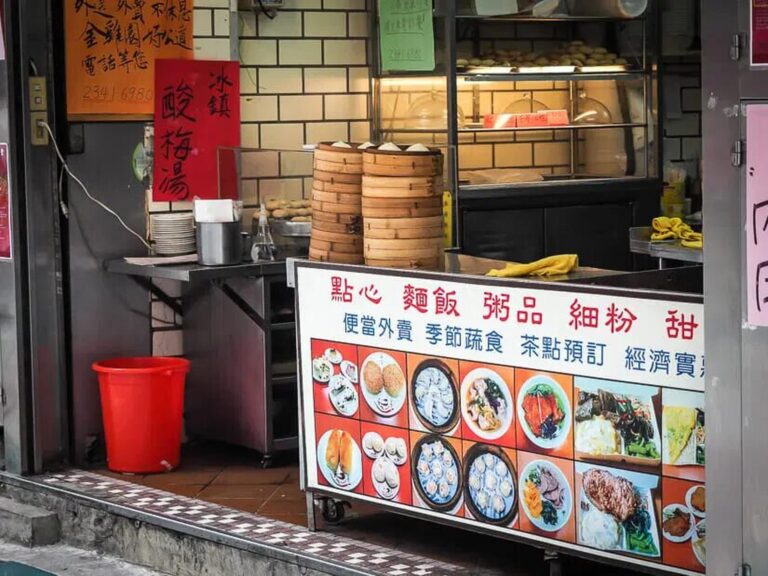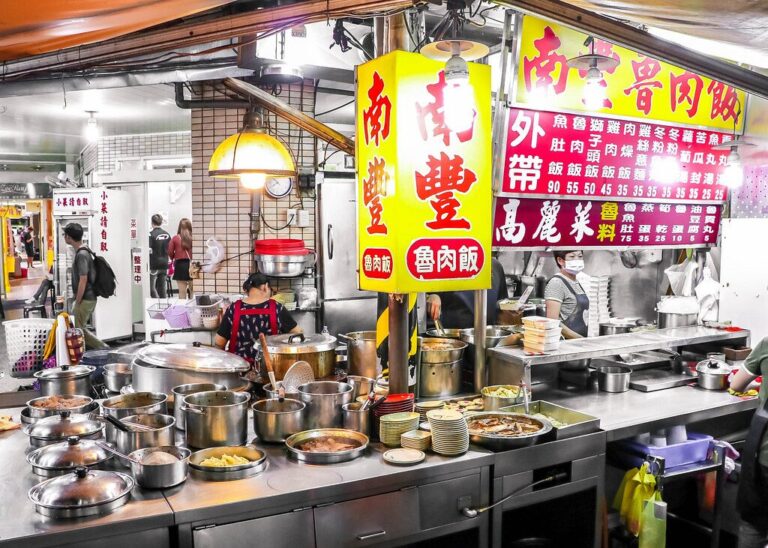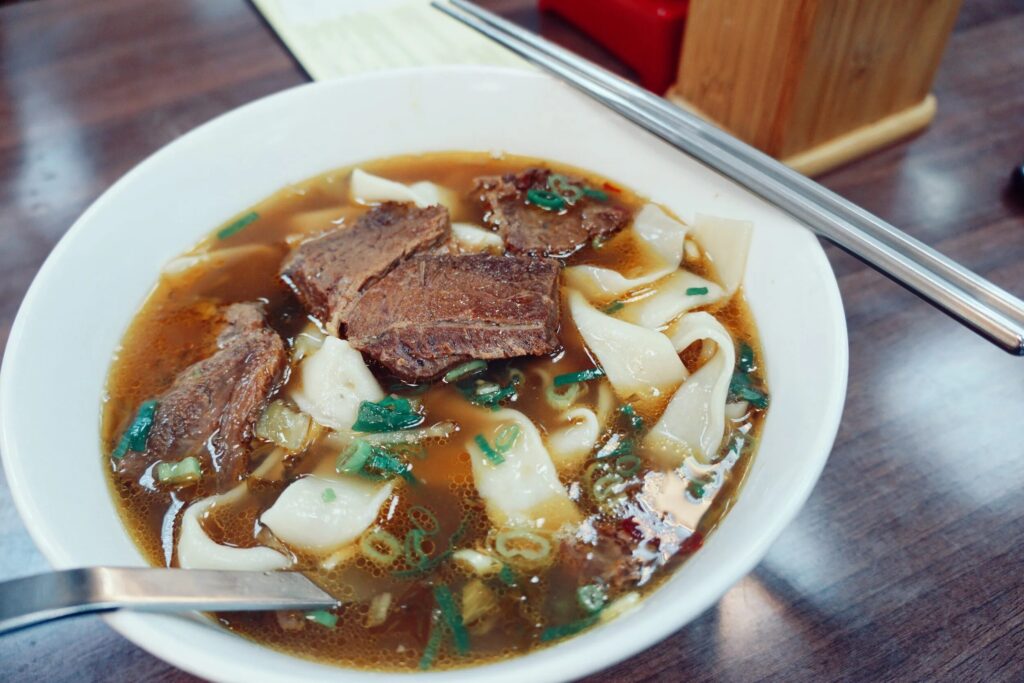
At the counter, ordering red-braised beef noodle soup is not quite finished when the bowl is named. The staff still needs to know whether the noodles should be thick, thin, flat, round, or made from starch—a small choice that changes what reaches the mouth first.
Right after I finally manage to order a bowl of red-braised beef noodle soup (hongshao niurou mian), the staff asks without a pause.
Which noodles?
It is often not written on the menu.
A quiet extra option.
If I hesitate even for a second, the shop chooses for me.
They serve the default.
In Taiwan, noodle thickness is not a matter of taste.
It decides how the broth is lifted.
Where the bite begins.
How much resistance, how much Q, remains in the mouth.
The noodles are the steering wheel of the dish.


Two simple axes: ingredient and shape
At first glance, the choice looks like thick or thin.
But from a step back, it is simpler.
One axis is the ingredient.
Wheat, or starch noodles.
The other axis is the shape.
Round, flat, or shaved from a block.
Wheat noodles lean toward chewing.
Starch noodles lean toward sipping.
Round noodles blend into the broth.
Flat noodles carry it.
Shaved noodles keep their bite.
In the end, the noodles are not a container for soup.
They are a blueprint for how the bowl will be eaten.
The classic: knife-cut noodles
A block of dough is shaved directly into the pot.
The pieces are uneven.
The cross-section is close to a triangle.
Thickness changes from one strip to the next.
That unevenness is the point.
The center stays thick and elastic.
The edges turn thin and soft.
Two textures appear inside one mouthful.
Even under a heavy red-braised broth, the noodles do not disappear.
They demand chewing.
They hold their shape until the last swallow.
If I want the feeling of eating, this is the safe first choice.
The standard: wide flat noodles
A flat, broad noodle.
It resembles kishimen or fettuccine.
It is calmer than knife-cut noodles,
but the surface area is larger, so it carries fat and broth well.
In many shops, thick noodles means this.
It does not insist too much.
It does not fade either.
If I am new to the place and do not want to miss,
this option rarely causes trouble.
Pulled noodles
These are not cut with a knife.
The dough is stretched and pulled.
They are round and relatively uniform.
Not as delicate as thin noodles.
Not as rough as knife-cut noodles.
The bite is even.
The same resistance returns each time.
The relationship with the broth sits in the middle.
It does not melt into the soup like thin noodles,
and it does not carry it on the surface like flat noodles.
It works with both red-braised and clear broths.
It leans toward neither, and fully belongs to neither.
Some shops use the word loosely.
Even then, the label tells me the texture they are aiming for.
Thin noodles
A round, thin noodle.
The shape feels familiar to anyone who grew up with ramen.
Broth slips between the strands.
It rises together with the noodles.
This is less about chewing, more about drawing the soup in.
With a clear broth, the outline becomes sharp.
Beef bone, aromatics, and light oil move forward without obstruction.
It fits the days when weight is unnecessary.
Glass noodles
Starch noodles, close to vermicelli.
In Taiwanese beef noodle shops, this option is almost always present.
It is light.
And it absorbs.
It drinks the broth, swells, and enters the mouth with it.
On days when I do not want to eat much,
or when I want to focus on the soup,
this choice makes quiet sense.
A rough pairing logic
The patterns are easy to see.
Red-braised broth with knife-cut or wide noodles.
Chew, and become full.
Clear broth with thin noodles.
Sip, and settle down.
But the opposite is also possible.
A heavy broth with glass noodles.
The noodles vanish, and the soup turns direct.
There are rules, but nothing absolute.
Pointing is enough
If the noodles change,
the same bowl becomes a different dish.
Words are not required.
I can point at the noodles in the kitchen.
Or write one character on paper.
That is enough.
Finding my own level of Q is part of the reason to eat this dish.
Next time I am asked, I will answer without pausing.

— Detour —
a little further to walk
- Notes on Dry Beef Noodles in Taiwan
- Notes on the History of Taiwanese Beef Noodle Soup
- Notes on Tomato Beef Noodle Soup in Taiwan