At Taipei’s International Beef Noodle Festival, bowls can arrive with wagyu, gold leaf, and truffle under the lights of a judging stage. In neighborhood shops, a much quieter bowl is still carried to a table beside the television, with no medal in sight.
Taipei has the Taipei International Beef Noodle Festival.
It takes place near Yuanshan Station on the Tamsui–Xinyi MRT Line, inside Yuanshan Expo Park.
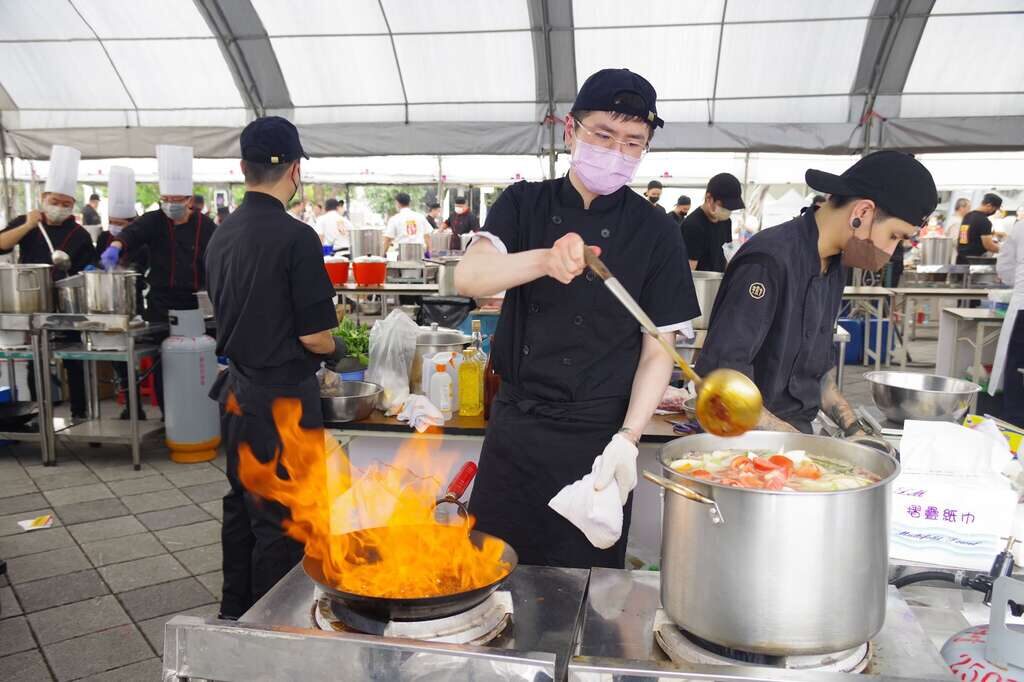
Every year, as spring begins, tents rise across the open ground.
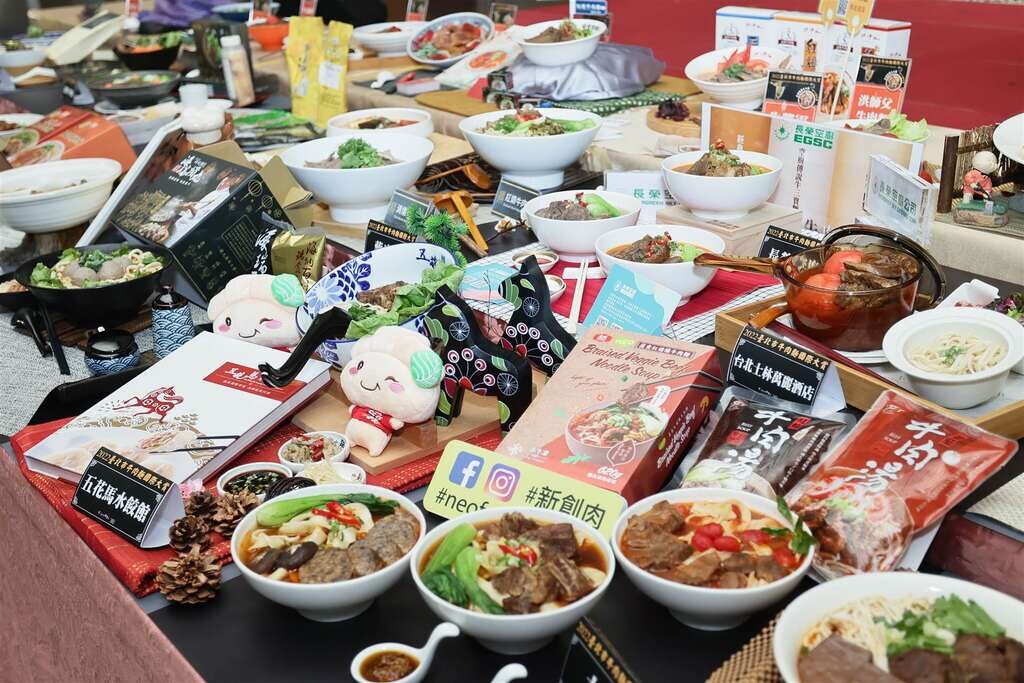
There are rows of stalls and a large judging stage.
The crowd that gathers there carries a kind of heat that does not belong to ordinary days.
The festival is said to have started in 2005.
It was not only a market of food stands.
It was also a place where chefs wagered their names and technique.
A kitchen became something closer to an arena.
That shift seems to have changed the way the dish is framed.
Once, this bowl was described as cheap food for workers.
Something eaten quickly, one hand busy, sweat still on the face.
A small part of daily life.
The festival placed it under a different light.
A street staple was turned into a contest dish, scored and ranked.
It began to appear on screens as an object of medals and awards.
So the question changes.
What does this excitement alter.
And how does it remain connected to the quiet routine of the city.
Tomato, and Other Innovations
One of the festival’s clearest effects is diversification.
The older structure was simple.
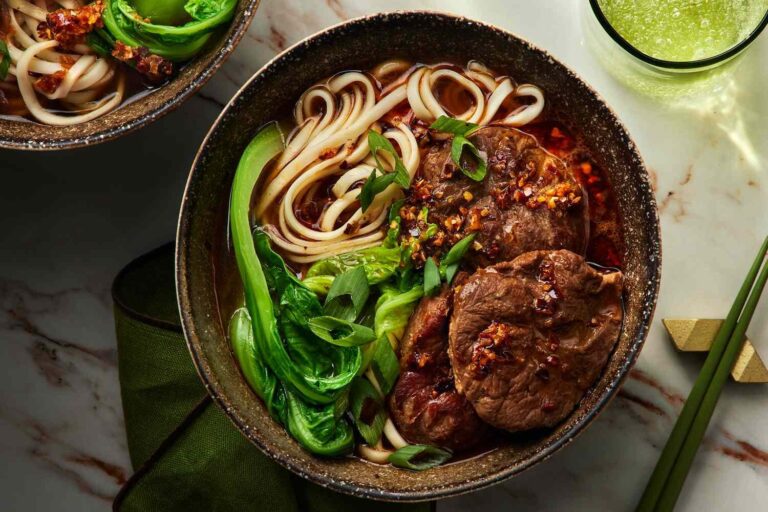
Red-braised broth, heavy with soy and spice.
Clear broth, built on salt and stock.
In competition, that was no longer enough to stand out.
A force of differentiation began to work.
Some turned to tomato.
Some added herbs.
Some introduced fruit, or expensive cuts of beef.
Tomato beef noodle soup gained a stable place in the city, people say, after a winning entry.
A red broth with acidity did not belong to the old two choices.
Still, it drew people in.
The pressure of innovation was not gentle.
It was close to enforced evolution.
The festival became a trigger.
The question of what this dish is kept being revised.
One year, a prize-winning bowl used fruit and proposed a pairing with the noodles.
In the space between stalls, a small debate followed.
Is this still the same dish.
As the festival continued, the permitted range expanded.
The definition grew wider under the hands of competitors.
When Competition Produces Something Strange
Competition, when overheated, moves toward extremes.
The most visible symbol was the ten-thousand-NT-dollar bowl.
Roughly forty-five thousand yen.
A block of top-grade wagyu.
Gold leaf.
Black truffle.
Broth simmered over several days.
The media called it a monster.
Some said the taste was delicate.
But it also looked far from the old definition.
This was not the warm steam of a street stall.
It was served in a tense atmosphere, closer to ceremony.
Beyond luxury, it became a symbol.
A working meal, in one corner of the city, began to turn into entertainment for the wealthy.
The distance feels similar to what is called gentrification.
A bowl once eaten quickly is now discussed with knife and fork beside it.
The change is more than price.
Quietness as a Form of Resistance
Behind the festival’s bright heat, some long-running shops refuse to participate.
A narrow alley.
A small storefront under an old sign.
The characters for beef noodles are there.
But there are no medals, no trophies.
They say they are already too busy serving regular customers.
The words are not cold.
They are calm, like a long breath.
For them, this dish is not a work meant to impress judges.
It is daily food meant to fill the stomach of a student from nearby.
If the competition bowl stands at the center of a stage,
this one sits on the back side of the city.
In a play, it would be the lead and the supporting role.
But both have lines.
A bowl for competition.
A bowl for living.
This is not a clean opposition.
It is the same word used in different contexts.
The division created by the festival lies quietly inside the city’s food culture.
Beef Noodles Inside Daily Life
Walking through the city, there are shops where chairs line up under the sign.
A television hangs overhead.
The click of a remote’s volume button echoes inside.
In afternoon light, the owner pours broth.
The customer moves chopsticks in silence.
There are no certificates on the wall.
But there is the same careful rhythm.
The soup is not too heavy.
The noodles move softly.
The beef is cut into pieces that can be bitten through without struggle.
It is quieter than the festival stage.
But this place also has its own time.
Two Answers, Side by Side
The Taipei International Beef Noodle Festival helped raise this dish into a tourism asset.
That achievement is widely recognized.
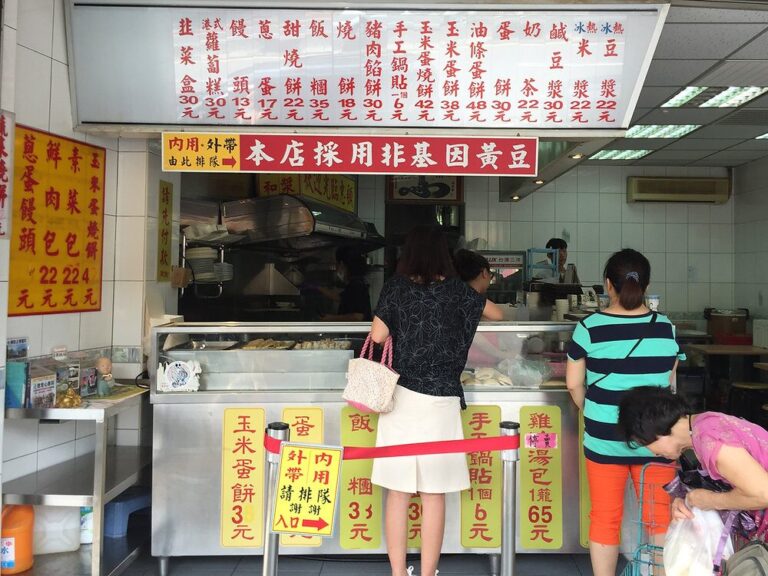
At the same time, a 150-NT-dollar bowl carried by an auntie while the TV plays also holds a life.
Entertainment that evolves.
A staple that stays.
Their coexistence may be part of what makes Taipei feel thick as a city.
It may also be simpler than it looks.
The competition bowl and the everyday bowl may be running the same course,
only at different speeds.

— Detour —
a little further to walk
- Notes on Tomato Beef Noodle Soup in Taiwan
- Notes on the History of Taiwanese Beef Noodle Soup
- Notes on Dry Beef Noodles in Taiwan