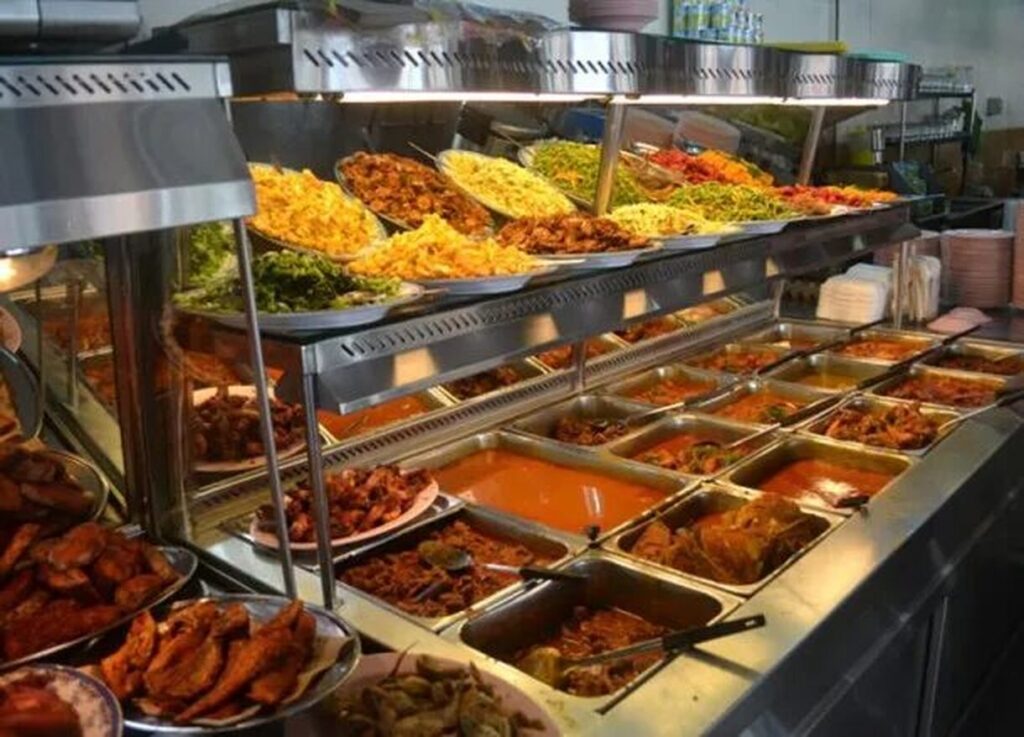
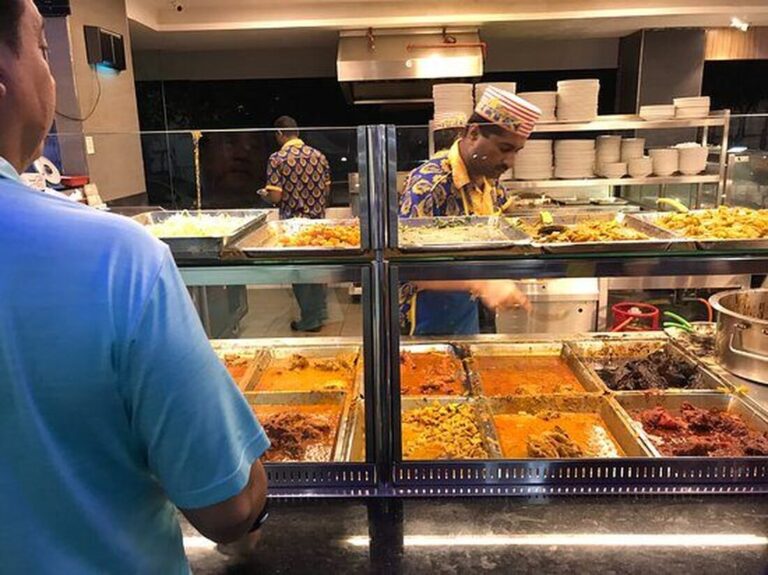
Behind the glass, brown, red, black, and gold dishes sit in neat rows, each one suggesting a different kind of weight. A single pointed choice can make the rice crisp, glossy, fiery, sweet, or difficult to finish.
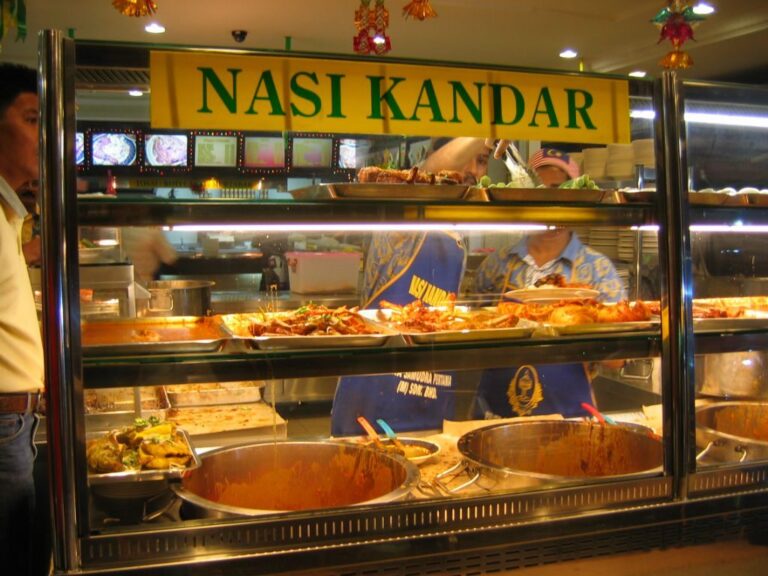
I stand at the ordering counter.
Dishes are stacked behind glass.
Brown, red, black, gold.
The colors alone suggest the weight of the plate.
What I choose is lauk (side dishes).
It looks like a simple act of pointing.
In practice, it becomes the day’s design work.
Spicy or sweet.
The center of gravity shifts.
Crisp or stewed.
The texture is decided as well.
Here I sort the common main items.
I record their roles one by one.

Chicken as the default unit
In nasi kandar, chicken feels like a base currency.
It is also an exit when I hesitate.
There are two main lines.
Fried, and stewed.
Fried stays dry.
Stewed stays wet.
The same meat changes the terrain.
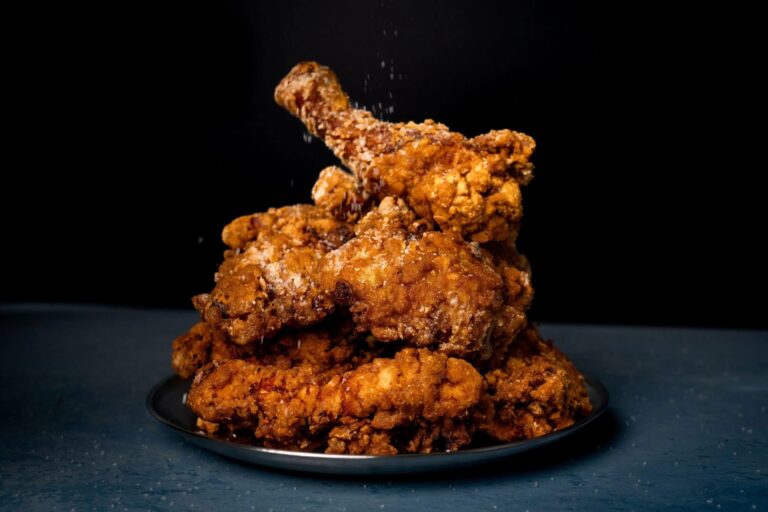
Ayam goreng
Ayam goreng (fried chicken) works as a texture anchor.
In a sea of curry, it keeps the dignity of something solid.
Spices sit in the coating.
When I bite, fibers appear.
It rarely fails.
The outline of the plate holds.
Ayam kicap
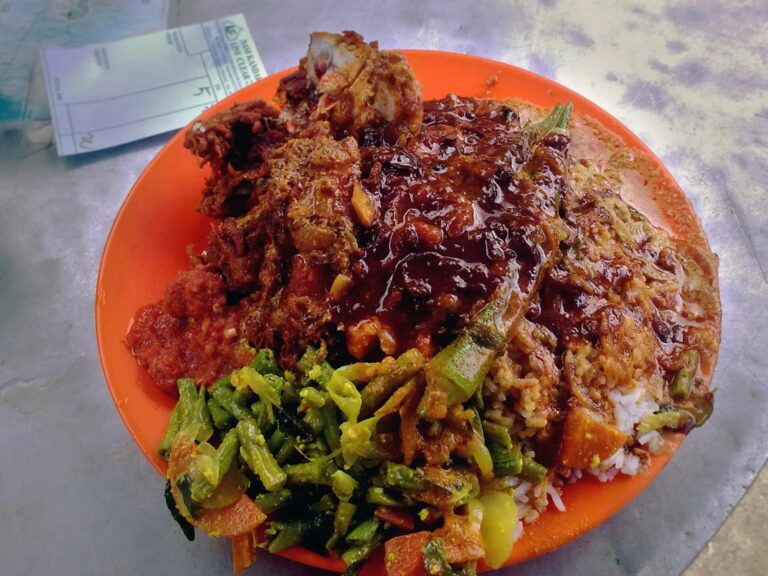
Ayam kicap (soy-braised chicken) works as black gravity.
It is often linked to Penang.
It is stewed in thick sweet soy sauce, kicap pekat (dark soy sauce), and spices.
The color is deep.
There is a bitterness like scorched sugar.
The richness is heavy.
Rice disappears faster.
Ayam madu
Ayam madu (honey chicken) works as a buffer of sweetness.
It carries a red gloss from madu (honey).
Placed beside a very hot curry, contrast appears.
Sweetness does not cancel heat.
It sharpens its edges.
When sweet and hot sit together, the temperature of the plate changes.
Ayam sambal / merah
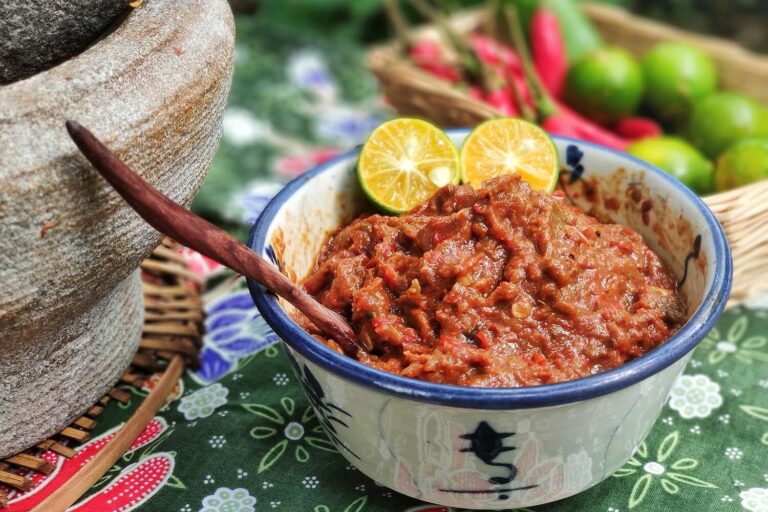
Ayam sambal, also called ayam merah (red chili chicken), works as a red trigger.
It is stewed in a sambal-based sauce.
Sourness and heat are strong.
When it meets curry, the mixture thickens.
The red becomes denser.
Heat stays longer in the mouth.
Beef and goat as concentrated spice
These are heavier than chicken.
They suit days when I want spice to press harder.
The fibers are thicker.
The fat is stronger.
The whole plate starts to sink.
Daging hitam
Daging hitam (black stewed beef) is cooked until the fibers loosen.
It is darker than ayam kicap.
The taste is compressed.
It often appears as a signature of Penang style.
When I put it in my mouth, bitterness arrives before sweetness.
Kambing
Kambing (goat meat) has a distinct edge.
It is close to an animal smell.
Strong spices pin it down.
Cardamom and clove do the work.
The curry becomes thicker as well.
It feels less like choosing meat, and more like choosing the density of sauce.
Seafood as price and size
In the glass case, seafood stands apart.
The pieces are larger.
The price rises.
It becomes the luxury slot on the plate.
Sotong
Sotong (squid) can be large enough to hang over the rice.
Sometimes telur sotong (squid eggs) sit in a single lump.
The texture is not springy.
It is dense and elastic.
Often it is fried first, then coated in a sweet-hot sauce.
Chewing takes longer.
Udang
Udang (prawns) are cooked with the shell on.
Large ones appear.
Their sweetness and paste-like richness melt into the curry.
A sea taste spreads across the plate.
It is a different kind of weight from meat.
Vegetables and eggs as stabilizers
Once the main item is chosen, gaps remain.
Side items fill them.
They are not just breaks.
They do work.
They cut fat.
They protect the tongue.
They move rice with salt.
Each has a function.
Kubis goreng
Kubis goreng (fried cabbage) often appears in a spiced style.
It works as a reset of texture.
Turmeric and mustard seeds are common.
The bite stays crisp.
A light sweetness comes out.
It becomes a solvent for curry that is too heavy.
Bendi
Bendi (okra) is often served simply boiled.
It works as lubrication.
Its slime coats the tongue.
It softens the mouth after spice.
A gentle layer forms inside the plate.
Telur rebus
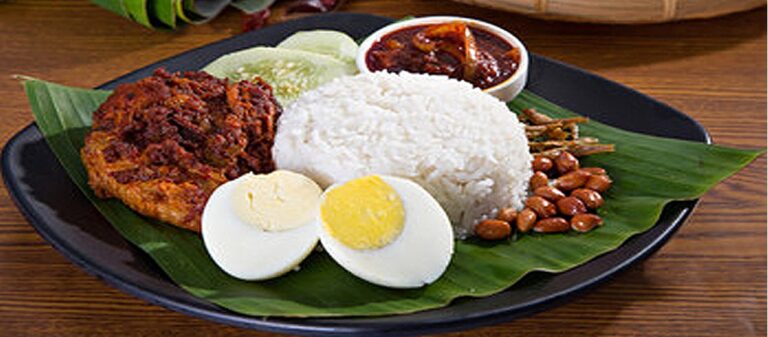
Telur rebus (boiled egg) works as volume.
A hard-boiled whole egg sits on top.
Some people break the yolk into curry.
The taste becomes milder.
Corners turn round.
Telur masin
Telur masin (salted egg) works as a salt bomb.
Duck eggs are cured in brine and left to ferment.
The white is sharply salty.
The yolk turns dense and sticky.
A small bite moves rice forward.
It works like a trigger switch.
Mistaking it for a normal boiled egg can hurt.
Teh tarik as the closing liquid
A nasi kandar plate is made of oil, salt, and heat.
By the end, the surface of the tongue grows dull.
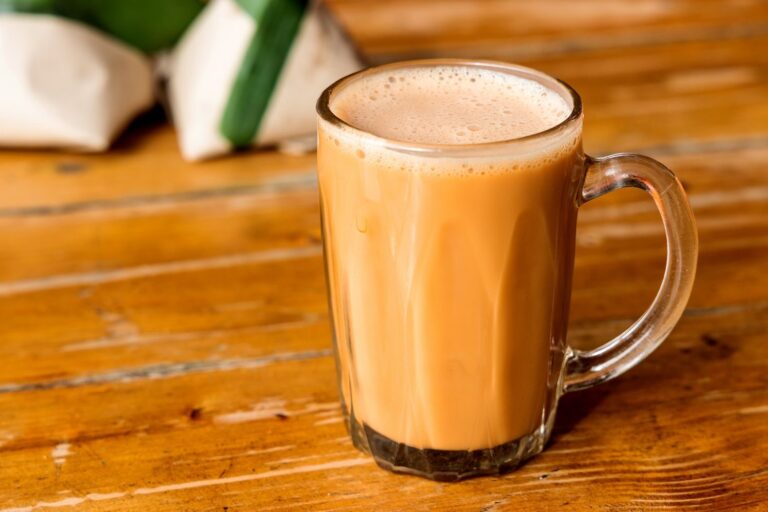
Then teh tarik appears.
Teh tarik (pulled milk tea) is hot, thick, and heavy.
After spice, it rounds the mouth.
The heat drops slightly.
Sometimes it feels like the oil film loosens under milk.
The meal ends by drink, not by plate.
Placing sweetness at the end resets the whole thing once.
The habit remains.
Drawing a private map
Today I choose fried chicken.
Or I spend on squid.
Or I sink with black beef.
A plate becomes a map drawn to match the day’s condition and appetite.
Choosing lauk is close to that.
Some days, the combination feels exact.
Then nasi kandar goes slightly beyond a meal.
The next day, I hesitate again in front of the glass case.

— Detour —
a little further to walk
- Notes on How to Order Nasi Kandar in Malaysia
- Notes on Nasi Kandar in Malaysia
- Notes on Nasi Kandar Pelita at KLCC