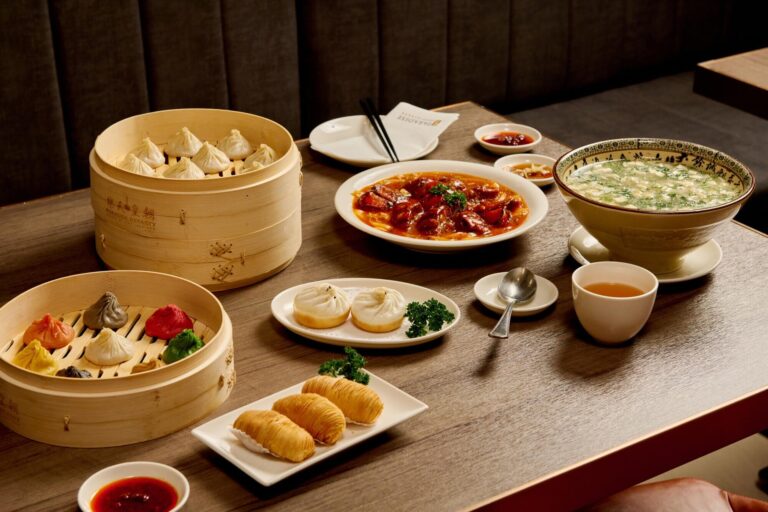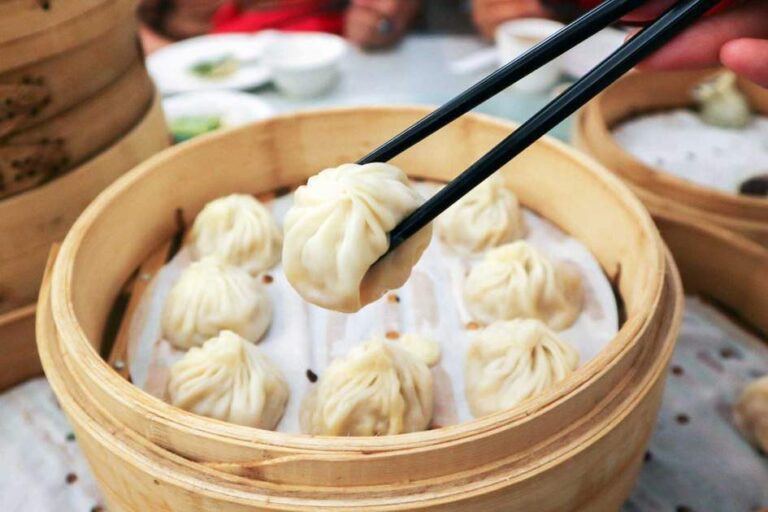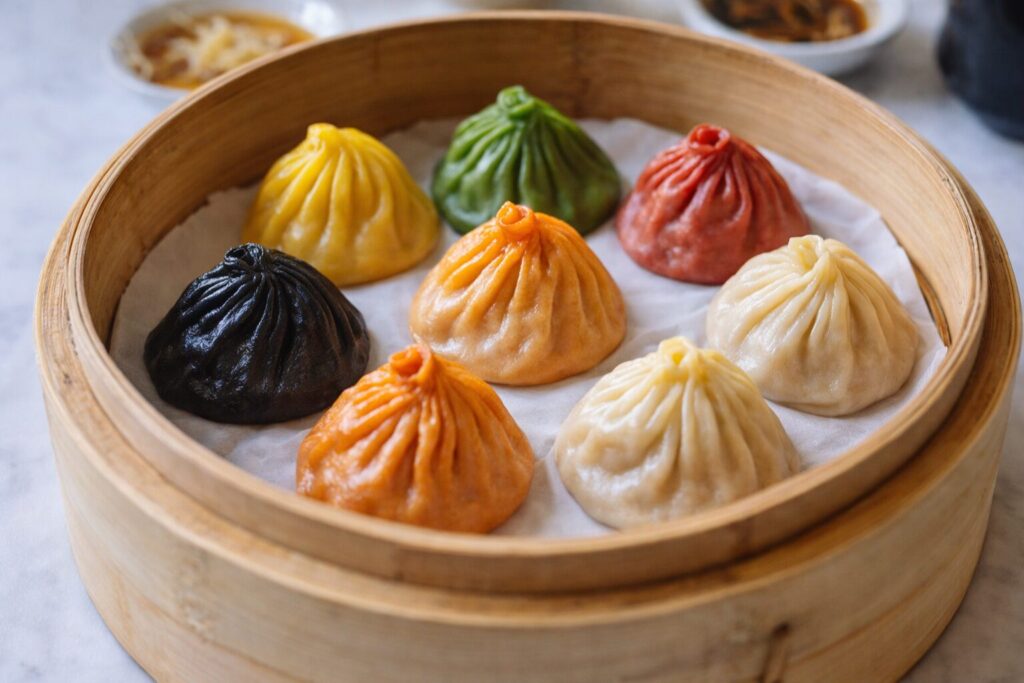
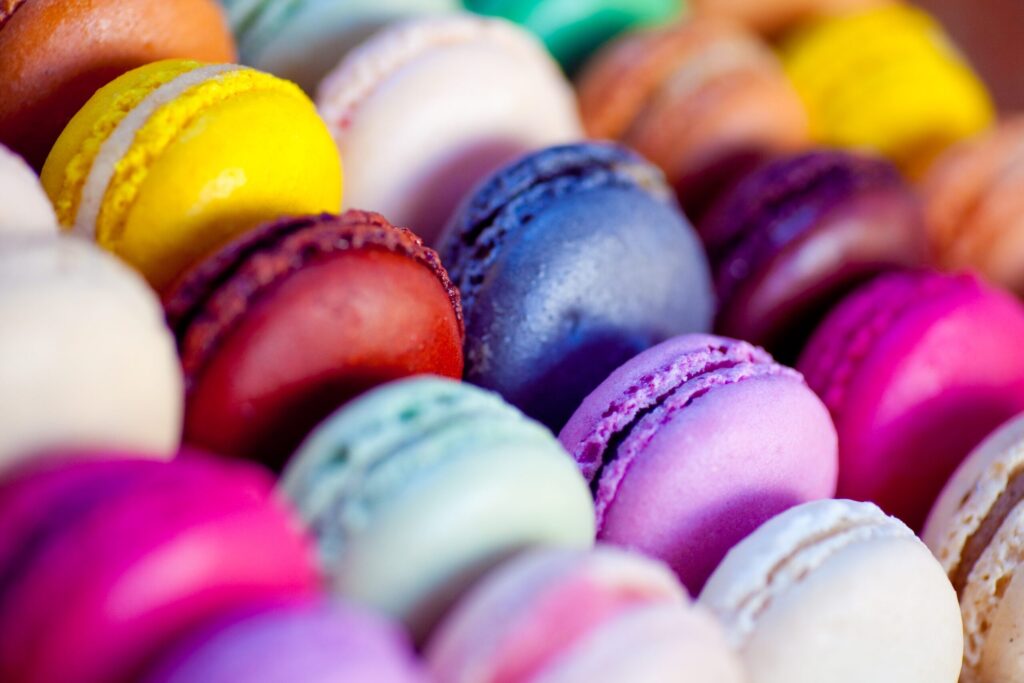
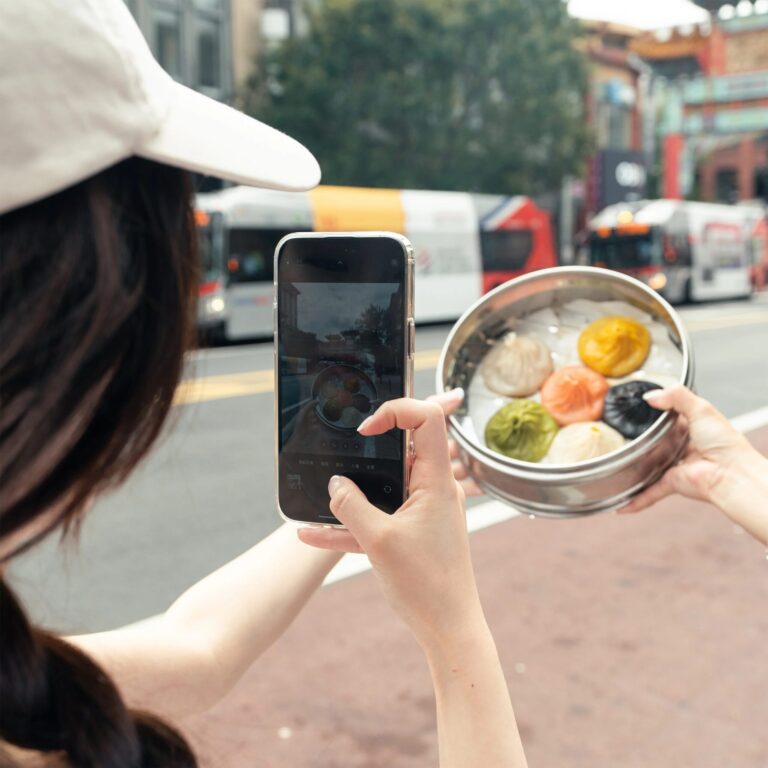
When the lid comes off a Paradise Dynasty steamer, the xiaolongbao arrive in red, green, black, and yellow instead of the expected white. They sit in sequence like a gift box—or a flight of macarons—before anyone takes a bite.
In 2010, a small incident was said to have happened in the world of xiaolongbao.
A bamboo steamer opened.
What should have been white was not white.
Red, green, black, yellow.
Candy colors mixed into the steam.
It looked less like dim sum, and more like a boxed assortment.
The name of the restaurant was Paradise Dynasty.
Some said Taiwanese craftsmen frowned.
For a long time, xiaolongbao had been expected to be white, thin, and uniform.
But younger customers raised their phones.
The steamer stopped being only a tool for eating.
It became an object to photograph.
Xiaolongbao began to be consumed as color, not only as heat and soup.
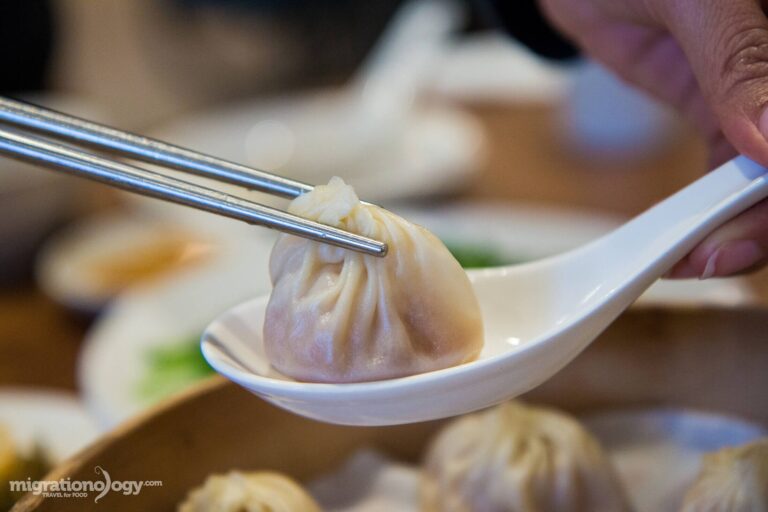

The assumption that Din Tai Fung cannot be beaten
Behind this idea, there was a Singaporean reality.
Din Tai Fung, already a giant, had filled Asian cities.
The same whiteness.
The same thinness.
The same kind of uniformity.
Competing on that ground was difficult for a latecomer.
To win, it would require a different scale.
The founder often named is Eldwin Chua.
He may have looked at xiaolongbao not as a finished tradition,
but as a product that could be edited.
The target was luxury and entertainment.
Not closing the gap in taste, but widening the gap in experience.
That approach fits Singapore.
This city often turns food into a designed event.
A hint taken from macarons
Macarons are often mentioned as the hint.
They are colorful.
They come in variations.
They can be boxed and given as gifts.
Xiaolongbao is usually white.
And a steamer empties quickly.
It disappears the moment it is eaten.
Paradise Dynasty changed it into something you can choose by lineup and color.
The steamer became the entrance of a course.
Xiaolongbao became a kind of Chinese macaron.
In dim sum culture, this was close to a taboo.
But a taboo can become a market the moment it is broken.
A roller coaster of flavors
The symbol of Paradise Dynasty is known as the eight-colored set.
The colors are not only decoration.
They function as signs for different flavors.
Sometimes the restaurant provides a suggested order.
It feels less like a menu,
and more like a schedule for an experience.
Original comes first.
Then ginseng.
Foie gras.
Black truffle.
Cheese.
Crab roe.
Garlic.
And finally mala.
From mild to intense.
Aroma rises.
Fat increases.
Spice closes the sequence.
This is not a claim of superiority.
It is a design of progression.
If Din Tai Fung feels closer to quiet repetition,
Paradise Dynasty feels closer to an attraction.
A meal is reorganized into a short event.
Why it had to be Singapore
This idea is harder to produce in the center of tradition.
The closer you are to the origin,
the stronger the form becomes.
A form becomes beautiful by being protected,
but it also resists deformation.
Singapore is a place where forms mix.
Chinese, Malay, Indian.
And also Western expectations of service and taste.
In this city, fusion often carries more value than purity.
Foie gras, truffle, cheese, ginseng, mala.
The steamer arranges ingredients by nationality.
The mixture itself begins to resemble Singapore.
Not orthodox or heretical.
It simply exists because it mixes.
A time when “foreign objects” became acceptable
At first, the colored steamer could be dismissed as a gimmick.
But commercial success remained.
And success invites imitation.
After that, restaurants around the world began selling truffle versions,
and mala versions.
Xiaolongbao became a dish where variation was allowed.
Even Din Tai Fung later introduced a truffle version, it is said.
The color stayed white,
but the entry of “foreign objects” was accepted.
That alone shows a shift in time.
Paradise Dynasty opened a door.
Not a revolution of flavor,
but a permission of thinking.
Aiming for landmarks, not standardization
Its expansion is also different from Din Tai Fung.
Din Tai Fung rewrote the world through standardization.
Paradise Dynasty aims for visible addresses.
Shanghai.
Los Angeles.
And even Taipei.
This feels less like export,
and more like a counterattack.
A dish shaped by Taiwanese culture is re-edited elsewhere,
then brought back into Asia’s own cities.
The question of which country xiaolongbao belongs to becomes weaker.
It begins to circulate as a form, not as a nationality.
A white shirt and a colorful dress
Paradise Dynasty is now global.
It exists in places like Ginza in Tokyo.
The colorful steamer is built into travel schedules.
If Din Tai Fung’s white xiaolongbao is an everyday white shirt,
this one feels closer to a colorful dress for a party.
It is not a question of which is better.
The use is simply different.
The lid opens.
Steam rises.
In that moment, color is recorded along with taste.
Xiaolongbao seems to have moved on.
From competing only by precision,
to being consumed as style.
— Detour —
a little further to walk
- Notes on the Xiaolongbao New Wave in Taiwan
- Notes on the Entertainment of Xiaolongbao
- Notes on Xiaolongbao and the History Taiwan Inherited