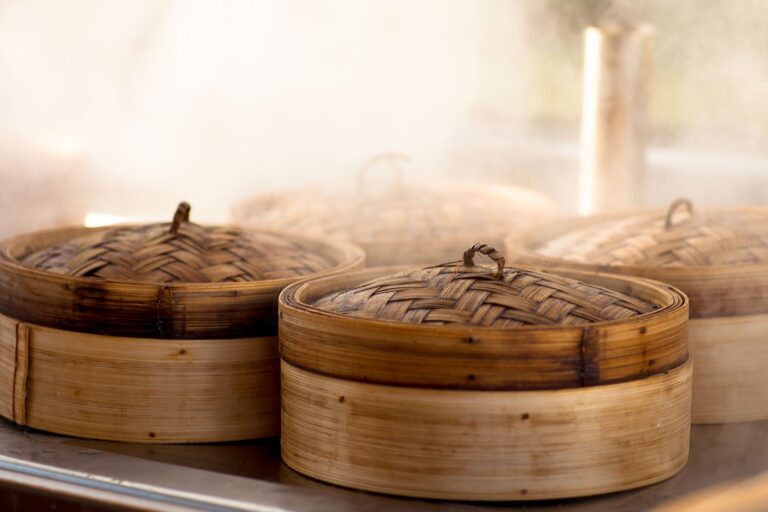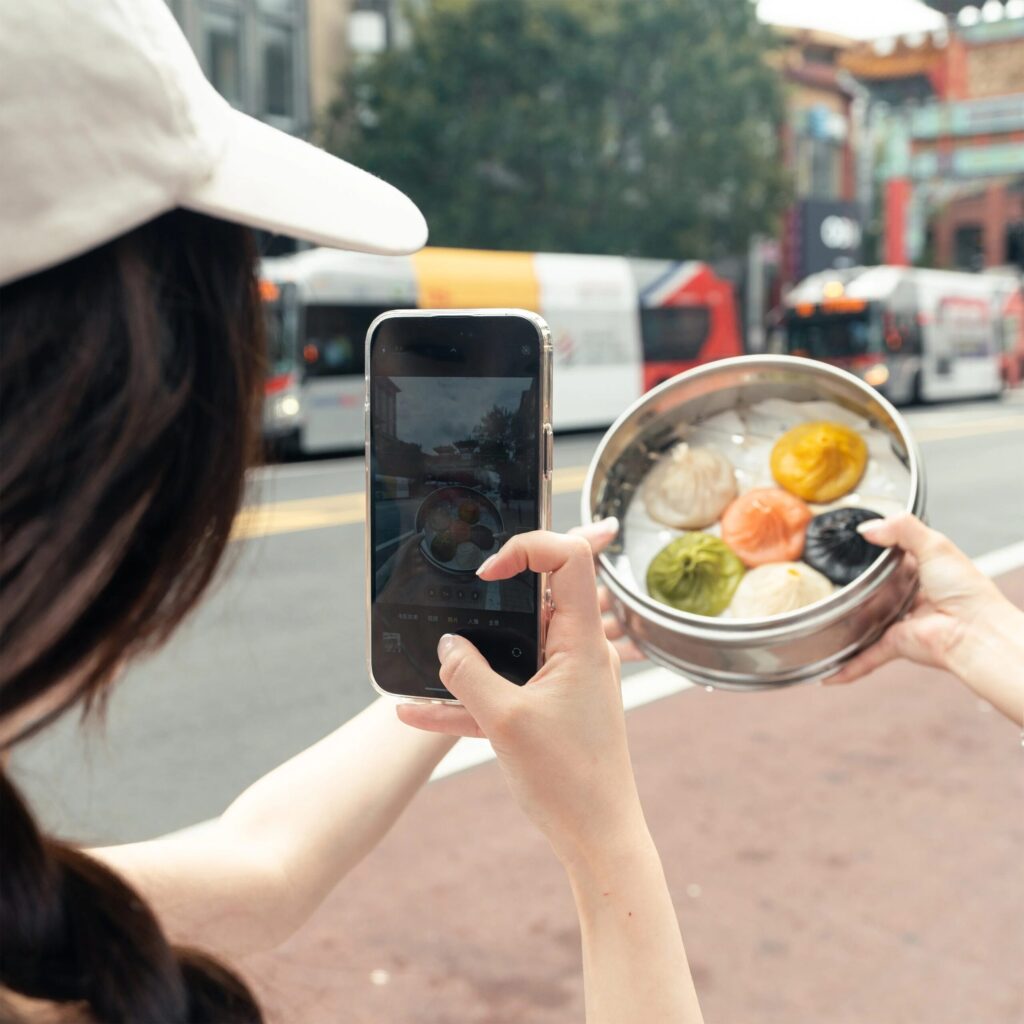
The bamboo steamer opens, steam rises, and a smartphone appears before the chopsticks do. On the screen, the dumpling’s trembling skin and sudden spill of soup matter before anyone has tasted it.
Xiaolongbao, or soup dumplings (xiaolongbao), were once meant to be eaten while still hot.
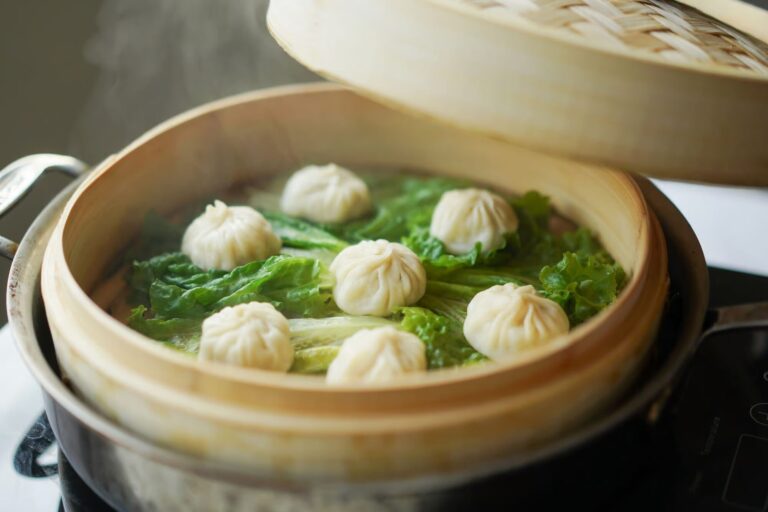
The lid of the bamboo steamer would lift.
Steam would rise.
The air at the table would cloud for a brief moment.
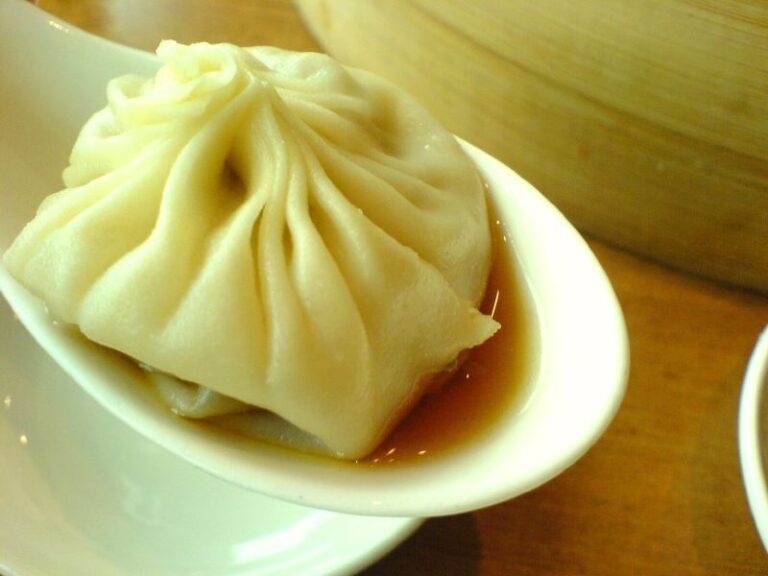
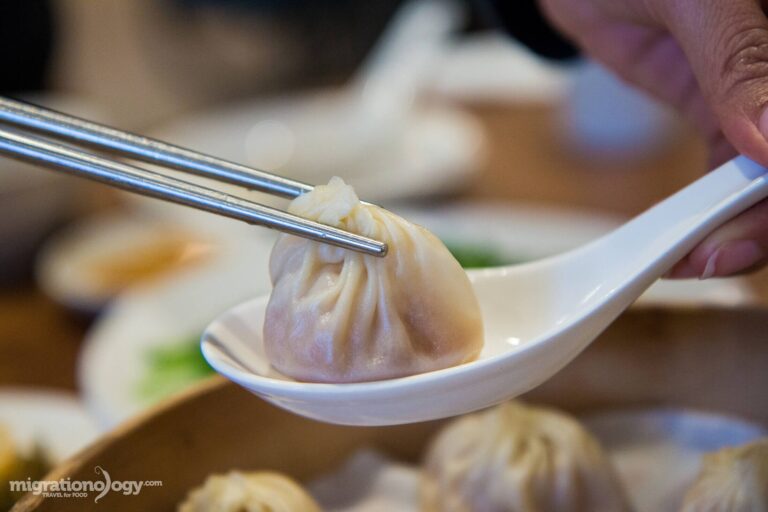
Before that haze disappeared, the dumpling was moved to a spoon, the skin broken, and the contents brought to the mouth.
Carefully, so it would not tear.
Quickly, before it cooled.
That short tension was part of the dish.
Now the order is slightly different.
The steamer arrives, and before chopsticks move, a smartphone rises.
Someone searches for an angle.
Someone looks for light.
Someone waits for focus to settle on the screen.
What sits at the table is no longer heat, but something close to silence.
The dumpling is no longer eaten before it cools.
It is recorded before it cools.
The phrase “camera eats first” is not a metaphor here.
It describes the actual sequence.

From taste to sight
Before, the tongue arrived first.
Now the lens does.
In videos, what matters is not flavor but motion.
How it trembles when lifted.
How it sinks into the spoon.
How the skin breaks under pressure.
The speed and volume with which liquid spills out.
This is closer to documenting a physical event than describing taste.
The first question is no longer how it tastes,
but whether it produces an image.
What changed was not the cooking technique,
but the order of consumption.
2010 and the arrival of color
There was a clear turning point.
In the 2010s, color appeared.
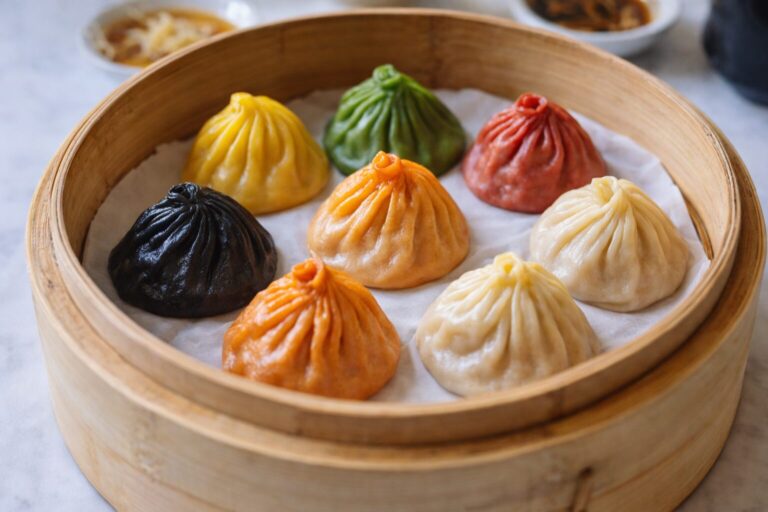
The often-cited symbol is Paradise Dynasty from Singapore, with its eight-colored dumplings arranged like an exhibit rather than a meal.
Black, for truffle.
Yellow, for cheese.
Green, for ginseng.
For a long time, white had been the norm.
Pale wheat-colored skin, shining faintly inside the steamer, dissolving into steam.
Being unobtrusive was part of the logic.
Then natural pigments were introduced.
They added variation in flavor, but more importantly, they made photographs possible.
Color is readable at a distance.
It survives the screen.
It explains itself without words.
From this point on, the dish no longer competed only on taste.
A visual contest had begun.
The jiggle, and its cost
As video spread, expectations shifted.
Movement.
Explosion.
Excess liquid.
To look good, more soup was needed.
More soup made tearing more likely.
Many shops responded by making the skin slightly thicker, slightly firmer.
Structure changed to create a moment.
The original balance favored thinness.
The skin would give way in the mouth, releasing filling and liquid together.
That brief instant defined the dish.
But thin skin does not survive filming.
If it breaks too soon, there is nothing to record.
To avoid that, it must be reinforced.
A quiet paradox appears.
Visual impact increases as delicacy disappears.
What looks better is not always what eats better.
The gap accumulates without noise.

The spoon as stage
There is a repeated scene online.
A white spoon.
A dumpling trembling.
A hole pierced.
Liquid flooding out.
This is less a meal than a short performance.
The spoon becomes a stage.
The skin becomes a prop.
The liquid becomes the lead.
The original procedure was plainer.
Sauce prepared.
Ginger set aside.
Placed on the spoon.
A small tear.
Liquid first.
Then the rest.
It was a sequence designed to avoid burns.
In video grammar, the order reverses.
Pierce first.
Spill next.
Sip last.
Safety gives way to spectacle.
The forbidden shortcut
As entertainment accelerates, structure bends.
Oversized versions appear.
Dumplings the size of buns.
Straws inserted to drink what is inside.
This style is often associated with tourist areas in Shanghai, then echoed elsewhere.
What was once about enclosing liquid becomes an attraction built around drinking it.
The name remains.
The contents drift.
A wrapped dish becomes a beverage.
The shift is less about taste than about experience design.

Images travel first
In the past, spreading this dish required people.
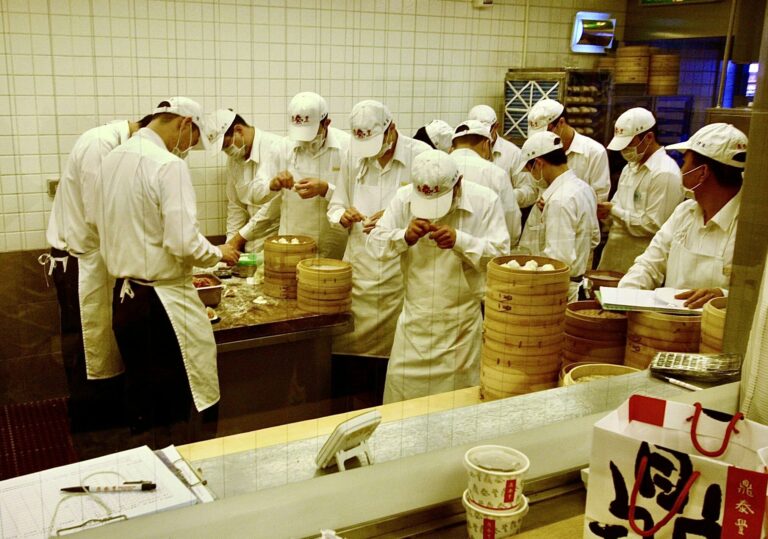
Skilled hands moved.
Shops opened.
Steamers stacked.
Time accumulated.
Now images go first.
Short videos cross borders, time zones, languages.
People who have never tasted the original watch something wobble on a screen and learn that this is what it is.
Misunderstandings spread with it.
So do new audiences.
Globalization enters a second phase, not as flavor, but as meme.
Steam does not photograph well
On a phone screen, it looks colorful and lively.
It seems delicious.
But even the best camera cannot record smell or heat.
Those two are the core.
The scent released when the lid opens.
The warmth traveling through the spoon into the fingers.
After filming ends and the phone is set down,
what remains may be a cooler, firmer remnant of an image.
Still, people record.
Then eat.
Then post.
This dish continues to tremble,
not only as food, but as something meant to be shared.

— Detour —
a little further to walk
- Notes on Paradise Dynasty in Singapore
- Notes on Guan Tang Bao
- Notes on the Globalization of Taiwan’s Xiaolongbao