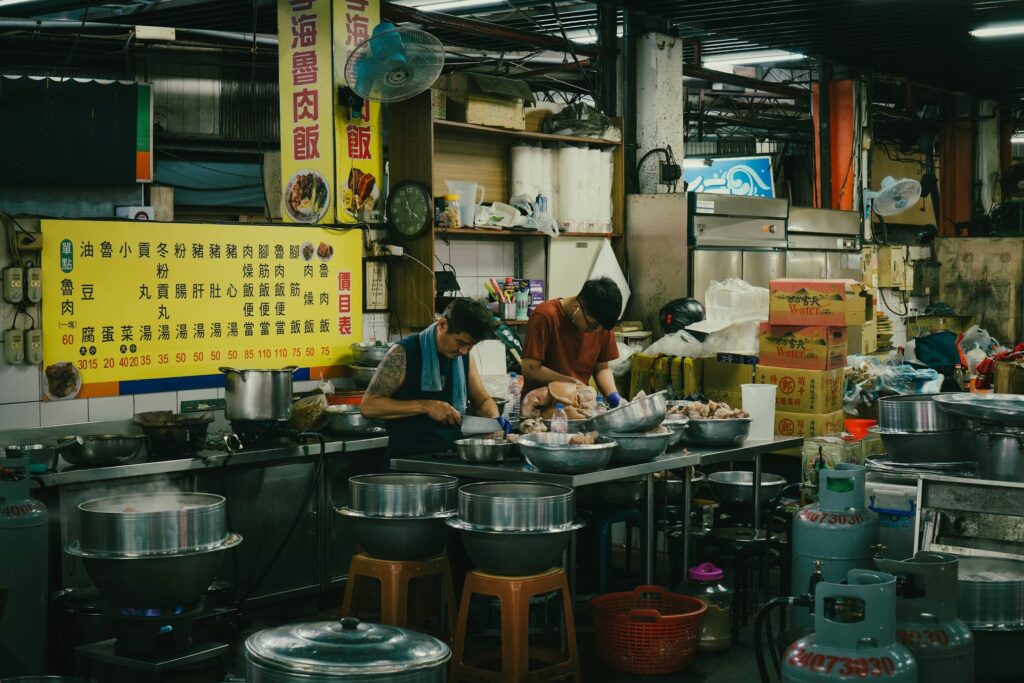
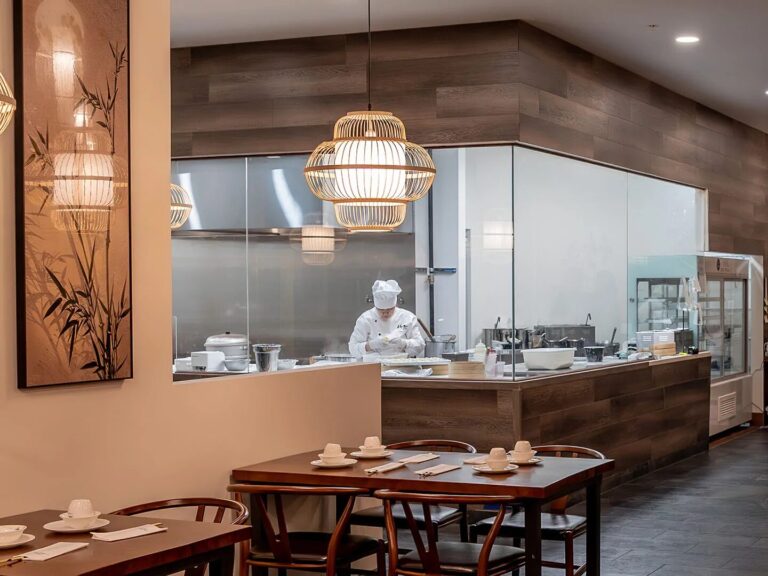
Formosa Chang serves a modest bowl of braised pork rice beneath bright lights, on dry floors, with uniforms and a tightly managed order of service. The dish belongs to Taiwan’s street-food tradition; the setting looks built to make it repeatable.
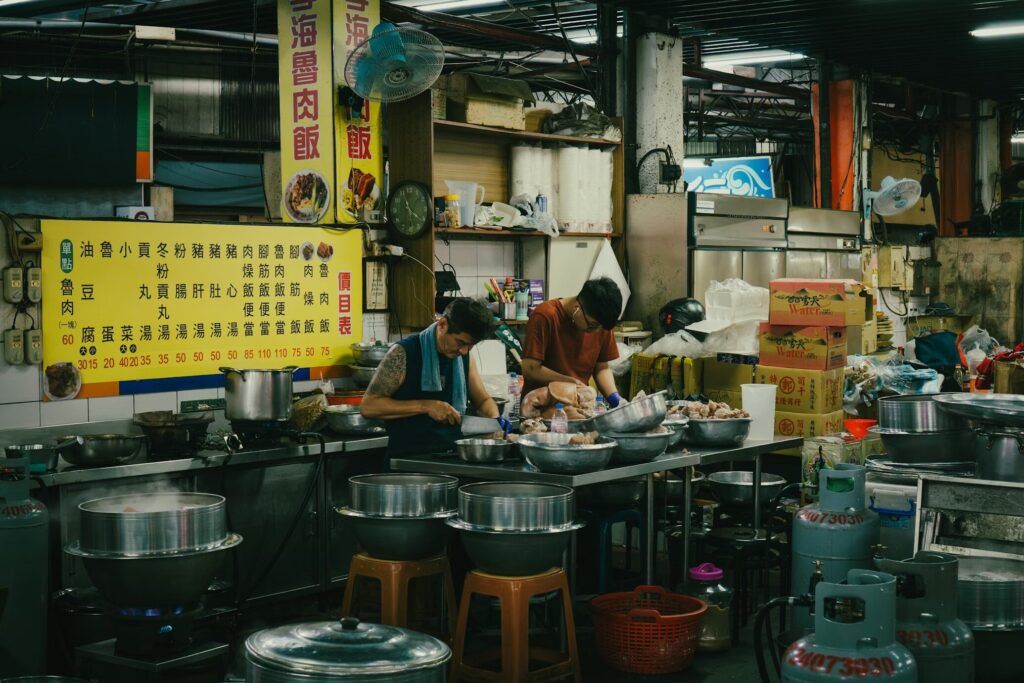
Taiwan has countless excellent stalls.
Many become well known. Few become corporations.
The taste is remembered.
The system rarely survives.
Why did Formosa Chang alone cross the boundary?
Behind it, there appears to have been a deliberate change in direction.
What the Mustached Logo Signals
There is a restaurant known as Formosa Chang, a nationwide chain built around lu rou fan.
It began in 1960 as a small street stall in Taipei.
Today, it is often treated as a reference point within Taiwanese food culture.
Inside, the lighting is bright.
The floors are dry.
Air-conditioning runs steadily.
Staff move in uniform.
The flow from ordering to serving is clear.
The dish comes from the world of street cooking.
The environment, however, feels corporate.
For many people, the name signals a meal unlikely to deviate far from expectation.
It may be one of the places that gave a stable outline to a dish once defined by variation.
Yet what is notable is this:
The presence of Formosa Chang does not end at the restaurant door.

Lu Rou Fan as Taiwanese Everyday Life
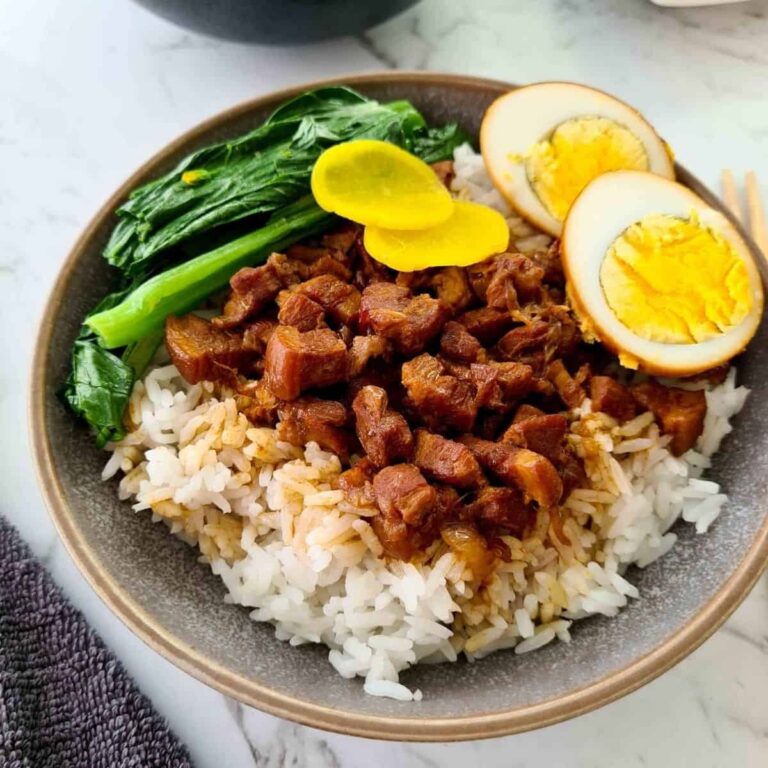
Lu rou fan is often described as a national dish of Taiwan.
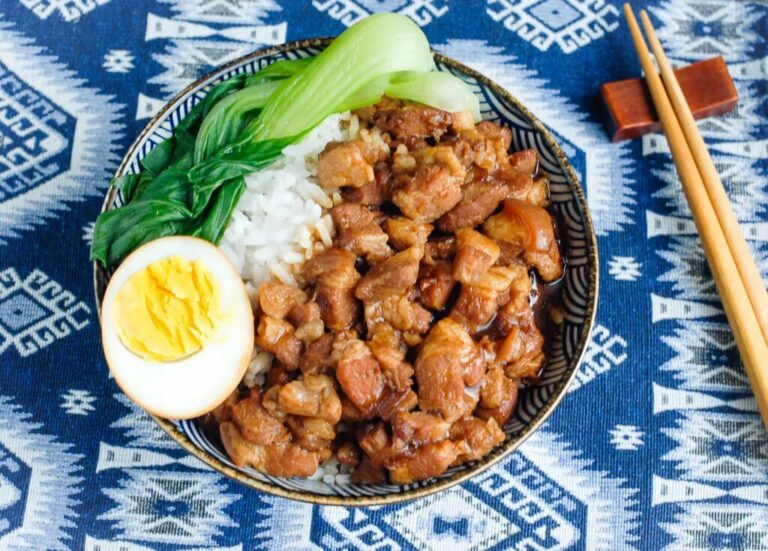
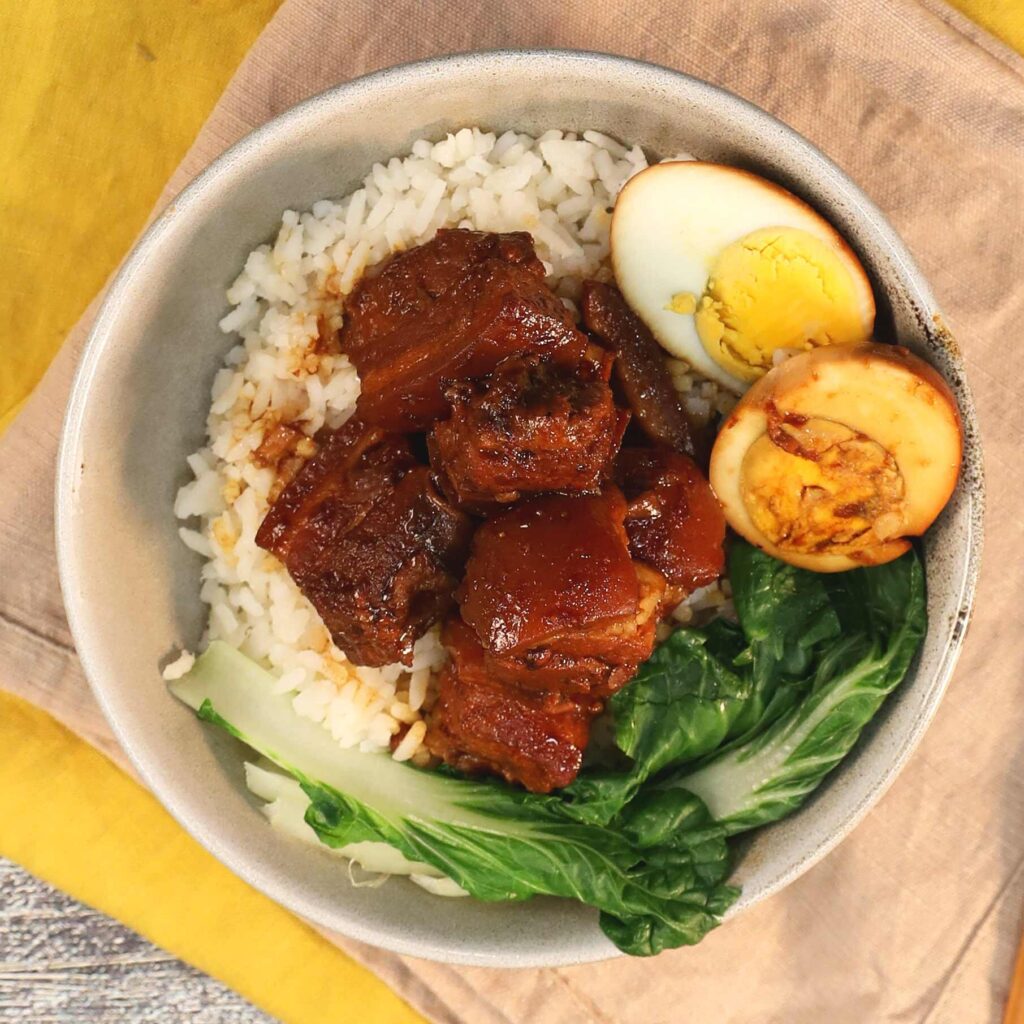
Finely chopped pork is simmered in a soy-based sauce with a restrained sweetness.
It is then poured over white rice.
The structure is simple.
Differences between shops remain visible.
The ratio of fat to lean meat shifts.
Sweetness rises or recedes.
Sometimes star anise lingers at the edge.
Even so, most people picture roughly the same bowl.
The portion is modest.
The price is usually restrained.
Some finish it alone.
Others add greens or soup and let it become a full meal.
In Taiwan, this bowl rarely marks an occasion.
It sits closer to a baseline —
something that quietly supports the rhythm of ordinary days.
When Expansion Disturbed the Flavor
The founder, Chang Yen-chuan, is often described as a craftsman.
He could judge the saltiness by the color of the stew.
He adjusted the flame by watching how oil rose to the surface.
Such knowledge resisted language.
It lived in the body.
But once additional locations began to open, conditions shifted.
“This branch is good, but that one is different.”
“It did not taste the same as yesterday.”
Voices accumulated.
Craft is difficult to replicate.
Without replication, expansion becomes an accident.
The second-generation owner, Chang Yung-chang, is said to have recognized this structure.
As long as the business depended on his father’s palate, it could not grow.
Rather than increasing the number of craftsmen, the task was to build a system that functioned without them.
From the logic of the stall to the logic of the corporation —
the first turning point seems to lie there.
1984 and the Arrival from Abroad
Another catalyst came from outside.
In 1984, McDonald’s entered Taiwan.
At the time, many local eateries did not operate with particularly high standards of speed or hygiene.
What appeared instead was the concept of QSC: quality, service, cleanliness.
Bright interiors.
Quick delivery.
Consistent interactions.
Young people and families formed lines.
The scene suggested a different future from that of the traditional diner.
Watching this, Chang is said to have fixed his direction.
Treat braised pork rice as one would treat a hamburger.
Provide not just a dish, but a system.
The goal shifted.
No longer simply to be the proprietor of a respected stall, but to build a food system aligned with global standards.
Industrializing a Traditional Bowl
The transformation took visible form.
First came the central kitchen.
The center of cooking moved away from individual shops and into a single facility.
Then the flavor itself was translated.
Words such as “a pinch,” “an appropriate amount,” and “when ready” were replaced with grams, temperatures, and minutes.
Knowledge once stored in the craftsman’s body became numerical.
The company went further, obtaining international certifications such as ISO 9001 and HACCP — unusual decisions within the world of traditional snacks.
These were not merely titles.
They resembled declarations.
A line drawn to separate the business from the image of the unsanitary stall.
At the same time, it introduced the discipline of manufacturing into a culinary setting.
Selling the System
Once measurement and manuals were established, another door opened.
Franchising.
If flavor can be copied, a store can be copied as well.
Years of apprenticeship are no longer required; operations follow a procedure.
At this stage, the enterprise seems to have shifted again.
From a restaurant that sells braised pork rice
to a company that sells the method for succeeding with it.
Ingredients, processes, managerial knowledge —
bundled together and distributed across regions.
Overseas expansion became possible only through this structure.
The move into Japan sits on the same continuum.
When a street food crosses borders, taste alone is not enough.
A reproducible form is required.
A Quiet Parallel with Din Tai Fung
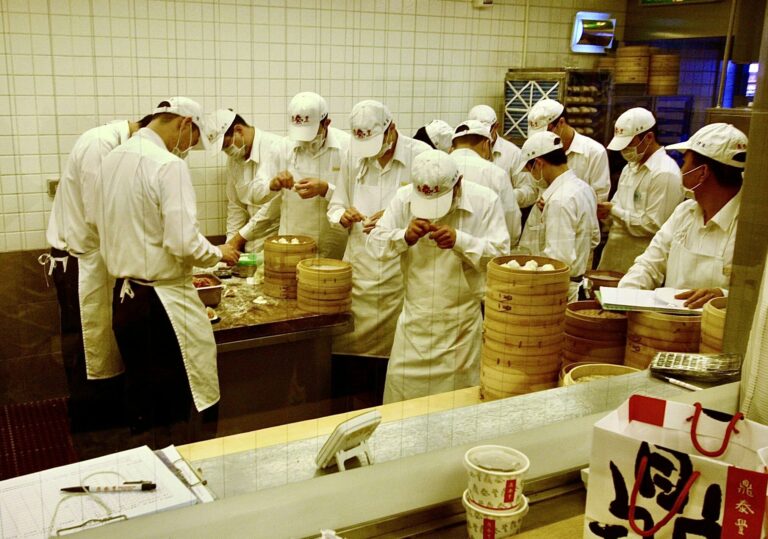
Another Taiwanese restaurant followed a similar trajectory: Din Tai Fung.
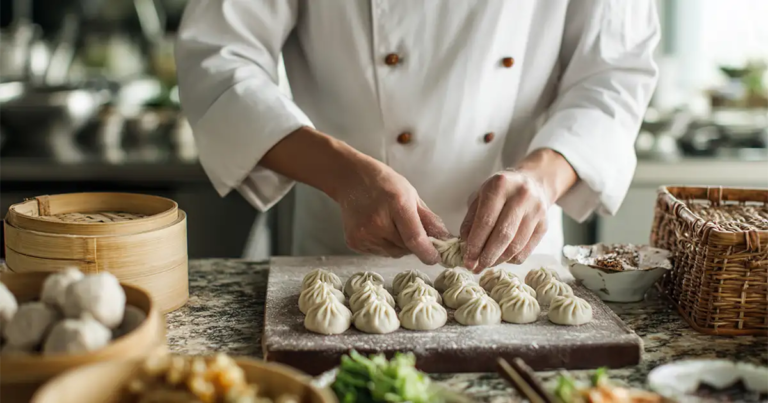
The soup dumpling once depended heavily on the intuition of individual cooks.
Din Tai Fung introduced explicit standards — eighteen folds, dough measured to fractions of a gram — translating flavor into numbers.
The process closely resembles the industrialization carried out here.
The dishes differ.
Soup dumplings occupy a higher price range, while braised pork rice belongs to everyday meals.
Yet the conditions necessary for a single celebrated shop to expand beyond its region appear strikingly similar.
The scientific framing of tradition.
Strict hygiene.
A system that can be reproduced.
This may not be coincidence.
For local food to stand as an industry, the craftsman’s senses alone are insufficient.
Only once translated into numbers can a dish travel.
In their respective domains, these two establishments seem to have traced that path.
Tradition, Modernized
Some visitors may find the bowl here somewhat industrial.
The impression is not entirely misplaced.
Yet there exists another choice:
to change in order not to disappear.
Tradition fades when left unattended.
To endure, it often requires form.
The bearded logo has remained largely unchanged since the early years.
Inside, however, a highly organized system operates.
Partly human.
Partly mechanical.
Without this turn, the restaurant might have been remembered only as a single famous shop.
Instead, it has become one of the enterprises representing Taiwan’s food culture.
A presence whose structure modernized while the memory of the stall remained.
Stepping outside, the bearded logo enters the field of view once more.
On the next visit, the same flavor will likely appear.
Knowing that in advance seems to form part of the restaurant’s value.
— Detour —
a little further to walk
- Notes on Formosa Chang as a Manufacturing
- Notes on Formosa Chang Beyond the Dining Room
- Notes on Formosa Chang That Never Went South