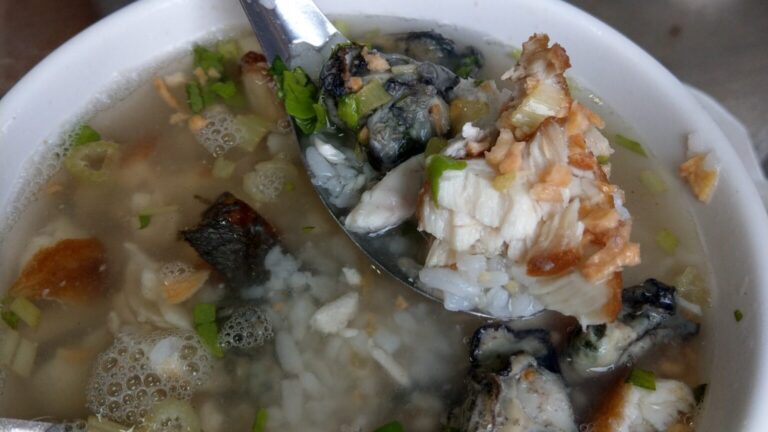
A bowl of braised pork rice looks familiar in Taipei and Tainan: white rice, brown pork, and a dark sauce. But in Taipei salt and soy rise first, while in Tainan sweetness arrives before the savory depth.
A pattern of sugar in the south and salt in the north, traced through everyday meals
Braised pork rice (lu rou fan) often appears when sitting down in a Taipei diner. A few days later, a similar-looking bowl appears in Tainan under a different name. The surface is almost the same. White rice carries brown pork and sauce.
Yet the first bite shifts clearly. In Taipei, the structure is built on soy sauce and salt. In Tainan, sweetness rises first and spreads across the tongue.
When people speak about food in Taiwan, a phrase returns again and again: the south is sweet, the north is salty. It is not treated as a theory but as shared experience.
This divide seems deeper than personal preference. It feels connected to a river that cuts across the island and to the layers of history tied to that line.
The Zhuoshui River as a turning point
The Zhuoshui River runs across central Taiwan. On a map it looks like a simple stroke. Crossing it, however, the island’s character begins to change.
To the north lies a subtropical zone. Winters are damp and gray, with frequent rain and heavy humidity. To the south the climate shifts toward tropical monsoon patterns. Sunlight becomes sharper, skies brighter, and temperatures stay higher throughout the year.
Climate shapes crops. Crops shape industry. Over time, cities take on different roles.
The north became the political and commercial center. Government institutions gathered in Taipei, while Keelung developed as a key port. The south turned toward agriculture and sugar production, with wide plains planted in sugarcane.
The difference in taste begins quietly from this environmental split.

Tainan and the memory of sugar
From the seventeenth century, Tainan functioned as a central city under Dutch rule and later regimes. It stood as a political and economic core of the island.
Across the southern plains, sugarcane spread. The sugar industry grew, and refined sugar moved through ports and overseas trade.
For a long time, sugar was a luxury. Even local residents could not consume it freely. It symbolized wealth and power.
When wealthy households entertained guests, sweetness appeared generously in cooking. Sweet flavors became markers of status and hospitality.
Over time, adding sugar to dishes turned into a natural choice rather than a display. The sweetness remained as a trace of historical prosperity embedded in everyday food.
The north shaped by labor and salt
Northern development followed a different rhythm. Mining, tea exports, and port labor formed the early economy around Keelung and Taipei.
Physical work in a wet climate drained the body. Salt loss was constant.
What workers needed first was salt. Strongly seasoned food met a physical demand.
Soy sauce-based cooking, rich in aroma and salinity, settled naturally into daily meals.
After 1949, another layer arrived. Large numbers of migrants from mainland China settled primarily in the north. They brought cooking styles heavy with fermented pastes and dark soy sauce, reinforcing salty profiles.
Where the south carried memories of sugar and wealth, the north accumulated memories of labor and migration. The result rested on the tongue.
The flavor of a single bowl was not accidental. It held overlapping histories separated by the river.
How the divide appears on the table
The difference is not abstract. It emerges in ordinary dishes.
Order the same-named meal north and south, and it changes form and direction. The pattern looks less like variation and more like habit layered over time.
The same braised rice becomes a different flavor
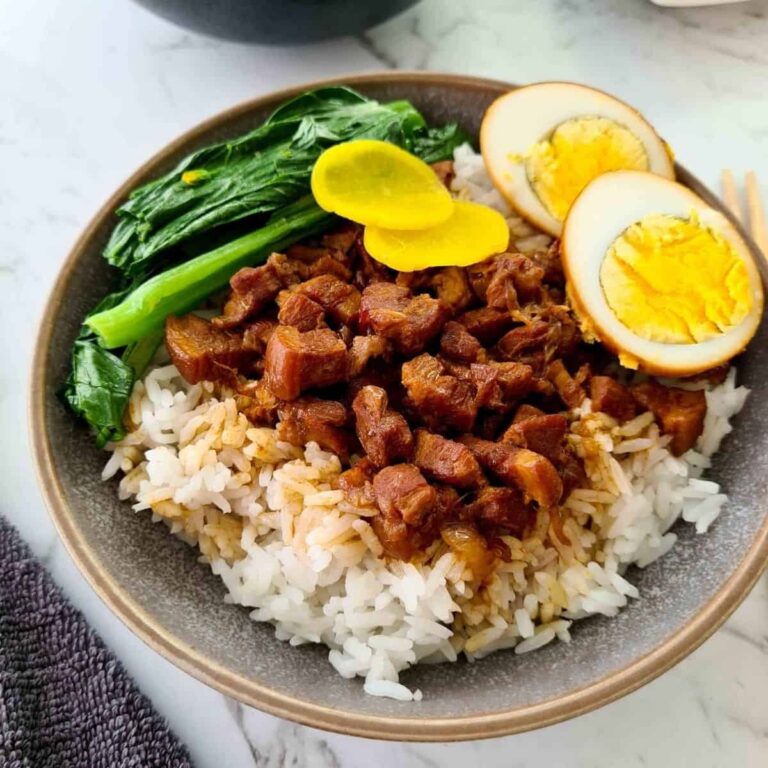
In Taipei, the pork is finely chopped. Soy sauce and spices lead the aroma. Salt rises first, with restrained fat and loose grains of rice.
In Tainan, the meat grows coarser and fattier. Rock sugar melts into the pot, and the surface shines. Sweetness arrives before the savory depth follows.
Both fit within the idea of braised pork over rice, yet they serve different roles. One drives appetite through salt. The other wraps the rice in sweetness.
Zongzi as another boundary marker
As the Dragon Boat Festival approaches, zongzi appear everywhere, and the north–south divide reemerges.
Northern-style zongzi begin by stir-frying rice in oil. The grains are then wrapped with fillings and steamed. The result is firm, fragrant, and strongly seasoned, closer in structure to oily rice dishes.
Southern-style zongzi use raw rice wrapped directly in leaves and boiled. The grains absorb water and become soft and cohesive. Sweet peanut powder or thickened soy sauce often finishes the dish.
The difference follows the same logic. The north builds flavor through oil and salt. The south shapes it through water and sweetness.
Thickened soups that grow sweeter moving south
Traveling south, soups begin to change. Clear broths cloud, then thicken.
Thickened soups known as geng appear more frequently. Many include sugar, producing clear sweetness alongside salt.
They hold heat longer in warm climates and deliver both energy and seasoning. At the same time, they reveal where sugar has long functioned as an everyday ingredient.
Sweetness and thickness become increasingly natural the farther south one moves.
A flavor boundary that shapes restaurant chains
The river’s influence does not stop at small eateries. It becomes clearer in the distribution of major chains.
Tastes that dominate in the north often slow in the south. Those born in the south struggle to spread north.
An invisible line seems drawn across the map.
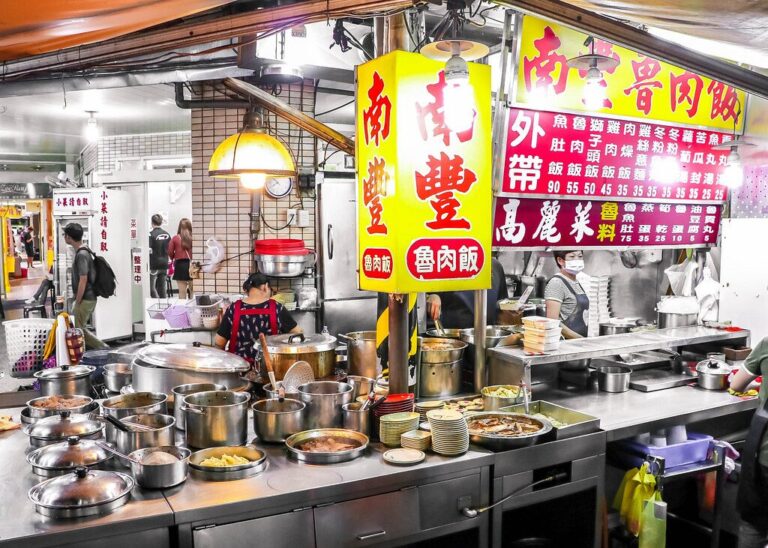
Formosa Chang in the north
Formosa Chang began in Taipei and embodies northern flavor structure. Its bowls are finely chopped, leaner in fat, and built on strong soy aroma and salt.
Across Taipei and New Taipei City, its presence is dense. Lunch hours bring steady lines.
Moving south, however, its expansion thins. In Tainan and Kaohsiung it has long faced resistance.
For southern diners, the food feels too salty and not sweet enough. The price also sits higher than what is expected for everyday meals.
Taste and value failed to align.
Zhengzhong Pork Ribs Rice in the south
Zhengzhong Pork Ribs Rice began in Kaohsiung. Its defining features are glossy, sweet-savory ribs, large portions, and low prices.
The bento is designed around working bodies.
Across central and southern Taiwan, its signs appear at nearly every major intersection. Lines form at midday.
For years it struggled to enter Taipei. The sweetness felt excessive, and the style did not match urban eating habits. Although a few locations have appeared recently, the center of its territory remains in the south.
Flavor as a limit to standardization
Nationwide dominance is rare among Taiwanese food chains. Once a flavor is standardized through central kitchens, it inevitably becomes foreign to part of the island.
The Zhuoshui River can be crossed by logistics. It is far harder to cross by taste.
The business map mirrors the island’s historical layers.
Convenience stores as observation points
Taiwan’s convenience stores operate nationwide distribution. In theory, uniform flavors would be efficient.
Yet the divide appears even here.
Why “regional limited” labels line the shelves
Lunch boxes and cold noodle packages frequently carry labels marking them as region-specific.
The same product name hides adjusted seasoning: sweeter in the south, saltier in the north. Sales patterns demand it.
This is not variety for promotion. It is adaptation for survival.
The boundary beside the hot food counter
Standardized stews simmer in identical broth nationwide. Ingredients and bases remain the same.
What changes are the sauces placed beside them.
Northern stores offer sharper soy sauces and spicy condiments. Southern stores set out thick, sweetened soy paste.
Customers choose without thinking, finishing flavor according to where they stand.
Infrastructure may be uniform. Taste remains local.
Zongzi divided even in catalogs
Dragon Boat Festival gift catalogs always separate northern and southern zongzi into distinct products.
A single nationwide version would be more efficient. Yet it never appears.
The separation reflects how firm the boundary remains.
Geography that lingers on the tongue
On an island this small, such persistent difference does not appear accidental. Climate diverged, industries separated, and migration histories layered.
The sweet soy paste on southern tables carries the memory of sugar production and prosperity. The northern saltiness holds the weight of labor and movement.
Taiwan’s flavors function less as preference and more as a map. With each bite, the geography the island has lived through quietly emerges.
— Detour —
a little further to walk
- Notes on the Zhuoshui River Border in Taiwan
- Notes on Formosa Chang That Never Went South
- Notes on Two Forms of Soy Milk in Taiwan’s Breakfast Shops