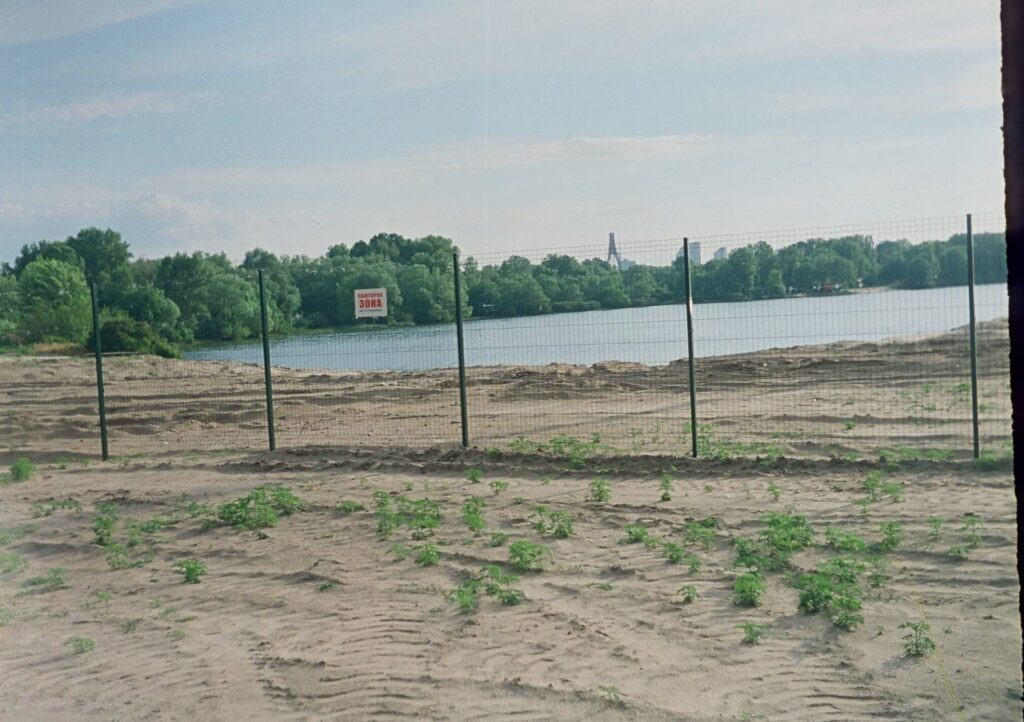
Highways and railways cross Taiwan’s Zhuoshui River with little ceremony, but nearby menus begin to change: the same pork over rice may be called lu rou fan on one side and rou zao fan on the other. Restaurant chains show a similarly uneven pattern, with some stopping around Taichung while others reach across the island.
Taiwan’s climate splits north from south. The north sits in the subtropics; the south is fully tropical. Near that dividing line, a river cuts across the island from the eastern mountains to the western coast: the Zhuoshui River (濁水溪). It’s Taiwan’s longest.
Bridges, highways, and rail lines cross it now. Crossing the Zhuoshui no longer feels like crossing a boundary. And yet travel from north to south, and things start shifting around here: the way rain falls, the shape of villages, how a bowl of lu rou fan gets its name, even where fast-food chains choose to open.
Is the Zhuoshui still a line that splits Taiwan in two?
North and South of the River, Even the Villages Took Different Shapes
Western Taiwan’s dry season sharpens as you move south. The north sees rain through winter; the south’s winters turn dry and stay that way longer. That gap shaped how people used water.
In the 1930s, the geographer Tomita Yoshirō, who surveyed Taiwanese settlements, recorded that villages north of the Zhuoshui tended to scatter while villages south of it clustered together.
Scattered villages put farmhouses near their own fields, spread across the land. Clustered villages pack houses together, with farmland ringing the settlement.
Water explains much of the pattern. In the drier south, water was harder to come by, so people settled near wells and irrigation channels and shared what there was. In the north, water was easier to reach, so farmers could afford to live scattered near their own plots.
Climate alone doesn’t explain everything about how a village takes shape — reclamation methods, irrigation systems, and defense arrangements mattered too. The river itself was an obstacle before bridges existed, doubling as an administrative and settlement boundary. Two climate zones sat on either side of a major river, and the river may have helped make the differences between them harder to erase.
North and south of the Zhuoshui, even how people occupied the land looked different.
The Taste Changes Here Too
That difference shows up at the table. Taiwan has a saying — “sweet in the south, salty in the north” (南甜北鹹). Not every southern dish is sweet, and not every northern dish is salty. But spend a meal in Tainan and the sweetness is hard to miss. Southern Taiwan was long a center of sugar production, and access to sugar, along with the city’s history, is thought to have shaped a regional taste for sweetness.
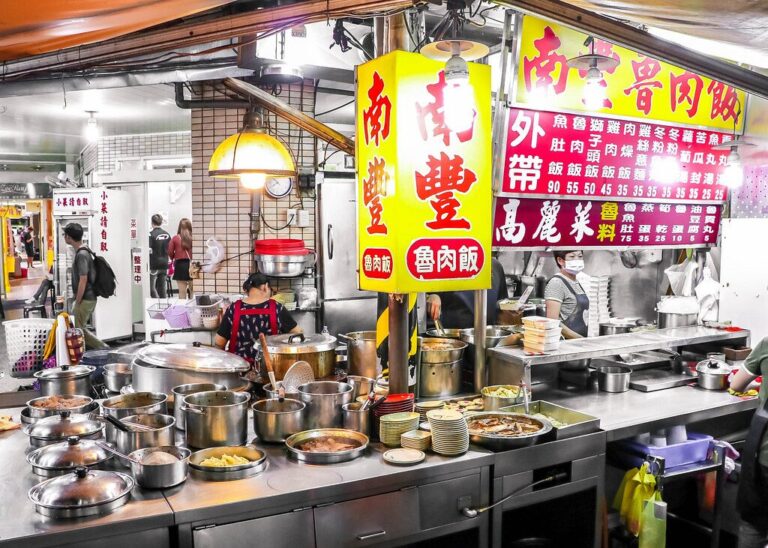
Near the Zhuoshui, flavor shifts, and so do dish names. Lu rou fan (魯肉飯) makes the case well.
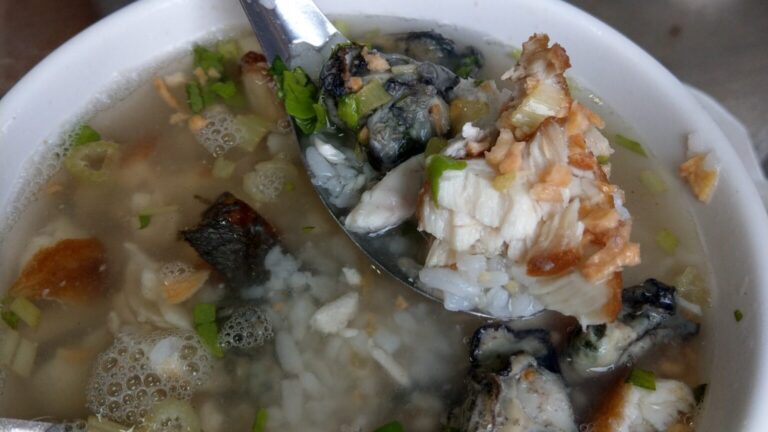
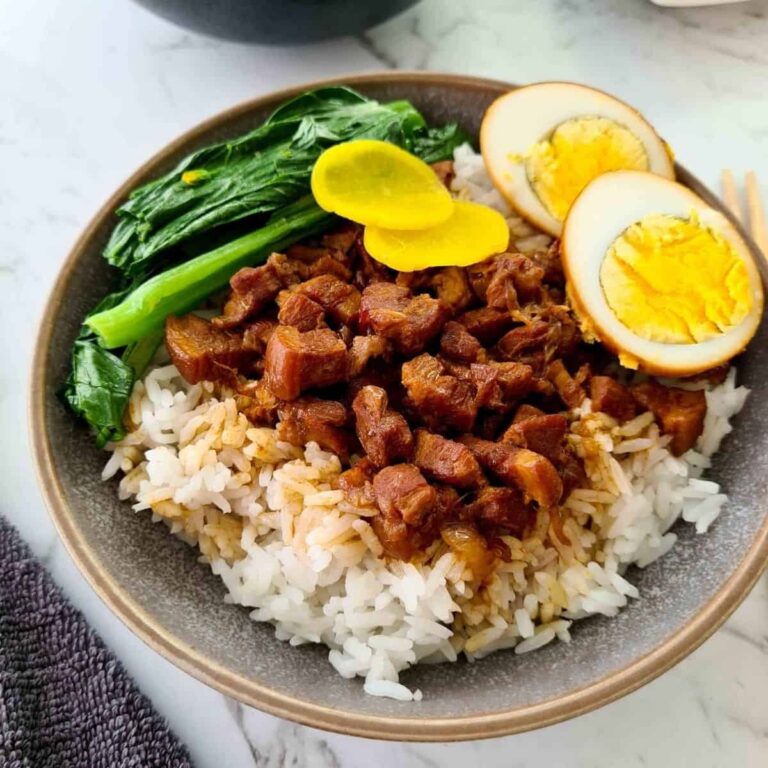
In Taipei, lu rou fan usually means finely minced pork stewed and ladled over rice. Head south, and the same dish tends to go by rou zao fan (肉燥飯) instead, while lu rou fan, in the south, can mean something else entirely: a single braised chunk of pork on rice. Around central Taiwan, the two naming systems begin to overlap. Some places serve a minced lu rou fan; others serve rou zao fan; others still call the same chunk-style dish kong rou fan (爌肉飯). A few shops even call the chunk-style version lu rou fan.
Treat the Zhuoshui as a hard border, and the exceptions pile up fast. Treat it instead as the place where two food cultures, shaped independently, start to overlap, and it makes a lot more sense. Nothing flips the moment you cross the river. But the words and flavors start to wobble somewhere around here.

The Chains Show the Same Line
That’s the old story. Map today’s restaurant chains, though, and the Zhuoshui area gets interesting again.
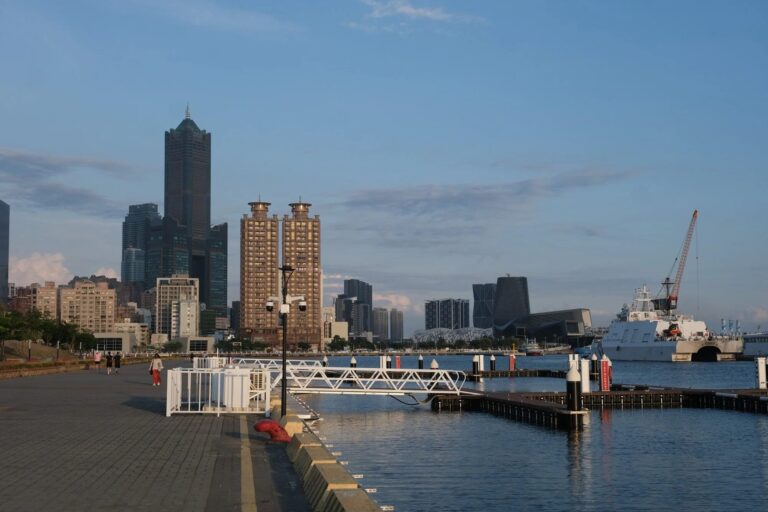
Formosa Chang, born in Taipei, pushed its stores south through Taoyuan, Hsinchu, and Taichung, and its conventional store network effectively stops around Taichung. One Kaohsiung location exists, but it’s a delivery-only kitchen with no seating; Formosa Chang hasn’t built an actual store network south of Taichung, and Tainan has none at all.
Dain-Dain Hamburger runs the opposite pattern: a southern fast-food chain confined to Tainan, Kaohsiung, and Pingtung. It’s a household name down there, and it stays put. It doesn’t go north.
Jengjong Ribs Rice, born in Kaohsiung, crossed the other way. It pushed north past Taichung and now has outlets in New Taipei.
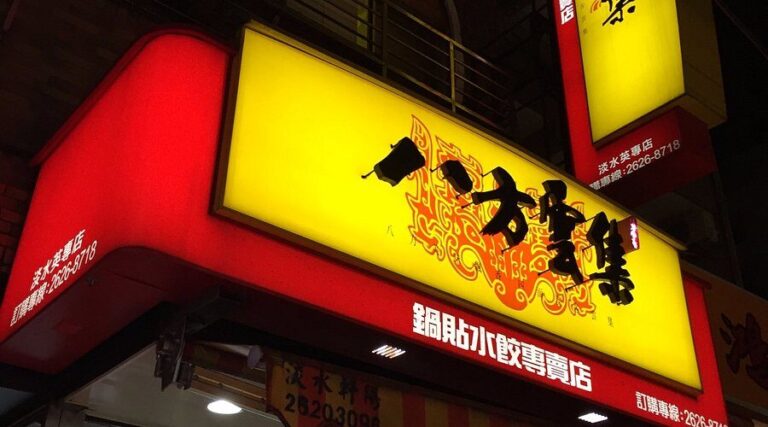
Bafang Yunji (八方雲集) blurs the line further still. Born in the north, it now covers the whole island, and it built manufacturing bases in the south to match — the same dumplings, supplied at scale, wherever the store sits. Din Tai Fung (鼎泰豐) spread the same way, from Taipei to Taichung to Kaohsiung.
None of this proves the Zhuoshui decides where a chain opens. Population differs, and so does rent. Still, look at the map, and some chains cross easily while others don’t. The old north-south split, visible a century ago in how villages formed, might still leave a faint mark on where these businesses can operate.
Crossing the River Takes More Than a Dish
Why do some chains cross and others don’t?
Part of it sits on the company’s side. Behind Dain-Dain’s burger sits a business system built for the south: pricing, sourcing, and how the stores run. Move the recipe north without moving the system, and there’s no guarantee the same price and quality hold up. Bafang Yunji went the other direction — instead of just adding stores, it built production sites region by region, engineering its own way past the border.
The dish itself matters too. Dumplings standardize easily; the dough and the filling can come out consistent from a factory and travel well. Lu rou fan is trickier. How the meat is cut, the ratio of fat to lean, the sweetness all vary by region, and in some places even the name “lu rou fan” points to a different dish entirely.
The more a dish is woven into a specific place, the harder it is to carry across a river on its own. The company behind it has to be built for crossing, too.
A Tariff Called Memory
There might be a cost on the customer’s side as well.
Eat something often enough, and a standard forms. Decades of lu rou fan build a private sense of what lu rou fan is supposed to be, and that sense differs by region. Someone from Taipei pictures finely minced, stewed pork. Someone from the south might picture a single chunk instead.
So a chain moving into new territory doesn’t just get asked whether it tastes good. It gets asked whether it’s even lu rou fan.
Research on local food backs this up in a general sense: authenticity and a sense of place shape how people judge what they eat, and regional consumer ethnocentrism — a tendency to favor products associated with one’s own region — has been documented too. The longer people have eaten something, the more they turn into unconscious critics. For an outside chain, that acts like a tariff. A tariff called memory.
That framing helps explain the gap between Formosa Chang and Bafang Yunji. Lu rou fan carries regional memory in a way dumplings may not. There seems to be less insistence that a “southern dumpling” must look a particular way than there is about what counts as lu rou fan. Standardized food probably crosses more easily because of it.
None of this fully explains chain distribution on its own. Price matters, and so does chance. Still, there’s a real case that local food has to cross memory as much as geography.
A Faint Border
Bridges span the Zhuoshui now. Highways and rail run over it. Travel from Taipei to Kaohsiung, and it’s easy to cross without noticing.
And yet set the north side against the south, and differences remain: the shape of villages, the taste of food, where restaurant chains choose to open.
None of it traces back to a single cause. Climate didn’t decide everything. The river itself didn’t cut Taiwan in two. But layer these different-era differences onto the same map, and a line appears in roughly the same place, again and again.
It isn’t a hard border. Get close, and the exceptions are everywhere. Step back, though, and something still seems to shift right around there.
The Zhuoshui still looks, faintly, like a line that splits Taiwan north from south.
— Detour —
a little further to walk
- Notes on the Divide of Sweet and Salty Across Taiwan
- Notes on Formosa Chang That Never Went South
- Notes on the Taste of Taiwan Before 1949