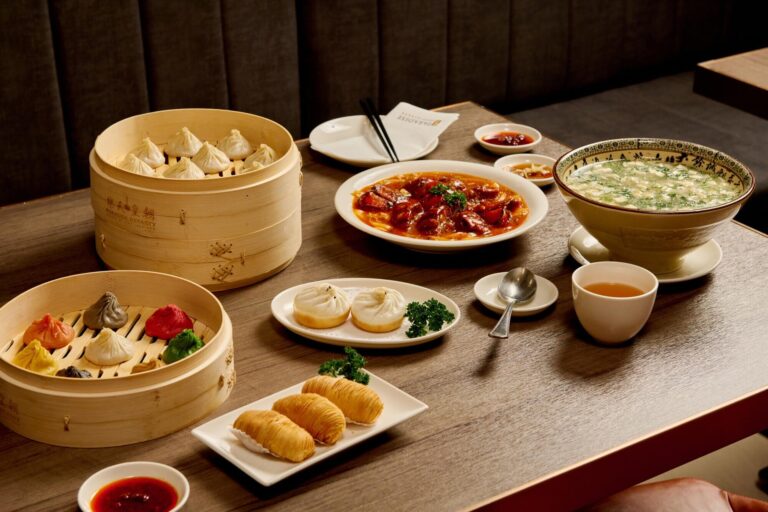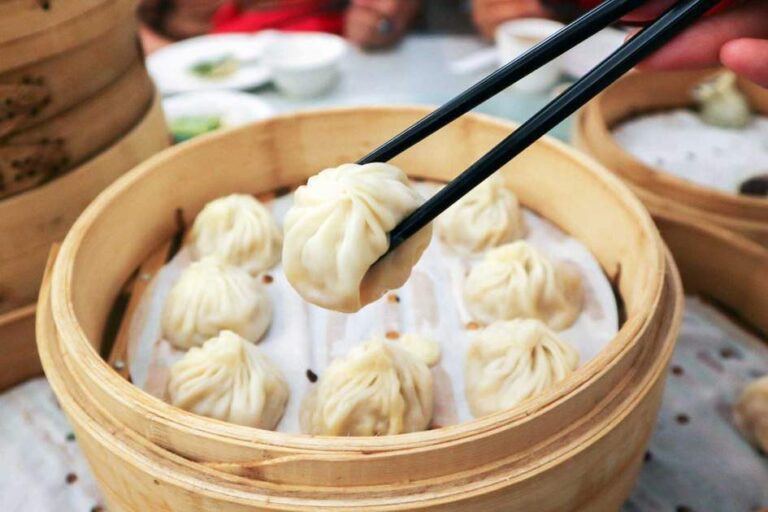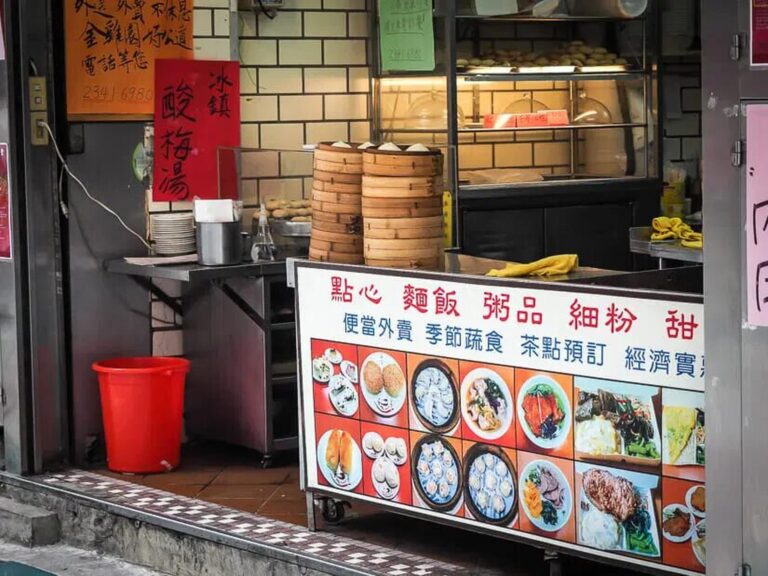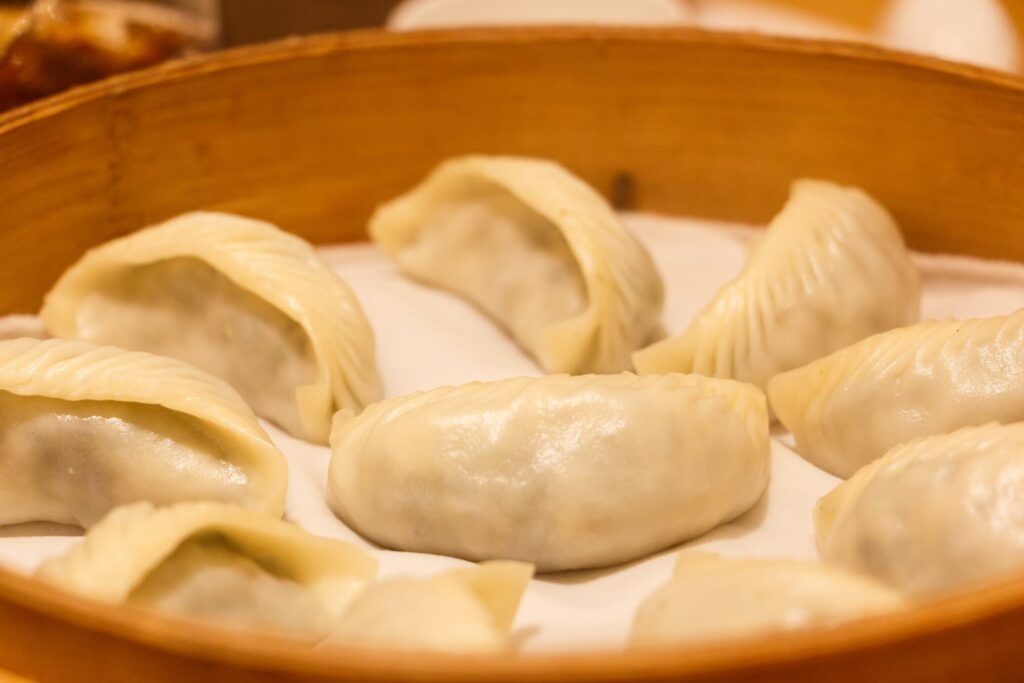
In Taiwan, a steamed dumpling can sit beside xiaolongbao, pan-fried dumplings, and noodles without ever earning a shop of its own. The bamboo steamer is familiar; the sign above the door is missing.
Finding steamed dumplings (zheng jiao) in Taiwan requires a particular kind of patience. The difficulty is not that the dish is rare. It is that dedicated zheng jiao shops almost do not exist. For pan-fried dumplings, there are shops that sell nothing else. For boiled dumplings, the same is true. But steamed dumplings do not carry their own sign above any door. To eat them, one does not search for a shop that specializes in them. One searches for a menu that happens to list them. The question that follows is a quiet one: why does this dish have no place of its own?
The Misreading That Became Standard
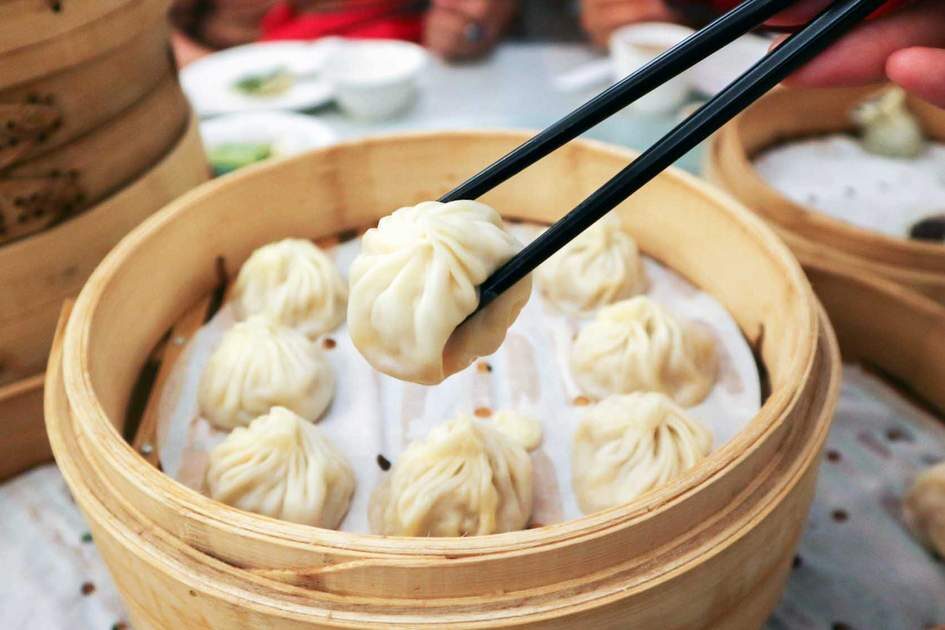
The position of zheng jiao within Taiwanese food culture is strangely unclear. They appear beside xiaolongbao in upscale restaurants, and they appear beside pan-fried dumplings and dry noodles in neighborhood diners. Because they arrive in the same bamboo steamer baskets, many people assume they are related to xiaolongbao. And because no soup bursts from them when bitten, they are often judged to be a lesser version of the same thing — a soup dumpling without the soup, a dim sum that is slightly dry. This is a fundamental misreading. The reason the outline of zheng jiao has become so blurred lies in the entirely different histories that the two dishes have traveled.
The Lineage of Xiaolongbao — Southern Teahouses and Edible Entertainment
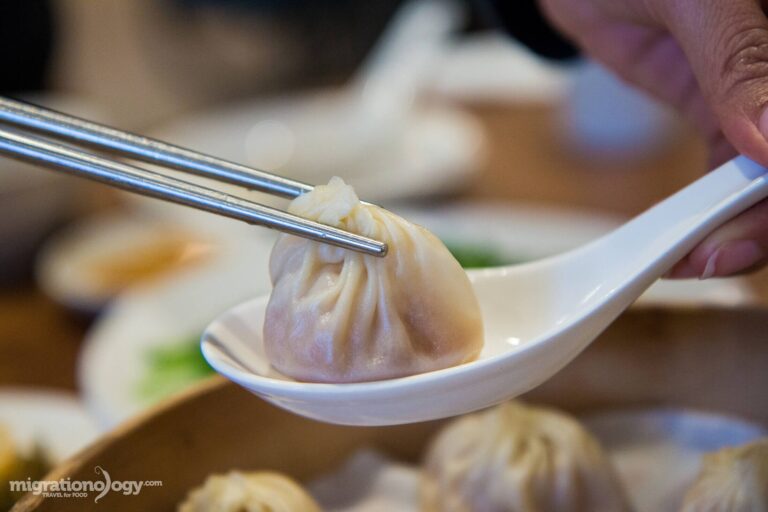
Xiaolongbao originates from the lower Yangtze region on the Chinese mainland — the area around Shanghai, in what is broadly called Jiangnan. This region was historically warm, commercially prosperous, and culturally refined. The dish belongs to the category of dian xin, which corresponds roughly to snacks or light refreshments. It was food eaten for pleasure in teahouses, by merchants, scholars, and the wealthy. Filling the stomach was not its primary purpose. To serve that purpose, xiaolongbao was built with an extreme logic. The wrapper is stretched to the thinnest possible point, minimizing the presence of carbohydrate. Inside the filling, a preparation called pi dong — a jellied stock made from simmered pork skin — is incorporated. Under steam, it melts into liquid. The soup inside is engineered, not naturally occurring. The manner of eating carries its own protocol: place it on a ceramic spoon, add black vinegar and thin-cut ginger, and draw the liquid carefully to avoid burning the mouth. It was a highly refined urban dish that demanded a degree of elegance from the person eating it.

The Lineage of Zheng Jiao — Northern Soil and Food as Fuel
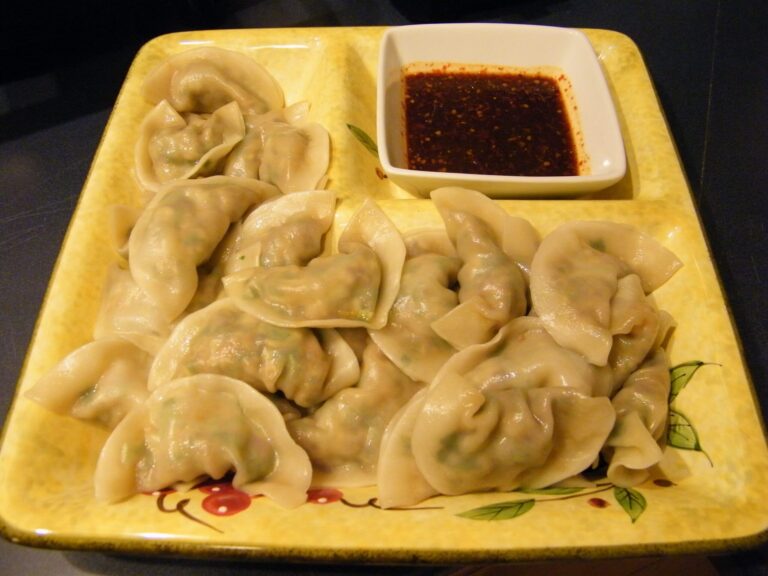
Zheng jiao comes from a different world entirely. Its roots lie in northern China, centered on the Yellow River basin. The land there is cold and dry, and the winters are severe. The dish was not a luxury. It was a staple, eaten by farmers, laborers, and soldiers as a source of energy to sustain hard physical work in a difficult environment. There is nothing playful in its construction. The wrapper is made from a dough prepared with boiling water — called tang mian — which produces a thick, dense skin with strong elasticity. That chewiness is itself part of the point. No jellied stock is used inside. The filling is packed tightly with pork, cabbage, napa, and garlic chives, and only the juices that the ingredients release naturally are sealed within. The eating requires no spoon. One picks it up with chopsticks, dips it into a strong soy-based sauce, and bites into it while chewing raw garlic alongside. It is food purely in the service of moving the body.
Two Lines That Never Met
These two dishes should never have shared a table. Between the Jiangnan region in the south and the Yellow River basin in the north, the distance on a map is several thousand kilometers. Beyond geography, there was a division of class that was equally absolute. The merchant resting in an elegant southern teahouse and the laborer covered in mud and sweat did not inhabit the same food culture. In the high-end teahouses of Jiangnan, there was no place for the blunt, garlic-scented zheng jiao. In the exposed, unadorned diners of the north, the paper-thin xiaolongbao had no reason to exist. The two were entirely separate expressions of entirely separate worlds. But in 1949, at a singular point in history, both were pressed simultaneously into the narrow island of Taiwan.
It Was the Northern Cooks Who Swallowed Xiaolongbao
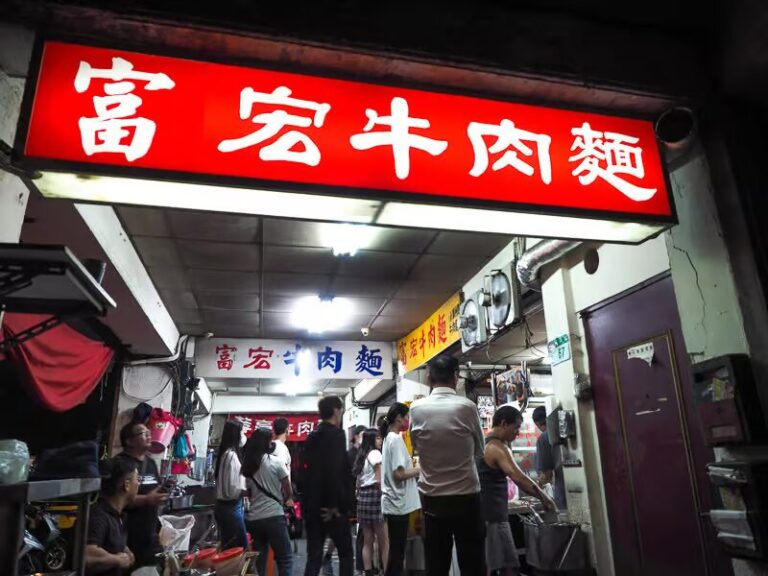
The question of why zheng jiao and xiaolongbao appear on the same menu has a direction to it. It was not that zheng jiao crept into a xiaolongbao shop. The movement went the other way. The mian shi guan — the neighborhood diner serving northern wheat-based food — absorbed xiaolongbao, a refined southern delicacy, and added it to its own menu. As the economy developed and competition grew, these street-level diners needed to attract customers. Xiaolongbao was something they could learn by observation and practice. They already knew how to work with wheat dough. They already had bamboo steamers in the kitchen. The tools were present, and the basic technique was close enough. So the northern cooks absorbed xiaolongbao quietly into their kitchens, and over time, it was xiaolongbao that became the more visible dish. The item that had once been secondary began to occupy the front of the menu.
Din Tai Fung, a Northern Diner That Mastered a Southern Weapon
No establishment embodies this historical inversion more completely than Din Tai Fung. It is known throughout the world as the representative xiaolongbao restaurant of Taiwan. It has held Michelin stars and operates locations in Tokyo, Shanghai, New York, and Sydney. The founding date is 1958. Yang Bingyi, originally from Shandong Province, opened a cooking oil retail shop on Xinyi Road in Taipei. The name Din Tai Fung was taken from the oil wholesale supplier from which Yang sourced his goods. When the retail oil business declined in the 1970s, he began selling dim sum from one section of the shop. At that point, Yang brought in a dim sum chef trained in Jiangnan methods and introduced the technique of making xiaolongbao into the kitchen. That became the turning point. The reputation of the xiaolongbao spread, the oil business was eventually abandoned, and the shop transformed fully into a restaurant serving dim sum and noodles. In 1993, the New York Times named it one of the ten best restaurants in the world, and its international standing was established at once.
Looking at the menu with some attention, however, one notices something. Braised beef noodle soup, zha jiang noodles, pork ribs, fried rice, and zheng jiao. What sits alongside the xiaolongbao is not the dim sum of Jiangnan. It is, without exception, the menu of a northern mian shi guan. The founder came from Shandong. He started from an oil shop. He imported xiaolongbao by hiring an outside specialist. That establishment is now understood around the world as the definitive home of xiaolongbao. Din Tai Fung is not, in its origins, a pure dim sum house. It may be more accurately described as a northern diner that acquired the most powerful weapon of the south, and then refined that weapon to the highest level it has ever reached.
The Most Honest Staple, Keeping Its Silence
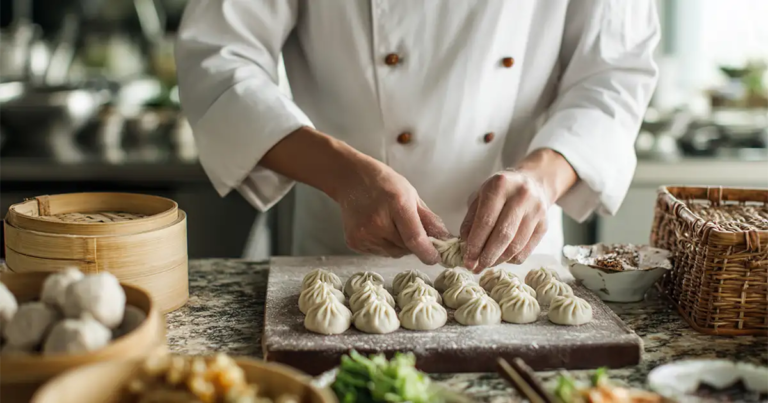
As xiaolongbao settled into the daily life of Taiwan and gradually came to dominate the kitchens of neighborhood diners, the dish that had originally held the central position in those kitchens quietly lost definition. It receded into the shadow cast by the stronger personality of xiaolongbao. Yet Taiwanese people appear, without necessarily being aware of it, to retain an understanding of what zheng jiao actually is. When eating them, almost no one reaches for a spoon. They pick them up with chopsticks, dip them in a strong soy sauce, and bite into them while chewing a clove of raw garlic held in the other hand. The method of eating is nothing like what one does with xiaolongbao. Even when they arrive in a bamboo steamer that looks identical to the one used for the southern dish, the moment one puts them in the mouth alongside raw garlic, the texture and weight inside are northern. Zheng jiao has no shop of its own. It does not draw attention beside xiaolongbao. And yet, somewhere on the menu of almost every diner in Taiwan, it is still there.
— Detour —
a little further to walk
- Notes on Xiaolongbao and the History Taiwan Inherited
- Notes on the Fluffy Xiaolongbao of Taiwan’s Breakfast Shops
- Notes on Bao and Jiao in Taiwan