From a worker’s plate to a national staple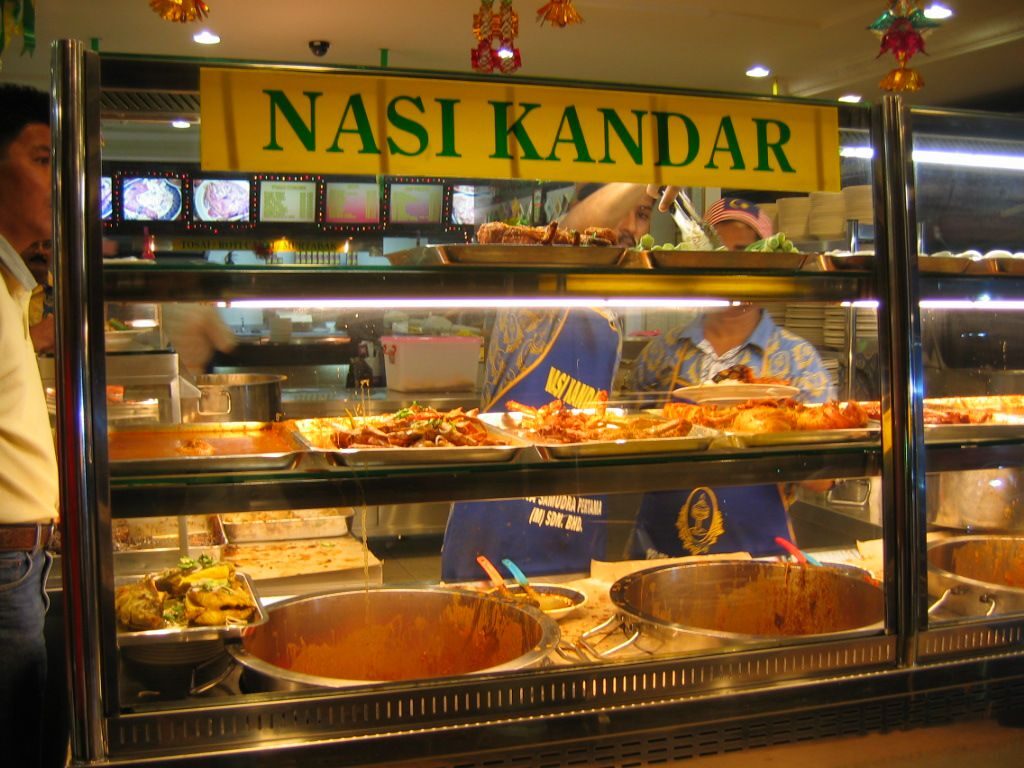
When I look for food in the streets of KL, I sometimes collide with a strong smell. It is the smell of oil, the burnt edge of spices, and a heavy scent where sweetness and heat are mixed together. At the center of that smell, there is often nasi kandar. As a dish, its outline seems simple, rice covered with curry, yet when I actually stand in front of the plate, it appears more complicated than that. This dish is not something neatly arranged; it almost looks like a dish that abandoned order from the beginning. Even so, it holds together somewhere, and the chaos seems not accidental but managed as a kind of practice.
The Resume of a Name
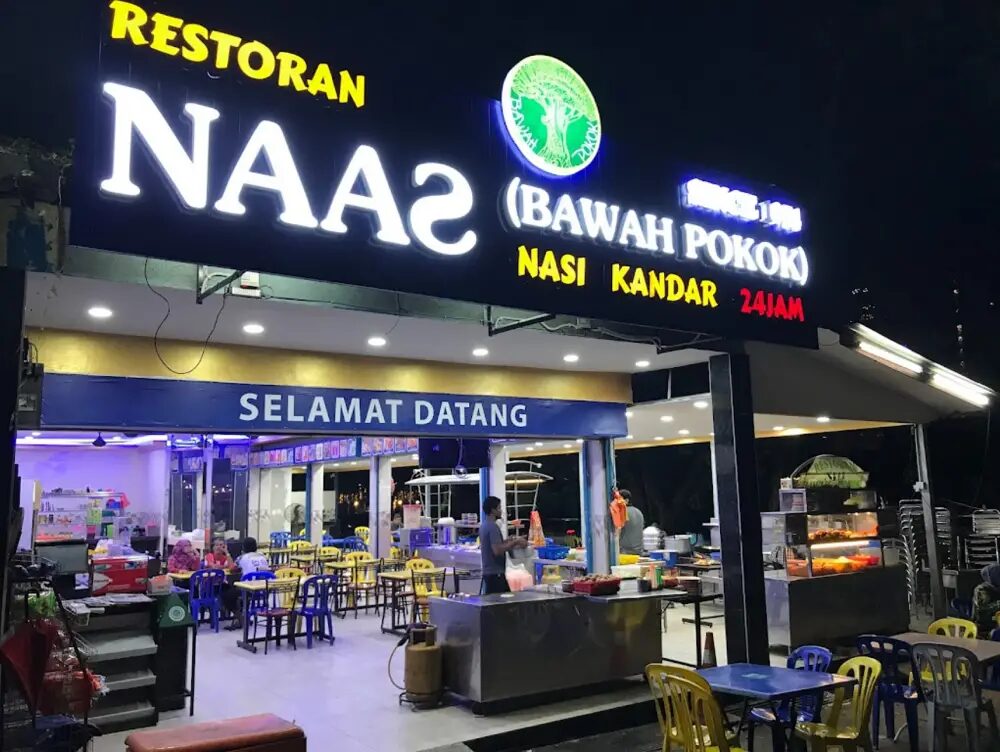
Rice with curry (nasi kandar) keeps its origins inside its name. Nasi refers to rice. Kandar means to carry on a balancing pole. In the nineteenth century, in the port areas of Penang Island, Indian Muslim hawkers known as mamak carried pots suspended from both ends of a pole and brought meals to workers. White rice and curry filled the stomach quickly and served as fuel for bodies that sweated and moved.
Its beginning resembles Taiwan’s danzai noodles. Neither dish was born in restaurants. Both were mobile fast food created to support the time and physical strength of working people. What exists today, however, is no longer a pole but a mountain of stainless steel.

Brown Ranges of Food
When entering a nasi kandar shop, the eyes are overwhelmed first. Inside glass cases, large amounts of food are piled high: dark red mutton, almost black beef, yellow dhal, and heaps of fried chicken. Taken together, everything is brown. Bright colors are rare. Even when vegetables appear, their color sinks beneath layers of oil and sauce. The display is not organized, yet it stimulates appetite with precision.
Orders are placed in front of these ranges. Pointing becomes the language. It is not that words are unnecessary; words cannot keep up. Without knowing what is what, only the contents of the pots accumulate, and in front of them each customer assembles a plate.
The Chicken That Becomes the Center
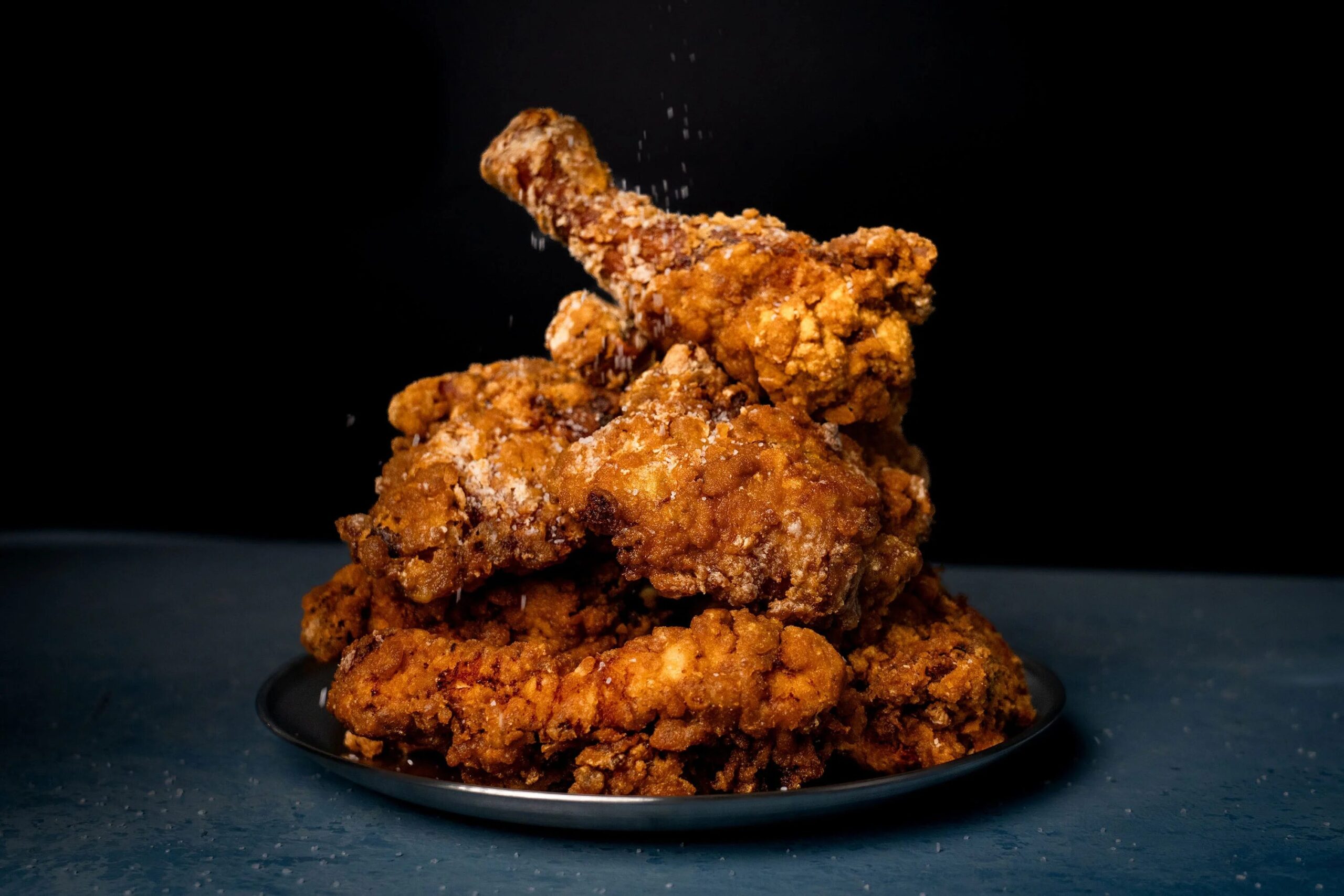
Within this mountain, there is a standard item that many hands reach for. It is spiced fried chicken (ayam goreng berempah). Unlike Japanese karaage, where the batter takes the lead, here coarse spices cling directly to the surface of the meat. Lemongrass, ginger, and fennel form fine fibers that harden in hot oil, becoming something like armor.
When bitten, there is a slight gritty crunch. After that sensation, aroma spreads. It is not only heat but thickness of fragrance. With this on the plate, a center forms. Even if the other side dishes remain vague, a single piece of chicken is enough for the meal to hold together.

A Dish Completed on the Plate
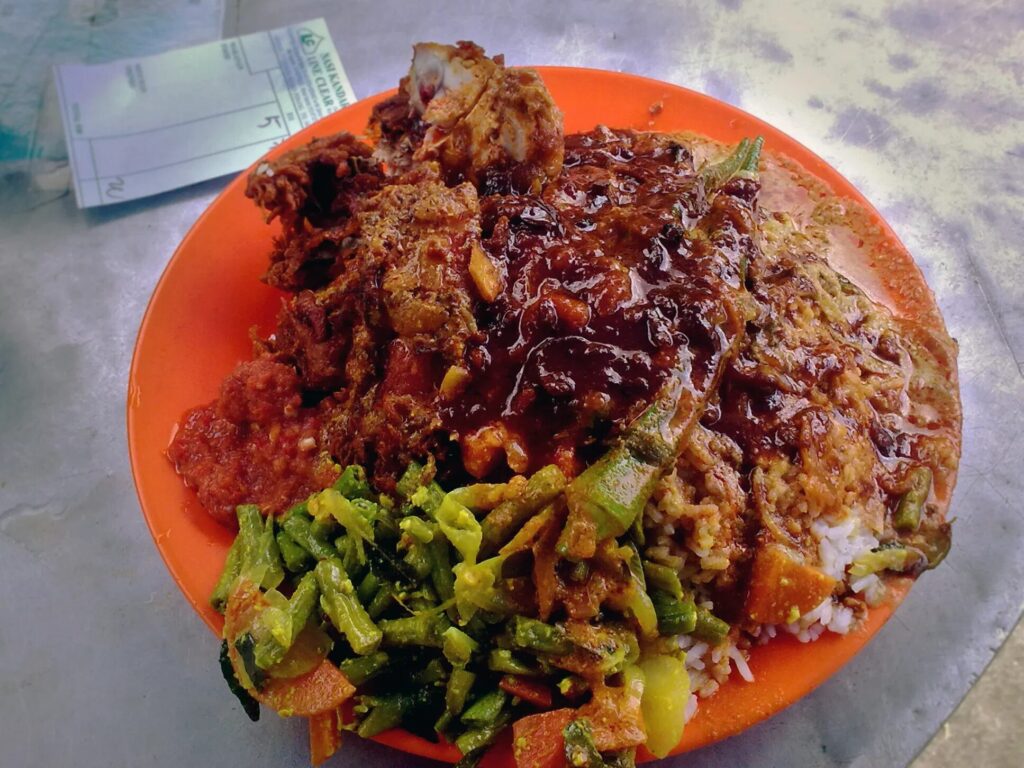
This dish is not complete from the start. On top of white rice or biryani, chicken, meat, fish, and vegetables are piled in any amount. Then the staff pour several curries over everything with a ladle. What matters is not which curry was chosen but the result of them mixing together on the plate. That mixture, known as kuah campur, comes closest to the essence of this dish.
At first glance it looks disorderly. There is no intention to arrange things neatly from the beginning. Yet the chaos also appears calculated. Being soaked in sauce is what counts as correct.
Colors That Lose Their Borders
The sauces have colors. Black carries strong sweetness and depth, leaning toward something like soy sauce. Red brings the sting of chili. Yellow holds the softness of beans and rounds the heat. Each on its own tilts in one direction. When mixed, the edges disappear and only density remains. The disappearance of borders on the plate becomes the completed form of the dish.
The Custom of Ordering
This dish is not explained at length with words. Everything proceeds through pointing and a short phrase. First the base is chosen, white rice or biryani, and for a first time, white rice is enough. Next, side dishes are indicated from the counter lined with brown pots. The standard choice is the spiced chicken, stained red with spices and nearly essential. Vegetables are stir-fried cabbage, known as kubis, or okra, called bendi, small lifebuoys floating in a sea of oil and spice.
At the end, a short word is added. Kuah campur, or banjir. Kuah refers to curry gravies. Campur means to mix, signaling that several sauces should be poured together. Banjir means flood, a more direct request for enough sauce to sink the rice.
The staff scoop several curries at once and drop them onto the plate. A brown sea forms. Only when the flood arrives does the plate become complete.

The Partner Called Teh Tarik
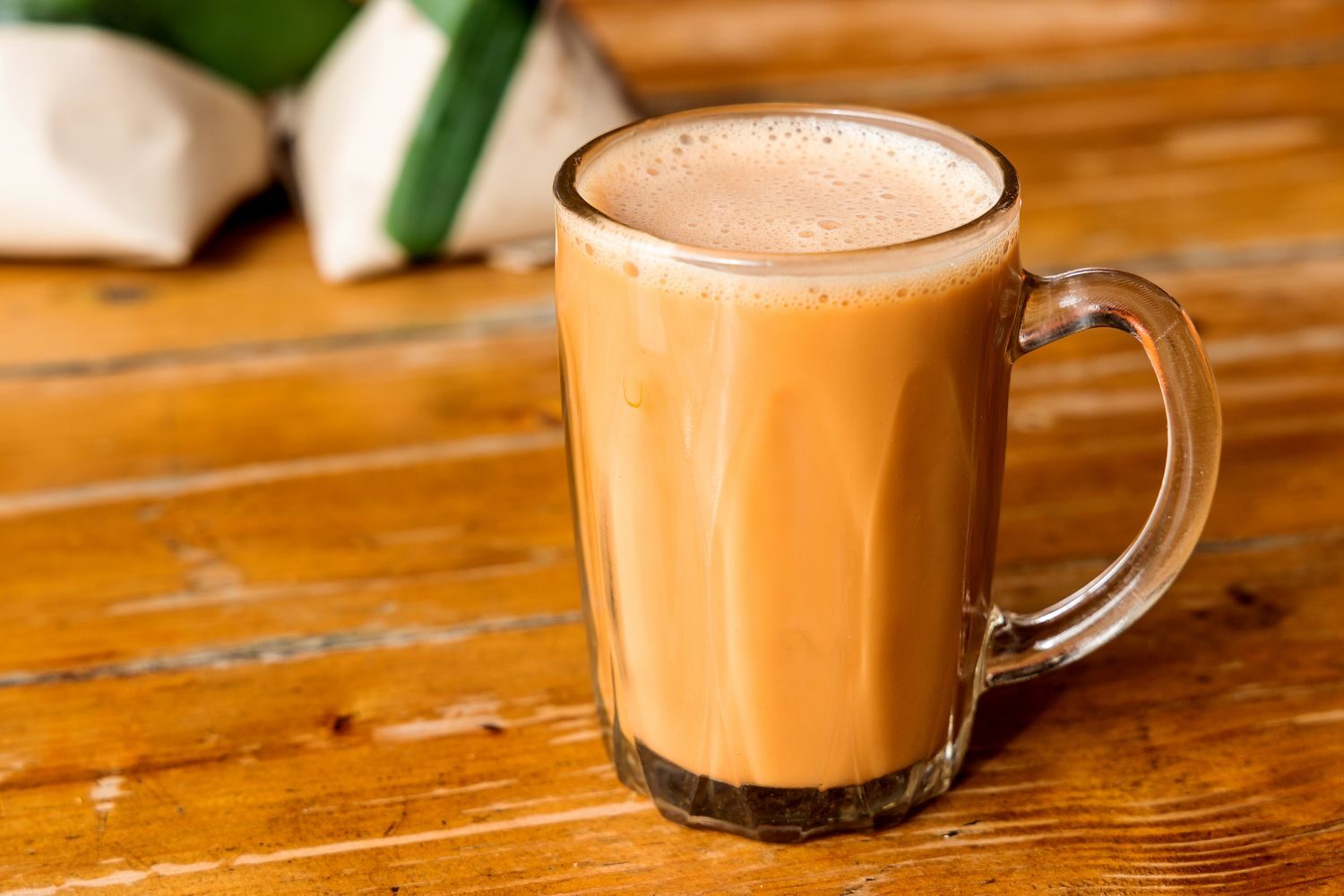
The plate is heavy. Oil, salt, and spices stack in layers. Beside it, a sweet drink is often placed. Teh tarik is a foamy milk tea. When washed down with cold water, the aftertaste of the dish breaks off. Teh tarik does not break it. Sweetness rounds the heat, and milk softens the edges.
It acts less like a drink and more like a seasoning. A bite with the spoon, a sip from the glass. That back and forth becomes the rhythm of the meal. In mamak shops, teh tarik is not the main character, yet without it the plate feels unsettled. Next to the curry flood, only the foam stands quietly.
The Trap of Market Price
This dish is often spoken of as food for ordinary people. Yet there are exceptions on the plate. Squid, known as sotong, and prawns, called udang, shine inside the display cases, but these tend to be priced by the market. The moment they are pointed at, the bill can jump.
Visually it is the same plate. Once submerged in the brown flood, the difference in value disappears. Still, the price reflects it honestly. This is the first trap beginners step into. The more one assumes the dish is cheap, the greater the gap feels.
Instant Calculation by Sight
There are moments when no cash register is needed. After eating, or right after receiving the plate, the cashier, often called the aunty, glances at it. It takes only seconds.
Chicken. Vegetables. Sauce. Is there squid. Is there egg.
Everything is seen, and a price is presented at once. There is no receipt, no itemized list. What exists is only the going rates and memory inside their heads. Once the amount is set, a colored slip or small piece of paper is handed over. That becomes proof of payment.
The system feels strange and at the same time natural, as if a trace of its days as dockworkers’ food has remained intact.
A Shape Born from Mixing
This dish is not organized. Heat, sweetness, acidity, bitterness, different spices become one on the plate. It cannot exist as a single flavor. Only by mixing does it gain shape.
It can look like a miniature of Malaysia itself. Malay, Indian, Chinese, and the shadow of the colonial period. Without any one of them, the plate would not hold together.
Sweating, I shovel the flood with spoon and fork. At that moment, what I am eating is not curry rice. It is labor and history from the southern seas, left as they are on a plate.