A red paste that carries appetite through humidity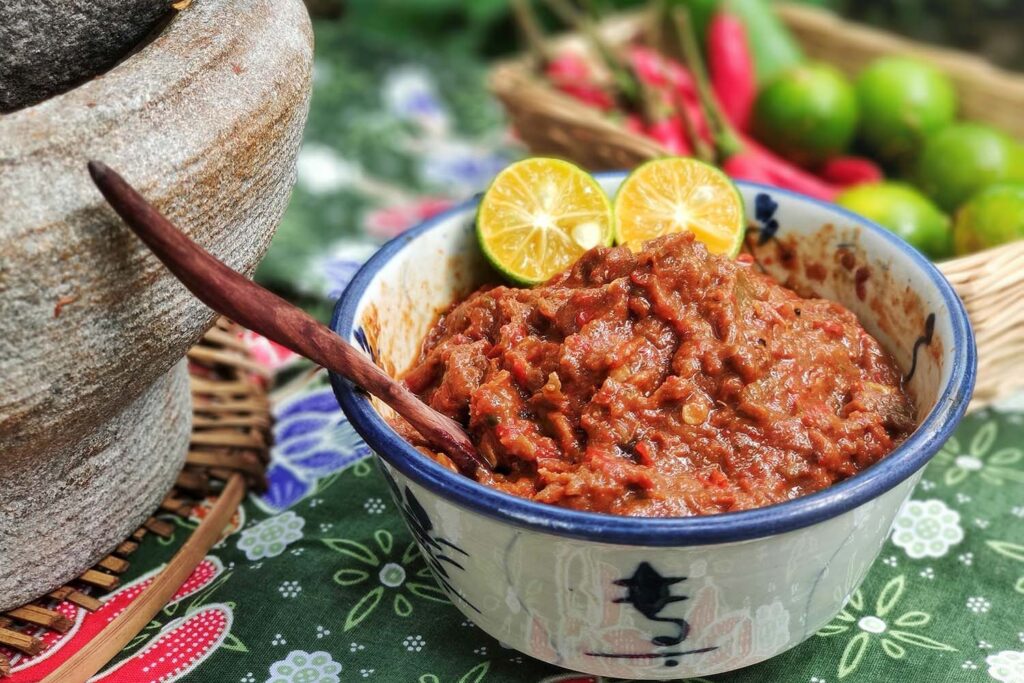
Sambal is often described as Malaysia’s chili sauce, sambal.
The description is convenient.
It also shrinks the role.
If it is placed on the side like ketchup, it becomes an accessory.
At a restaurant table, especially at a Mamak, it sits closer to the center.
Rice and meat sometimes look like carriers.
They move the red paste to the mouth.
The meal seems to turn around that weight.
This country is hot and humid.
Appetite drops easily under those conditions.
People still work and keep moving.
Sometimes I think this heat was raised for that purpose.
Spice here feels less like preference, and more like a tool for staying awake.
Invasion and blending from the New World
Before the sixteenth century, red chilies did not exist in the Malay Archipelago.
Heat came from black pepper, long pepper, and ginger.
It was dark and blunt.
That balance broke during the Age of Exploration.
Chilies carried from South America spread fast.
Red heat pushed black heat aside.
The table was repainted in a short time.
But the new ingredient was not accepted as it was.
This place already had another technique.
Belacan.
A fermented seafood paste.
In some regions it is called terasi.
Local fermentation met the new chili.
It did not simply mix.
It was pressed and struck together.
It is crushed, kneaded, and made into one mass.
New World sharpness joins Southeast Asian depth.
Sambal rises at that boundary.
The line between rot and fermentation
Belacan sits at the core of many sambals.
Small shrimp are salted, dried in the sun, fermented, and pressed into a block.
On its own, it smells like decay.
It makes the body step back.
But heat changes its direction.
The smell turns into something else.
A fragrance rises.
“Explosive aroma” stops being an exaggeration.
People say sambal loses something when it is made in a blender.
The blade is fast, but the work is different.
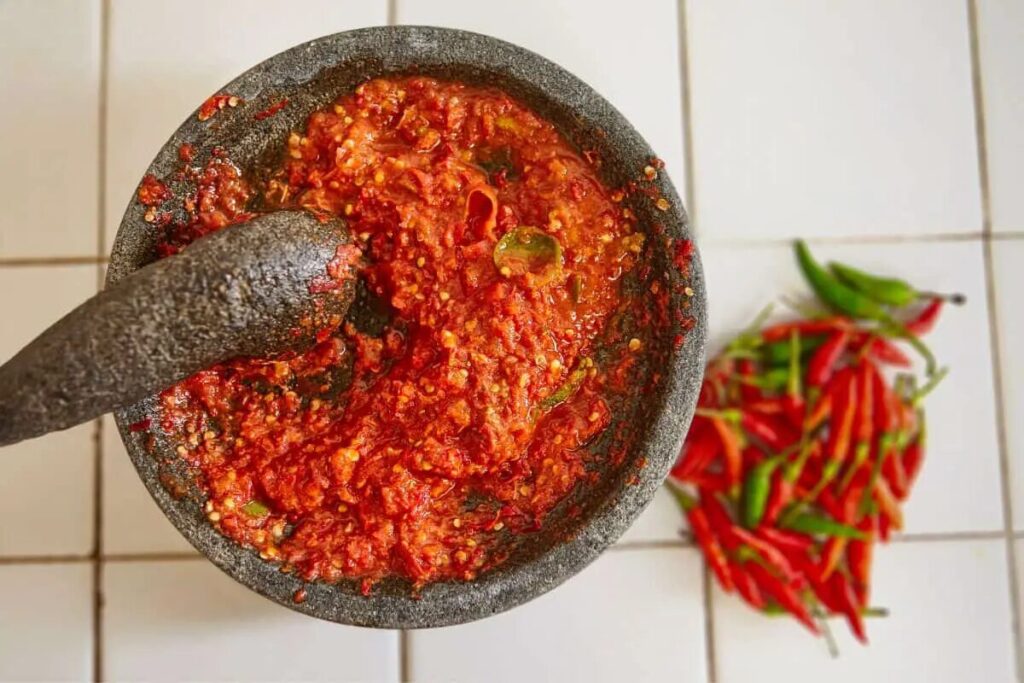
When it is pounded in a stone mortar, the chili walls break.
Oil comes out from the seeds.
Belacan’s amino acids fold into it.
It is not just cutting.
A binding happens.
Something like emulsification appears.
It looks like a process that speed alone cannot reproduce.
A spectrum between raw and cooked
Sambal has no single form.
But it seems to gather into two states.
One is raw.
The other is cooked.
There is a wide band between them.
There is a raw sambal, often called sambal belacan.
Fresh chilies are pounded with toasted belacan.
Limau kasturi is added.
No heat follows.
Spice and acidity go straight through.
It is less an accent than a detonator.
Saliva arrives quickly.
Then there is cooked sambal, sambal tumis.
Onion, chili paste, and belacan are simmered in oil.
Moisture is driven off with time.
The taste rounds out.
A certain state matters here.
Pecah minyak.
Water disappears.
Red oil separates and floats.
Kept to that point, it lasts longer.
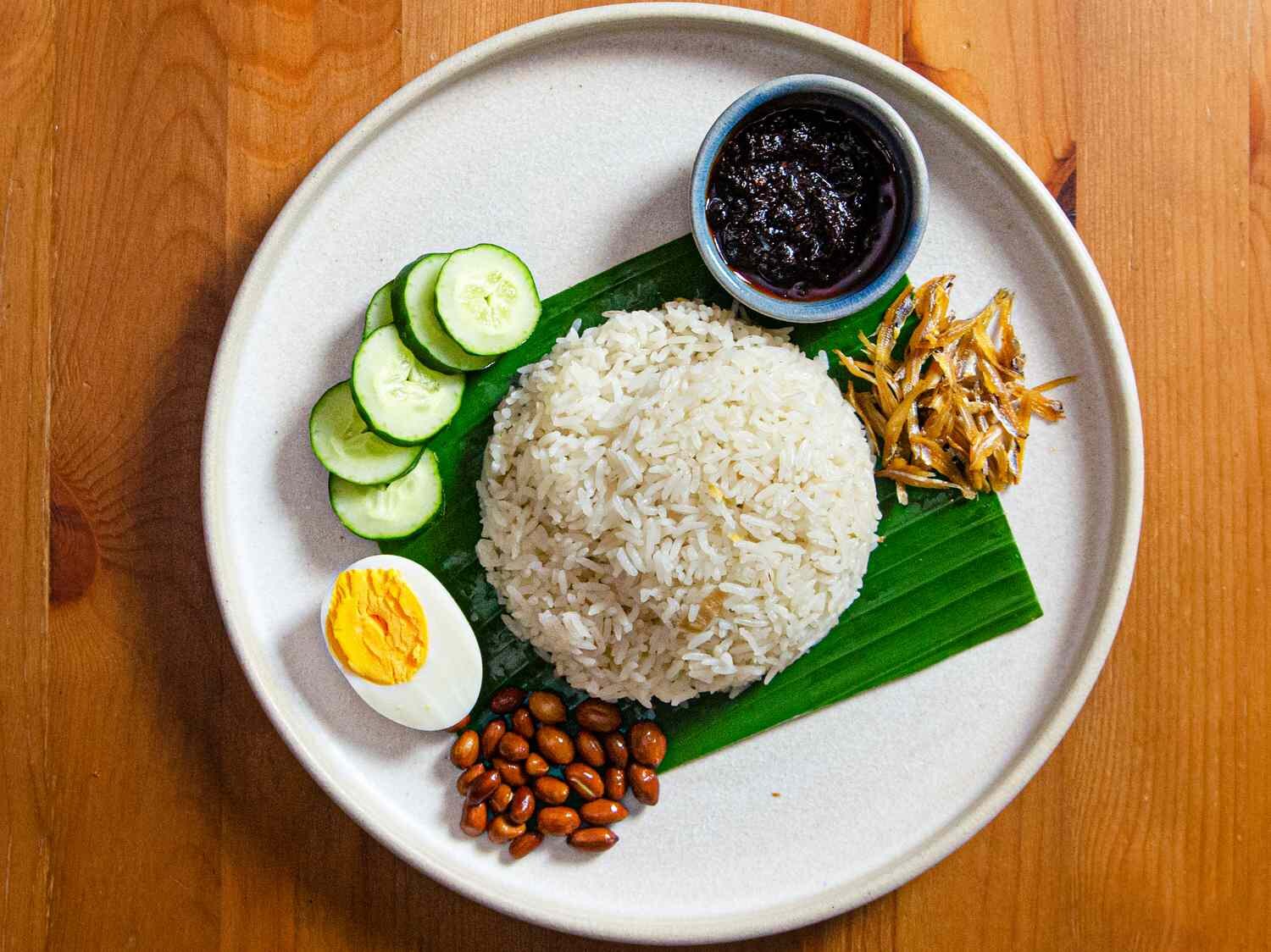
This is often the one used for nasi lemak.
Dishes driven by the red paste
Sambal is not usually eaten alone.
It becomes a dish when it binds to ingredients.
Nasi lemak
There is nasi lemak.
Here, it is not a sauce.
It becomes the main side.
Against sweet coconut rice, salt and heat are placed.
It works like a weight that balances the plate.
It sometimes looks less like eating rice.
More like eating the red part, with rice provided as structure.
Sambal kangkung
There is sambal kangkung.
It is water spinach, but it stops being just vegetables.
Belacan’s depth and chili’s heat cling to each strand.
It is greens, yet it can feel like meat.
Thickness replaces thinness.
Ikan bakar
There is ikan bakar.
Grilled fish.
Sambal is spread in a thick layer over stingray or mackerel.
It is wrapped in banana leaf and grilled.
Oil melts under heat.
Smoke moves through the flesh.
It becomes less a dish of fish than a dish of grilled sambal fed by fish stock.
The red layer leads.
The fish becomes the base.
Laksa
Laksa joins the list.
It is a noodle soup, but sambal often sits at the center of its scent.
Sometimes sourness leads.
Sometimes coconut richness comes first.
Still, what stays on the tongue at the end can be red heat.
In a spoon, oil and spice form a film.
While drinking the soup, that film is broken little by little.
Laksa is liquid food.
But sambal inside it feels closer to a solid.
Crossing into Mamak
Sambal is something placed on Malay tables.
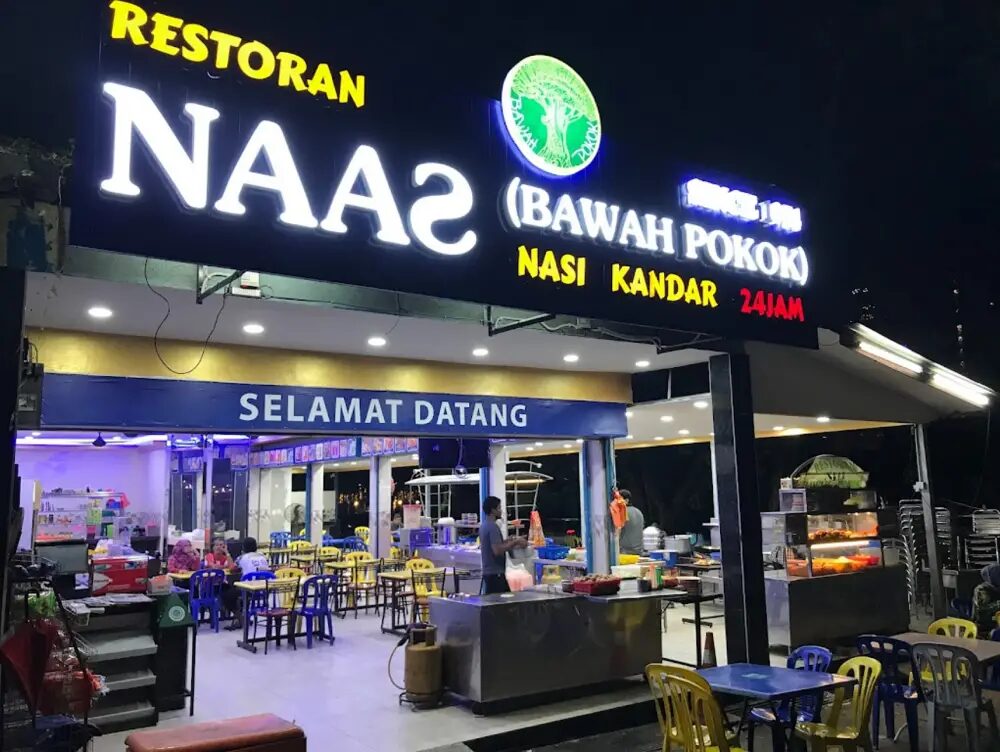
But the same red appears at Mamak shops as well.
The boundary can look softer than the signboard suggests.
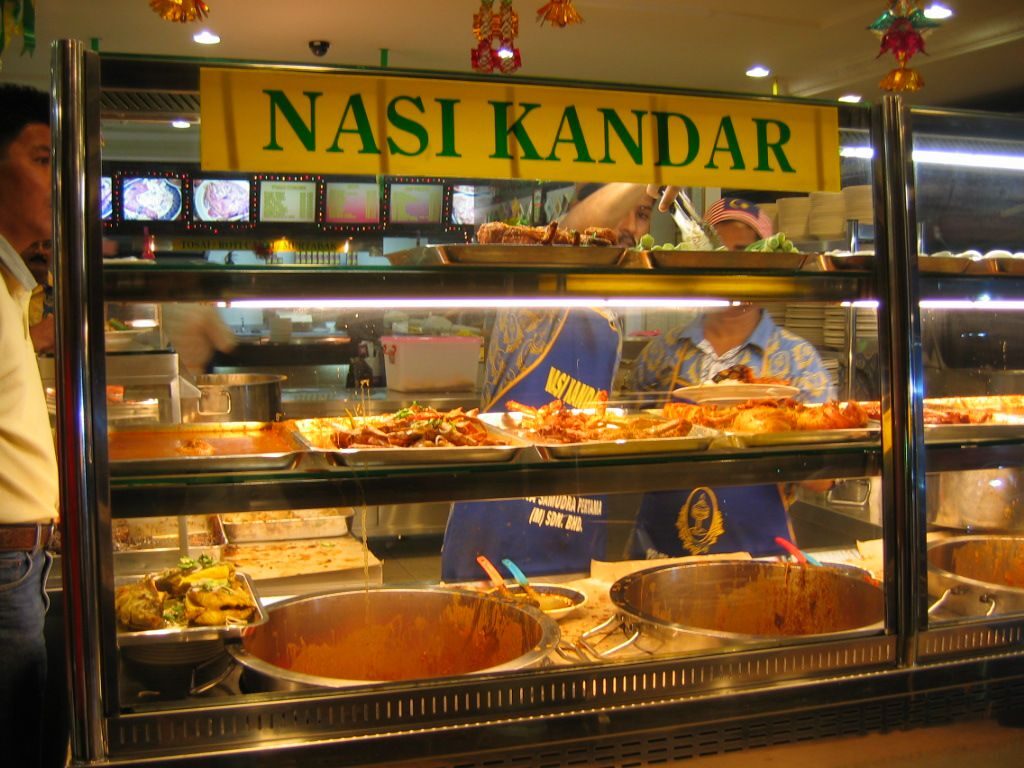
In nasi kandar, it is treated as an ingredient.
It sinks into layers of curry.
Rather than standing alone, it finds a place as a block of heat.
It lands on meat and rice.
It overwrites what was already there.
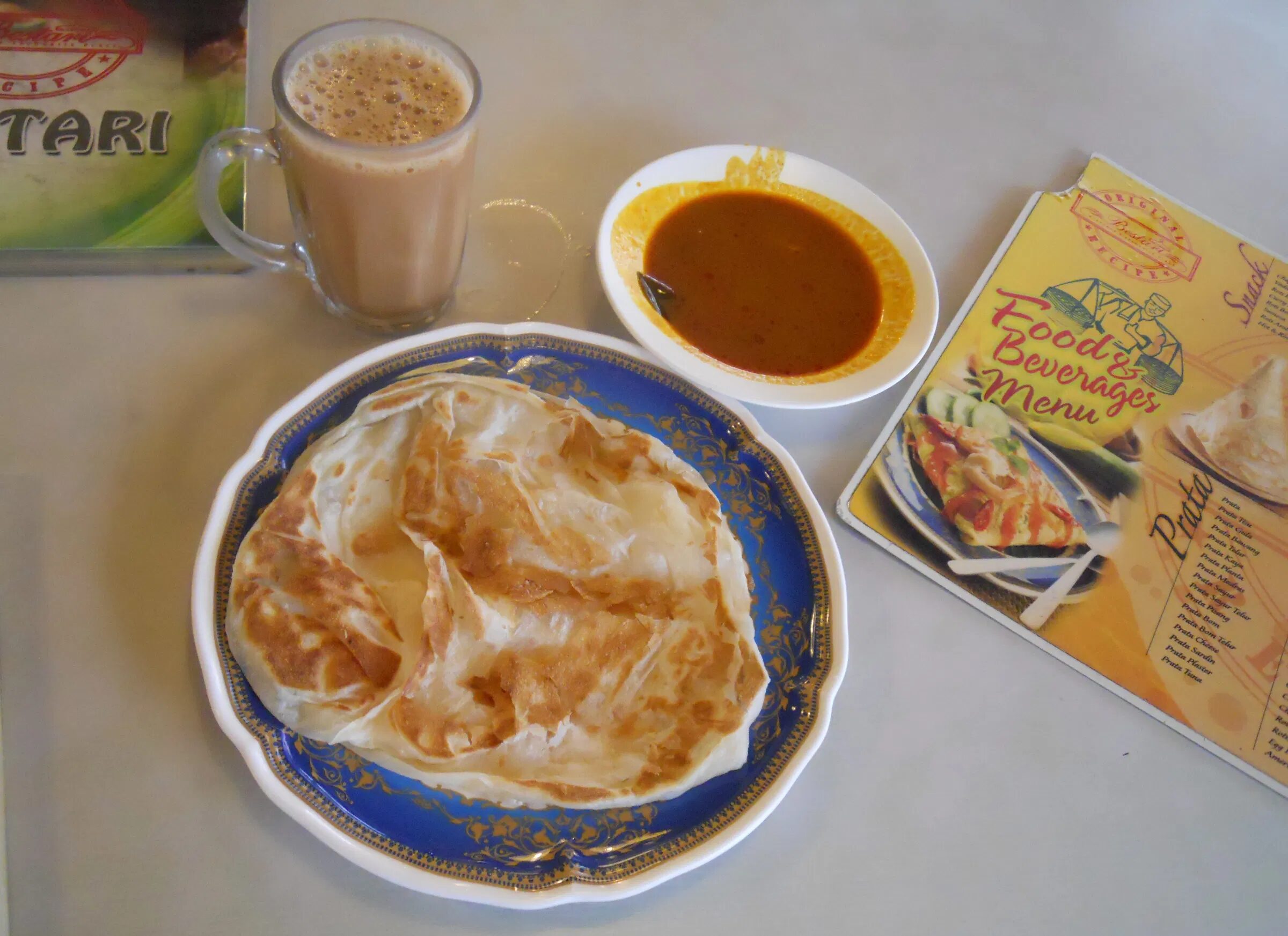
With roti, it becomes a sauce for blending.
A little is mixed into dal or curry, adjusting heat and smell.
It is less a side, and more a material that completes the bowl.
A Malay staple enters an Indian spice system.
The role shifts.
It is the same red, but placed in a different position.
Still, one point remains shared.
Sambal is on the table.
In this country, that single point holds more than expected.
The sound of the mortar
Evenings in Malaysian homes can begin with sound.
A steady knock of stone.
It is the sound of someone making sambal.
It comes from the back of the kitchen in a fixed rhythm.
Time changes, but people do not seem eager to abandon the handwork.
Chilies and fermented shrimp are pounded together.
A process unchanged for centuries remains.
They probably know the core of the taste lives in texture.
Even after eating, red heat stays on the tongue.
The humidity outside does not change.
Night continues as it is.