A familiar glass on Malaysian tables
In Malaysia, this drink appears often.
It sits on tables in food courts and roadside shops.
The liquid is brown in a clear glass.
A thin layer of foam stays on the surface.
It is sweet, but it does not feel heavy.
Some places set it down the way other countries set down cold water.
The word tarik
After arriving in Malaysia, the first confusion is not food or transport.
It is the large letters on convenience store and restaurant doors.
TARIK.
It looks like an advertisement for tea.
That mistake is easy to make in a country with a national milk tea.
But this is not about drinking.
It is a simple instruction.
Tarik means pull in Malay.
It only means the door should be opened by pulling.
Why the tea is pulled
Then why is the national drink called pulled tea.
When I order it, the worker takes two cups.
Tea is poured from one into the other from a high position.
The stream becomes a thin line in the air.
It falls, then is lifted again.
That motion is tarik.
It is not done for show.
There are clear reasons.
One is mixing.
The condensed milk sinks, and needs to be made even.
One is cooling.
In a tropical country, a drink that stays too hot is inconvenient.
And one more is air.
The pouring traps air and makes foam.
Because of that, the texture becomes oddly gentle.
It is sweet, but not dense.
When I am tired, it enters the body without resistance.

Where it came from
It is often treated as a traditional Malaysian drink.
Its origin is less simple.
This is not a country of tea plantations in the everyday sense.
Much of the tea arrived from elsewhere.
Indian migration.
The shadow of British rule.
Port logistics.
A daily drink formed on top of that mixture.
Its spread also follows the rhythm of work.
Mornings start early.
Nights run long.
In the heat, the body asks for sugar and caffeine.
Condensed milk answers that need.
The sweetness is less luxury than fuel.
Tea alone does not carry enough weight.
The white sweetness fills the gap.
In mamak shops, it circulates for practical reasons.
People gather.
The night continues.
Televisions stay on.
In the center sits a glass of sweet tea with foam.
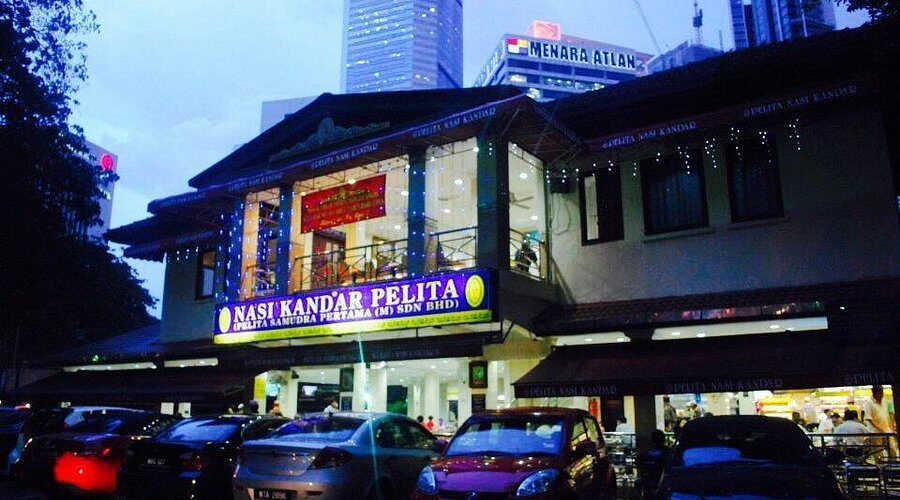
On the same tables, nasi kandar plates often appear.
The smell of mixed curry and the sweet foam share the same air.
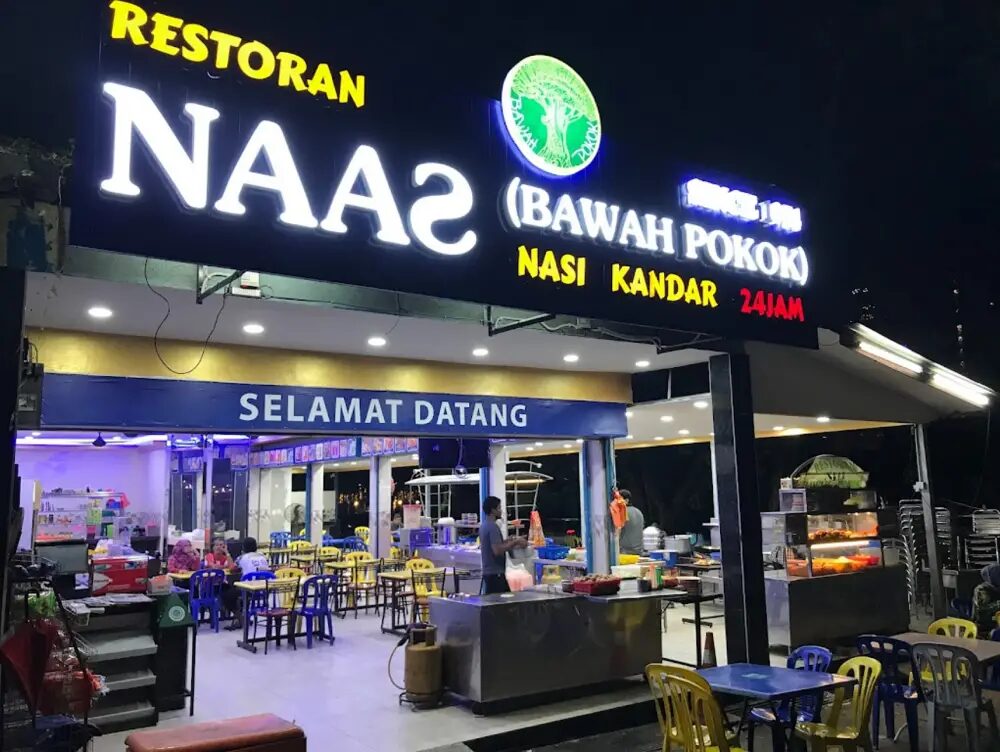
A drink placed beside nasi kandar
Teh tarik is often talked about on its own.
But in reality, there are places where it is almost always set down.
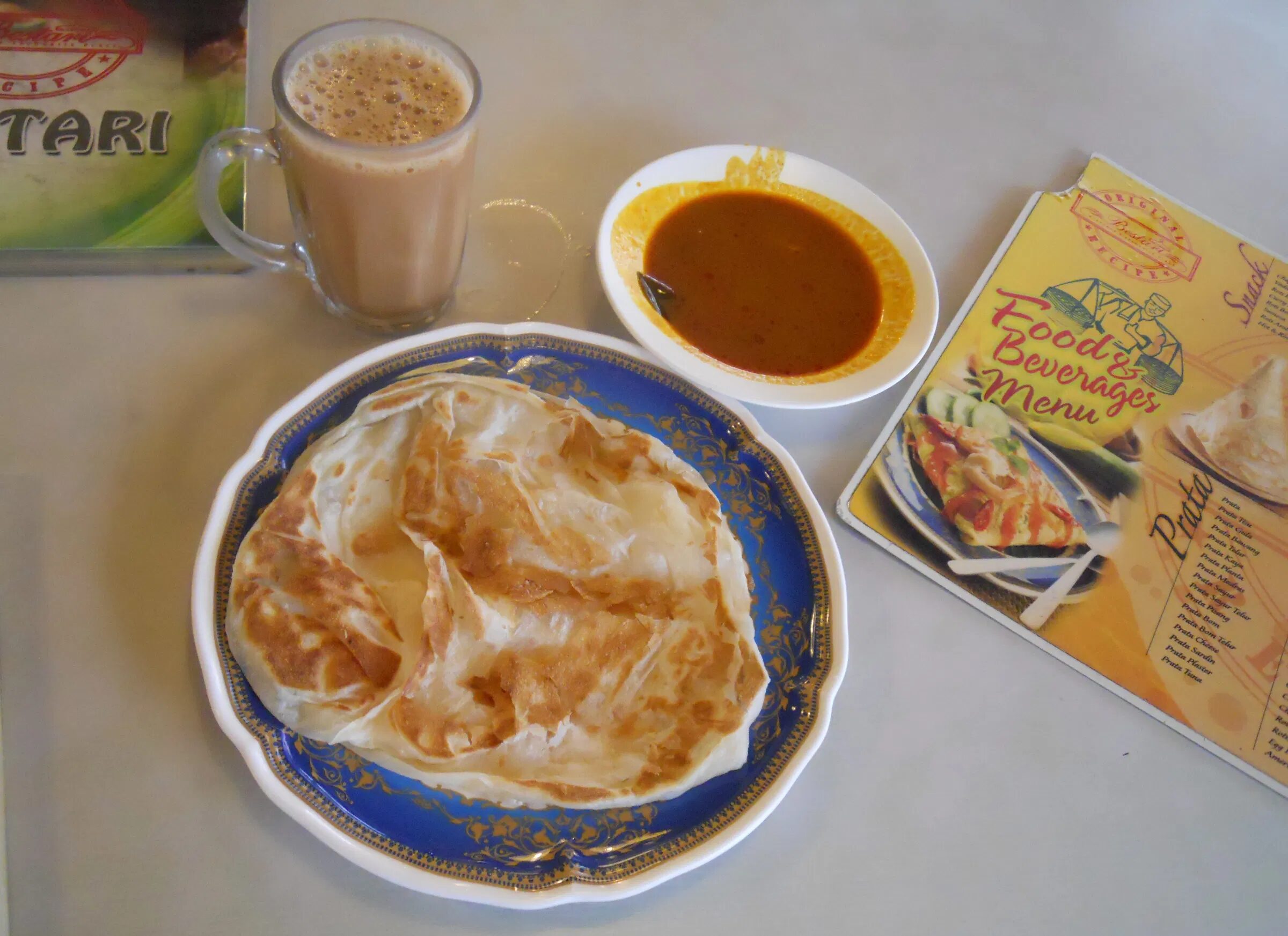
In the morning at a mamak, it sits beside roti canai.
A thin, folded flatbread, dipped into dhal or a light curry.
Oil and wheat land in the stomach first.
Then the sweet, foamy glass arrives.
Roti canai is breakfast, but it is not light.
It feels less like a gentle start, and more like fuel before work begins.
Teh tarik makes a small pause in that weight.
After hot dough and hot oil, hot sweetness slides in.
Only then does the mouth feel arranged.
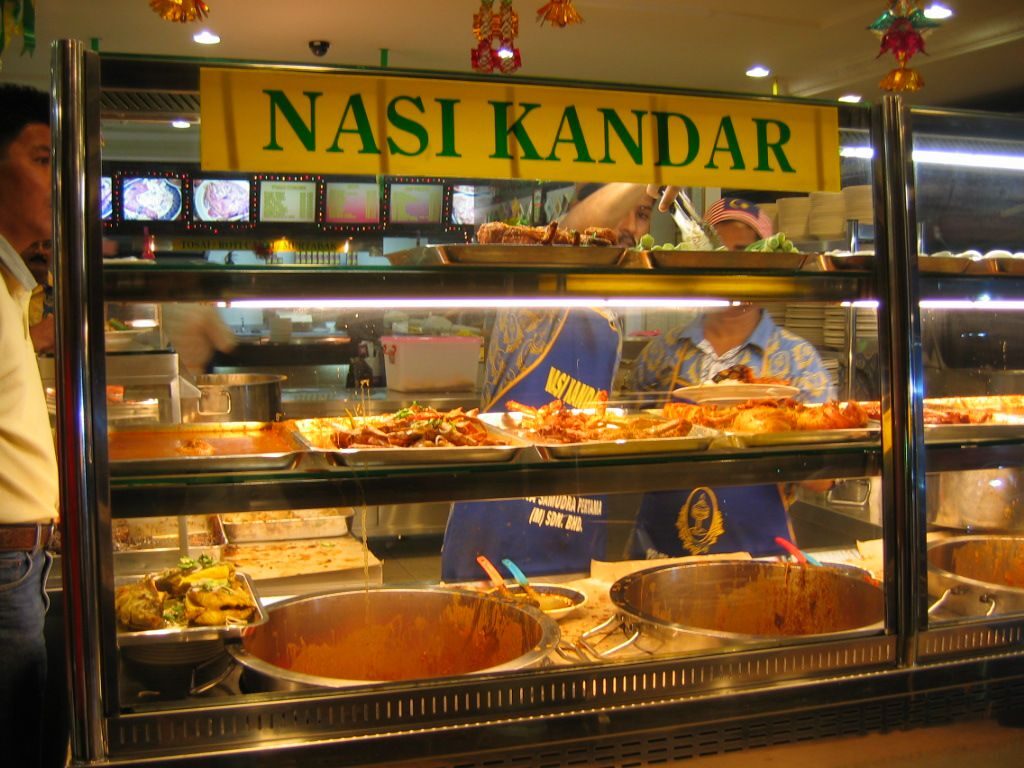
From midday into the night, teh tarik shifts to the side of a nasi kandar plate.
Brown curries blend into the rice, and then more sauce falls on top.
When the plate becomes a kind of flood, a sweet, foamy glass is needed.
Not to erase the heat.
Not to pretend the heaviness is gone.
Just to create a gap before the next bite.
If nasi kandar is a meal that works by mixing,
teh tarik looks like a drink that keeps it going by resetting.
Sweetness adjusted by a short spell
The problem is sweetness.
The default version is clearly sweet.
After a long trip, it helps.
Every time, it can be too much.
Here, a short spell becomes useful.
Teh tarik kurang manis.
It means less sweet.
It is still sweet, but the outline becomes clearer.
If I want to strip it down further, there is teh o kosong.
No milk, no sugar.
As tea, this is the quietest option.
In Malaysia, drinks become sweet if you stay silent.
You have to state your preference.
The opposite trap: tolak
Back to the doors.
Where there is tarik, there is always the other side.
That word is tolak.
It means push.
The sound is misleading.
Japanese speakers often imagine pulling.
Then the door is met with a small collision.
Many travelers pass through this quiet initiation.
In Malaysia,
both doors and drinks only open in the right direction.

Order settles by pulling
A Malaysian day begins with tarik.
You pull the door to enter.
You drink tea that has been pulled to form.
It is not a loud culture.
It is practical, and it fits the body.
After returning home, if I see the word TARIK somewhere,
and for a moment I remember the foam on tea,
that feeling does not leave easily.
Quick order list (for screenshots)
| Phrase | Meaning | Notes |
|---|---|---|
| Teh Tarik | milk tea with condensed milk | sweet, light foam |
| Teh Tarik Kurang Manis | less sweet | still sweet, clearer taste |
| Teh O | no milk, with sugar | closer to plain tea |
| Teh O Kosong | no milk, no sugar | quiet and light |
| Teh C | evaporated milk | cleaner, less heavy |
| Teh Ais | iced tea | for hot afternoons |