Twin bistros that do not sleep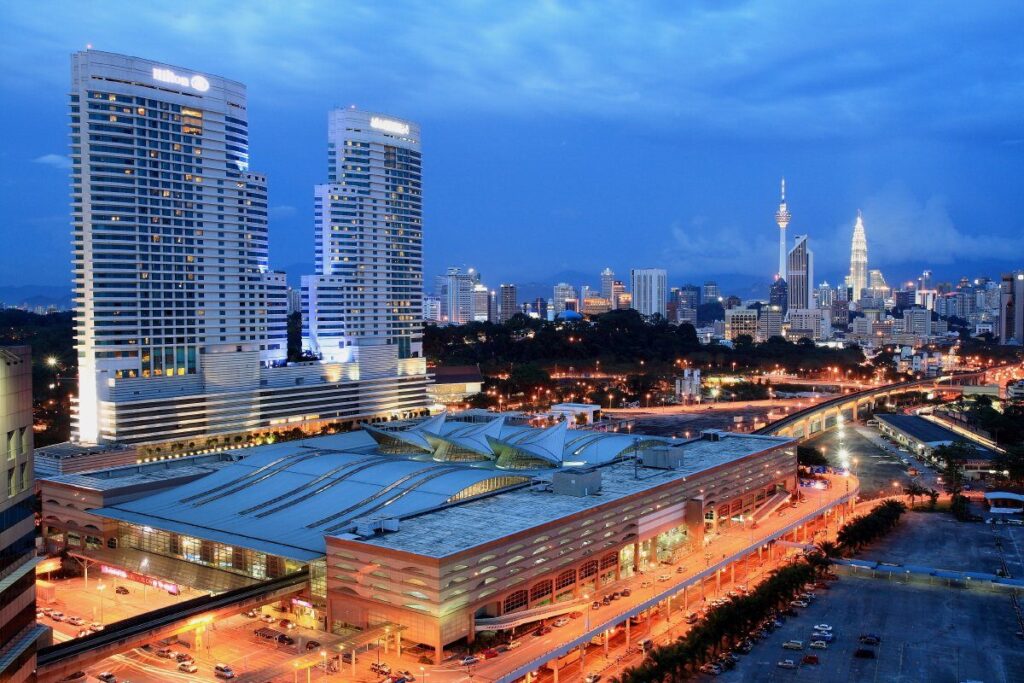
Leaving KL Sentral through the Nu Sentral exit, I go down the escalator and walk toward the monorail tracks. Just before the crosswalk, my steps slow. This point functions as the practical entrance to Brickfields, the area known as Little India, where the smell of everyday life arrives before any tourist signage. What first enters the field of vision are large letters. ABC. Red and blue signs stand side by side.
Whether early morning or deep night, this corner remains as bright as midday. White fluorescent light spills onto the pavement. The air carries a mixture of spices and vehicle exhaust. If there is a place where travelers first feel they have arrived in Malaysia, it may be here. The moment one steps outside the station, the atmosphere changes.
A Subtle Difference Between Red and Blue
Most people recognize only that there is a place called ABC. In reality, two distinct shops stand next to each other. The red sign belongs to ABC One Bistro, which displays the slogan Always Best Choice. The blue sign marks ABC Bistro Cafe, separated by a narrow alley and standing near a 7-Eleven.
Both are ABC, yet the entrances feel slightly different. The menus appear almost identical, yet the air in front of each shop is not quite the same. On the red side, a display case for nasi kandar (Nasi Kandar) stands prominently, with a tandoor oven visible behind it. On the blue side, the sound of roti (Roti) hitting a hot griddle fills the space, giving the place a faint café-like tone.
Still, the offerings are nearly interchangeable. One can order roti at the red shop or eat curry at the blue. This looseness, where either choice works, feels like a local standard rather than a flaw.
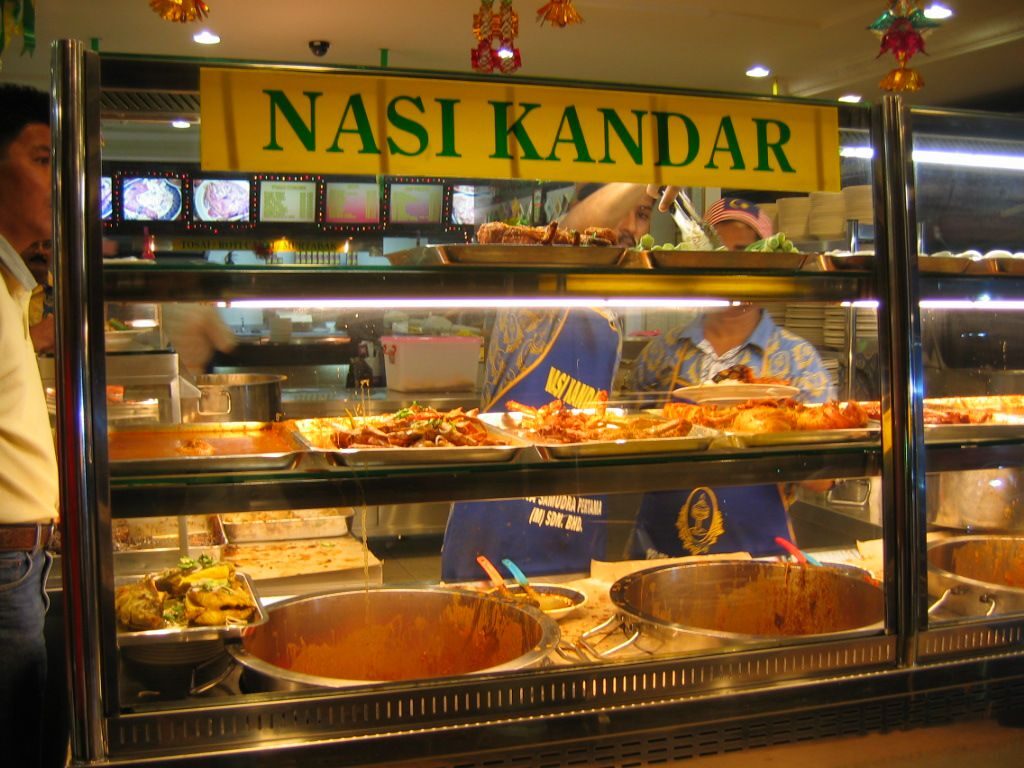
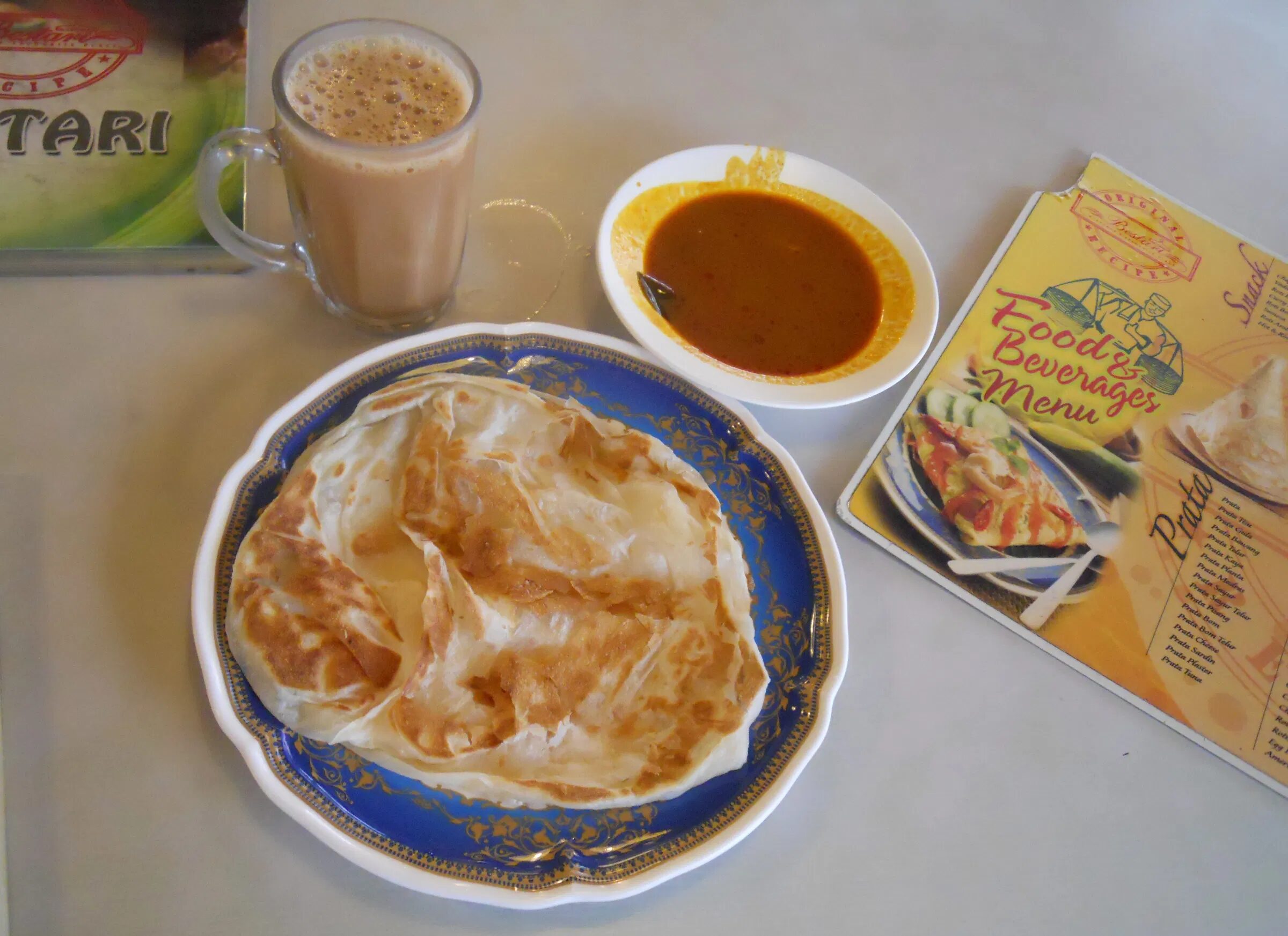
The Standard Form of a Mamak
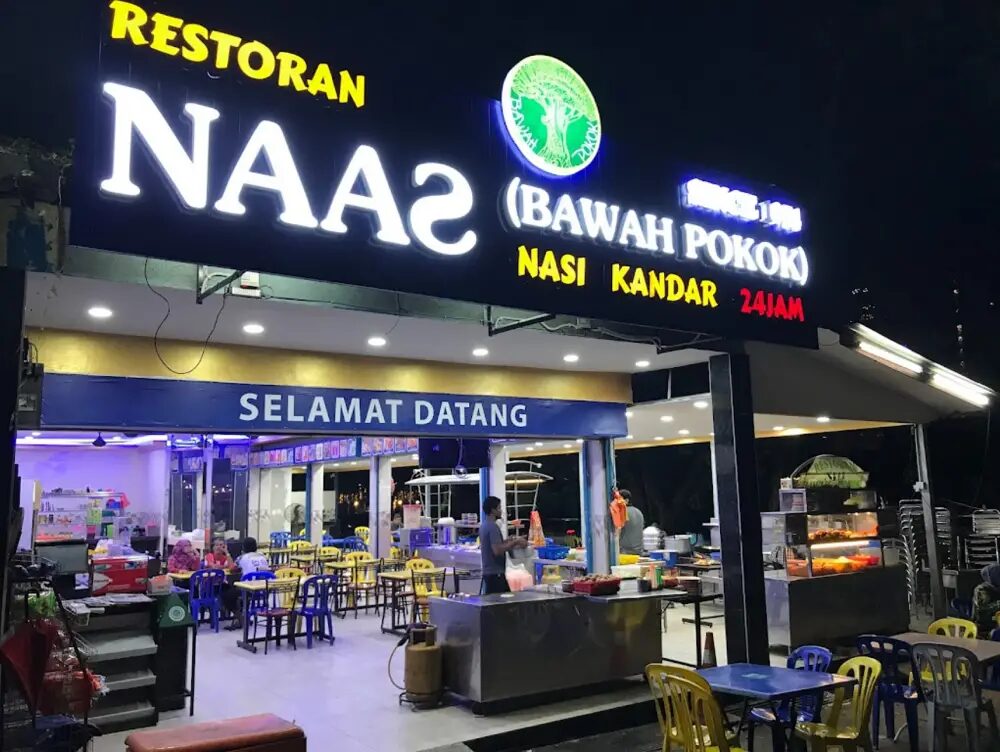
Inside, both shops follow the typical structure of a mamak eatery. Plastic chairs line up in rows. Stainless steel tables reflect the overhead lights. The floor, wiped clean with water, looks bright even at night. The lightness of the chairs and the hardness of the tables suggest a space not built for long stays. People eat, stand up, and move on. The rhythm appears built into the design.
Tables hold only what is necessary. Condiments are few and placed without disorder. Photographs of dishes sometimes hang nearby, making pointing sufficient for ordering. Including the outer seating, the space feels like an extension of the walkway. The boundary between street and shop remains thin. One can drift in, sit, eat briefly, and leave. This ease fits the station front.
There is nothing extraordinary here. Yet all the essential elements of a Malaysian mamak are present without excess or lack. For travelers, this becomes a reference point.
Open Without Exception
The value of ABC lies less in taste than in time. It stays open twenty-four hours a day. That fact alone carries weight. Seats are available at dawn. The lights remain on past midnight. When such certainty exists in front of a major station, a form of comfort appears.
At five in the morning, backpackers waiting for the first KLIA Express train sit with their luggage at their feet, sipping teh tarik (Teh Tarik). The sweetness is strong. Sugar replaces sleep. At one in the morning, office workers after overtime sit alongside tourists heading back to their hotels, replenishing themselves with maggi goreng (Maggi Goreng). The flavor is heavy. It looks less like eating for pleasure and more like closing the day.
At these hours, the clientele blends together. Locals and travelers share tables. Often no one speaks. They simply drink the same sweetness under the same lights. A shop that stays open through the night becomes a form of urban insurance. When plans collapse, there is somewhere to return to. ABC performs this function quietly at the station’s edge.

The Distance to Original Penang Kayu
On the first floor of Nu Sentral sits Original Penang Kayu, another place serving nasi kandar. It stands across the main road from ABC, appearing similar on a map. Like ABC, it uses an open-air layout with a thin boundary between inside and outside, where airflow moves through seats that spill outward.
Yet the atmosphere shifts once seated. ABC sits outside the station, where people flow in like part of the walkway, sit briefly, eat, and leave. Original Penang Kayu lies within the mall. Walking speeds slow. Clothing appears slightly more arranged. The way bags are placed changes.
The clientele also differs subtly. ABC draws people from late night and early morning, many in transit. Original Penang Kayu closes in the evening, serving those eating between shopping stops. Both fall within the mamak tradition, yet even with the same roti or the same tea, location alters meaning.
ABC stands outside the checkpoint. Penang Kayu stands inside. That single distinction reshapes the face of each place.
Controlling the Entrance
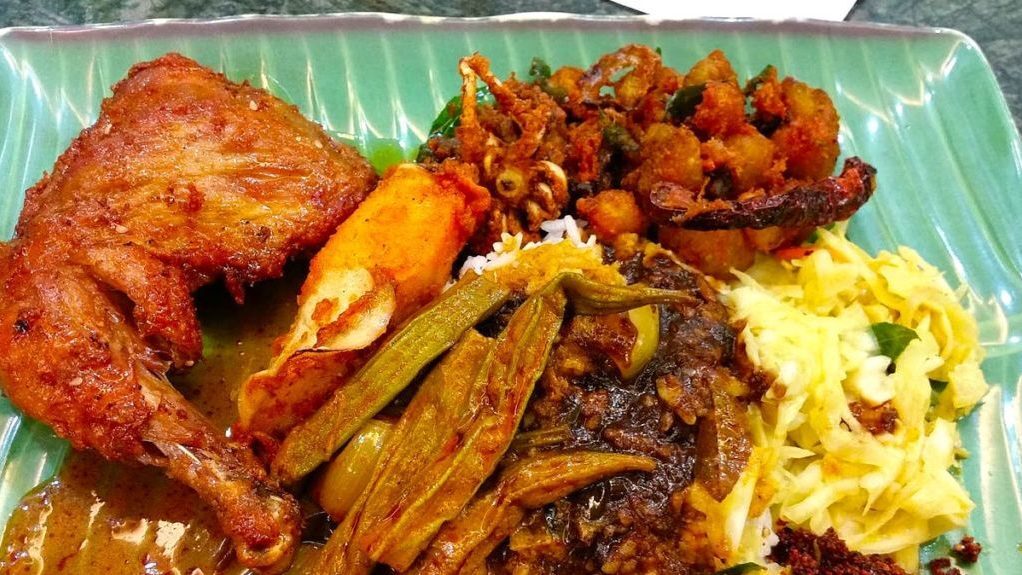
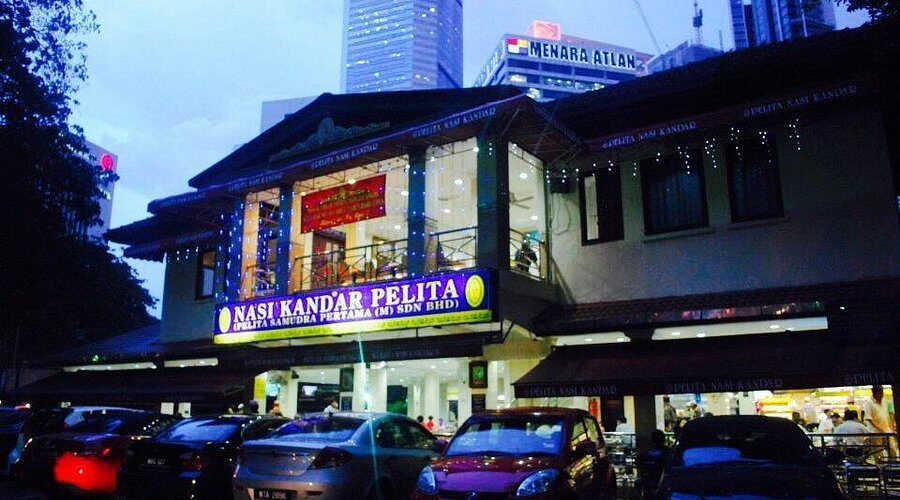
ABC is not a nationwide giant chain. It does not reach the scale of Nasi Kandar Pelita. The number of locations is smaller than expected. Yet many travelers remember it as a famous place. The reason appears simple. It stands at Kuala Lumpur’s front door.
Foot traffic is constant here. People leaving the station pass by. Those heading to the monorail pass by. Those entering Brickfields pass by. The red and blue shops together secure this single point. If the red side is full, people drift to the blue. If the blue feels crowded, they return to the red.
Once stepping into this corner, choices narrow. Other eateries exist, but ABC dominates the visual center. Simply occupying that space causes people to sit. This shop wins less by flavor than by position. It reflects the strategy of businesses standing at a city’s entrance.
The Meaning of Always Best Choice
The red sign reads Always Best Choice. The phrase does not suggest the best flavor. At least, it does not read that way. It means the place is always open, reasonably satisfying, and unlikely to result in a bad decision.
In that sense, the promise is honest. It is less about excellence than about the safest middle point. During travel, such middle ground often becomes welcome. The next time I arrive in Kuala Lumpur, I will likely sit here again without thinking. Red or blue will depend only on which has space. That will feel sufficient.
Sitting here becomes part of checking into the city. Places like this still remain at the station front.