A twist in evaluation, and what it suggests in Taipei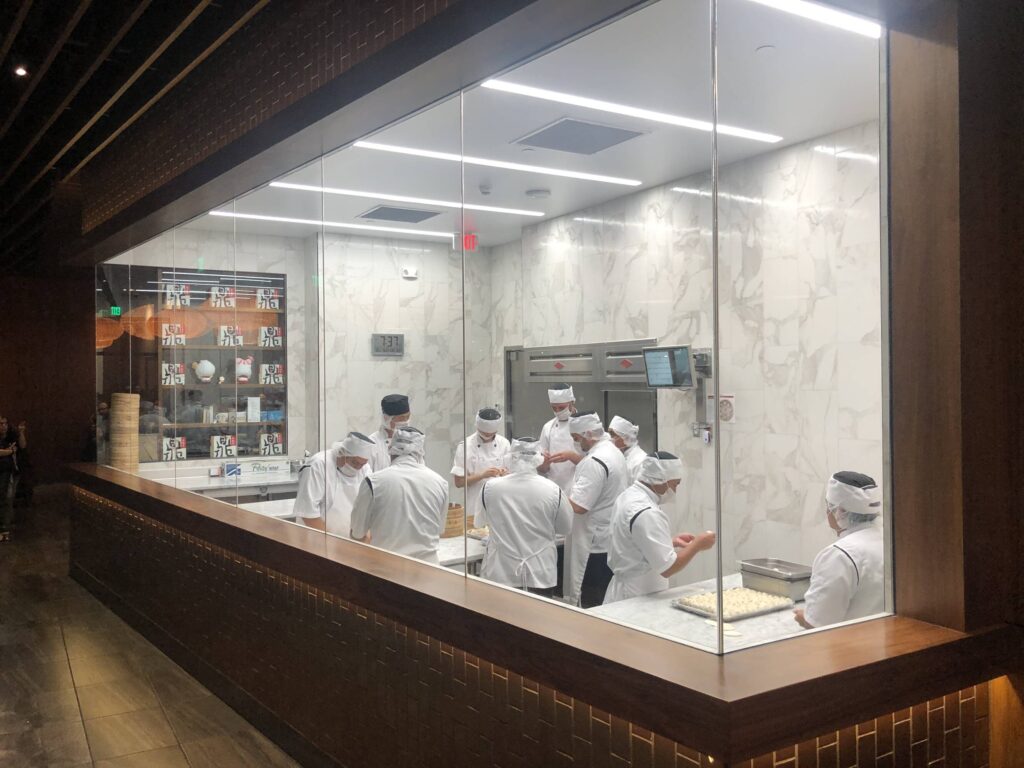
Din Tai Fung’s Hong Kong branch once received one Michelin star.
It surprised many people.
Dim sum, treated as light food, was pulled into the star system.
In Taipei, the Xinyi flagship did not receive a star.
Its place was Bib Gourmand.
A category for good quality at a reasonable price.
The student holds the star.
The master does not.
From the surface, it looks strange.
Some people may want to call it a defeat.
But that conclusion comes too fast.
The twist may show something else.
It may show that Din Tai Fung is a Taiwanese company.

The outline of Din Tai Fung
Din Tai Fung is known for xiaolongbao.
It began in Taipei.
Now it has branches across the world.
For a dim sum restaurant, the geography is unusually wide.
There are usually people in front of the entrance.
Tourists stand beside locals.
Orders move in multiple languages.
Steamers stack at a steady rhythm.
Here, food is not the only product.
Operations are part of what is sold.
The same shape.
The same temperature.
The same timing.
Repetition becomes the skeleton of the brand.
In Taiwan, restaurants often swing by the day.
Taste and service can shift with staff and mood.
Din Tai Fung reduced that swing on purpose.
That is why it worked overseas.
And overseas, it was reinterpreted as fine dining.
Why Bib Gourmand fits: staying within everyday Taiwan
People say Michelin stars are not decided by taste alone.
Price and atmosphere also matter.
At least, that is the feeling many readers carry.
In Hong Kong and Japan, Din Tai Fung is localized as upscale.
From the entrance, it is no longer a street dim sum shop.
Service becomes thicker before a person even sits down.
In Taiwan, the flagship remains closer to the street.
The price is clearly lower than abroad.
It stays inside Taiwanese cost of living.
If the flagship tried to chase a star,
it would likely change its shape.
Prices would rise.
Interiors would become more formal.
Dining time would stretch longer.
These are natural steps in the star world.
But the moment that happens,
the restaurant moves away from daily Taiwan.
It becomes a landmark.
Not an extension of life.
Bib Gourmand can function as a reason to stay here.
We are still within reach.
It reads like a quiet declaration.
Why Bib Gourmand fits: an aesthetic of turnover
A starred restaurant is built for slow time.
Guests stay longer.
The room moves quietly.
Silence is treated as value.
Din Tai Fung’s flagship feels closer to a battlefield.
Steamers arrive.
Orders pass through.
People eat.
People leave.
The cycle repeats all day.
This speed sits at the center of Taiwanese food culture.
At stalls and small diners, turnover is fast.
Short stays become strength.
The quiet service that Michelin rewards
is replaced here by something else.
Not softness, but accuracy.
Not space, but flow.
Din Tai Fung seems to have chosen
to keep the Taiwanese noise
rather than become quiet for a star.
The spirit of Taiwanese manufacturing
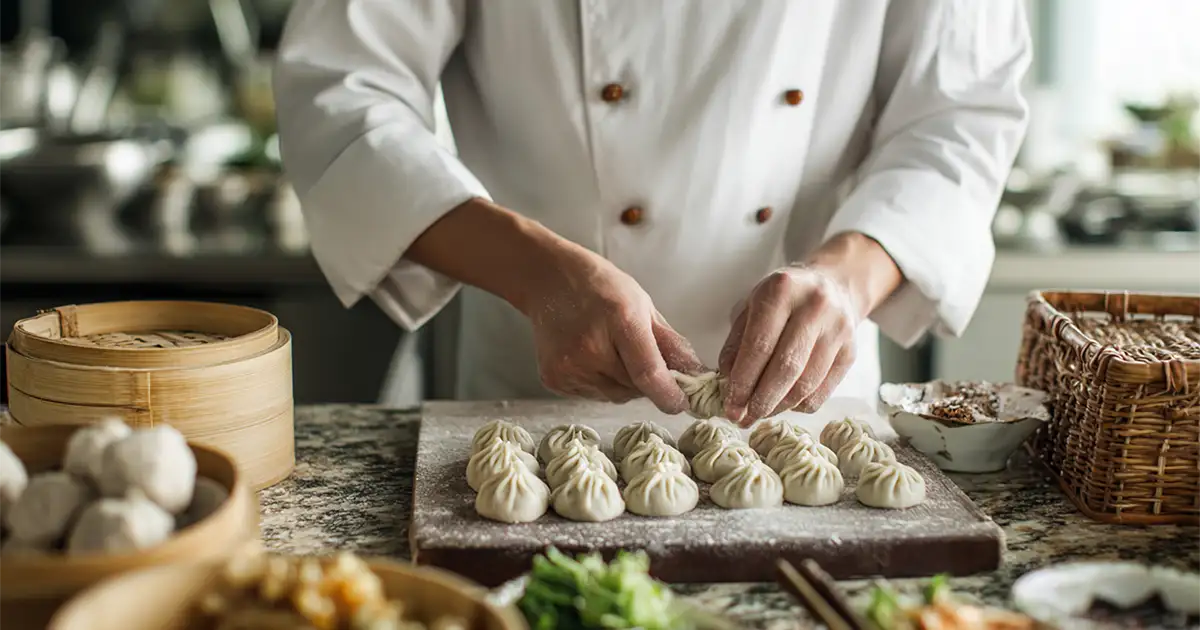
The xiaolongbao here can feel closer to a product than a dish.
Each piece looks the same.
Wrapper thickness.
Steaming temperature.
Variation stays small.
People often mention the number eighteen.
The folds are kept to a fixed count.
It is handmade,
but the process behaves like a standard.
This matches Taiwanese industry well.
Low cost.
High volume.
High quality.
Not mass output through roughness,
but mass output with precision.
Taiwan has many jobs like this.
Parts that stay unseen.
Contract manufacturing that supports global supply.
The name does not stand in front.
Trust is built through delivery and consistency.
Din Tai Fung carries a similar smell.
The kitchen is divided like a factory.
Paths are cut short.
Roles are separated.
It is not one genius producing taste.
It is a team reproducing quality.
In that sense, Bib Gourmand fits.
A star rewards rarity and special experience.
Bib Gourmand rewards high quality inside daily life.
Low cost.
High volume.
High quality.
Holding these three at once
is itself a Taiwanese strength.
Din Tai Fung sits on that line.
The flagship changed shape, but the idea remained
There is one important fact.
The original Xinyi location became takeout-only in 2023.
Aging facilities and labor shortages were cited as reasons.
Seating moved to nearby locations, such as the Xinsheng branch.
The holy place did not remain as it was.
Even the word “flagship” begins to shift.
Still, the Bib Gourmand spirit remains.
“Good quality for the price” is a convenient phrase.
But it fits this company.
Even as a global luxury brand,
in Taiwan it stays a place you can enter in sandals.
That pride may be a harder choice
than receiving a star.
An uncrowned king
For overseas branches, a Michelin star becomes polish.
It is an easy symbol.
It also supports higher prices.
By moving closer to the system,
a restaurant can travel farther.
For the Taipei flagship, a star is not required.
There is still a line today.
People wait for hours.
That line functions as the local evaluation.
A queue is rougher than a star.
More direct than a star.
And it is likely more honest.
Din Tai Fung’s flagship does not look up at stars.
It looks at the stomachs in front of it.
It remains that kind of place.
And Taipei keeps processing the line,
again today.