A Solitary King Selling at Twice the Price
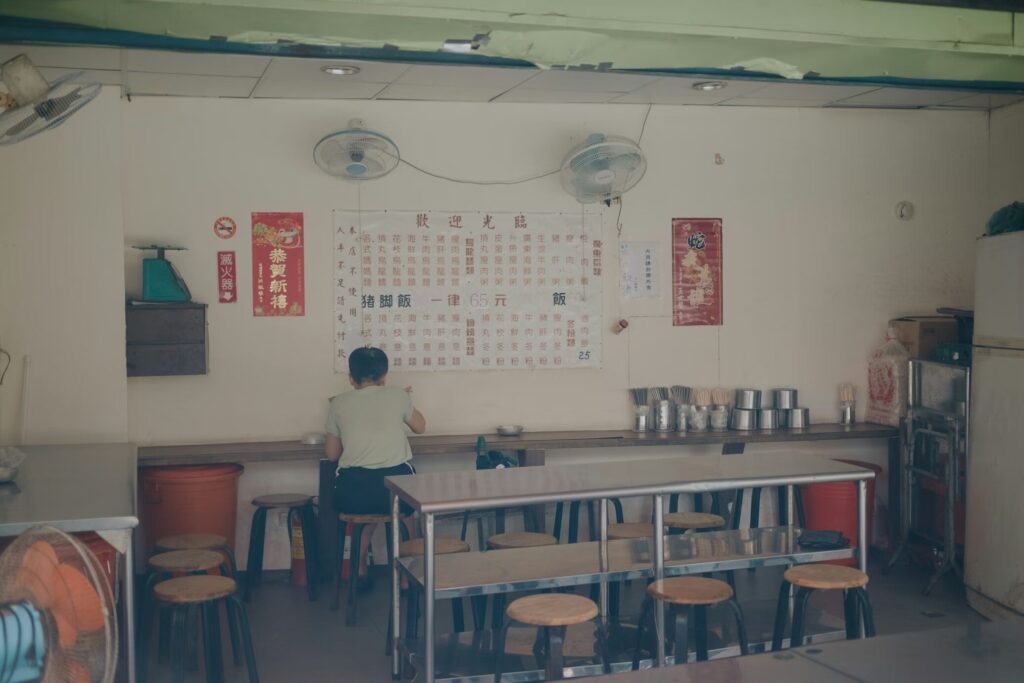
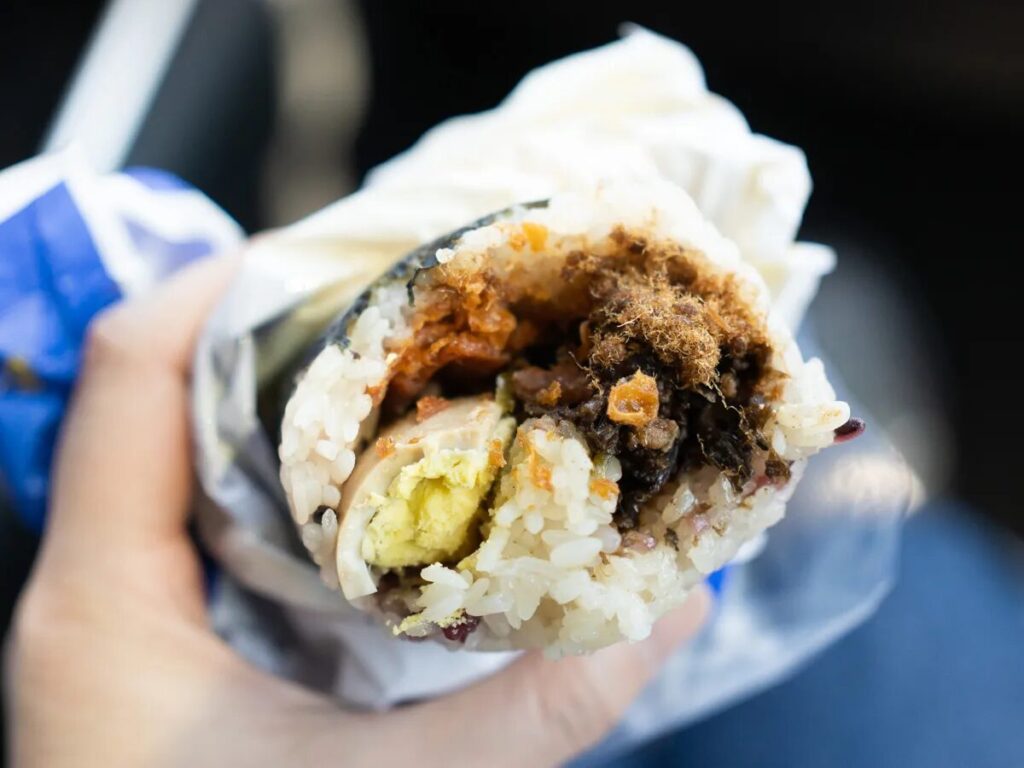
Eating this dish in Taiwan is not an event.
Morning, noon, or night, it appears somewhere in the city.
The price is usually around thirty NT dollars.
Street stalls and small eateries sit at roughly the same level.
There was never an idea of luxury attached to it.
Cheap, fast, filling.
That was its position.
There is, however, one presence that quietly disrupts this balance.
Formosa Chang.
Its version is not cheap.
The price is close to double the usual rate.
Even so, the number of locations is large, and at lunchtime the seats rarely stay empty.
On an island where “cheap and good” is often treated as justice,
one question keeps returning.
Why does “expensive and ordinary” continue to win?
What the Mustached Logo Signals
There is a restaurant known as Formosa Chang, a nationwide chain built around lu rou fan.
It began in 1960 as a small street stall in Taipei.
Today, it is often treated as a reference point within Taiwanese food culture.
Inside, the lighting is bright.
The floors are dry.
Air-conditioning runs steadily.
Staff move in uniform.
The flow from ordering to serving is clear.
The dish comes from the world of street cooking.
The environment, however, feels corporate.
For many people, the name signals a meal unlikely to deviate far from expectation.
It may be one of the places that gave a stable outline to a dish once defined by variation.
Yet what is notable is this:
The presence of Formosa Chang does not end at the restaurant door.
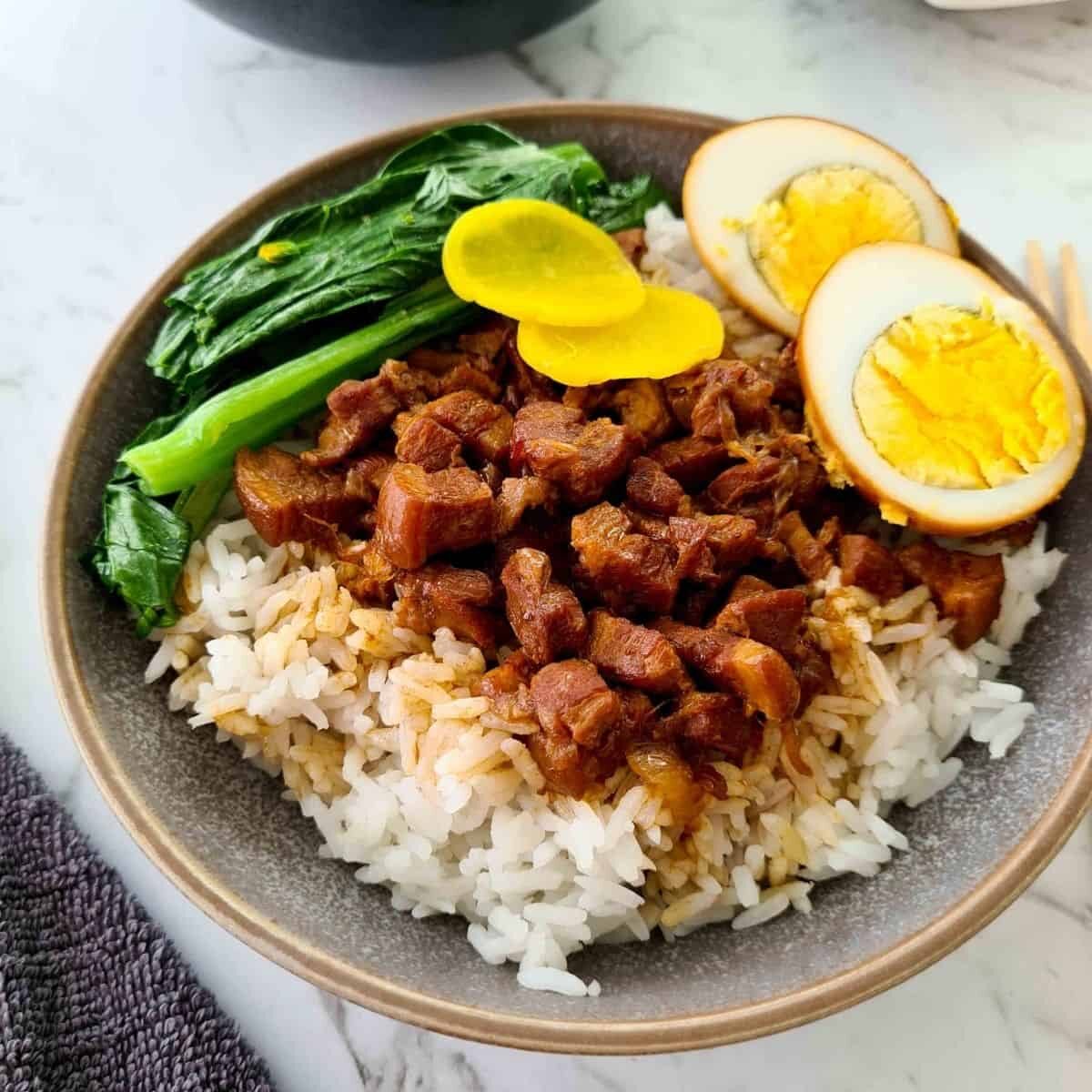
Lu Rou Fan as Taiwanese Everyday Life
Lu rou fan is often described as a national dish of Taiwan.
Finely chopped pork is simmered in a soy-based sauce with a restrained sweetness.
It is then poured over white rice.
The structure is simple.
Differences between shops remain visible.
The ratio of fat to lean meat shifts.
Sweetness rises or recedes.
Sometimes star anise lingers at the edge.
Even so, most people picture roughly the same bowl.
The portion is modest.
The price is usually restrained.
Some finish it alone.
Others add greens or soup and let it become a full meal.
In Taiwan, this bowl rarely marks an occasion.
It sits closer to a baseline —
something that quietly supports the rhythm of ordinary days.
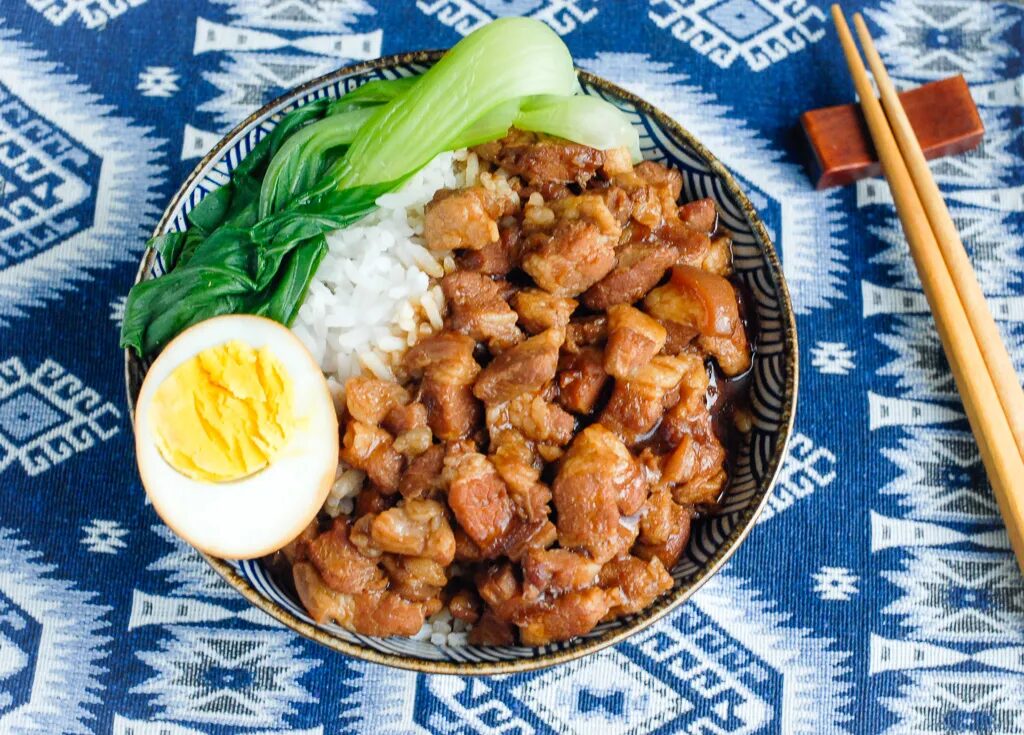
The Visible, Replicable Front
The flavor itself is not exceptional.
It is not sharp or surprising.
It sits somewhere around a safe eighty points.
A capable independent shop could reproduce it.
In Taipei’s side streets, bowls that taste better are not rare.
Next comes the menu structure.
The rice is only the entrance.
Fried pork chops, braised eggs, blanched greens.
The system encourages additions.
Customers raise their spending naturally.
This design is not an invention.
Then the room itself.
Cool air.
Dry floors.
Bright kitchens.
Matching uniforms.
All of this can be achieved with money.
Seen this way, every element appears imitable.
Yet most imitators collapse by their second store.
The Machinery Behind the Counter
Formosa Chang operates a large central kitchen in New Taipei City.
The pork is prepared there in bulk.
Heat.
Time.
Salt content.
Everything is measured.
International standards such as ISO and HACCP are in place.
Its hygiene logic stands clearly apart from stall culture.
At this point, a corporate logic becomes visible.
Facilities and manuals can be purchased.
Other firms could build larger factories if they wished.
Taiwan has companies with sufficient capital.
Even so, the throne does not move.

Time as the Only Unpurchasable Asset
What remains cannot be bought.
The chain operates an internal training institution.
What is taught there goes beyond cooking.
How to hold a bowl.
Where to direct one’s eyes.
How loudly to speak.
Where to stand.
These are hard to quantify, yet they shape the floor.
Every staff member is asked to reach the same level.
This takes time.
And it is tedious.
Many competitors skip this part.
They copy flavor and equipment,
and postpone human development.
The result is predictable.
The floor weakens.
The store becomes merely expensive.
Formosa Chang has carried this burden for decades.
Organizational Culture as an Invisible Asset
The strength here is not the recipe or the factory.
It is the maintenance of something simple:
ordinary things done ordinarily, everywhere.
This is not a manual.
It has become culture.
New staff enter.
Managers grow.
The same standard is reproduced.
Only time creates this loop.
Here stands the solitary king.
A Mirror Across the Sea
Japan has a similar figure.
Curry House CoCo Ichibanya.
A national dish sold at a higher price.
A mild flavor.
Toppings that raise the bill.
The decisive factor is training.
Its system moves workers from part-time staff to managers and owners.
Not only cooking, but judgment, numbers, and service are absorbed step by step.
The goal is simple.
Anyone should reach the same decision.
That is why it does not collapse.
Just as that chain does not win on curry flavor alone,
Formosa Chang does not win on pork alone.
What both built was a system that reproduces people.
Perhaps the victory lies not in food,
but in the flow of human capability.
The Result of Refusing Shortcuts
This market is tempting.
Everyone wants to enter.
But the condition for winning is narrow.
Do not take shortcuts.
Formosa Chang did not choose the shortest path.
It invested time.
Accepted inconvenience.
Continued to train people.
That may be the only reason
a bowl at twice the price still holds its ground.