Rebuilding soup, fat, and structure without pork
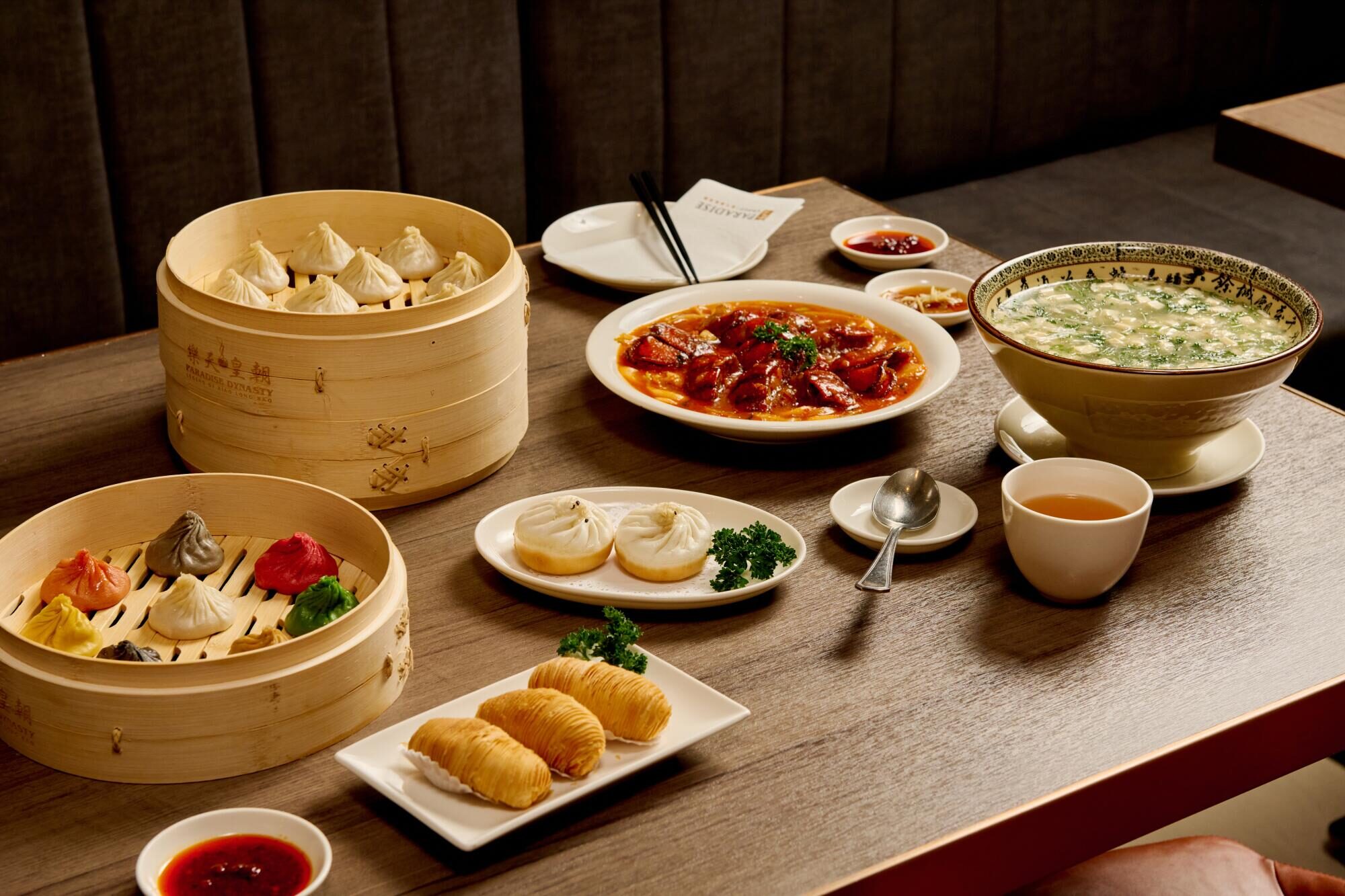
Xiaolongbao is already everywhere.
In London, in Los Angeles, in Singapore, steam still rises from stacked baskets.
But the wider it spreads, the more one problem remains.
Halal.
In Kuala Lumpur or Dubai, xiaolongbao can still be found without much effort.
It appears as an ordinary item on the menu.
Pork is absent, yet the form survives.
That leaves a simple question.
How does it hold together.
Halal is not only a rule about ingredients.
It is also a rule about process.
Tools, kitchens, and handling matter.
In xiaolongbao, pork is more than a filling.
It is part of the structure.
Removing it is close to removing the base.
Still, Taiwanese producers treated the constraint directly.
What they found was not a new invention.
It looked more like a return to older methods.
Four functions that disappear
The moment pork is removed, xiaolongbao becomes unstable.
What disappears is not only taste.
The first loss is gelling.
The soup must be solid before it can be wrapped.
Pork skin collagen sets when cold, then melts when steamed.
It is convenient in a way few ingredients are.
The second loss is richness.
Pork fat gives weight to the liquid.
It clings to the tongue.
Chicken fat or vegetable oil can feel lighter and separate faster.
Water and oil return to two layers.
The third loss is texture.
Pork stays soft even after heat.
Chicken tightens.
Fibers contract, moisture escapes, and the filling dries out.
The fourth loss is aroma.
Pork fat carries sweetness.
It can also carry smell.
But it creates a sense of completion.
When it disappears, the mouth notices an absence before it can name it.
Pork was too useful.
Once forbidden, several weaknesses surface at the same time.
Old kitchens, still holding solutions
Taiwan did not solve this by starting from zero.
It gathered methods that already existed.
For gelling, there is a Cantonese approach.
To set a broth without pork, chicken feet are simmered.
Not meat, but skin and cartilage provide density.
The pot turns cloudy.
The smell can grow strong.
But the liquid firms when cooled.
For texture, there is a method from Chinese Muslim cooking.
Beef and lamb are common there, and they can be firm.
To keep fillings moist, meat is made to hold water.
This mixing is sometimes called dashui.
Water is added to minced meat and beaten hard.
The fibers take it in.
Even after steaming, less juice escapes.
The dryness of chicken can be reduced this way.
Taiwan also has a separate lineage of meatless cooking.
In Buddhist contexts, meals were built without animal fat.
Soy protein, mushrooms, and other materials were used to create weight and bite.
Instead of searching for a single substitute, the functions of pork were separated.
Each missing role was filled by a different method.
That division is what makes the structure possible again.
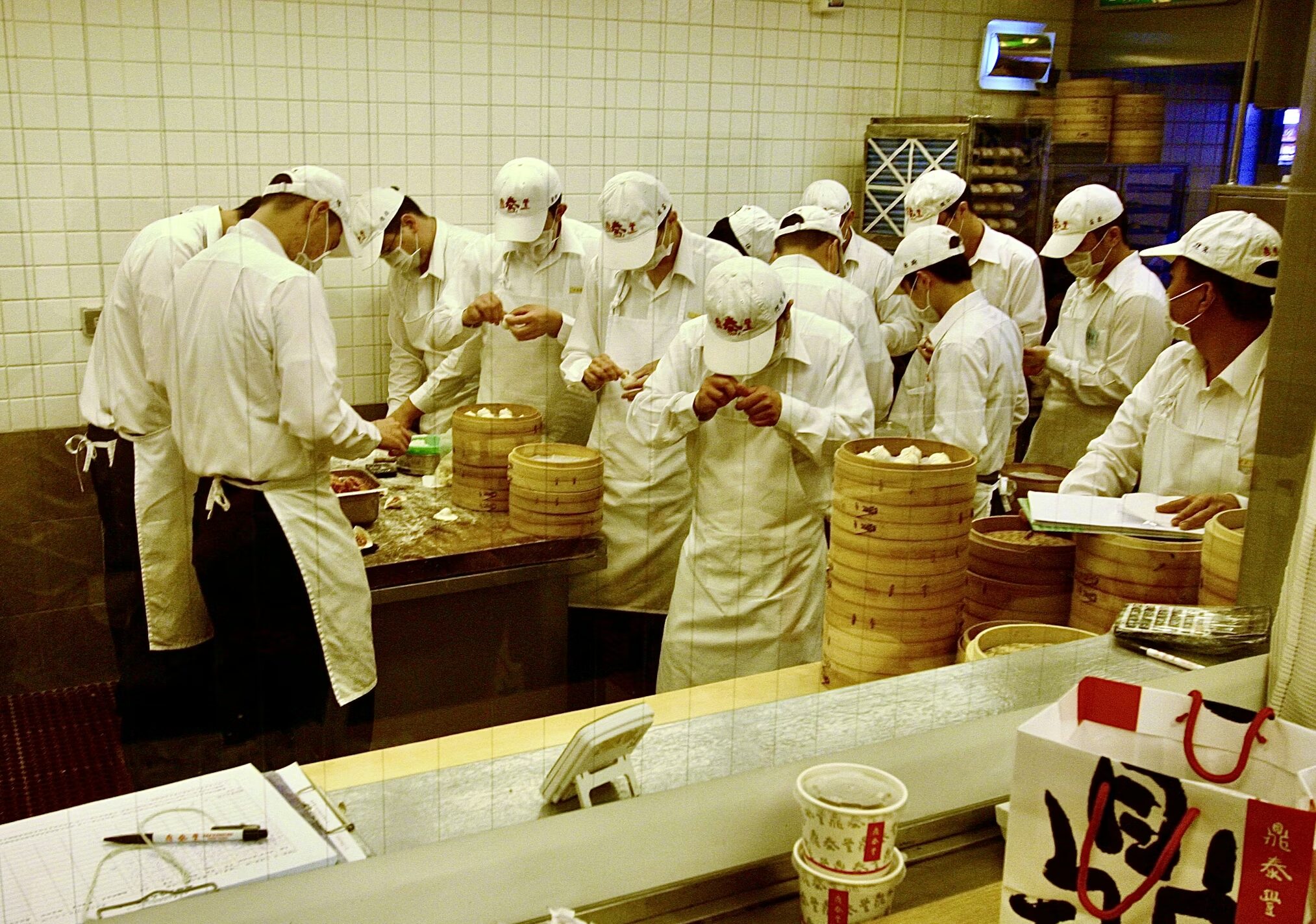
Din Tai Fung: stabilizing the handmade version
Din Tai Fung approaches halal xiaolongbao as an extension of craft.
It does not look experimental.
It looks careful.
For gelling, chicken feet appear again.
They are simmered to draw collagen into the soup base.
It replaces pork skin with another source of structure.
The important part is control.
The stronger the broth becomes, the stronger the smell can become as well.
Balance is not found by shortcuts.
It is found by time and repetition.
Richness becomes a question of fat.
Pork fat has a particular weight and melting point.
To approach that, other fats are combined.
Duck or chicken fat can be used.
The goal is not heaviness, but the right moment of melting.
Chicken filling dries easily.
Here, the water-binding method becomes practical.
Moisture is added and beaten into the meat.
Vegetables can also help.
Luffa or bamboo shoots hold water and soften the bite.
Aroma is handled differently.
Instead of imitating pork, another entry point is created.
Truffle or crab-based versions work in this direction.
They do not explain what is missing.
They change what the mouth expects.
What Din Tai Fung does is not replacement.
It is refinement.
Older methods are made precise, then made repeatable.
Chimei: making halal xiaolongbao survive the freezer
Chimei operates in frozen food.
Taste is only one requirement.
Factory-made xiaolongbao does not end in a bamboo basket.
It is frozen, shipped, stored, and steamed again in another kitchen.
If it melts once during transport, it is over.
The wrapper breaks.
The soup escapes.
Here, water-binding becomes a process rather than a gesture.
The mixing is reproduced by machines.
Vacuum tumblers can be used to push liquid into fibers.
The goal is simple: a filling that does not turn dry after thawing.
Richness becomes an engineering problem.
Water and oil separate by default.
To stop that, emulsification is built in.
Vegetable oil is dispersed into fine particles.
Stabilizers keep it from splitting.
Meatless techniques matter here as well.
When pork is removed, structure needs support.
Soy protein or mushrooms can become a cushion that holds juice.
They add bite.
They extend the time it takes to chew.
The mouth reads that time as fullness.
Chimei is not reproducing a restaurant experience.
It is producing a form that survives shelves and borders.
Xiaolongbao reached two billion people
Halal xiaolongbao is not a substitute version.
It is the result of dividing pork into functions, then rebuilding them.
Cantonese soup methods.
Water-binding from Chinese Muslim kitchens.
Taiwan’s long practice of meatless structure.
Each technique was born under different constraints.
Halal brought them into one place.
Din Tai Fung makes it work in the dining room.
Chimei makes it work in the freezer.
Because of that, xiaolongbao moves again.
From a familiar East Asian food into a wider market.
In a Malaysian food court, the basket opens.
In a Dubai mall, a spoon is placed beside a small dish of vinegar.
Pork is not there.
The soup still is.
Xiaolongbao survives by changing its materials.
That quiet adaptation may be one of Taiwan’s strengths.