Why the Characters Cannot Be Trusted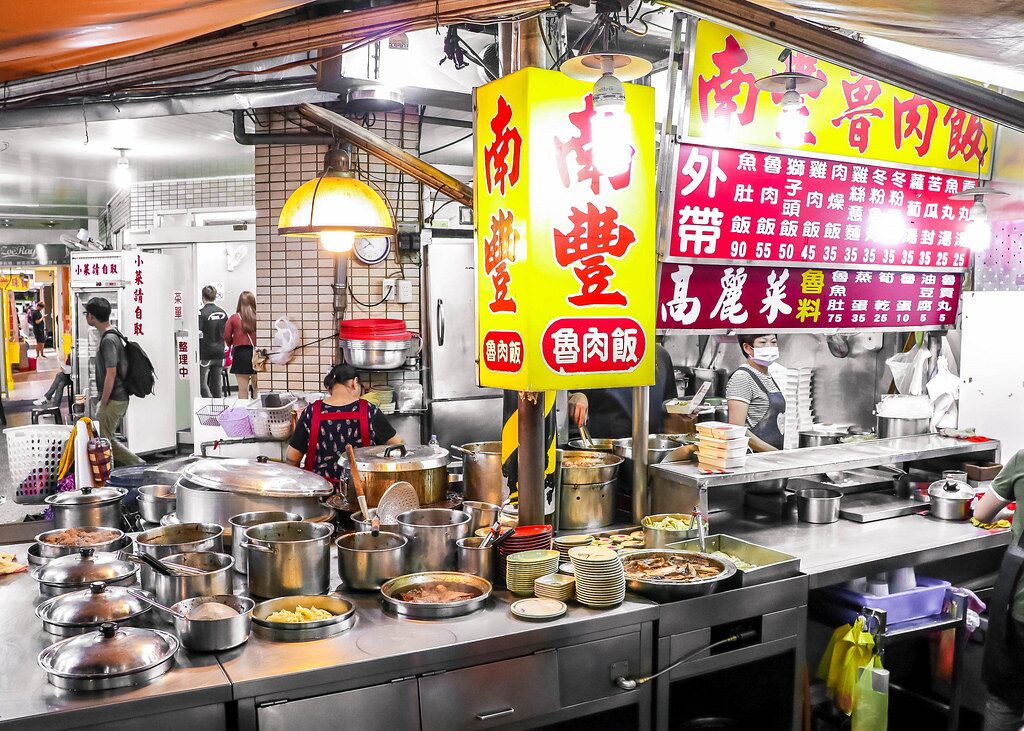
When entering a Taiwanese eatery, three similar sets of characters sometimes appear side by side.
Lu rou fan, rou zao fan, and kong rou fan.
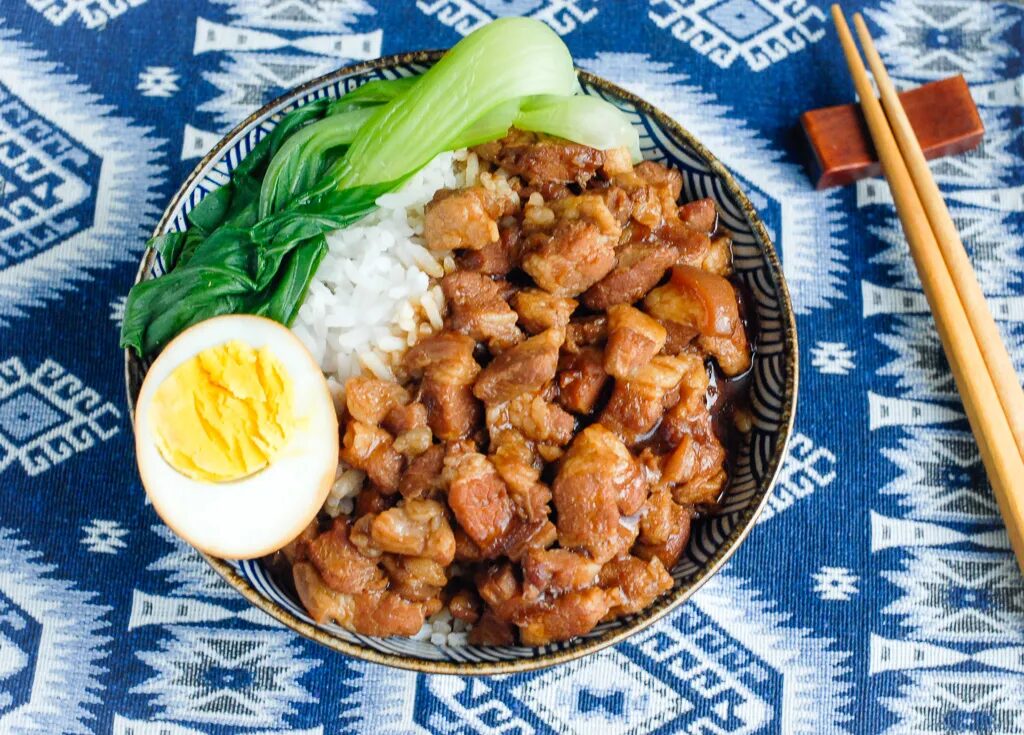
They all look like bowls of rice topped with pork.
Guidebooks usually offer brief explanations.
Minced pork for one.
Similar minced pork for another.
Braised pork belly for the third.
This is broadly correct.
Yet if one travels across Taiwan relying only on these definitions, confusion follows.
On this island, there is a line that quietly rewrites the meaning of words.
Lu Rou Fan as Taiwanese Everyday Life
Lu rou fan is often described as a national dish of Taiwan.
Finely chopped pork is simmered in a soy-based sauce with a restrained sweetness.
It is then poured over white rice.
The structure is simple.
Differences between shops remain visible.
The ratio of fat to lean meat shifts.
Sweetness rises or recedes.
Sometimes star anise lingers at the edge.
Even so, most people picture roughly the same bowl.
The portion is modest.
The price is usually restrained.
Some finish it alone.
Others add greens or soup and let it become a full meal.
In Taiwan, this bowl rarely marks an occasion.
It sits closer to a baseline —
something that quietly supports the rhythm of ordinary days.
The Invisible Border: Zhuoshui River
A long river cuts across central Taiwan.
The Zhuoshui River.
On maps, it is only a geographical feature.
In food culture, it functions more like a border.
There is a common phrase: north salty, south sweet.
Seasoning shifts across this line.
As flavors change, names change with them.
Words that work in Taipei stop working in Tainan.
The moment one crosses the river, the old dictionary expires.

A Small Misfortune for Southbound Travelers
In the north, people grow up understanding this bowl as minced pork over rice.
It is light.
A quick meal.
Not heavy.
Carrying that assumption south leads to surprise.
In Tainan or Kaohsiung, ordering the same name may bring a large slab of braised pork belly.
The afternoon plans adjust themselves.
The reverse also happens.
Someone from the south orders the dish in the north.
What arrives is minced pork.
The expected centerpiece is missing.
For many in the south, the character for braising implies a solid cut of meat.
The word points to heft, not fragments.
Trust the Meat, Not the Name
Avoiding confusion is simple.
Do not trust the name.
There are only two things to check.
The shape of the meat.
And whether you are north or south of the river.
When Minced Pork Is the Goal
If minced pork is desired:
In the north, order lu rou fan.
In the south, ask for rou zao fan.
Crossing the river changes the label.
This is the key adjustment.
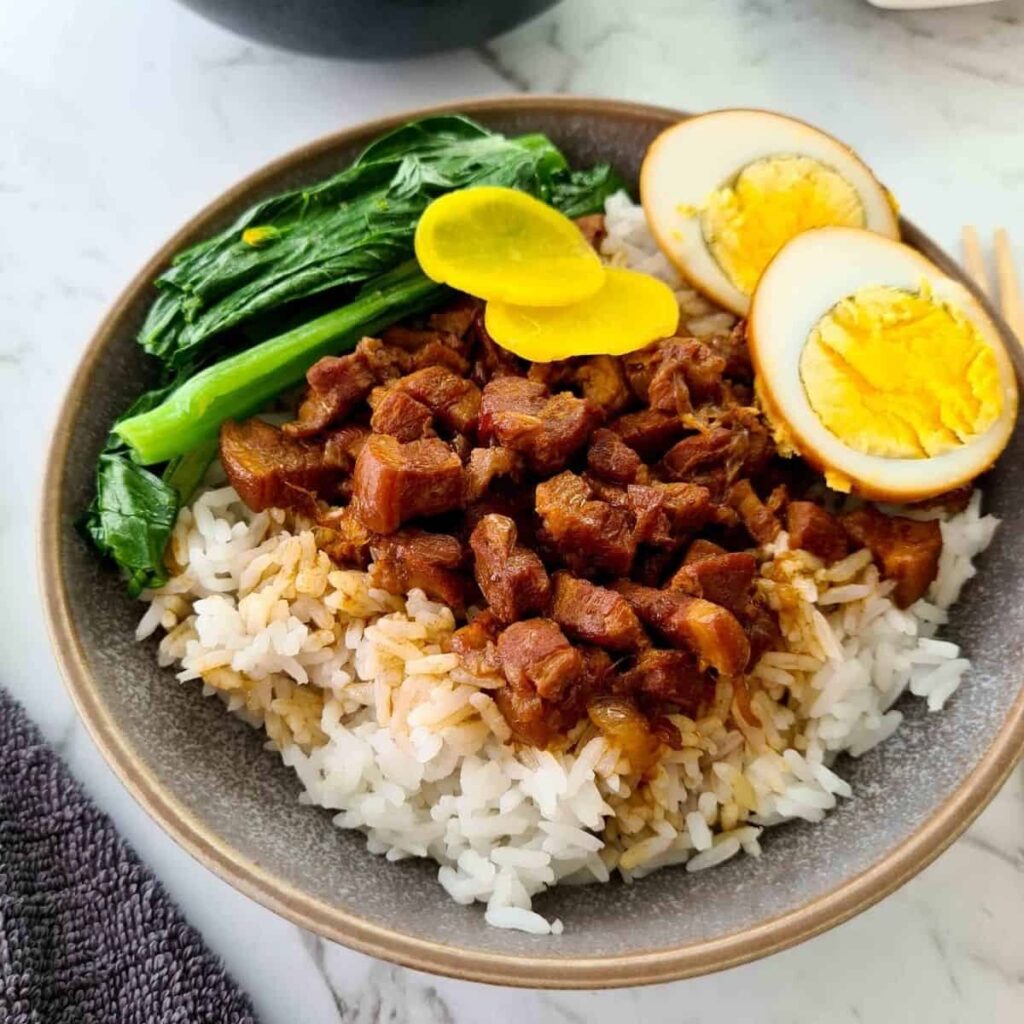
When Pork Belly Is the Goal
If a large cut of braised meat is what you want:
In the north, order kong rou fan.
In the south, order lu rou fan.
The characters may be the same.
The meat will not be.
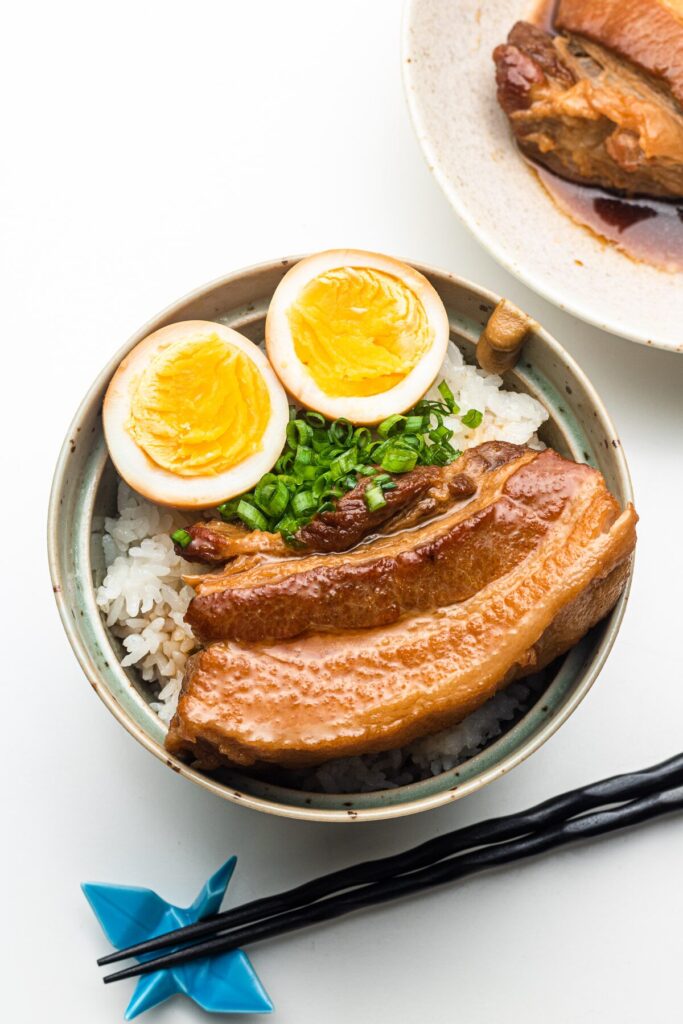
Sweetness as a Second Boundary
Crossing the river alters another element.
Sweetness.
Northern versions emphasize salt and spice.
Southern versions bring sugar forward.
Neither is more correct.
They belong to different habits.
Knowing which side of the river you stand on helps not only with names, but with expectation.
What the Bowl Reveals
Characters can mislead.
The pork does not.
Before opening a guidebook, look at the map.
Are you north of the Zhuoshui River, or south of it.
Cross the river, and words shift.
So do flavors.
So does meaning.
Noticing that shift, and eating with it in mind, becomes part of traveling through Taiwan.