How the Philippines and Taiwan arrived at opposite solutions to the same fish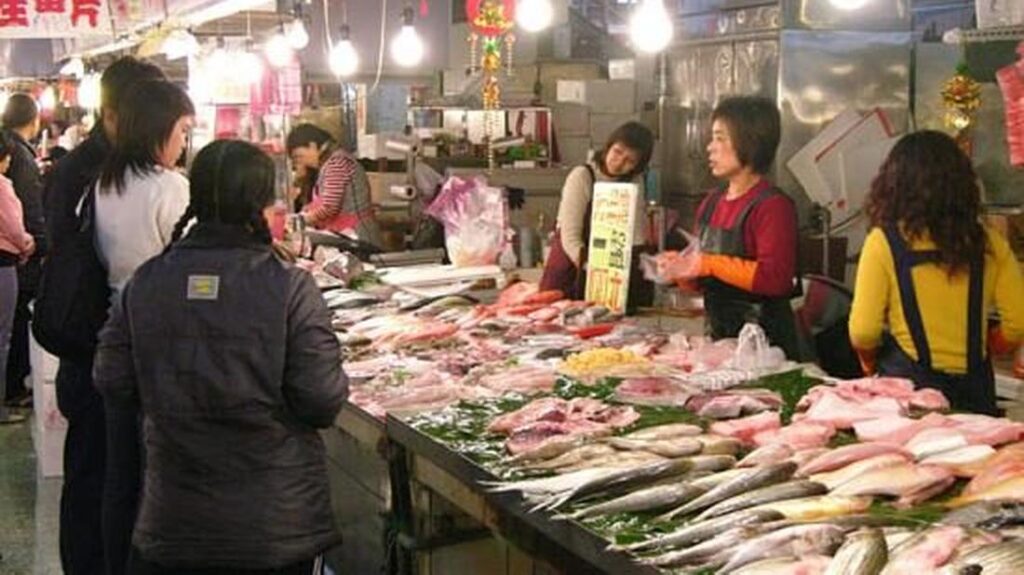
The market in Tainan is moving before sunrise. Fish arrive while it is still dark and are laid out across wet-down tables. The silver bellies catch and return the fluorescent light. Among them, milkfish (sabahi) is always present — more numerous than the other fish, and gone sooner.
The Same Fish, the Same Problem
In the noise of Manila it is called bangus. In the quiet mornings of Tainan it is called sabahi. Biologically, the fish is identical. The problem both peoples have faced with it is also identical: two hundred and twenty-two fine bones buried deep in the flesh, their tips branching into a Y shape. Attempting to pick them out with chopsticks causes the flesh to collapse. Pulling at them breaks them partway through. Trying to manage them while eating leads to the gradual understanding that the bones lie beyond the reach of chopsticks entirely. Facing this structural problem, the Philippines and Taiwan arrived at different answers.
The Philippine Solution: Subdue the Bone with Heat and Acid
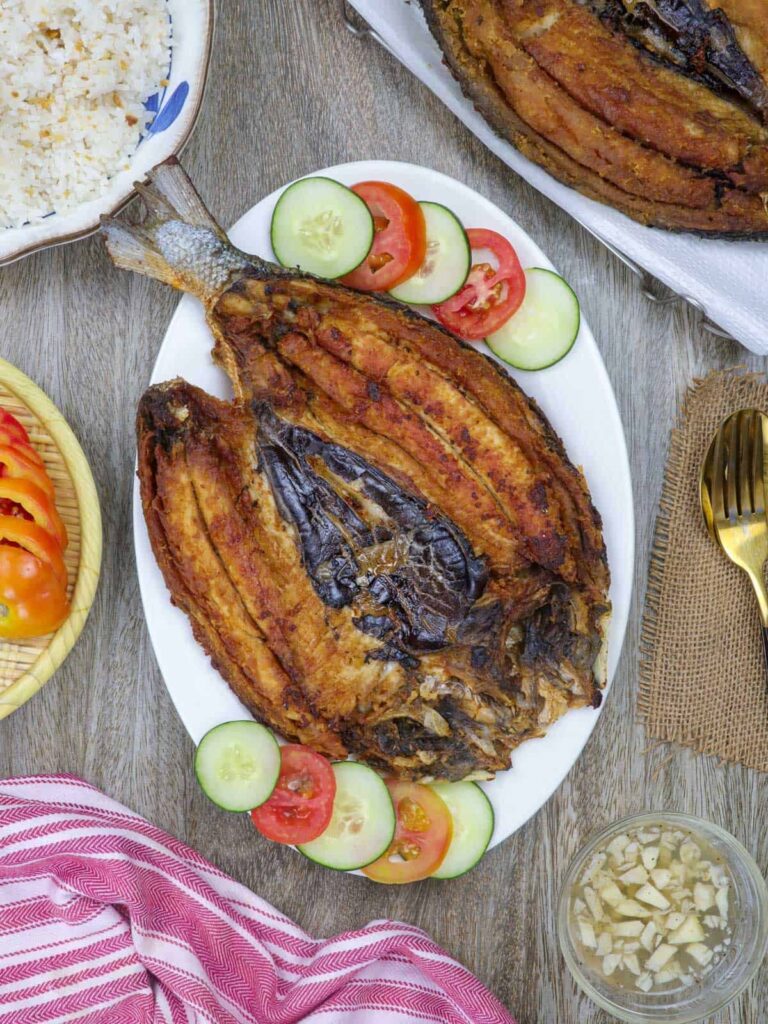
In the Philippines, bangus sits at the center of daily eating as the national fish. One of the most widely practiced traditional approaches to the bone problem is daing na bangus. The fish is split open, steeped deeply in large quantities of garlic and vinegar, then fried in hot oil at high temperature in a single motion. The bones are not removed. Instead, the heat drives the moisture from them until they become brittle enough to be bitten through and swallowed. At the same time, the sharp acidity of the vinegar suppresses the muddy smell that is characteristic of a fish raised in shallow pond water. This is not a method of subtraction or refinement. It is an energetic solution — meeting the obstacle of the bone directly, and overcoming it through heat and acid.
The Taiwan Solution: Remove All Two Hundred and Twenty-Two by Hand
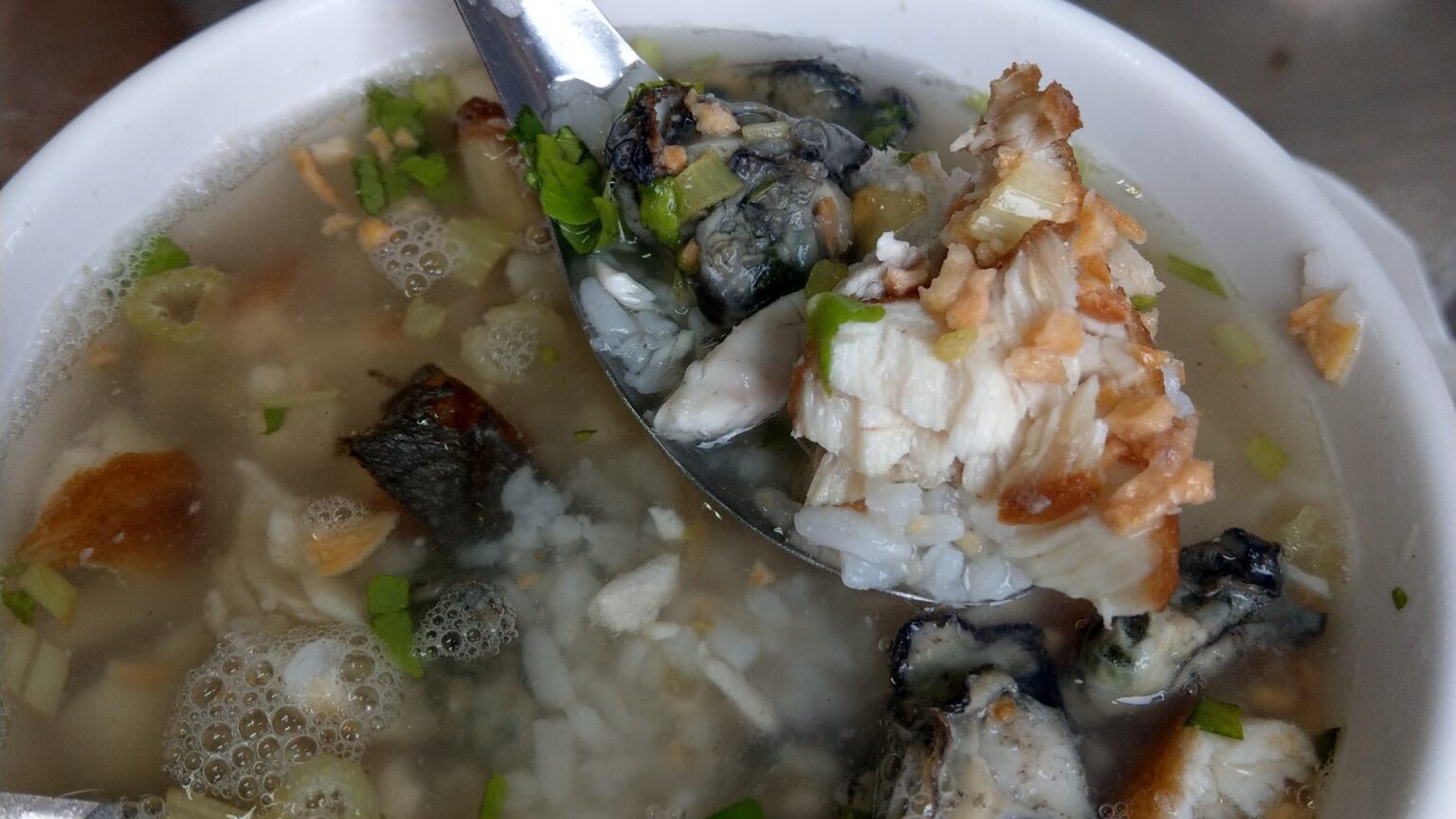
In Tainan, the context was entirely different. What the Tainan breakfast demands is clear broth or congee — a mild, gentle liquid to settle the stomach in the early morning. In a water-based preparation, whether simmered or poached, there is no way to disguise the bones. There is no strong acid to mask the earthiness. Taiwan moved in an extreme direction as a result. Craftspeople take up specialized knives and fine-tipped tools and extract the small bones from the muscle tissue by hand, one by one, two hundred and twenty-two of them, none left behind. On the signs of Tainan diners that handle sabahi, the two characters wu ci — meaning boneless — appear as a near-constant. It is not simply a description of what is on the menu. It is a declaration carved into the signboard: the natural structure of this fish has been entirely eliminated. The work behind those two characters is what makes them possible.
More Expensive Than Pork Ribs Rice
Looking up at the menu board in a Tainan diner, one notices a quiet contradiction. A generous cut of pork over rice — pork ribs rice (pai gu fan) — is priced to fill the stomach of a working person without difficulty. But the boneless sabahi belly in broth or congee, wu ci sabahi yu du, sits visibly above it in price. The locally farmed fish costs more than the pork. The fish itself is not scarce. The aquaculture ponds around Tainan are still operating, and large quantities of sabahi are landed every morning. The cost is in what happens before the fish reaches the pot. The labor of removing two hundred and twenty-two bones by hand, one at a time, is what the price reflects. When someone pays for a bowl of sabahi, they are paying not only for protein but for the time and precision of a craftsperson they will never meet. In Taiwanese local food, low price is a powerful standard. For sabahi, however, the premium attached to boneless preparation is accepted without question, and a few extra coins are left on the counter every morning. The attachment to this fish runs deep enough to bend the usual rule.
The Filipino Fingers Behind Taiwan’s Boneless Fish
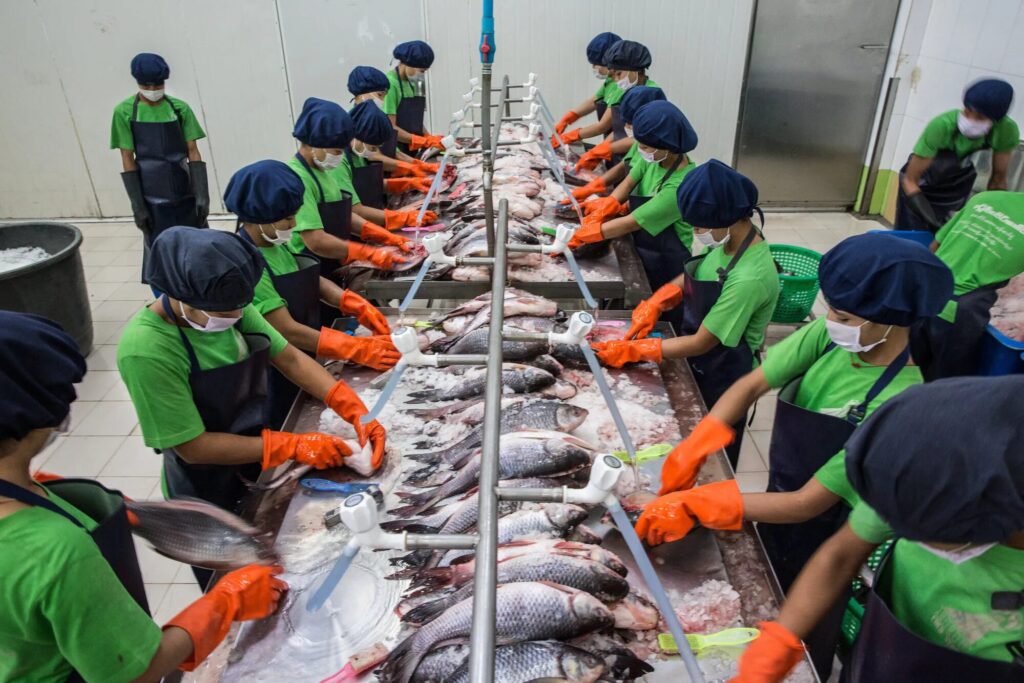
In the 2020s, a quiet convergence is taking place in processing facilities across central and southern Taiwan. The generation of women who spent their working lives removing bones from sabahi — known as sa yu a-ma, the fish-killing grandmothers — has been shrinking rapidly as they age. The workers now standing at the front of that demanding line have come from the Philippines. They are not, however, an unfamiliar workforce performing unfamiliar work. Alongside the tradition of frying bangus whole, the Philippines has long maintained a parallel industry and craft: deboned bangus, in which fine-tipped tools are used to extract the small bones at speed in a process that resembles surgical work. The craftspeople who developed that skill in Manila’s markets already understood the bone structure of this fish. They had already built a technique for removing those bones before they crossed the sea. That technique is now crossing the Taiwan Strait and sustaining what the wu ci signs in Tainan promise.
Two Paths, One Kitchen
Bangus and sabahi. For a long time, the two countries appeared to have chosen entirely separate roads in response to the same two hundred and twenty-two bones — one frying, one extracting. But both had been developing technical knowledge about those bones, in different forms, across the same span of years. That parallel history has now folded into a single space. The craft that grew in one country is being applied in the kitchens of another, and the morning bowl of clear broth in Tainan holds, without announcement, the combined weight of both.