A Dish Shaped by the Night Market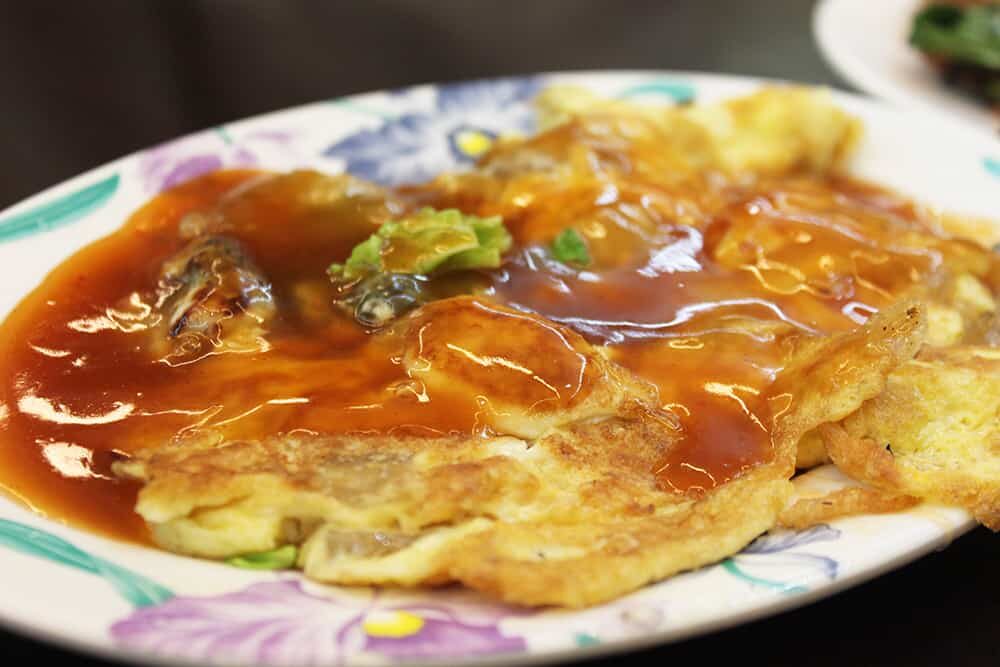
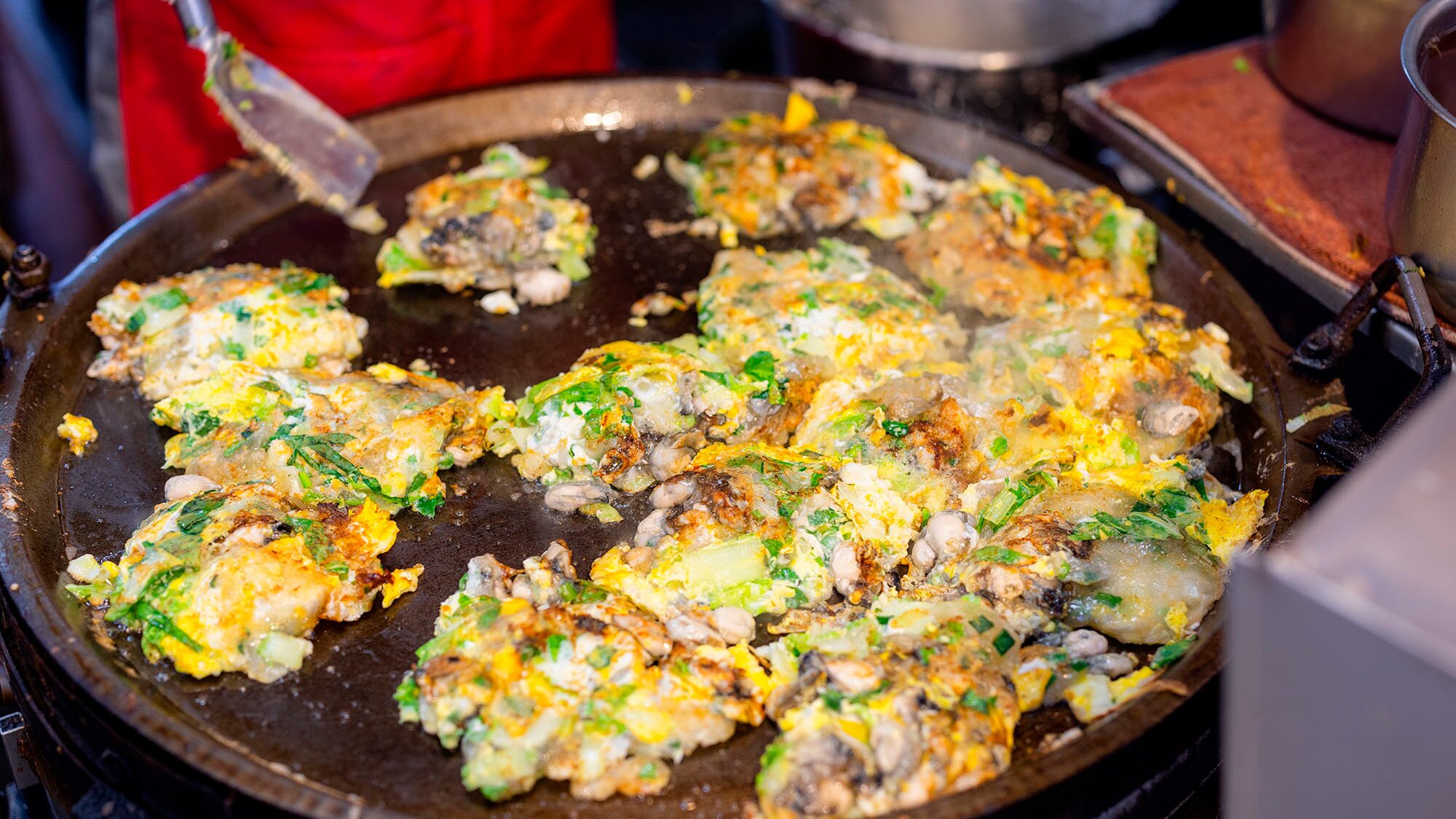
Oyster omelet, known locally as o-a-chian, is the first thing I notice when I stand in front of a night market griddle.
Oil snaps without pause.
Small oysters, thin batter, greens, and eggs are added in quick layers.
It appears everywhere on the island, north and south.
But this is not a simple oyster omelet.
It is a plate built from local habits and textures.
The local name remains in daily use.
That alone suggests how rooted it is here.
Batter and the Texture Called Q
The most important element is the batter.
It is made from sweet potato starch and potato starch mixed with water.
When poured onto the hot surface, it sets while staying translucent and elastic.
The cooked surface feels soft and slightly slick.
In Taiwan, this resistance is called Q.
It is the same word used for noodles or dumplings that stretch before breaking.
But this dish does not rely on that alone.
At the edges, where the batter meets oil, a thin layer dries and browns.
Here, a brittle texture appears.
One plate holds both.
Soft in the center.
Crisp at the rim.
In other parts of Southeast Asia, similar dishes use rice or wheat flour and more oil.
They move toward crispness.
Taiwan moves the other way, letting heat and moisture expand the batter.
It behaves less like a pancake
and more like a soft cake cooked on iron.
Vegetables as Structure
A large amount of greens goes into the pan.
Often bok choy or chrysanthemum leaves.
Sometimes there is more green than shellfish.
It becomes less an omelet and more a warm vegetable dish bound by starch.
Elsewhere, oysters lead.
Here, the green holds its place.
The balance between starch, greens, and shellfish stays even.
The water from the vegetables controls the thickness of the batter.
The slight bitterness of the leaves fits the mild sweetness of the base.
A Sweet Sauce Defines the Plate
At the end, a thick pink sauce is poured over the surface.
Made from miso, tomato, sugar, and soy, it moves everything in one direction.
It is sweet, slightly sour, and heavy.
Because the base is soft, the sauce takes control.
Change it, and the dish becomes something else.
Here, sweetness is the frame that holds the plate together.
How It Sits in the Night Market
This is usually eaten as a light dish.
There is no rice.
Families share one and move on.
The griddle, the sound, the smell, the changing surface
all fit the logic of the night market.
The flavor shifts from Tainan to Taichung to Taipei.
The sauce.
The firmness.
The amount of shellfish.
It spreads across the island, but it does not flatten.
A Local Form of Place
Sweet potato starch grown on the island.
Winter greens.
A southern habit of sweetness.
These layers overlap here.
Compared with the crisp versions elsewhere,
this one stays soft and settled.
Starch, vegetables, and sweet sauce form a structure
rare outside this place.
Standing by the iron plate,
the same smell moves through the air again.