A layered wheat bread at the center of breakfast
Shaobing, a Taiwanese flatbread known locally as shaobing, stands out in breakfast shops across the island.
It is thin, round, and topped with sesame seeds, a baked wheat bread.
It looks simple. When held, it feels light. When broken, layers separate and fall away.
This bread functions less as a dish than as structure.
It holds together the Taiwanese morning.
Designing by layering
This bread is made by folding and stretching wheat dough repeatedly, inserting oil between each turn, then baking.
Its form is not achieved in a single step.
The process is cumulative.
Inside, countless thin layers appear.
The typical version has a dual structure:
a dry, crisp outer shell, and a soft, bread-like interior.
It sits somewhere between pastry and bread, without fully belonging to either.
Many shops use a vertical oven.
The dough is pressed onto the inner wall, exposed to direct flame and radiant heat.
This method expands the layers while driving out moisture at the same time.
Crispness and softness
The texture can be described with two ideas.
The outside shatters lightly when bitten.
Heat and oil create a dry, brittle crispness.
The inside yields slowly.
It compresses, then returns, designed to receive fillings.
This coexistence of crisp and soft is central.
The bread is not meant to stand alone.
It is built to hold something.
Difficulty as intention
This is not an easy food to eat.
Break it, and flakes fall. Sesame scatters.
Add a fried cruller, and the filling tries to escape forward with the first bite.
Crumbs gather inside the paper bag.
Hands become oily even with care.
This is not a flaw.
The bread was never designed to be eaten in motion.
In Taiwanese breakfast shops, people sit.
They listen to the sound of the griddle.
They drink soy milk.
This bread assumes time.
It does not rush.
It resists turning morning into a task.
Meeting fried dough
The bread reaches its clearest form when paired with fried cruller.
The combination is a familiar symbol of breakfast.
A fresh piece is split horizontally.
A full-length cruller is inserted as it is.
Sometimes a little sweet soy paste is added.
Crisp bread.
Hollow, airy fried dough.
Oil and starch layered together.
This structure is not theoretical.
It is understood through repetition.
Here, the bread is not the star.
It acts as a container, making the filling portable and edible.
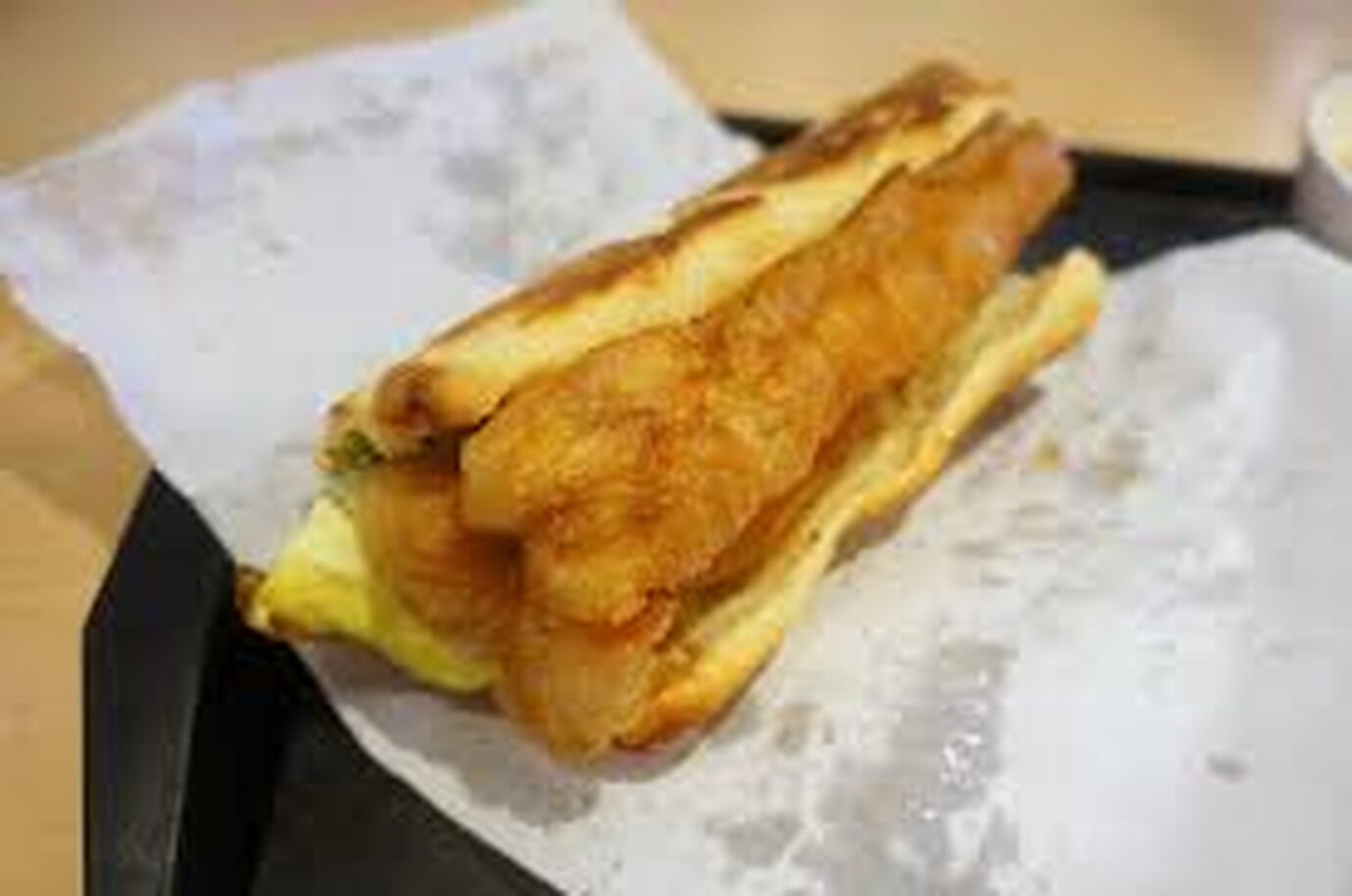
A base that accepts variation
The bread is not limited to fried dough.
Omelet is added.
Pork floss brings saltiness.
Vegetables soften the oil.
Each version works because of the same structure.
Rather than asserting flavor, the bread receives what the morning provides.
Thirst by design
Eating this bread makes one thirsty.
Its surface is dry. Inside, oil and salt remain.
This is intentional.
The bread expects a drink.
Hot soy milk.
Cold soy milk.
Rice milk.
Savory soy milk.
Without liquid, the meal stops midway.
With it, the layers move again.
This bread never completes itself.
It draws liquid in and turns breakfast into a combination.
Waiting by the oven
The bread is best just after baking.
The layers stand. The aroma is light.
With time, steam settles them down.
Regular customers watch the oven.
Has the dough been pressed on?
Have sesame seeds been scattered?
Is this the next batch?
This is not something ordered and awaited.
It is chosen at the moment it is ready.
In the damp morning air,
fresh bread peels from the oven wall and drops into a basket.
With that sound,
a Taiwanese day begins quietly.