A pair of carbohydrates that holds up the morning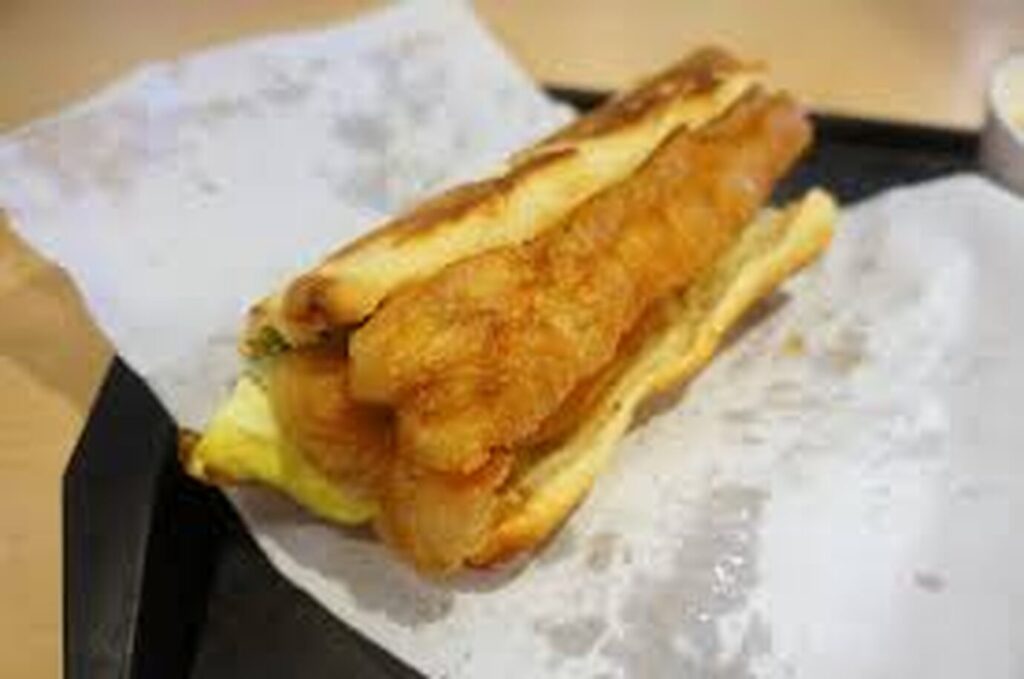
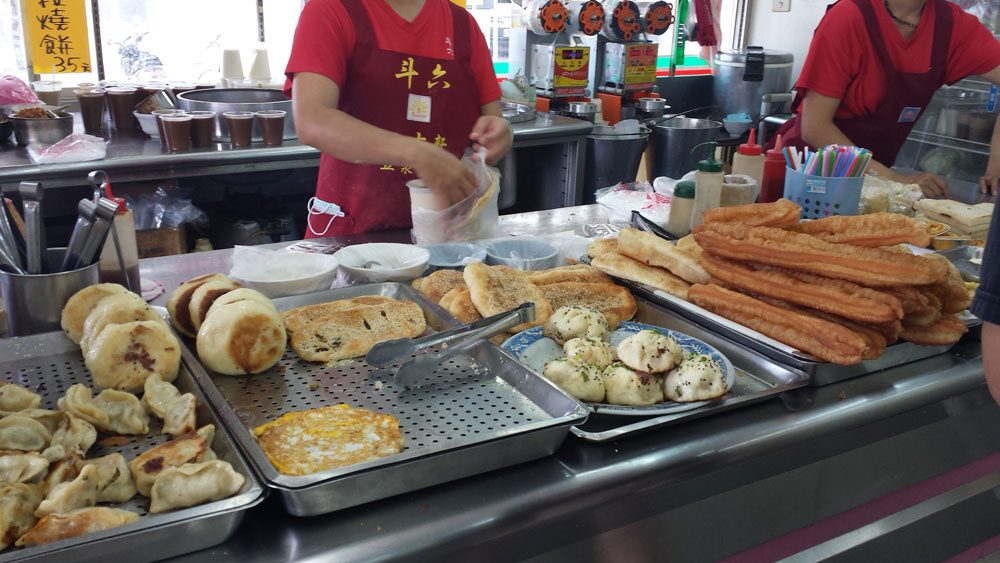
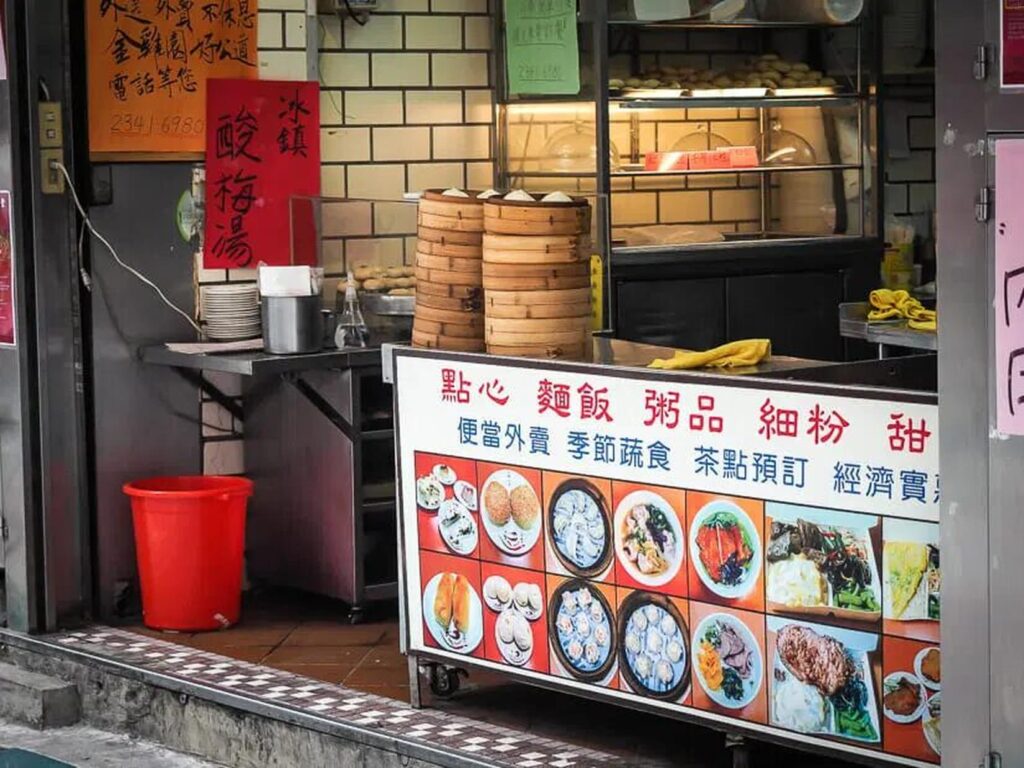
Before night has fully withdrawn, one corner of the alley begins to move. Dough is laid onto an iron griddle, while in a pot of oil long strips of batter slowly swell. The oil snaps and spits, and white steam rises into the dim air. On their way to work, people stop briefly, newspapers tucked under their arms, and place their orders. A warm bundle wrapped in a thin plastic bag is passed into their hands. Beside the stall, soy milk is poured into paper cups, and the sweet scent mingles with the smell of soybeans.
Breakfast shops in Taiwan share a similar landscape. There are no bright signs, only the persistent sounds of cooking. At this hour, what is sold almost always centers on wheat. Before porridge, before noodles, shaobing and youtiao are lined up at the front. The combination may cause hesitation when first encountered, yet in the city it flows as the most natural form of morning.
A breakfast wrapped in carbohydrates
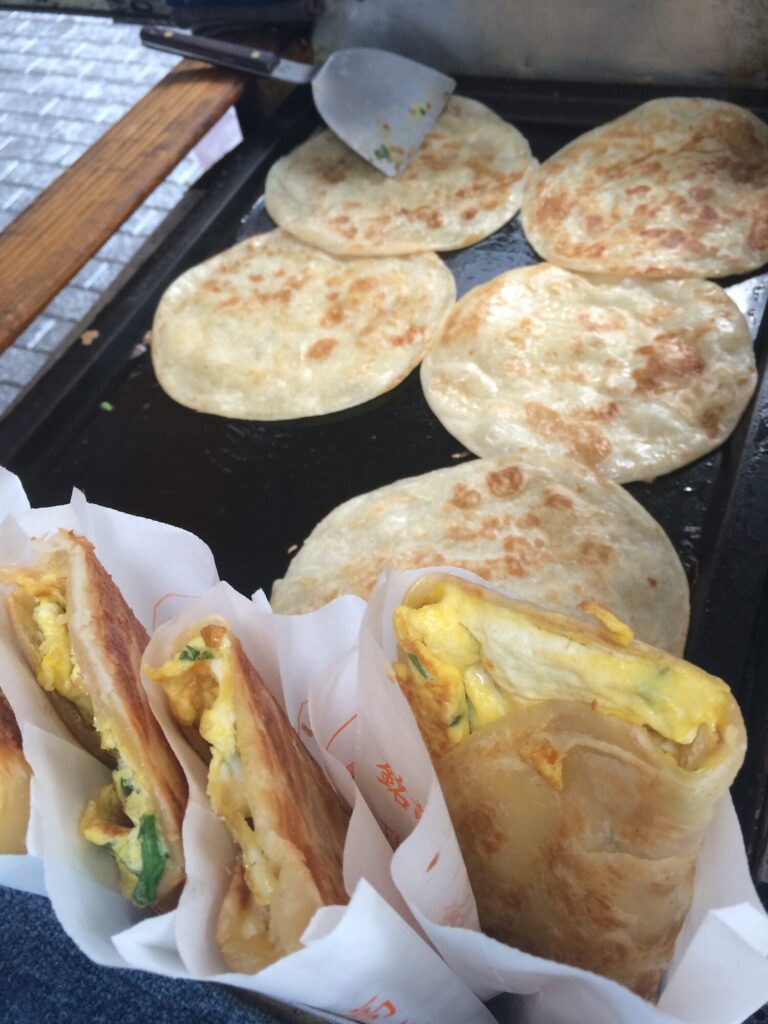
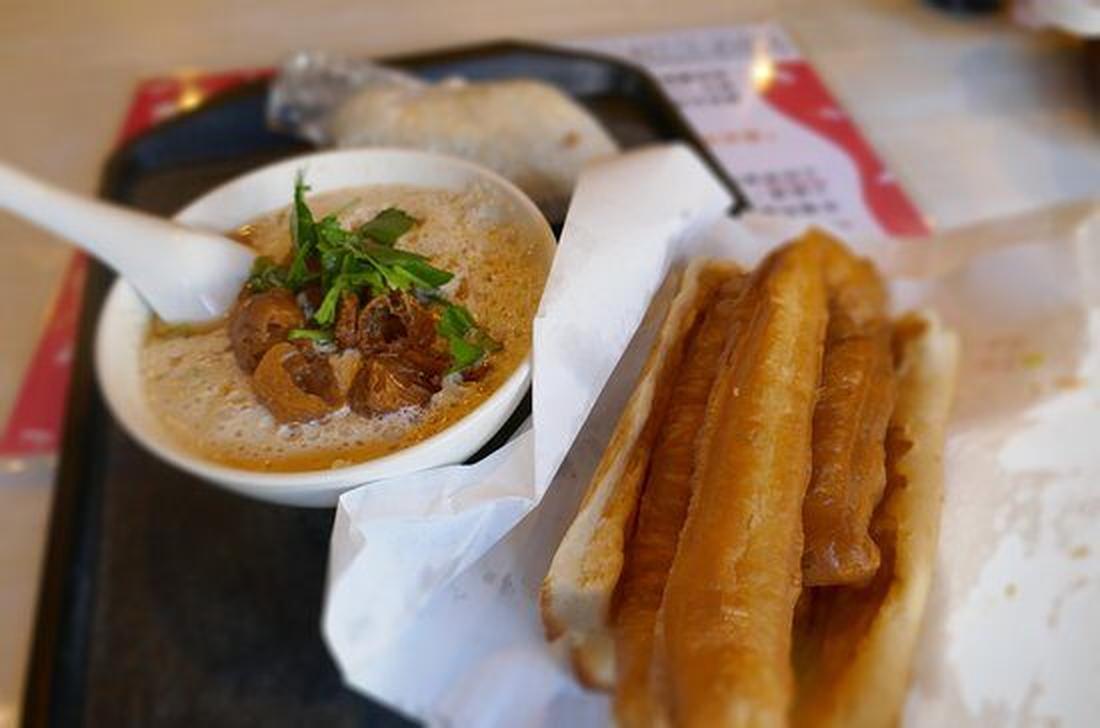
From a Japanese perspective, this dish appears slightly strange. A piece of fried dough is placed inside a piece of baked dough, a structure close to placing bread inside bread. The name is Shaobing and Youtiao (shaobing youtiao). It is a configuration in which carbohydrates envelop carbohydrates, where energy stands forward before considerations of balance.
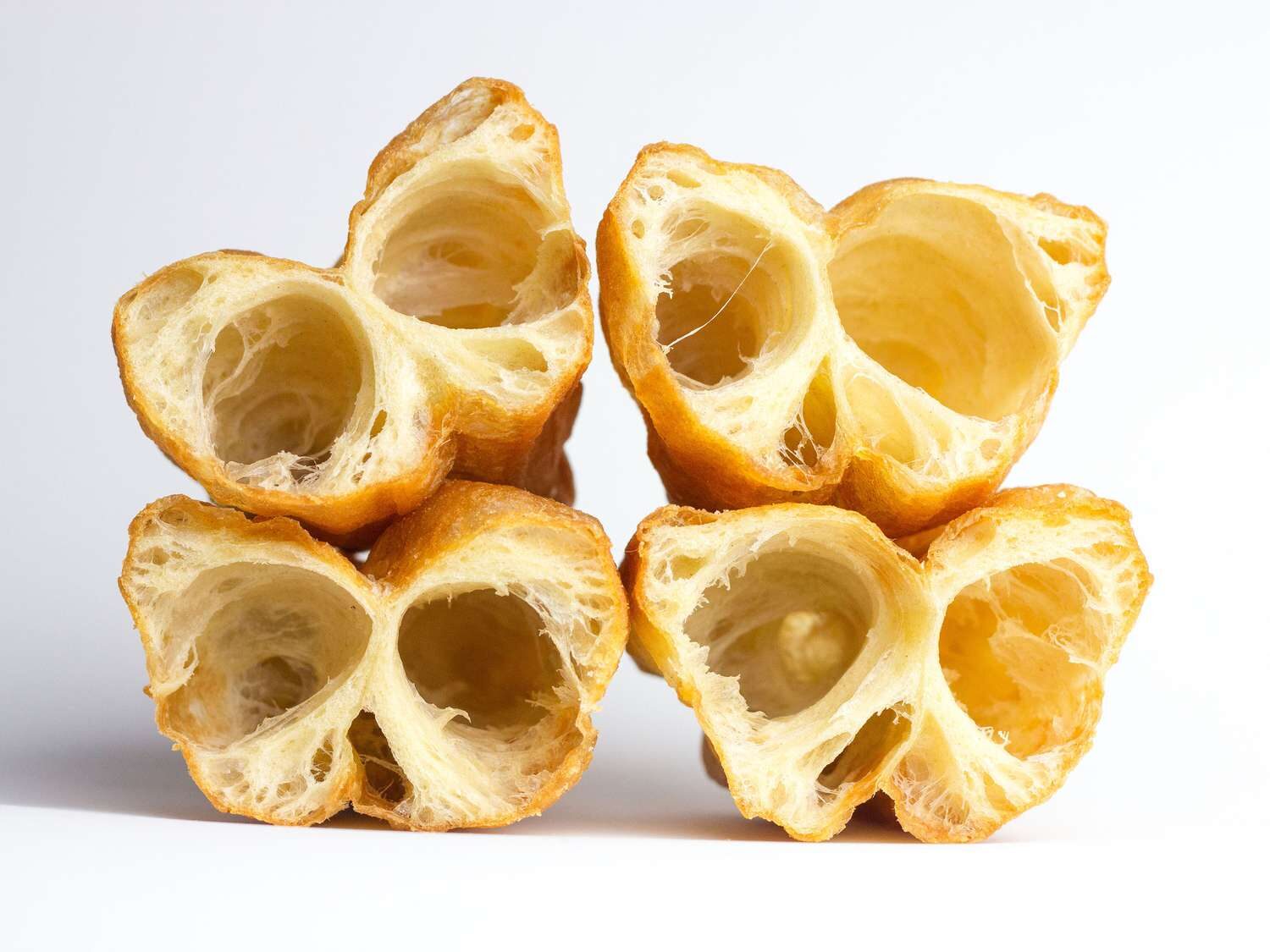
In Taiwan, this is accepted as the morning standard, in a position similar to rice and miso soup in Japan. Yet it is not merely a device for fullness. The outer layer, the shaobing, is dough baked in layered sheets. Moisture has been driven out, and it seems ready to crumble at a touch. When bitten, it fractures into dry flakes. Inside, the youtiao is hollow, expanded rapidly in high heat oil. Teeth meet elasticity, and oil seeps outward at the same time.
Both are described as crisp, yet the qualities differ. One is dry and brittle, the other resilient and soaked with oil. In the mouth, these two textures collide and then loosen. The pleasure seems to arise in that moment of impact. The essence of this dish appears to lie in this confrontation of textures.

A dry meal and soy milk
The most striking characteristic of this meal is its lack of moisture. Through baking and frying, nearly all dampness has been removed from the dough. Eaten alone, it quickly dries the mouth. For this reason, soy milk stands beside it without exception.
A bite is taken, then a sip of soy milk follows. Another bite, another swallow. A method emerges naturally, moistening the mouth as one continues. There is another practice often seen. The bundle is dipped directly into the soy milk. The dough absorbs the liquid and sinks with weight. The once dry layers soften, and the oil mixes with the soy milk. The texture shifts from crisp to saturated, as if it has become another dish.
Orders are made in units. A full set contains two sticks of youtiao. A half set contains one. Manual laborers often choose the full set, while those on their commute frequently take the half. Even the choice of quantity reflects the rhythm of daily life.

A northern stomach brought in 1949
There was a year when Taiwan’s breakfast scene changed significantly. That year was 1949. After defeat in the Chinese Civil War, the Nationalist government crossed to Taiwan with roughly two million people. Many of them came from northern China, from Shandong, Hebei, and areas around Beijing. There, wheat rather than rice formed the staple. They had grown up kneading, baking, steaming, and frying dough.
Before that time, Taiwanese breakfasts had centered on porridge and rice noodles. Moist meals had been the norm. Suddenly, tables of dry wheat foods such as shaobing and mantou were brought in. A fault line in food culture appeared at once. The prototype of this wheat pair entered the island with this migration. It was less a new dish than the transplantation of an entire way of living.
A heavy set assembled in Yonghe
One of the places where many migrants settled was Yonghe, just south of Taipei, connected by a single bridge to the city center. Rents were low, and workplaces were accessible. Veterans and their families gathered there, and many began street stalls to sustain themselves. Shaobing was baked in makeshift furnaces resembling oil drums, and youtiao was fried in deep pots of oil.
The primary customers were laborers heading to job sites before dawn. They required food that remained in the stomach. Compared to porridge, lumps of oil and wheat provided more strength. Thus shaobing and youtiao became fixed as a set. They did not remain separate items but settled as a combination. Shops such as World Soy Milk King spread this format, and eventually the name Yonghe itself became shorthand for this style of breakfast. The structure of the neighborhood and the hours of labor pushed this heavy meal into the position of standard.
Why these two bound themselves together
If one steps outside Taiwan for a moment, neither shaobing nor youtiao is unusual in northern China. They are common on the streets of Beijing and Tianjin. Yet their uses differ. Shaobing is often filled with stewed beef or seasoned meat, treated as bread for wrapping meat. Youtiao is frequently dropped into bowls of douhua or broken into porridge. Each moves independently.
There is no strict need for the two to form a pair. Options are many, and combinations remain fluid. Once in Taiwan, however, the situation changes. Shaobing wraps youtiao, and youtiao becomes something wrapped by shaobing. Meat fillings move to the margins, and youtiao paired with porridge does not become mainstream. The association between the two grows stronger on the island than on the mainland.
Why did this extreme structure, wheat layered upon wheat, remain dominant rather than meat or vegetables? Taste alone does not seem sufficient as explanation. Beneath it lies not only cuisine but economic movement.
The era when wheat covered the island
From the 1950s into the 1960s, significant changes occurred on Taiwanese tables. The agent of change was not a local cook but agricultural policy across the Pacific. In the United States, wheat and soybeans were overproduced. Surplus crops were released as aid to allied nations under Public Law 480, known as PL480.
Large quantities of wheat flowed into Taiwan at prices nearly negligible. For the government, the cheapest fuel to fill the stomach was no longer rice but imported wheat. Wheat became central. Both shaobing and youtiao consumed large amounts of it. With stable supply, they became easy to produce at stalls and in homes. Wheat was not special; it was abundant. The physical foundation for this wheat-based breakfast was prepared by this flood.
Rice from food to export
What, then, of the rice grown in Taiwan? It was sold abroad. High-quality rice served as an important source of foreign currency. Much was exported to Japan and elsewhere, treated as a means of earning dollars rather than as domestic staple. To support this, the government promoted a campaign known as the Flour-Eating Movement, encouraging citizens to conserve rice and consume wheat. Eat imported wheat to fill the stomach, export rice for income.
Eating this wheat pair in the morning was not merely habit but an action aligned with policy. Preference and economy overlapped, and wheat-centered mornings became standard. The combination appears less as spontaneous fashion and more as a choice lifted by the conditions of the era.
A pairing from a time when meat was scarce
Still, a question remains. Even with abundant wheat, why was meat not placed inside the bread? The answer is simple. Meat was expensive. In postwar Taiwan, it was not a daily purchase for many households. Workers had little room to include it in breakfast.
At the same time, nutritional concerns surfaced. Wheat-heavy diets lacked sufficient lysine, an essential amino acid. Calories might be sufficient, yet the material for building the body was incomplete. Here soy milk took on importance. Soybeans are rich in lysine, compensating for wheat’s weakness. The nutrition absent from the two wheat items was filled by soy milk, forming a natural trio: wheat and wheat, and soybean.
Dipping the bundle into soy milk may not have been only a matter of texture. It appears as a rooted practice, a way to absorb nutrition without waste, shaped by daily necessity.
From substitute food to morning scenery
Even after aid supplies ended and Taiwan’s economy grew, this breakfast did not disappear. What began as substitute food became the taste of the everyday. Today, dough continues to bake at street stalls, and long strips continue to swell in oil. Commuters receive their warm bundles and bite into the corners as they walk.
It no longer exists as memory of poverty but as part of morning scenery. This wheat pair is not merely fried dough combined with baked dough. It carries the migration of 1949, Cold War wheat policy, an economy that exported rice, and the ingenuity of using soy in place of meat. These layers remain within it.
The warm bundle inside the plastic bag appears to hold postwar history in its hands.