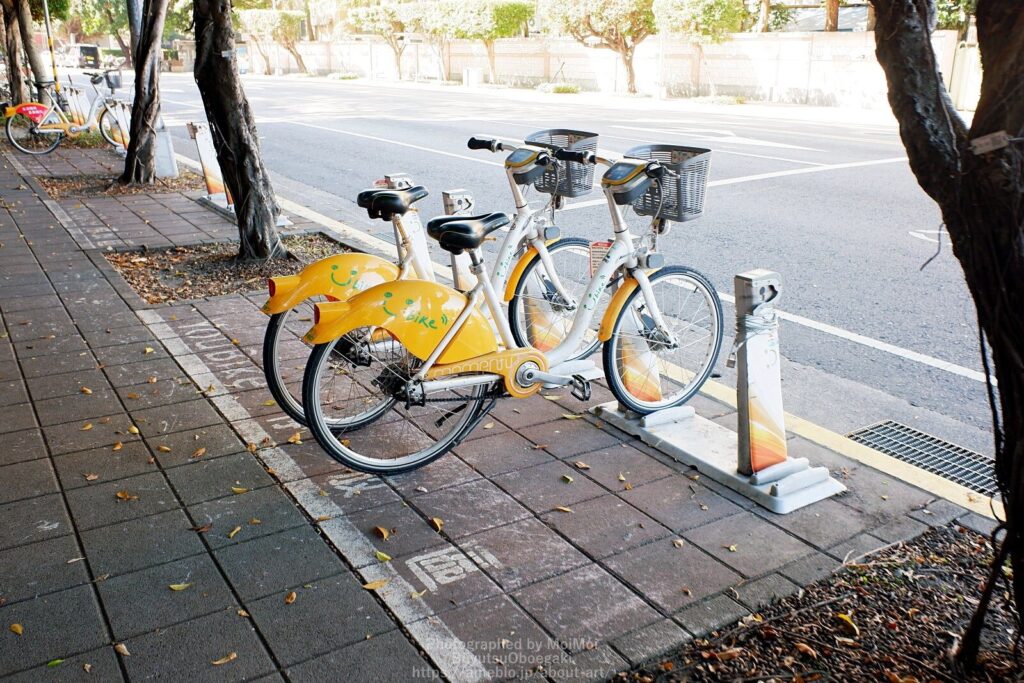
A YouBike with its saddle turned backward may look abandoned, but the gesture is legible to someone in the system. By the morning rush, bicycles have also appeared where the city will need them most, after moving through the night.
Many shared bicycle systems around the world followed the same path.
They failed in design.
They collapsed in hardware.
In the end, field operations stopped working.
In the first article, I wrote about how YouBike preserved order by designing constraint.
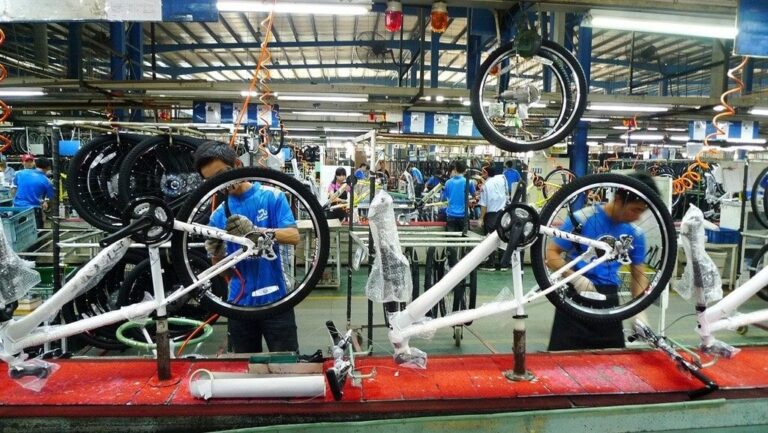
In the second, I wrote about how a bicycle maker called Giant kept supplying machines that did not easily break.
Still, that was not enough.
No matter how refined the design is,
no matter how durable the bicycles are,
once they are placed in the city, disorder begins.
They break.
They cluster.
They run short.
What makes YouBike distinctive is that this disorder is collected, every day, as routine work.
Turning the Saddle Backward
When using YouBike, I sometimes see a bicycle with its saddle turned backward.
At first glance, it looks like a prank.
But it is a shared, unspoken signal between users and operators.
A slipped chain.
Weak brakes.
Gears that do not shift smoothly.
These are problems that are not critical, but uncomfortable.
They are not serious enough to report in the app.
Not serious enough to stop using the system.
So the saddle is turned.
By the next day, the bicycle is gone.
Or it returns, fixed, as if nothing happened.
This exchange is not recorded in any IT system.
But within the city, it works.

Trucks That Move at Night
That YouBikes are neatly lined up in front of MRT stations during the morning rush is not accidental.
From late night to early morning,
trucks circulate through the city.
From places with excess
to places with shortage.
Which stations overflow in the morning.
Which universities empty out by midday.
Which residential areas refill at night.
These patterns are predicted by data,
and adjusted by human judgment.
It is not fully automated.
But it is not fully manual either.
IT and people divide the work.
Because YouBike did not rely on free drop-off,
this redistribution became the system’s heart.
A Maintenance Standard That Stands Out
Anyone familiar with bicycles notices it after one ride.
The condition is consistently good.
Brake feel is stable.
The handlebars stay centered.
Unusual noises are rare.
There is nothing flashy about it.
But there is little that causes concern.
Taiwan is rainy.
Humidity is high.
For shared bicycles left outdoors,
used daily by different people,
and often handled roughly,
this is a harsh environment.
Given those conditions,
the fact that this level is maintained feels almost strange.
In many systems,
minor defects are accepted as normal.
As long as it moves, it is enough.
YouBike does not stop there.
Differences between individual bicycles are small.
The riding feel does not change much from one to another.
This suggests intervention happens before failure.
Chains are replaced before they stretch too far.
Brakes are adjusted before they stop working.
From a cost perspective,
this is not an efficient operation.
But as public transport used daily
in a rainy city,
it is realistic.
Users do not have to check the condition each time.
So they choose it again.
Part of the reason YouBike blends into the city
seems to lie in this accumulation of quiet maintenance.

An IT Company Likely Could Not Have Sustained This
Seen this way,
YouBike’s success looks less like a victory of technology,
and more like a system that trusted the field.
It assumes disorder.
It leaves room for human intervention.
It repeats the same work every day.
This is precisely what scale-focused IT companies struggle with.
YouBike did not pursue flashy innovation.
Instead, it was built to avoid breaking,
to avoid disorder,
and to be repaired when it does.
That unremarkable accumulation
continues to function quietly somewhere in the city today.
— Detour —
a little further to walk
- Notes on the Optimal Placement of YouBike in Taiwan
- Notes on the Bicycle Maker Behind YouBike in Taiwan
- Notes on the History of YouBike in Taiwan