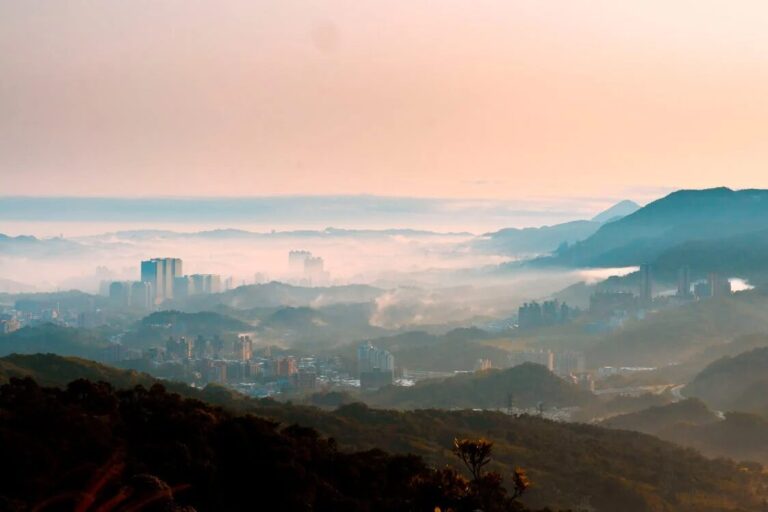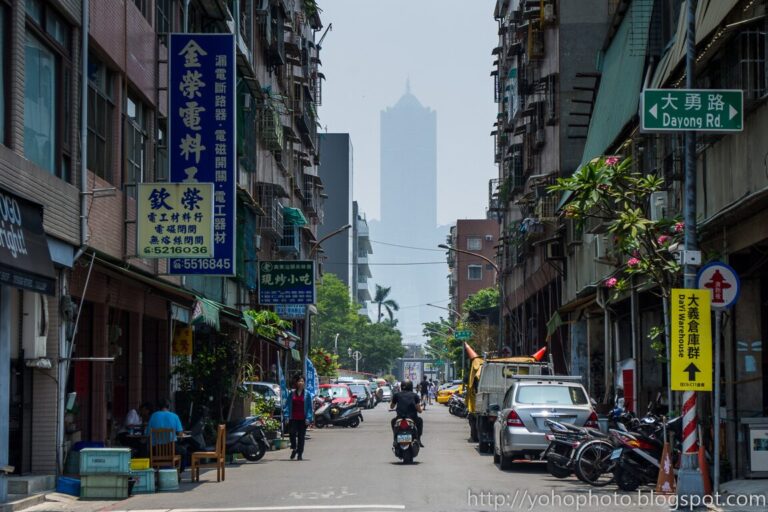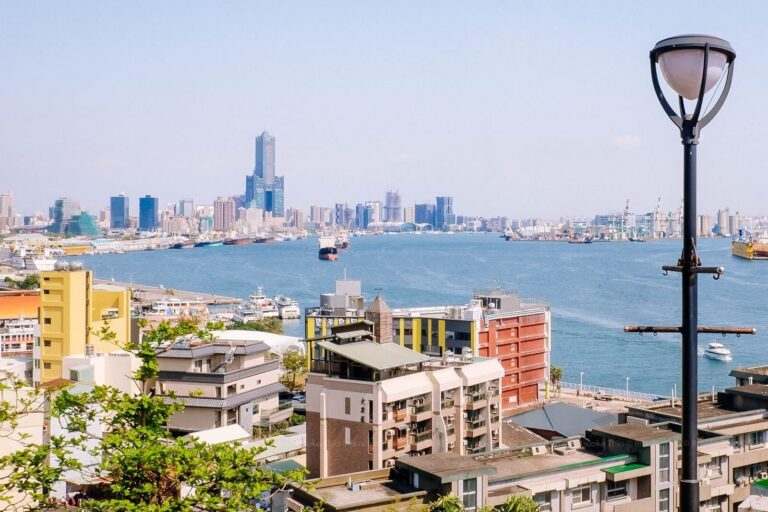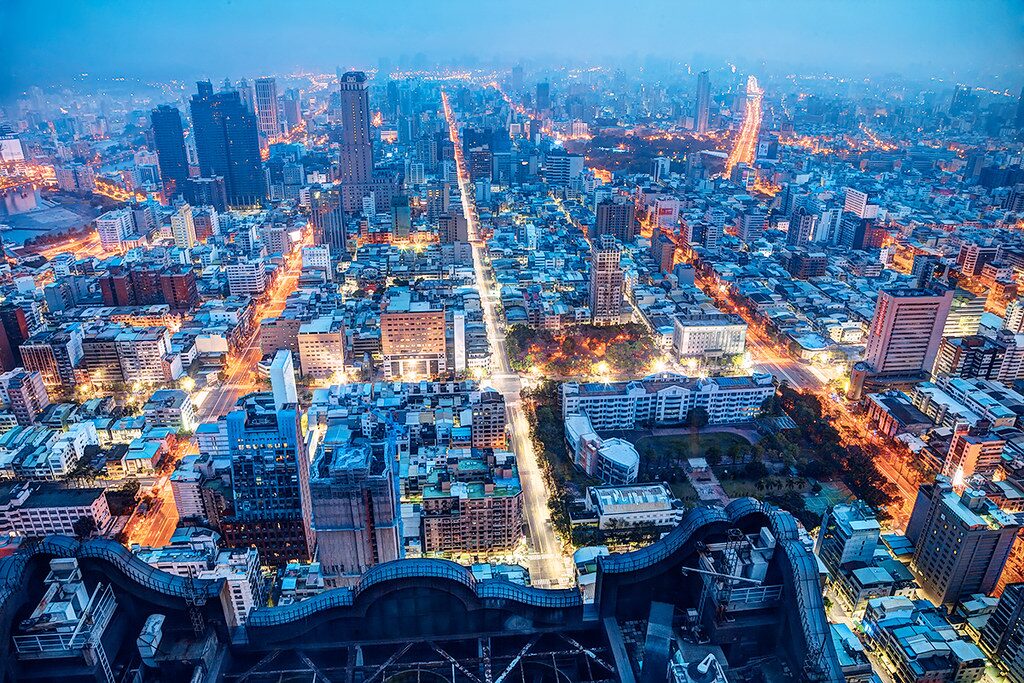
Kaohsiung’s northern districts run outward in a nearly continuous band of towers, while the south seems to stop short despite its flat ground, port, international airport, and MRT line. From the map, the missing continuation is hard to mistake.
When I look at a map of Kaohsiung, a certain imbalance becomes visible.
To the north, areas like Zuoying and Nanzih continue almost without interruption.
High-rise housing and new districts line up, even with mountains close by.
To the south, places like Cianjhen and Siaogang appear different.
There is flat land.
There is a port, an international airport, and the Red Line of the MRT.
And yet, the outline of the city stops partway.
The skyline remains low.
There is no single reason for this.
Where Air, Ground, and Surface Overlap
The south did not fail to grow because it lacked popularity.
Three constraints arrived from the same direction and overlapped.
First, the air.
Kaohsiung International Airport sits directly south of the city center.
Height restrictions spread across a wide area.
Buildings that work in the north do not work here.
Second, the ground.
Much of the southern waterfront is reclaimed land.
The soil is soft, with a higher risk of liquefaction during earthquakes.
Foundations cost more. Projects slow down.
Third, the surface.
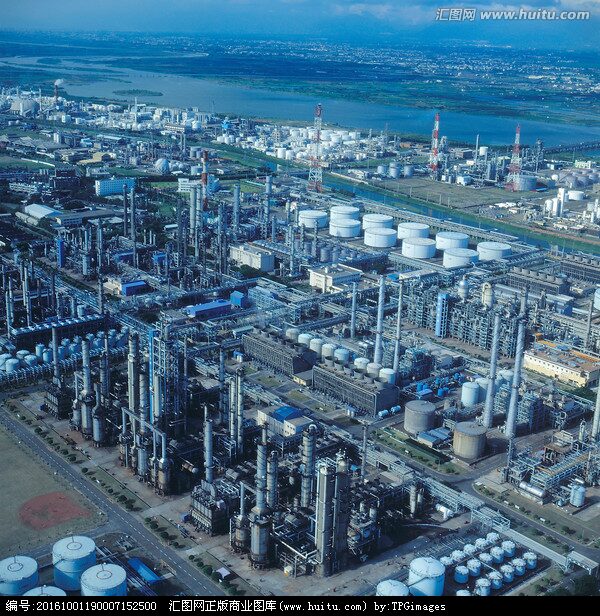
Industrial zones, petrochemical facilities, and military land lie in long bands.
They have physically divided living areas for decades.
These were not separate problems.
Together, they made the south a difficult place to justify investment.
The Moment the Void Began to Move
Still, the south was not simply abandoned.
The largest barrier, long sealed, has begun to shift.
The former 205th Arsenal in Cianjhen.
A site as large as twelve Tokyo Domes has entered the relocation phase.
This emptying means more than new redevelopment land.
It opens the possibility of stitching the city back together.
The areas around IKEA and Dream Mall, once separate, can connect.
South Kaohsiung is not extending outward.
It is being rebuilt by filling what was empty inside.
Redesign as a Company Town
The Uni Group reacted early to this change.
They did not choose a simple mall expansion.
At the center of the plan is consolidation.
A mixed-use tower over forty stories.
Offices, a hotel, residences stacked together.
Logistics, finance, and distribution functions gather nearby.
Thousands of people will work, live, and spend time here.
Dream Mall, once quiet on weekdays, becomes part of daily life.
The south is not growing as a residential suburb.
It is increasing density as a company-centered district.

Expansion in the North, Fermentation in the South
Northern Kaohsiung expanded to absorb people.
It grew by adding volume.
The south followed a different path.
Factories, weak ground, and restrictions were debts from the past.
Time was spent reorganizing them, not escaping them.
The southern sky remains low.
But beneath it, one of the city’s densest economic zones is taking shape.
Kaohsiung did not fail to extend south.
It is changing into a form that no longer needs to.
— Detour —
a little further to walk
- Notes on Hanshin Arena, Kaohsiung
- Notes on the Birth of Kaohsiung’s 85 Sky Tower
- Notes on Riding YouBike in Kaohsiung