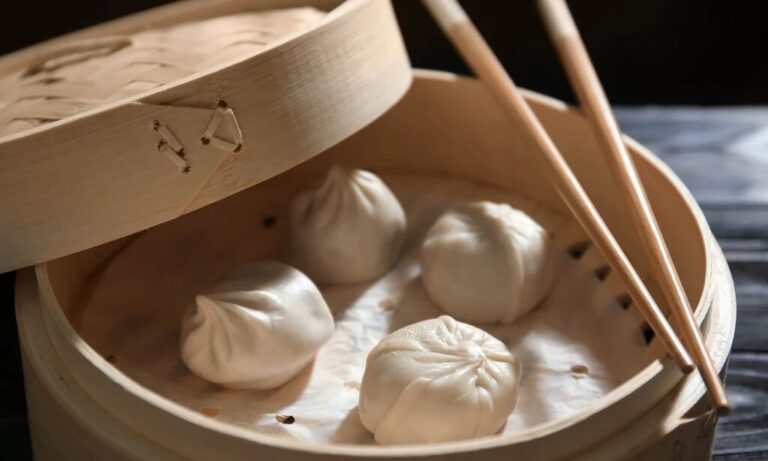
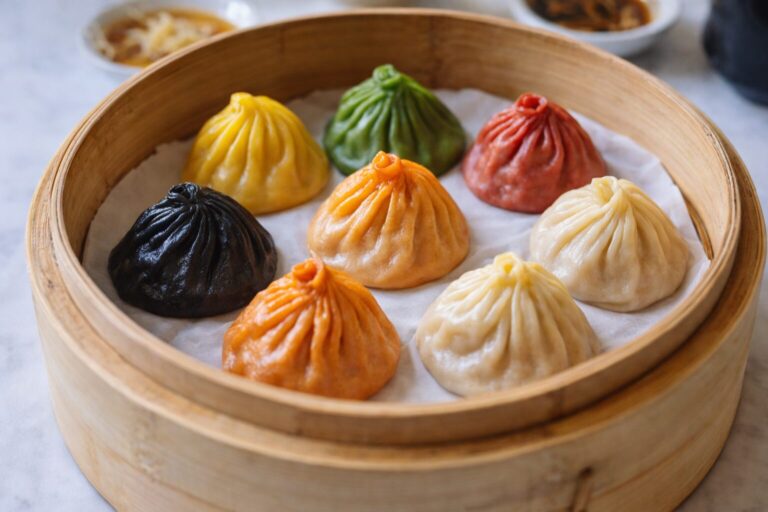
In Singapore, xiaolongbao can arrive in eight colors, with cheese, foie gras, or mala inside. In Shanghai, the same name points toward thicker skin, heavier filling, and crab roe strong enough to stand alone.
Xiaolongbao began as a local form, then traveled outward.
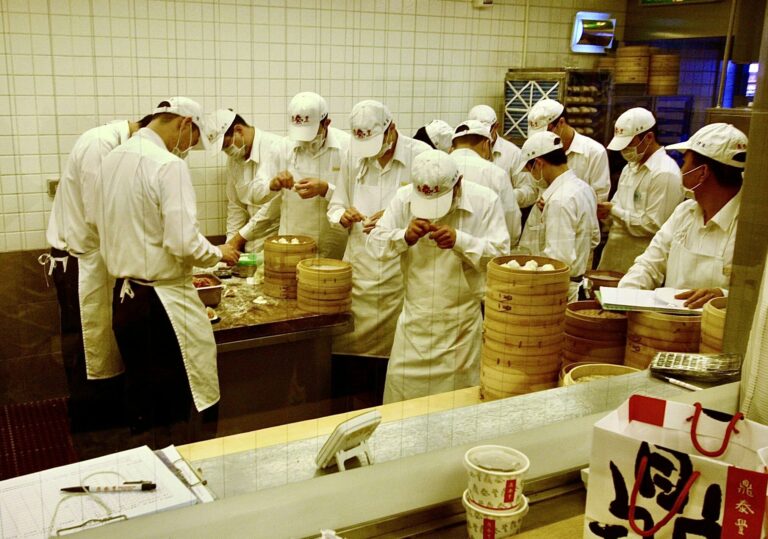
Din Tai Fung led that movement.
In Los Angeles, in London, in Singapore, the same sign appears.
Steamers stack up.
The same shape arrives at the table.
It was not only a famous shop.
It also fixed the meaning of the dish itself.
Thin skin.
A measured amount of filling.
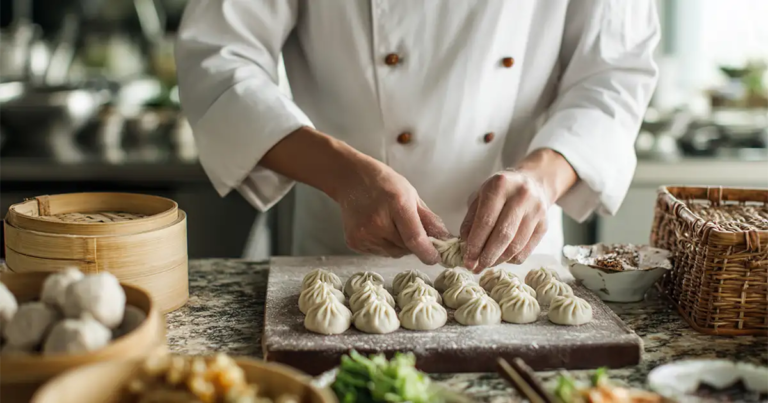
And eighteen folds.
Once those numbers spread, the dish moved away from the mood of a craftsman.
It became something repeatable.
It also became something comparable.
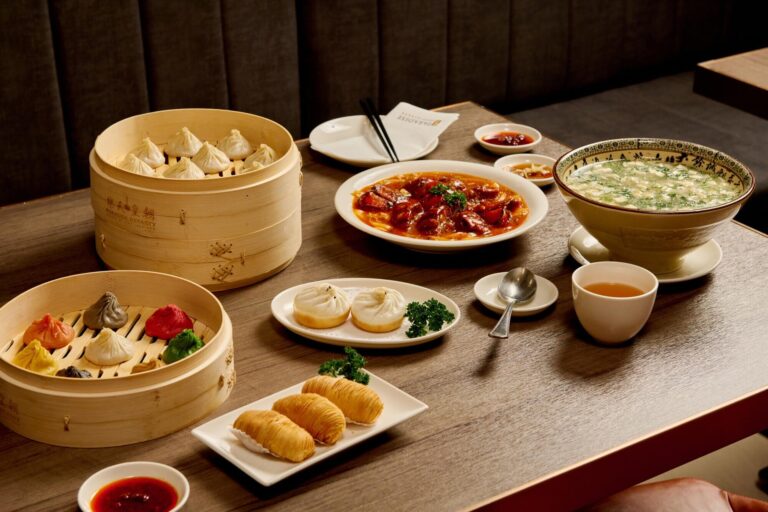

The Din Tai Fung standard
There are conditions that hold the dish together.
They look less like preference, and more like a set of requirements.
The wrapper is thin and even.
It stays intact at the edge of failure, holding hot soup inside.
The filling is not pushed by strong aromas.
It does not rely on star anise or heavy sauces.
It stays with meat and salt, leaving space for vinegar and ginger to finish the line.
The folds are eighteen.
They are not only for beauty.
They are for reproducibility.
A number that pulls different hands toward the same form.
As this format spread, the dish stopped being only “a shop’s taste.”
It became something eaten and discussed in the same way across cities.
Din Tai Fung built that state first.
How challengers move
Once a standard is fixed, the paths of challenge become clear.
Some try to win on the same field, by precision.
They add folds.
They bring local Taiwanese ingredients to the front.
They compete not on thinness, but on finish.
Others shift the field.
They change aroma, or materials, or sequence.
They do not strengthen “Taiwan-ness” directly.
They insert difference in another form.
Some return to the origin and push back.
Shanghai craftsmen do not treat thinness as justice.
They argue with weight and thickness.
The world of xiaolongbao branches out from the Din Tai Fung center,
by the distance each player chooses to take.
Paradise Dynasty (Paradise Dynasty)
The first visible move was color.
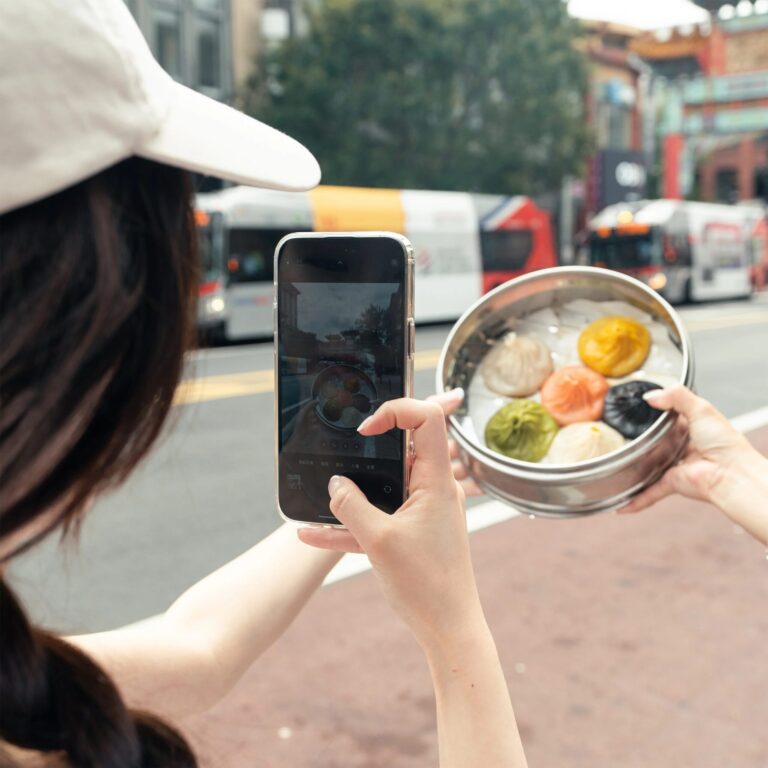
In Singapore, Paradise Dynasty served an eight-color set.
Into a world where white was assumed, red and green and black appeared.
The colors felt less like food, and more like symbols.
The fillings moved beyond the old dim sum frame.
Cheese. Foie gras. Mala spice.
Different grammars of fat and fragrance entered the steamer.
The order of eating was also written down.
From mild to heavy.
Toward stimulation.
A route was prepared in advance.
The dish becomes food and also spectacle.
The steamer becomes a stage device, not a plain container.
Jin Din Rou (Jin Din Rou)
After color came scent.
In Taiwan, Jin Din Rou is known for its green oolong tea version.
It is said to be a branch grown from the Din Tai Fung form.
Tea powder is mixed into the wrapper and the filling.
When bitten, bitterness comes first.
It pushes back slightly against the weight of pork fat.
The aftertaste turns lighter.
If Singapore’s approach brings in ingredients from the world,
this one digs into local terrain.
Pork and tea.
Two Taiwanese products living inside one bite.
Sometimes it works as a quiet self-introduction.
Dian Shui Lou (Dian Shui Lou)
Some challengers stay with the straight punch.
Dian Shui Lou presents “nineteen folds.”
If eighteen is the golden rule, this is a deliberate +1.
One extra fold does not transform flavor.
But it shows attitude.
A number used to say: we also stand at the top.
Ingredients also lean into local naming.
Scallions from Yilan.
Black pork.
Place names appear, and quality is argued through land.
This feels less like a new wave, and more like neo-orthodoxy.
It does not reject the standard.
It tries to take the peak from inside the same form.
Shanghai: Nanxiang and Jia Jia (Jia Jia)
As the world worships thin wrappers, the origin stays cooler.
Shanghai keeps another kind of justice.
Nanxiang and Jia Jia point to weight.
The wrapper chooses endurance over thinness.
Thickness is needed to hold the soup’s mass.
Flavor is heavier.
Fat is stronger.
Then there are extreme single-bite statements.
Crab roe versions that push forward without pork.
They cross the Taiwanese balance line without hesitation.
This is not evolution.
It is rebellion shaped like a return.
A pressure that says: the home source is still here.
The “straw” version: guantangbao
Some forms exaggerate the structure itself.
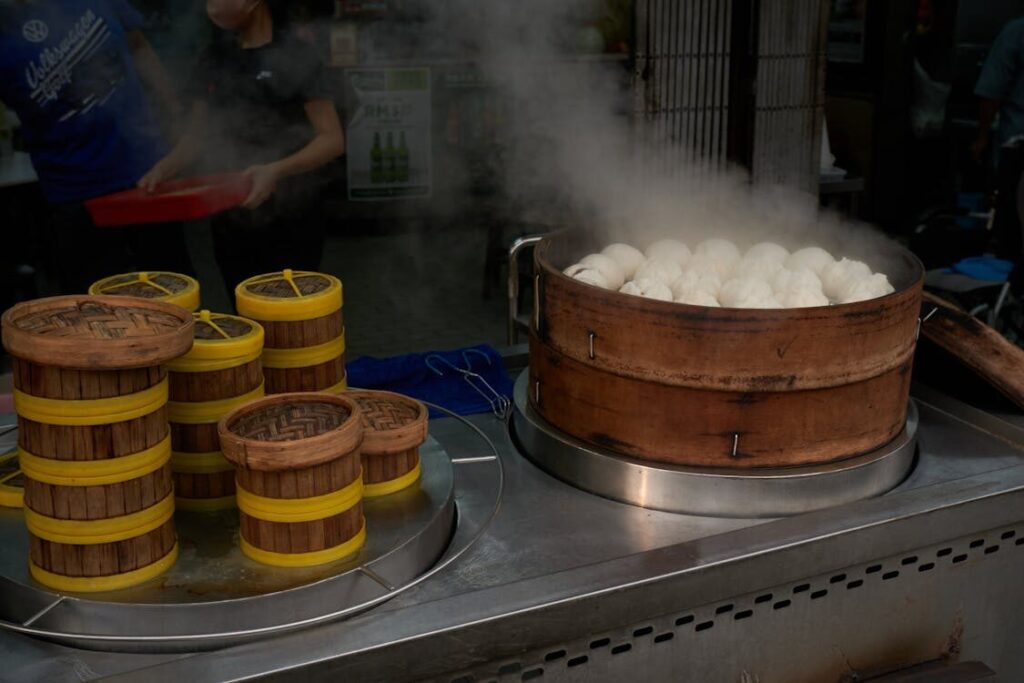
Guantangbao is a large bun with thick skin.
It is too heavy to lift neatly.
A straw is inserted first, and the soup is taken before anything is eaten.
The name xiaolongbao suggests something small.
This size feels like an argument against the word.
But the logic is honest.
The core is soup.
If the core is liquid heat, then drinking first becomes a possible shortcut.
In Chinese-speaking places, “suction” can be part of pleasure.
It connects, somewhere, to the popularity of tapioca drinks.
Chocolate and red bean
The last move is the orthodox side turning against itself.
Din Tai Fung serves chocolate and red bean versions.
The assumption of a savory dish breaks.
The chewy skin and sweet filling drift toward steamed buns.
Or toward something like molten dessert.
With that one step, the format stretches from appetizer to dessert.
The steamer fits into a full course.
The last remaining rule
Color changed.
Filling changed.
Size changed.
Even the category of taste shifted.
Still, there is a reason these are called xiaolongbao.
Hot liquid is sealed inside wheat skin.
Only that structure remains shared.
If that is kept,
then pork can disappear.
Tea can enter.
Crab can replace meat.
Sweetness can cross the border.
The white shirt that Din Tai Fung fixed was dyed by many cities.
The dyeing looks less like chaos, and more like local life.
The form stays, while other cultures take it in.
— Detour —
a little further to walk
- Notes on Paradise Dynasty in Singapore
- Notes on Xiaolongbao and the History Taiwan Inherited
- Notes on the Globalization of Taiwan’s Xiaolongbao