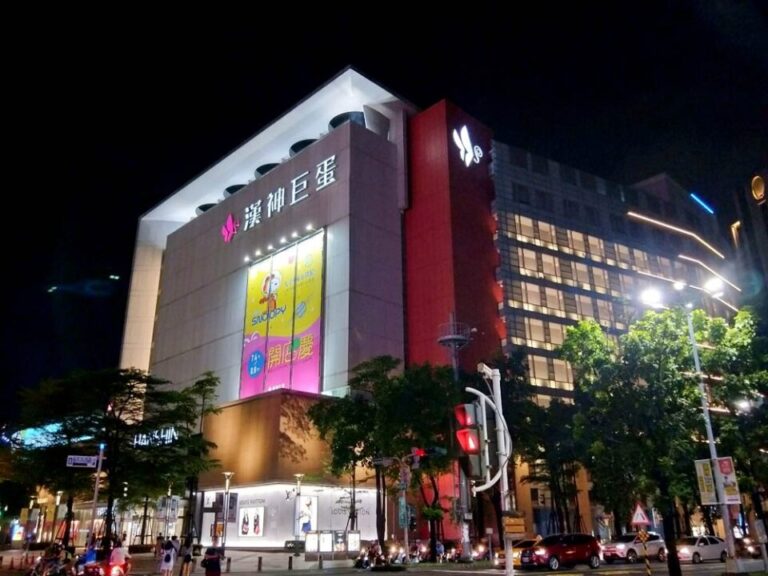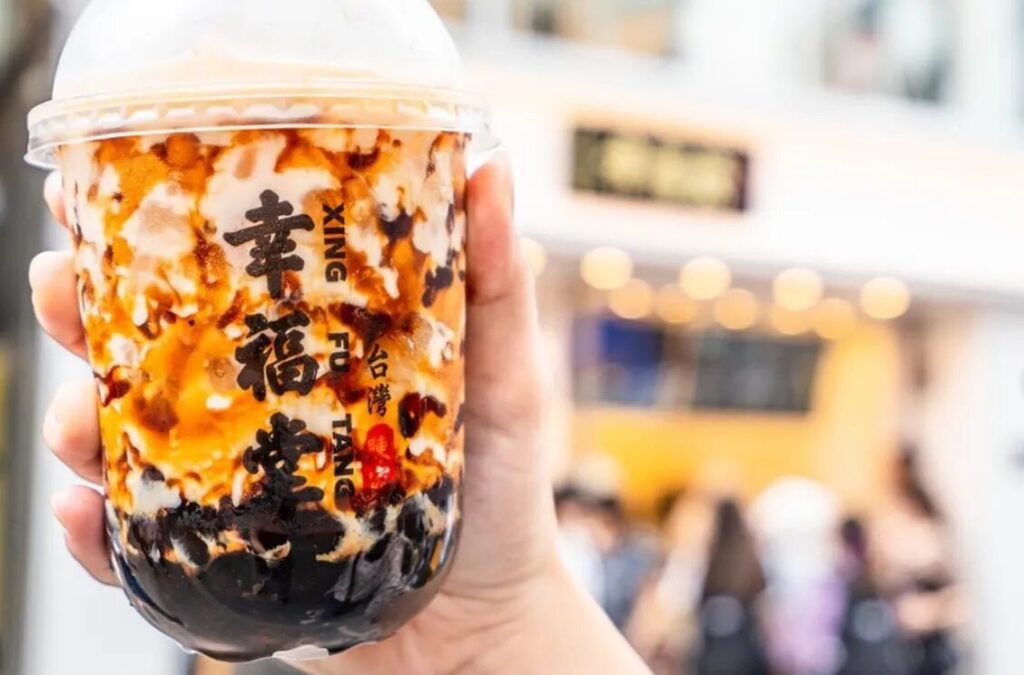
On a walk through Taipei, the next drink shop often appears before the last one has left the frame—along office roads, beside MRT exits, and on residential corners. Students carry cups past delivery riders collecting more, while each storefront seems to feed the same daily traffic.
Walking through Taiwanese cities, the next drink shop appears before I realize it.
Each turn brings a new sign.
I keep thinking, “Were there this many?”
On Fuxing South Road, on Zhongxiao East Road,
at almost every MRT exit, one shop enters the frame.
They are not only the colorful places aimed at visitors.
Office workers stop by during lunch.
Students walk with a cup in hand.
Delivery riders pause to collect the next order.
This feels less like a trend
and more like infrastructure.
At some point, I began to wonder how many there are in total.
I do not know the official number.
But at this density, even a rough outline seems reachable while walking.
So I tried a few estimation paths.
Starting From Population and Daily Habits
First, I thought about frequency.
In office districts at noon,
people enter and leave the same shop in quick succession.
In residential areas,
morning and evening are busier.
Not everyone buys a drink every day.
But it also seems rare for someone to go long without buying one.
When shops are built directly into commuting routes,
a certain share of customers appears to purchase by habit.
I set an assumption.
Taiwan’s population is about 23 million.
From what I see,
drinking one cup a day does not feel excessive.
Suppose 30 percent of the population,
around 7 million people, buy one cup almost every day.
That gives:
About 7 million cups per day.
Next, how much does one shop sell?
At peak hours, more than this.
But including weekdays, rain, and slow periods,
200 to 300 cups per day
seems realistic.
7,000,000 ÷ 300 ≈ about 23,000 shops
7,000,000 ÷ 200 ≈ about 35,000 shops
At this point,
“tens of thousands” becomes visible.
Given the street-level density,
it does not feel exaggerated.

Looking From Income and Spending Instead
Next, I shifted from people to money.
Standing in front of a shop,
the price range is familiar.
Cheapest drinks are in the 40 NT dollar range.
Standard ones are 60 to 80.
With toppings, they exceed 100.
Some people buy daily.
Others, a few times a week.
But those who never spend here seem rare.
Taiwan’s average annual income is roughly
700,000 NT dollars.
I asked how much might be spent on drinks each year.
Suppose 10,000 NT dollars annually.
At 60 to 80 per cup,
that is about 150 to 200 cups per year.
Assuming the working population is half the total population:
23 million ÷ 2 × 200 cups
= about 900 million cups per year.
Now I looked at shop capacity.
A small independent shop might sell
50,000 cups a year.
A mid-sized chain location might sell
around 100,000.
So:
900 million ÷ 100,000 ≈ about 9,000 shops
900 million ÷ 50,000 ≈ about 18,000 shops
This is not far from the earlier estimate.
Where the Numbers Gather
From population-based thinking:
around 20,000 to 30,000 shops.
From spending-based thinking:
around 10,000 to 20,000 shops.
Different paths,
similar territory.
My sense is that Taiwan has
somewhere in the high teens to low twenties in thousands.
A number that explains
why one appears wherever I walk.
Not a firm conclusion.
More a feeling of “probably around here.”
That vagueness suits the city.
Tea drifts in from across the street,
and I let the thought settle there.

Afterword: Checking the Answer
Later, I found data from Taiwan’s Ministry of Finance.
The number of drink shops is said to be
around 28,000.
For comparison,
convenience stores across Taiwan number
around 12,000.
Drink shops exist at more than twice that density.
The feeling of “there is another one”
was not imagined.
Even as numbers,
the density remains unusual.
For now,
that is enough.


— Detour —
a little further to walk
- Notes on Why Drink Shops Fill the Streets of Taipei
- Notes on Counting Taiwan’s Annual Tapioca
- Notes on Sealed Lids in Taiwan