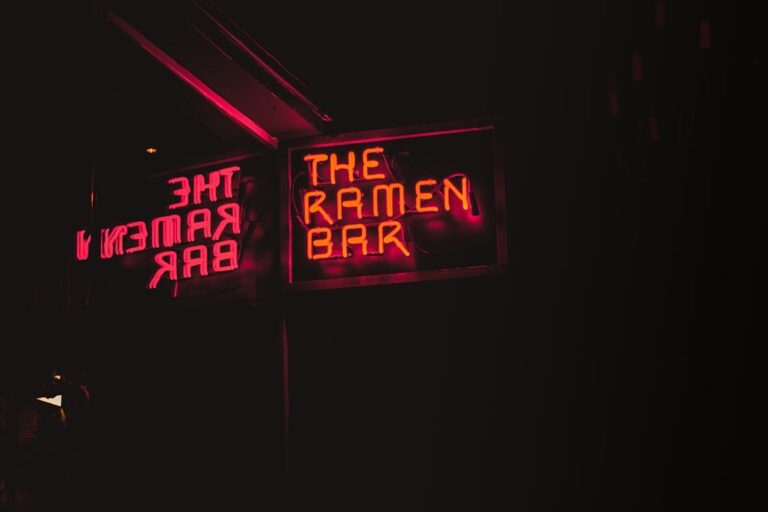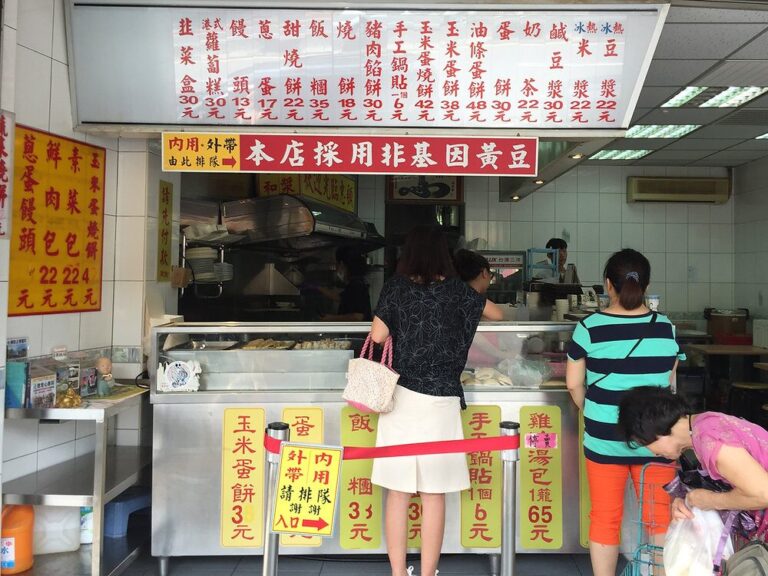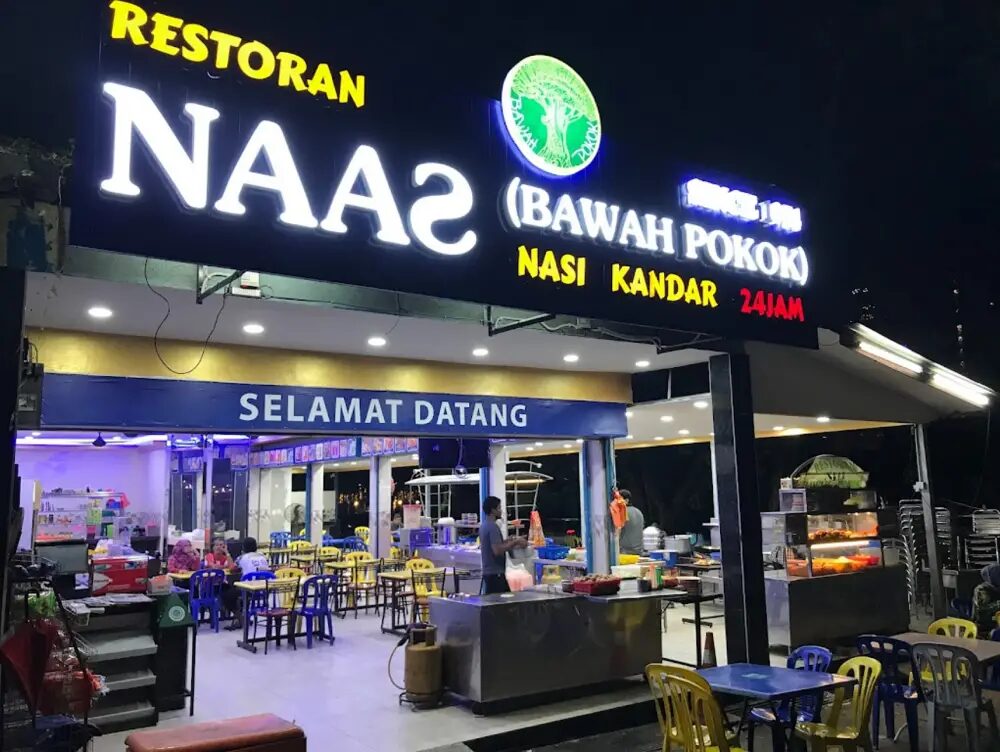
After the malls close and the bars serve their last orders, fluorescent tubes still mark small pools of light along Malaysia’s roads. Under them, a Ferrari driver and a courier may end up at the same stainless-steel table, on the same hard plastic chair.
At the edge of the city, the night does not go dark even after the shopping malls close and the bars finish their last orders.
Fluorescent lights remain in small clusters along the roadside.
Under that light, there is often a mamak stall.
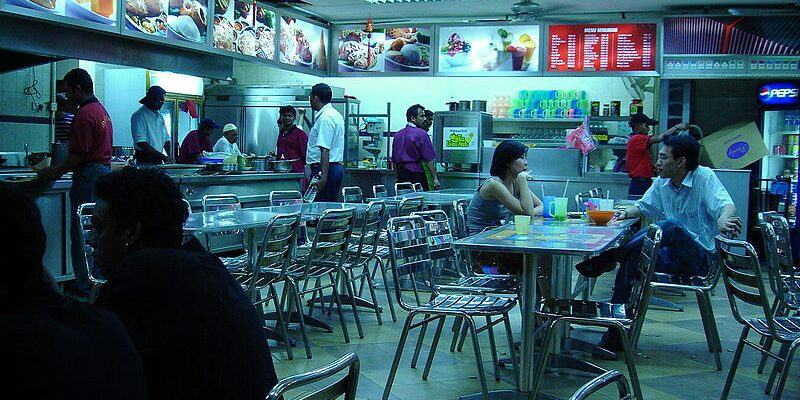
Plastic chairs.
Stainless-steel tables.
White fluorescent tubes overhead.
On the floor, wet footprints and a thin film of oil.
The city may be full of glass towers, but this corner stays outdoors.
Heat lingers. Air does not escape.
Still, people sit.
A person arriving in a Ferrari and a courier on a motorbike can end up in the same chair.
The table height does not change. The chair stays hard.
It is not that hierarchy disappears. It looks more like it is placed on hold.
A mamak is a place to eat, but not only that.
In a multi-ethnic country like Malaysia, it functions like a living room left outside.
The Word “Mamak”
Mamak is not a dish.
It is a type of shop, but the word originally referred to people.
It is often said to come from the Tamil word mama, meaning an uncle on the mother’s side.
It sounds like a name used at close range, as if you were at a relative’s house.
In Malaysia, the word settled as a label for Indian Muslim communities, especially Tamil Muslims, and then for the eateries they ran.
It is not purely Malay food.
Not purely Indian.
Not Chinese.
It sits in the middle without fitting cleanly into any one category, and still ends up at the center of daily life.
That is what a mamak looks like.

Spices Carried with Faith
Behind the mamak, there is movement.
Merchants and workers crossing from South India into the Strait of Malacca.
Port work.
Construction in growing cities.
Logistics.
They were Muslims, but they carried South Indian food habits.
Halal, spicy, and cheap.
It is said to have begun as street vending in port districts, or as small stalls by the road.
Rice and curry carried on a shoulder pole.
Fast, filling, and meant to fuel bodies that sweat and keep moving.
There is overlap with the origin story of nasi kandar.
Neither began as restaurant cuisine.
Both were devices built to support time and stamina.
The mamak looks like what happens when that device moves from stall to shop, and then adapts to a city that runs all night.

A Shared Language for Calling Staff
Inside a mamak, languages mix.
English.
Malay.
Tamil.
Cantonese.
Sometimes a religious word in Arabic.
But the word used to call staff is often simple.
Boss.
Or ane.
In some places, you also hear bang.
Customers call staff “boss.”
Staff call customers “boss.”
Everyone is a boss, and everyone is a brother.
It does not feel polite so much as practical.
You do not need a name.
You can avoid mistakes about age or ethnicity.
The air softens slightly.
The equality of a mamak is not a system. It is supported by small words used in the right way.
The Menu, and the Minimum Unit
A mamak menu is long.
There is nasi goreng.
There is mee goreng.
Sometimes nasi kandar is set out.
Satay, fried snacks, and sweet pastries also appear.
But when you do not know what to order, one unit remains strong.
Roti and curry.
Even as the menu expands, this part does not collapse.
The basic strength of a mamak seems to sit in this pairing.
Roti Canai
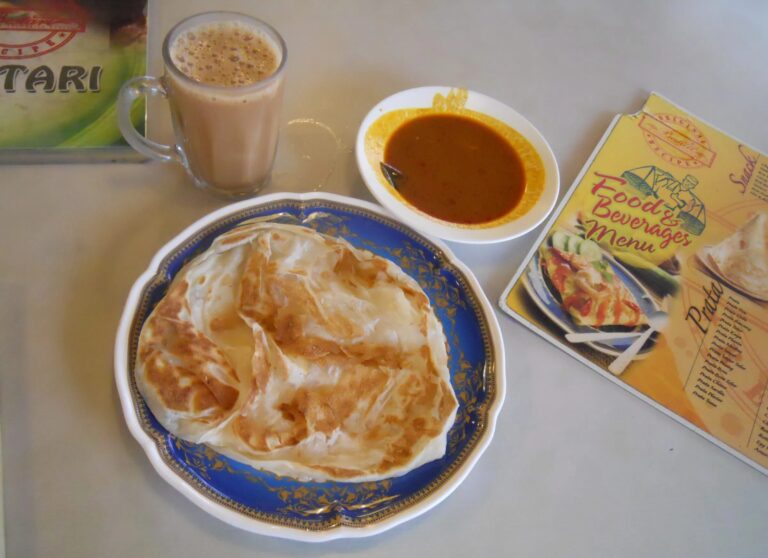
Roti canai is made from wheat dough stretched thin, folded, and layered with oil.
On a hot griddle, the surface dries while air stays inside.
What arrives is not a tidy piece of bread.
There are creases, tears, and oil stains.
When you pull it apart with your hands, the layers loosen.
You dip it into curry.
Tear, soak, eat.
It works without a spoon.
It feels less like a dish and more like a hand movement.
In a country with long nights, this kind of eating stays alive.
If a meal becomes a ceremony, it will not last.
A mamak is a form designed to last.
The curry works less like a star and more like glue.
It holds the roti together, carries flavor, and makes it easy to swallow.
The spices are strong, but the aim seems closer to continuation than to shock.
Maggi Goreng
At a mamak after midnight, another item appears often.
Maggi goreng is stir-fried instant noodles made with Maggi.
An egg is added. Vegetables go in. A thick sauce pulls it together.
It looks like junk food.
It is not healthy.
But at two in the morning, it sits in the right place.
A mamak is less a daytime canteen and more a night shelter.
A midpoint before going home.
A place to talk.
Or a place to kill time alone.
At that hour, careful food is not required.
Roughness becomes comforting.
Maggi goreng accepts that roughness from the start.
It arrives quickly, and it fills you quickly.
Late-night guilt becomes a normal part of the machinery.
Nasi Kandar
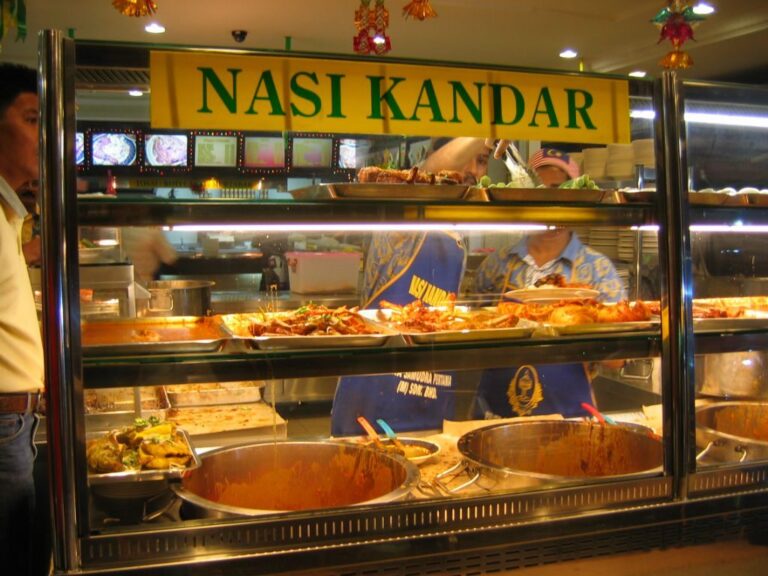
In some mamak stalls, nasi kandar is present.
Behind glass, brown stews and fried items pile up.
White rice is the base.
Side dishes are added by pointing.
Then curry is poured over everything.
Which curry matters less than the fact that they will mix.
Mixing is assumed.
It looks messy at first.
But the chaos does not feel accidental. It looks managed as a custom.
The dish is complete when boundaries disappear on the plate.
If roti is food for the hands, nasi kandar is food for the plate.
Under the same fluorescent light, two ways of becoming full sit side by side.
Ayam Goreng (Ayam Goreng)
On a mamak menu, there is another “smallest unit” you can fall back on when you can’t decide.
Ayam goreng.
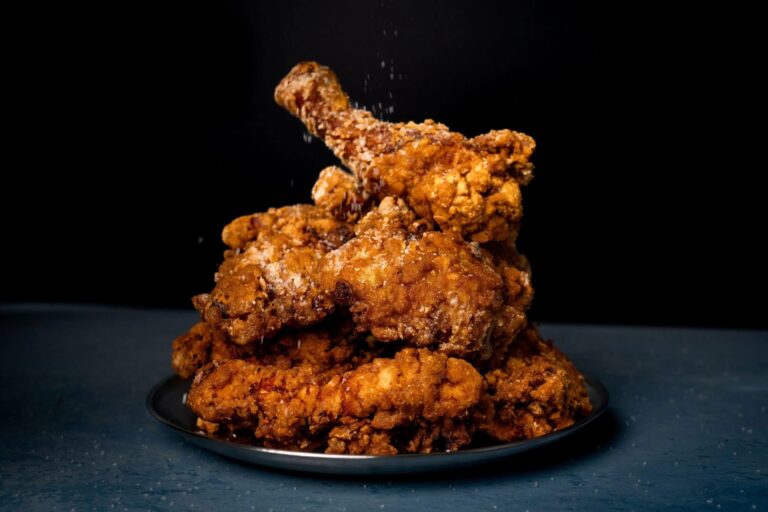
Bone-in chicken is stained yellow with spices, then fried.
The coating is not thick.
What clings to the surface is not flour, but fibers of turmeric and other aromatics.
It is fried food, but it is not layered up.
The meat is left exposed and put directly into the heat.
So scorch marks remain.
The aroma arrives first, and the oil follows after.
Depending on the shop, fine fragments collect in the corner of the tray after frying.
This becomes kerak.
Sprinkled over rice, the powdered spices and fat restore the outline of the meal once again.
Ayam goreng can stand on its own.
But in many cases, it does not end as a standalone item.
It sits beside roti, it lands on top of nasi kandar, and it works as a component within the plate.
Fried chicken steps lightly around the taboos of each community.
It is neither pork nor beef.
That harmlessness becomes strength here.
Why Teh Tarik Keeps Moving
On mamak tables, there is often a sweet drink.
The most common is teh tarik.
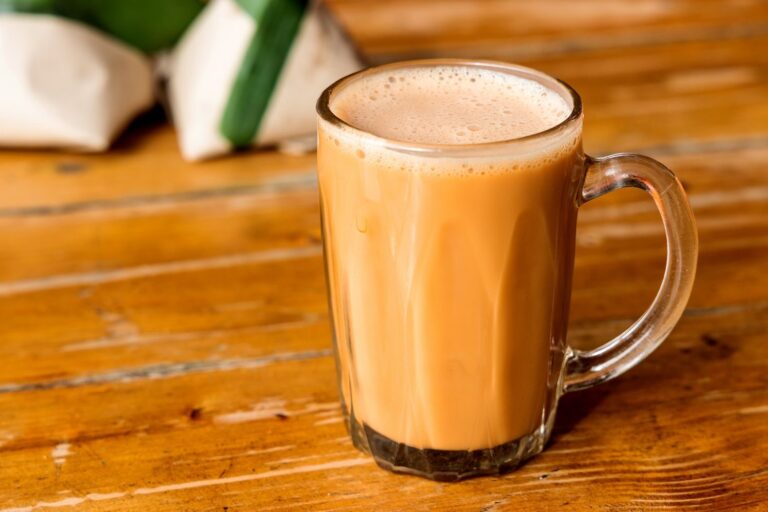
Black tea mixed with condensed milk, pulled until it foams.
A brown liquid in a clear glass.
A thin layer of bubbles on top.
It is sweet, but not strangely heavy.
Even in the tropical night, people drink it.
This is less a treat than fuel.
Heat drains stamina. Sweat pulls salt out of the body.
Sugar and caffeine become necessary.
Part of the reason a mamak does not sleep may be that teh tarik does not let you sleep.
Oil from roti, sugar from tea.
The night extends.
A Machine for Football and Sudden Rain
A mamak has one piece of equipment it cannot do without.
A large screen.
On nights with Premier League matches, the stall turns into a stadium.
When a team scores, strangers shout together.
Hands clap.
For a moment, the next table comes closer.
And when a sudden downpour hits, motorbike riders rush in to wait it out.
A helmet is placed on the table.
They sit in wet shirts.
They order tea and wait for the rain to weaken.
People exchange information, wait, and eat.
A function that once belonged to a village well shifts into an urban canteen.
The strength of a mamak is not culinary perfection.
It is that it offers multiple reasons to sit down.
Food.
Conversation.
Television.
Shelter from rain.
Staying up late.
Any one reason is enough.
The Lights Do Not Go Out
Even as Malaysia develops and high-rise buildings multiply, the mamak does not disappear.
An air-conditioned café cannot reproduce this humid heat and this cluttered sense of safety.
The chairs stay hard. The tables stay cold. The light stays white.
Still, people gather because it is useful.
You lean back into a plastic chair while the night air moves past.
Somewhere nearby, you hear someone call out, “Boss.”
Hearing that voice, I sometimes feel that even a stranger can be placed inside the circle of this country, if only slightly.
Not as a welcome, but as a body allowed to share the same space.
The mamak keeps glowing in that way, tonight as well.
— Detour —
a little further to walk
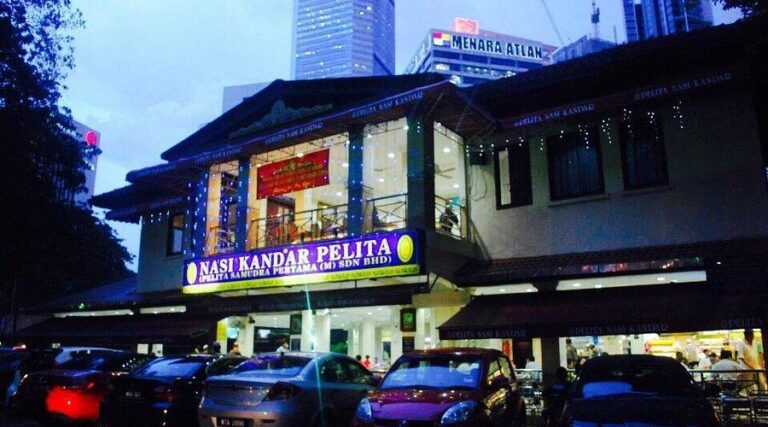
- Notes on Nasi Kandar Pelita at KLCC
- Notes on Mamak Culture Born in Penang
- Notes on Two ABC Bistros at KL Sentral