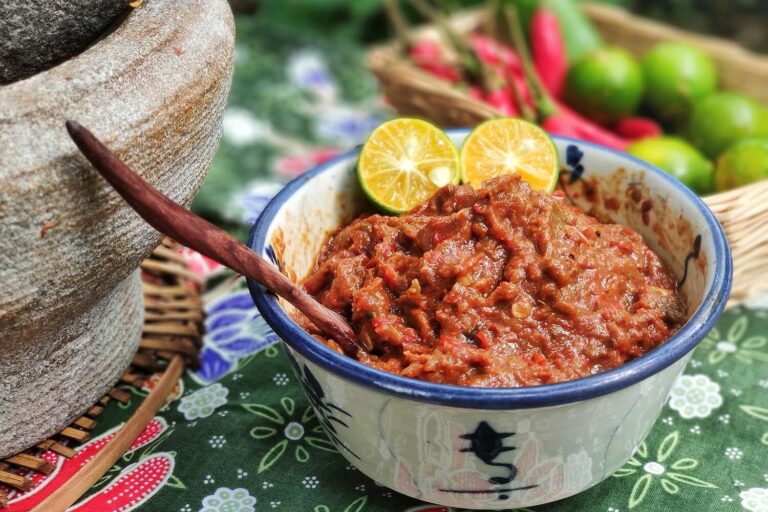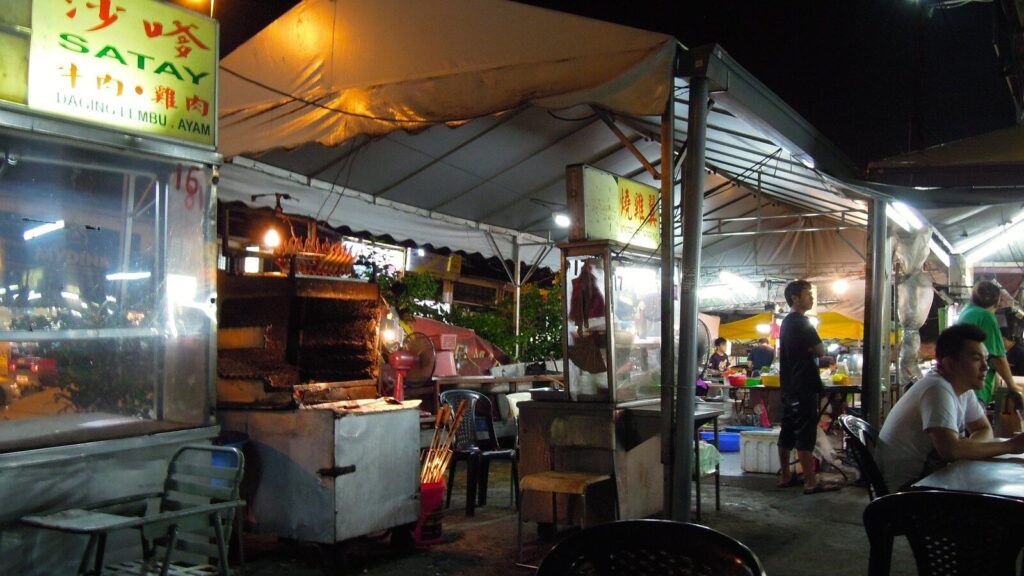
At Taiwanese eateries, a silver tin of brown sha cha sauce often sits beside the soy sauce, ready for hot pot, stir-fries, or a taste straight from the spoon. Its rough, sandy texture is as recognizable as its seafood aroma, and the same gritty paste keeps appearing in dishes that otherwise have little in common.
In Taiwanese eateries, when I glance at the bottles set on the table, there is often a brown, clouded paste resting there. It is mixed into stir-fries, dissolved into hot pots, and at times tasted directly from the spoon. Sha cha sauce (sha cha jiang) is a condiment that supports the outline of Taiwanese cooking from its base. It is neither sweet nor spicy, and while it carries a trace of the sea, it moves easily into meat and vegetables alike, a kind of ambiguity placed close to what feels Taiwanese.
Four coordinates that shape the taste of Taiwan
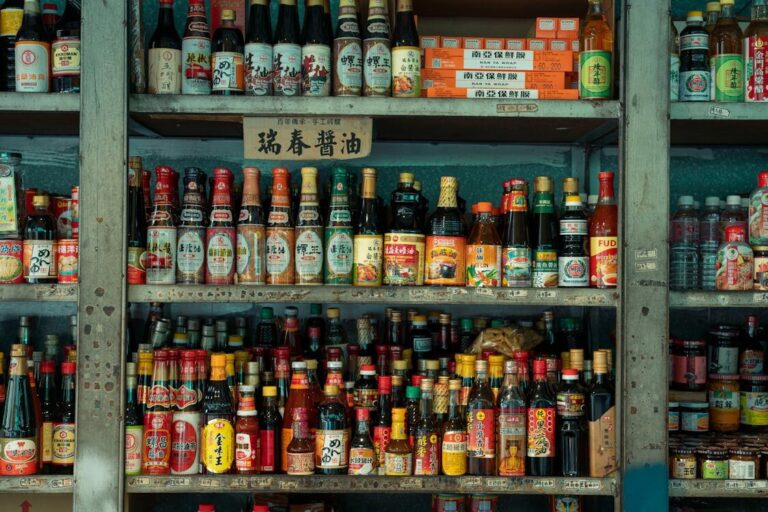
Walking through different dishes across the island, I begin to notice that despite the variety of plates, the direction of aroma is limited. Beef noodle soup and braised pork rice, dry noodles and blanched greens, night-market stir-fries and family dinners may look different, yet the steam rising behind them overlaps. The strength of heat and sweetness changes, but the skeletal structure hardly moves, and tracing it back reveals that Taiwanese flavor converges into only a few condiments: sha cha sauce, star anise, fried shallots, and thick soy sauce. None are the main dish, yet remove them and the food shifts into something belonging to another country, as if a small number of pillars quietly mass-produce the city’s scent.
This fixation did not happen by preference alone. Behind it lies layered history: migrants from Fujian, a subtropical climate, the industrial structure of Japanese rule, and exchange with Southeast Asia. New dishes appear, yet they eventually return to the same aromatic band, pulled back by forces older than any single recipe.

The silver tin that became a standard
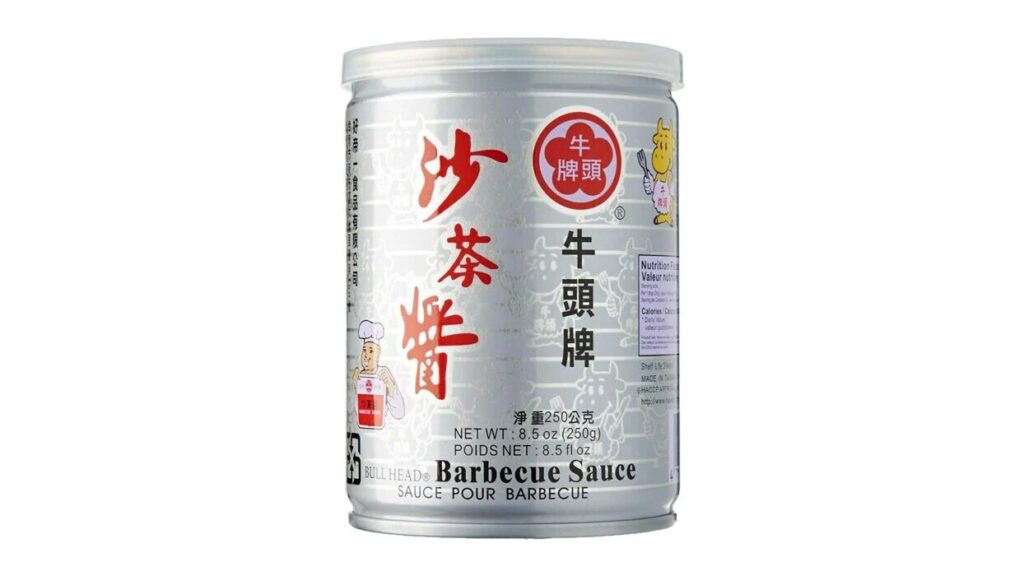
To speak of sha cha sauce in Taiwan is to encounter the silver tin with the red ox logo of Bull Head Brand. Supermarket shelves are dominated by it, in household sizes and professional containers alike, and its share is said to reach eighty percent. In the world of condiments, it is rare for one company to become a national standard, but here it has happened. For many Taiwanese, the smell imagined when hearing “sha cha” aligns closely with the scent from that tin.
The founder, Liu Lai-qin, is said to have begun with a noodle stall before developing and spreading the sauce, earning the title “father of sha cha sauce.” The success was not a story of novelty but of adjustment and stability. The balance of sweetness and seafood notes, the strength of aroma, the quantity of oil, all were tuned to Taiwanese taste and fixed into an industrial product. Where stall flavors shift with each cook, the tin does not move, and over time its unmoving quality came to resemble the taste of the country itself.
A lineage that began beyond the island
The ancestor of sha cha sauce lies not in China but in Southeast Asia, in the satay sauces encountered by migrants from Fujian and Chaoshan who traveled through the Malay Peninsula and Indonesia. Peanuts, dried shrimp, garlic, and spices formed thick glazes for grilled meat, carrying smoke and sweetness typical of street stalls. Even the word “sha cha” is said to echo the sound of “satay,” its name preserving the history of movement.
When it reached Taiwan, it was not reproduced as it was. The proportion of peanuts decreased, while dried seafood powders, garlic, and oil moved forward. It shifted from a grilling glaze into a base seasoning added during cooking, changing function in order to become daily food. Through that transformation, it embedded itself into Taiwanese kitchens.
Why sand lives in the sauce
The defining feature of sha cha sauce arrives before the taste, through texture. It feels gritty on the tongue, with particles that press back when bitten. The character “sha,” meaning sand, reflects this deliberate roughness. Rather than pursuing smoothness, the sauce completes itself by keeping grains intact.
These grains are said to come from crushed dried flatfish and shrimp, fragments rather than powders that release the sea when chewed. A uniform paste like peanut butter would round the aroma, but sha cha resists that softness. The particles allow oil to cling to ingredients instead of sliding off, creating a “chewable sauce” that grips meat and vegetables in both stir-fries and hot pots.
Why it bonded with beef
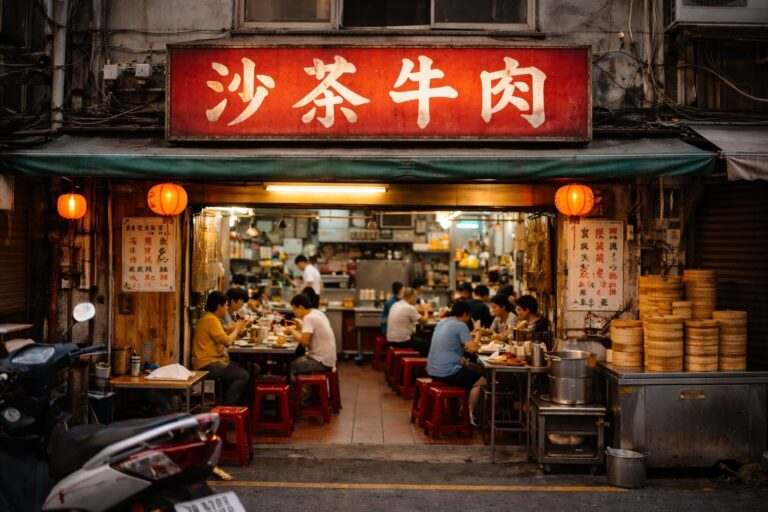
Sha cha sauce finds its strongest expression in beef dishes, from sha cha stir-fried beef to sha cha hot pot. This pairing is not accidental. Beef culture in Taiwan arrived relatively late, and its distinctive odor posed a challenge. The seafood umami and garlic fragrance of sha cha cover and reshape that outline, drawing it into a Taiwanese aromatic zone.
Some restaurants are built entirely around sha cha beef, searing meat over high heat, finishing it with oil and grains, and settling it into bowls of rice. Though beef stands as the main ingredient, what lingers is often the presence of sha cha itself. In hot pot, the structure repeats. Some shops season the broth with it directly, while others leave it in the sauce station for diners to complete. Beef is boiled plain, then pulled into the Taiwanese side of flavor through the dipping sauce, not softened but redefined.
The stage of the hot pot sauce station
Taiwanese hot pot restaurants almost always include a condiment corner, often labeled “self-service.” There, a bowl of sha cha sauce stands at the center. Diners add chopped scallions, garlic, chilies, vinegar, and soy sauce, stirring as aromas shift. Some drop in an egg yolk, a practice once common, coating meat to round sharp edges and thicken the mouthfeel.
This custom appears to be fading, shaped by changing hygiene standards and restaurant policies, showing how one era’s normal becomes another’s absence. Sha cha sauce exists as both finished product and unfinished base, a half-made seasoning completed by each person’s hand. Even around the same pot, every bowl of sauce differs, revealing a quiet individualism within shared meals.
Beyond stir-fry, into hidden layers
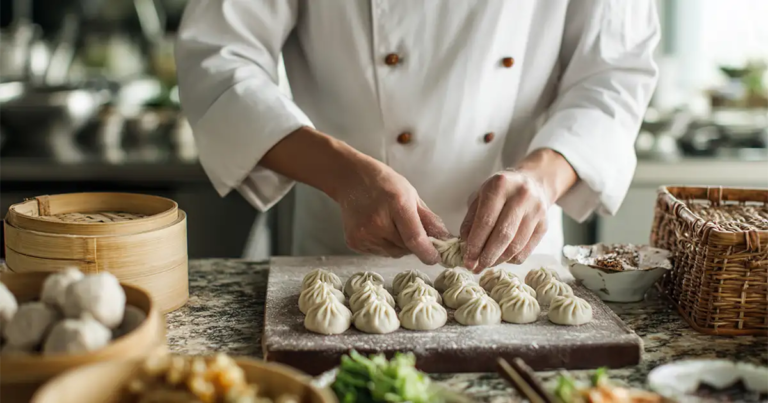
Sha cha sauce is often thought to belong only to hot pots and stir-fries, yet its reach extends further. Mixed into dumpling sauce, it changes the structure entirely, softening sharp soy and vinegar into a thicker, deeper profile. In sour soups like hot and sour soup, it creates a separate oily layer that stretches the sensation of spice rather than intensifying it.
In noodle dishes, it behaves differently again. Heated, garlic and seafood rise forward in aroma; stirred raw, the oil and grains remain dominant. The sauce carries dual personalities depending on fire, shifting between fragrance and texture.
After becoming the taste of a country
Sha cha sauce is not indigenous to Taiwan. It was born in Southeast Asia, reshaped along China’s coast, and redefined on the island through migration. Yet today it is inseparable from Taiwanese cuisine, with Bull Head Brand anchoring its memory in metal tins.
Drop a spoonful into a pot and the scent of oil and sea rises together, a blended history of crossings and adjustments. It is difficult to explain because it is mixed, yet when used, food becomes unmistakably Taiwanese. Sha cha sauce stands at that intersection, where movement settled into everyday life.
— Detour —
a little further to walk
- Notes on Shacha Sauce as a Daily Engine in Taiwan
- Notes on Four Invisible Pillars of Taiwanese Flavor
- Notes on Thick Soy Sauce in Taiwan